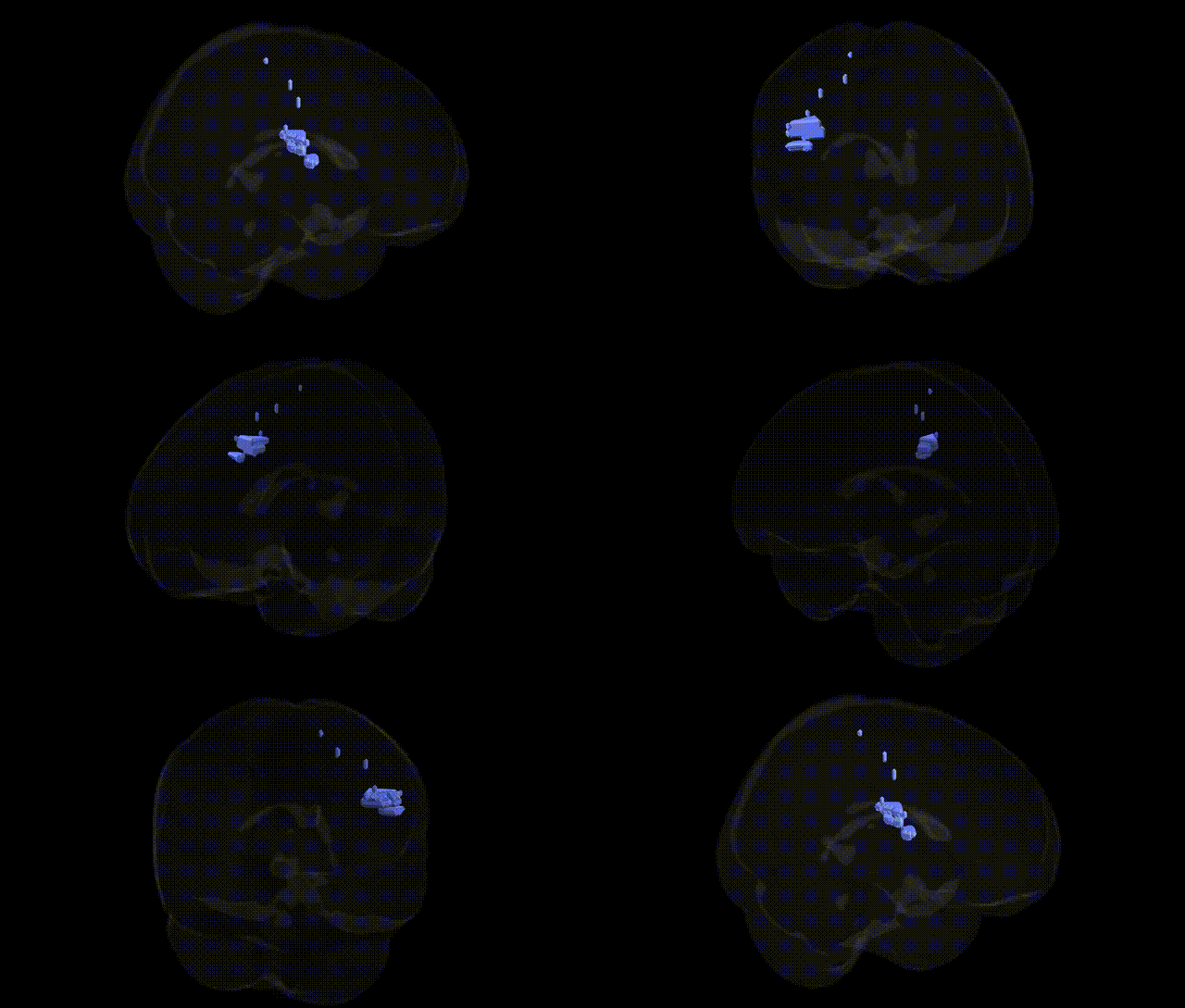
The bilateral Left Cerebrum.Frontal Lobe.Postcentral Gyrus.White Matter corresponds to subcortical fibers underlying the postcentral gyrus, which, despite the “frontal lobe” label in the atlas string, anatomically belongs to the parietal lobe and comprises the primary somatosensory cortex and its associated intrahemispheric and interhemispheric connections. This white matter region contains short association fibers linking adjacent somatosensory cortical areas, longer association fibers connecting somatosensory regions with frontal motor and premotor cortices, and commissural fibers passing through the corpus callosum to the contralateral hemisphere, supporting integration of tactile, proprioceptive, and nociceptive information with motor planning and execution. These pathways are critical for sensorimotor integration, fine tactile discrimination, and coordinated voluntary movement, and are commonly implicated in disorders involving sensory loss, neglect, or impaired sensorimotor coordination when damaged. There is no direct link for this specific white matter label; see the related cortical region Postcentral gyrus.
The bilateral Left Cerebrum.Frontal Lobe.Postcentral Gyrus.White Matter region, as defined in the Talairach 2 mm atlas, lies in the frontoparietal sensorimotor network, whose structural and functional properties have been repeatedly implicated in neuroimaging genetics and GWAS of brain morphology and connectivity rather than in highly region-specific single-gene findings. Large-scale MRI–GWAS consortia (e.g., ENIGMA, UK Biobank) have identified numerous common variants influencing global and regional white-matter microstructure (including fractional anisotropy and mean diffusivity in frontoparietal tracts such as the superior longitudinal fasciculus and corticospinal pathways that traverse postcentral and adjacent frontal white matter), with notable loci in genes related to axon guidance, myelination, and neural development (e.g., CNTNAP2, MAG, NRXN1, and several oligodendrocyte-associated genes), although these are typically reported at the tract or whole-brain white-matter level rather than specifically for the Talairach-labeled postcentral gyrus. GWAS of cortical thickness and surface area sometimes show associations in frontal–parietal sensorimotor regions with variants in genes involved in neurodevelopment (for example, widespread effects from loci near KIAA0586, DACT1, and other developmental regulators), and polygenic risk for schizophrenia, ADHD, autism spectrum disorder, and major depression has been linked to altered white-matter integrity and cortical morphology in these sensorimotor/frontoparietal areas, suggesting that genetic liability to these disorders partly manifests via changes in this network. Additional imaging-genetics work connects allelic variation in dopaminergic and glutamatergic genes, as well as APOE in aging samples, to alterations in frontal white-matter structure and connectivity, which can extend into or functionally involve the postcentral region, but current evidence supports a distributed, network-level genetic architecture rather than discrete, strongly validated, region-specific loci for the bilateral Left Cerebrum.Frontal Lobe.Postcentral Gyrus.White Matter label.
Overview generated by GPT-4o (2026).
Region ID: 833
Hemisphere: bilateral
Atlas: Talairach labels 2mm
Full Quality Version: Download MP4
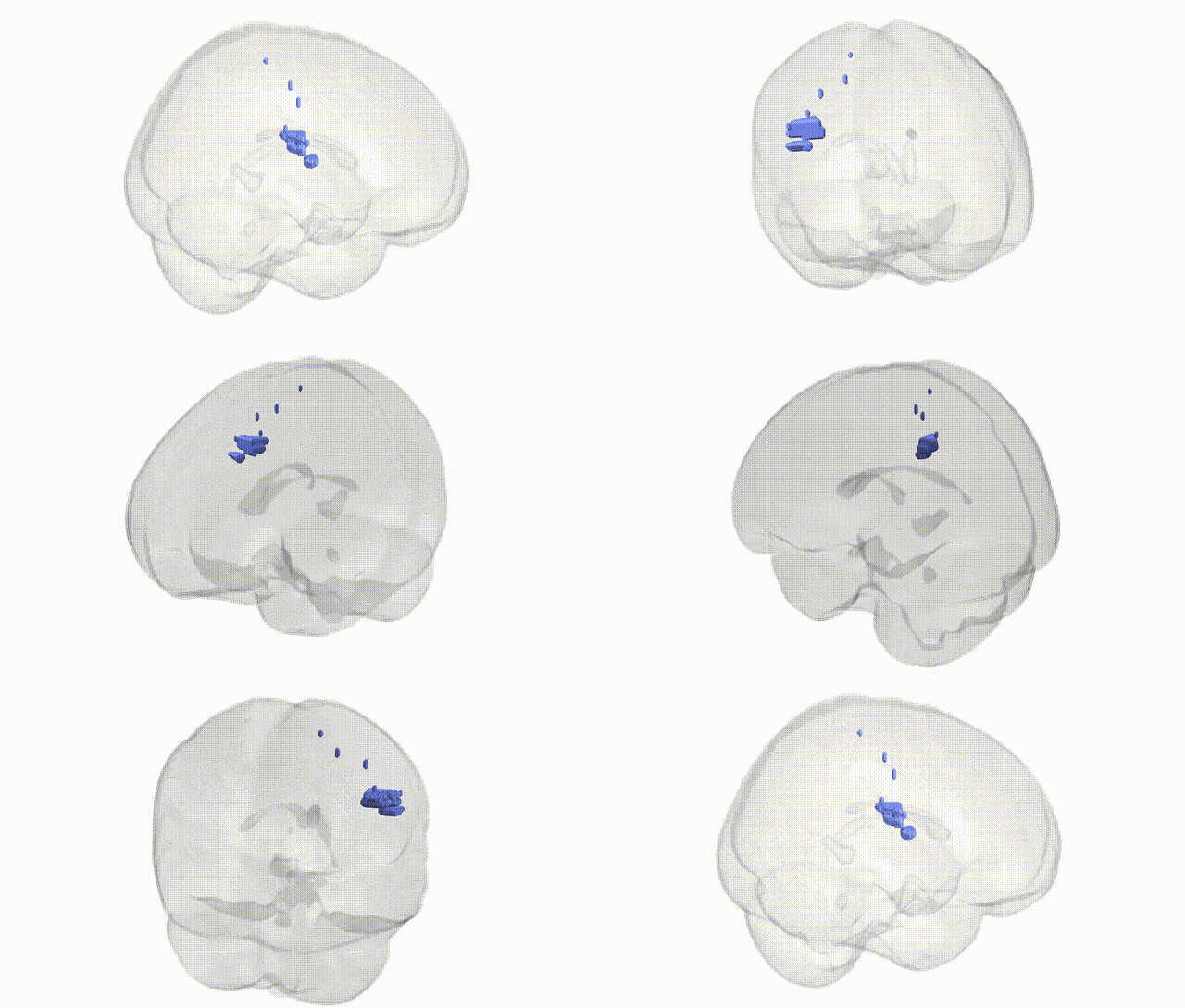
Full Quality Version: Download MP4
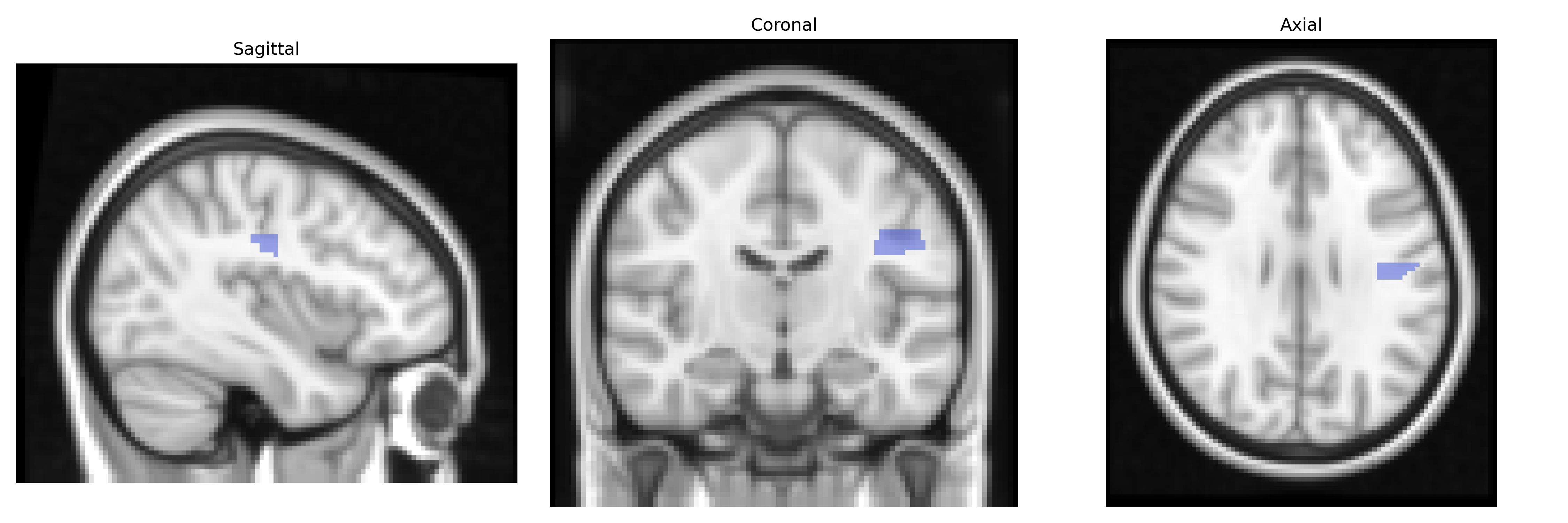
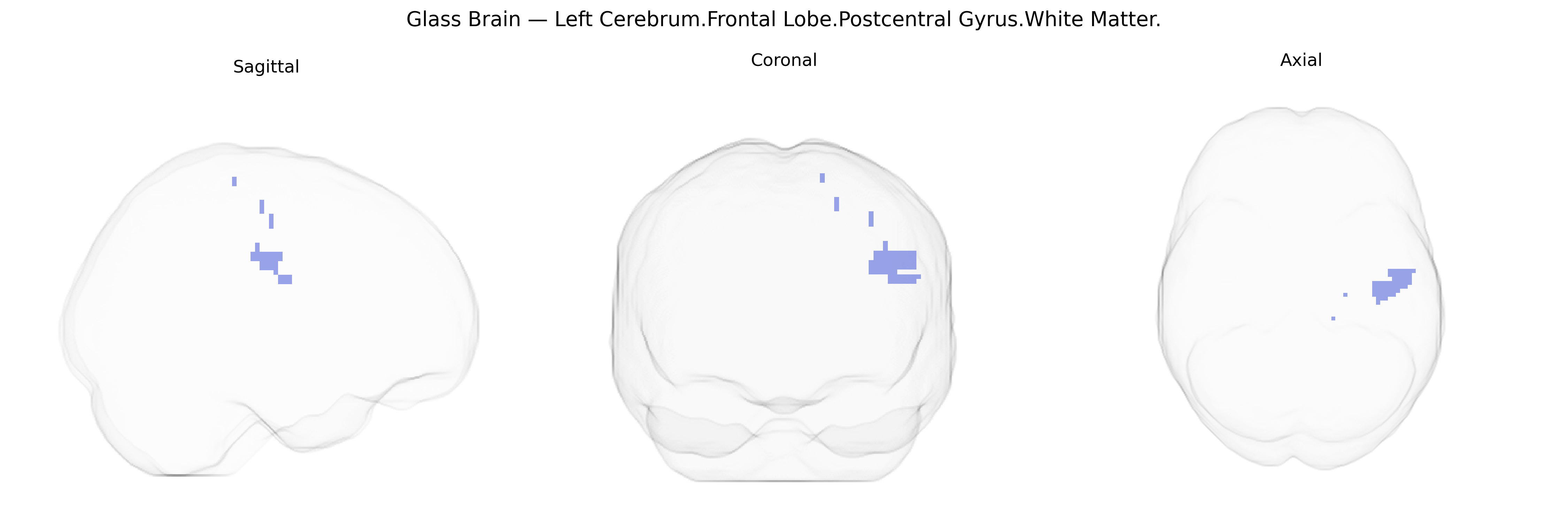
Wali Sidiqyar*, Gaurav Rudravaram*, Elyssa M. McMaster, Trent M. Schwartz, Adam M. Saunders, Kurt G. Schilling, Bennett A. Landman "Introducing SPINS: A Shared Public Visualization Library of Neuroanatomical Structures." Medical Imaging with Deep Learning- short paper
This resource is licensed under CC0 1.0 Universal (Public Domain).