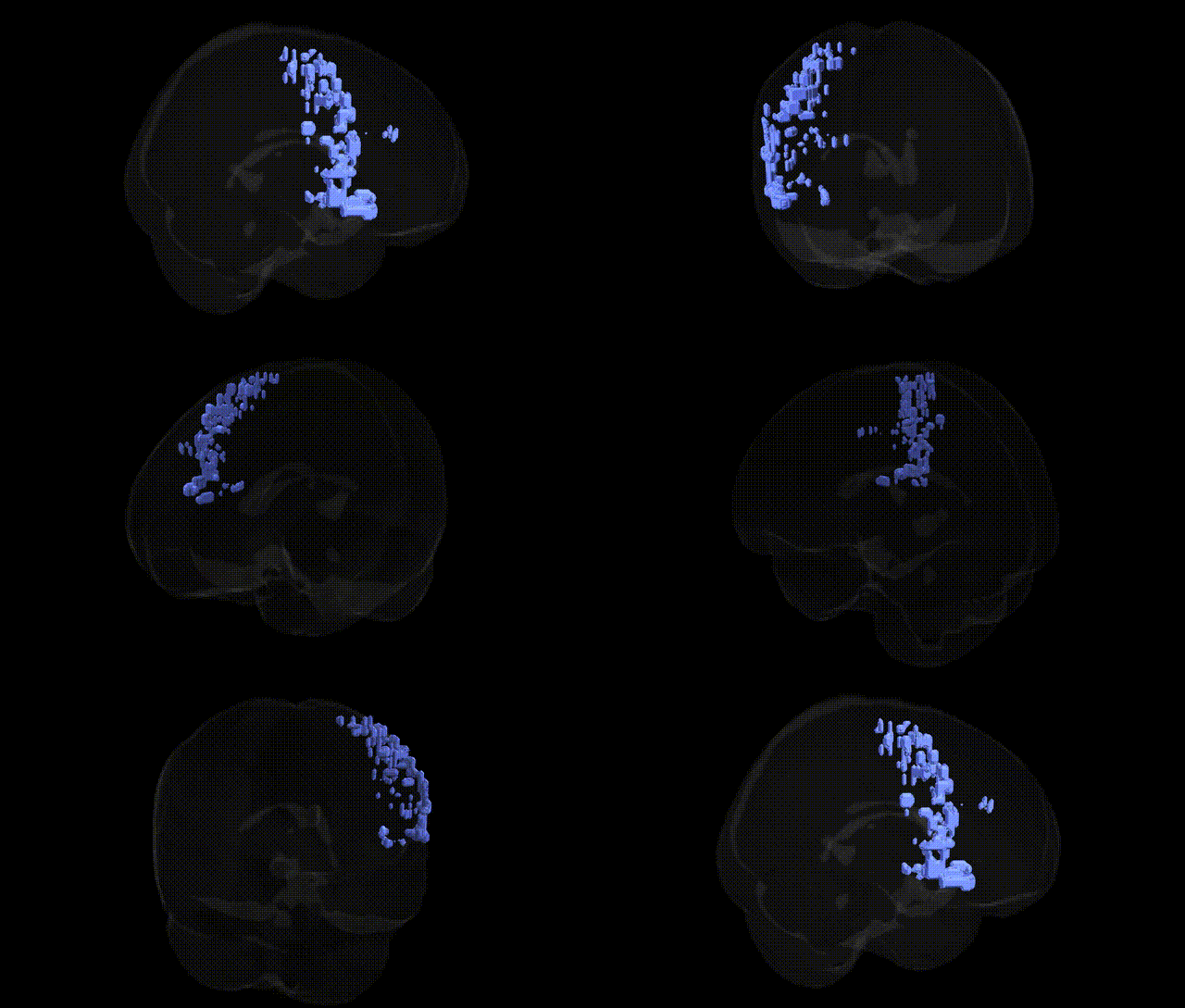
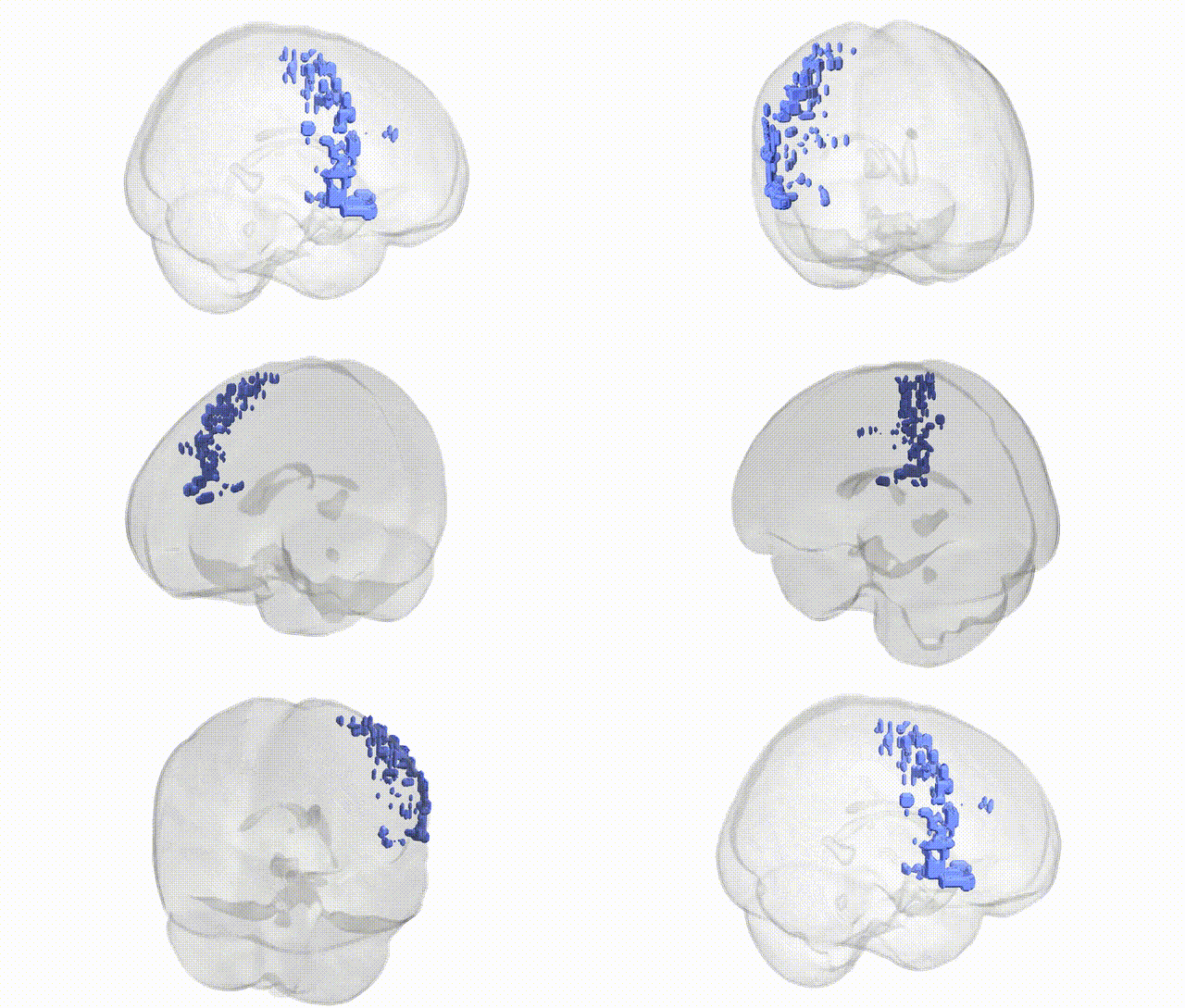
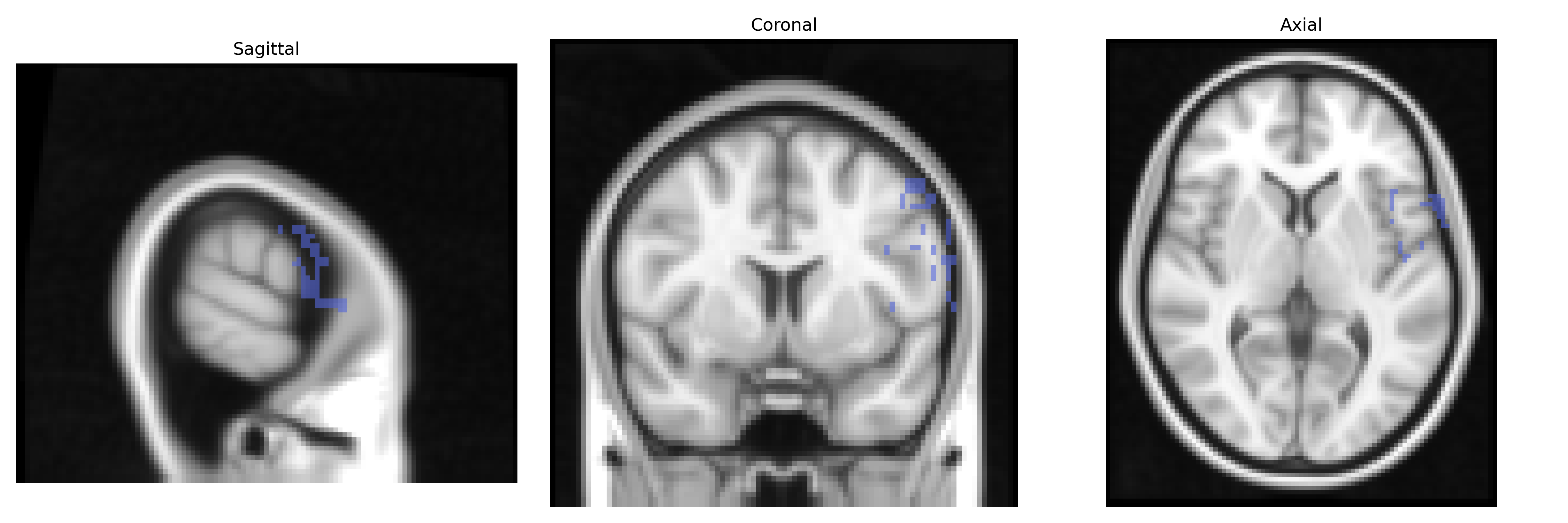
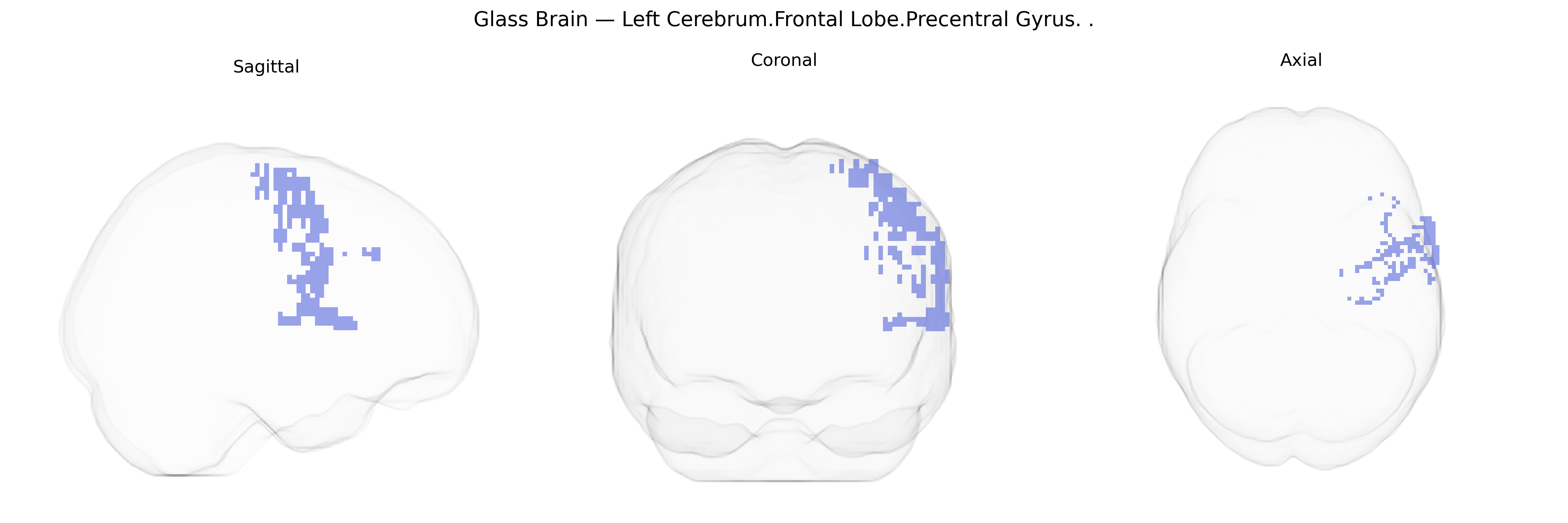
The bilateral left cerebrum frontal lobe precentral gyrus corresponds to the primary motor cortex (Brodmann area 4), located in the posterior portion of the frontal lobe immediately anterior to the central sulcus. This cortical strip is somatotopically organized, forming part of the motor homunculus in which different segments of the gyrus control voluntary movements of specific body parts, with the lower limb represented medially and the face and upper limb more laterally. Neurons in the precentral gyrus give rise to corticospinal and corticobulbar tracts that descend to spinal and brainstem motor nuclei, enabling precise, goal-directed motor output. Functionally, this region is crucial for initiation and execution of conscious movement, motor strength, and fine motor control, and lesions here typically result in contralateral motor deficits such as weakness or paralysis. There is no direct Wikipedia article specifically for “Left Cerebrum.Frontal Lobe.Precentral Gyrus (bilateral),” but it is part of the precentral gyrus motor cortex region: Precentral gyrus.
The bilateral left precentral gyrus (primary motor cortex) in the Talairach 2 mm atlas is implicated in several genetically influenced traits and disorders through GWAS and imaging–genetics studies, although most findings target broader frontal or motor regions rather than this locus alone. Variants in genes such as BDNF (e.g., Val66Met), CNTNAP2, and FOXP2 have been associated with motor learning, cortical plasticity, and speech–motor control, with corresponding structural and functional differences reported in precentral and adjacent frontal areas. Large-scale brain MRI GWAS (e.g., ENIGMA consortium, UK Biobank) have identified SNPs in loci including HMGA2, IGF1, and microtubule-related and synaptic genes that correlate with global and regional cortical surface area and thickness, often encompassing the precentral gyrus as part of motor cortex measures. Motor-related disorders with strong genetic components—such as amyotrophic lateral sclerosis (ALS) involving genes like C9orf72, SOD1, TARDBP, and FUS, and hereditary spastic paraplegias—show neurodegeneration and altered activation in the precentral gyrus, linking these genes indirectly to its integrity and function. Additionally, polygenic risk for neurodevelopmental conditions (ADHD, autism spectrum disorder, developmental coordination disorder) and schizophrenia has been associated with altered activation or morphology in frontal motor regions, including the precentral gyrus, in task-based and resting-state imaging–genetics analyses. Overall, genetic influences on this region appear to be mediated through pathways affecting cortical development, synaptic function, and neurodegeneration, but highly region-specific GWAS signals for the left precentral gyrus remain limited and are typically embedded within broader motor or frontal cortex phenotypes.
Overview generated by GPT-4o (2026).
Region ID: 679
Hemisphere: bilateral
Atlas: Talairach labels 2mm
Full Quality Version: Download MP4
Full Quality Version: Download MP4
Wali Sidiqyar*, Gaurav Rudravaram*, Elyssa M. McMaster, Trent M. Schwartz, Adam M. Saunders, Kurt G. Schilling, Bennett A. Landman "Introducing SPINS: A Shared Public Visualization Library of Neuroanatomical Structures." Medical Imaging with Deep Learning- short paper
This resource is licensed under CC0 1.0 Universal (Public Domain).