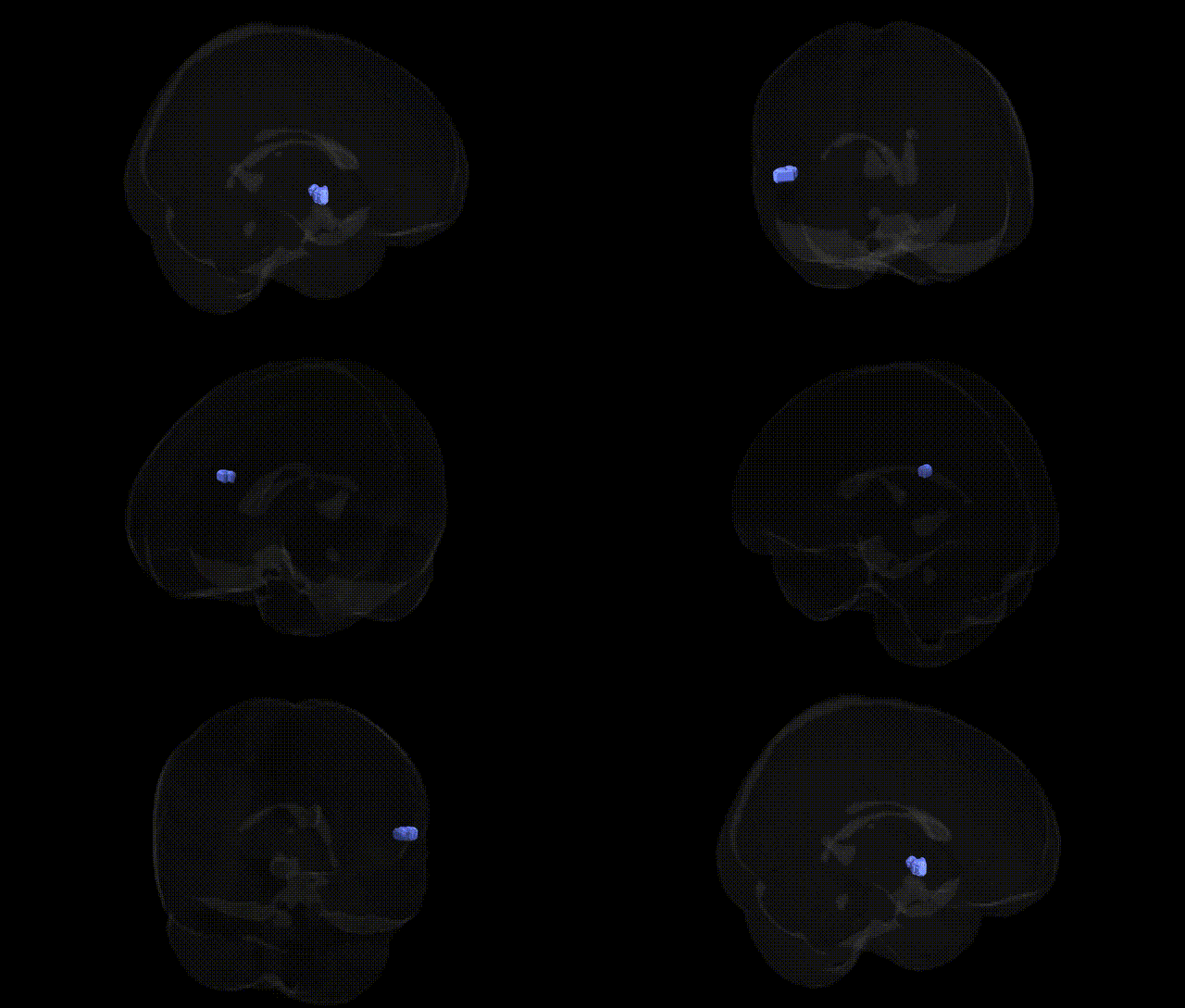
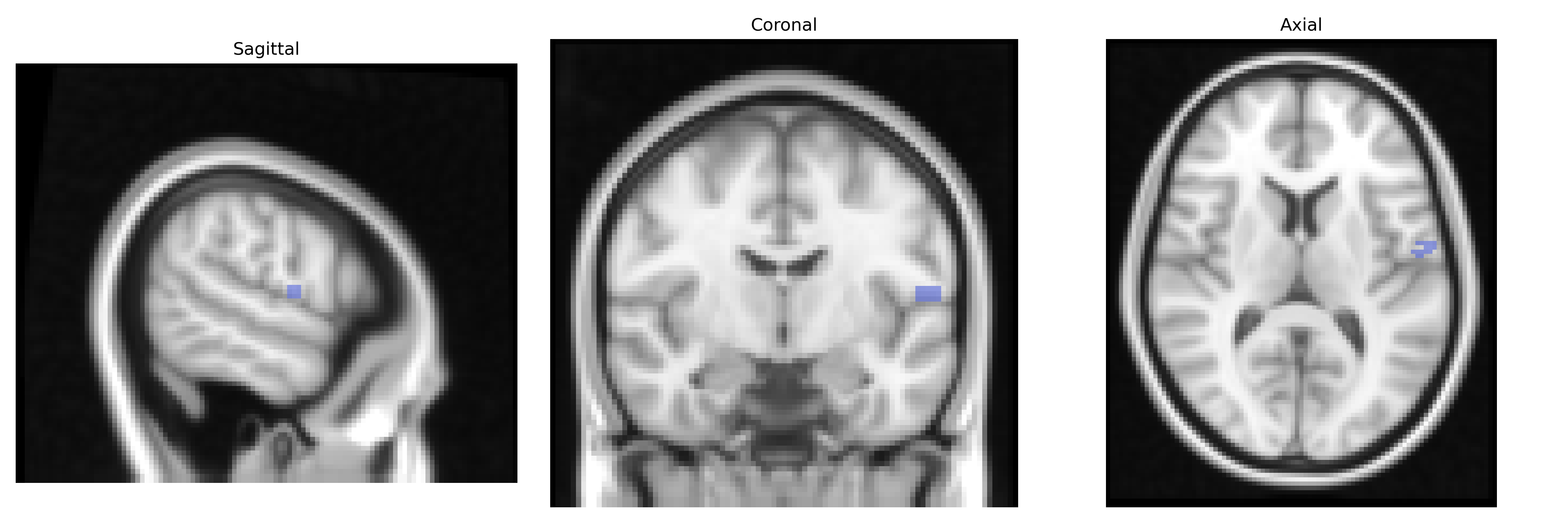
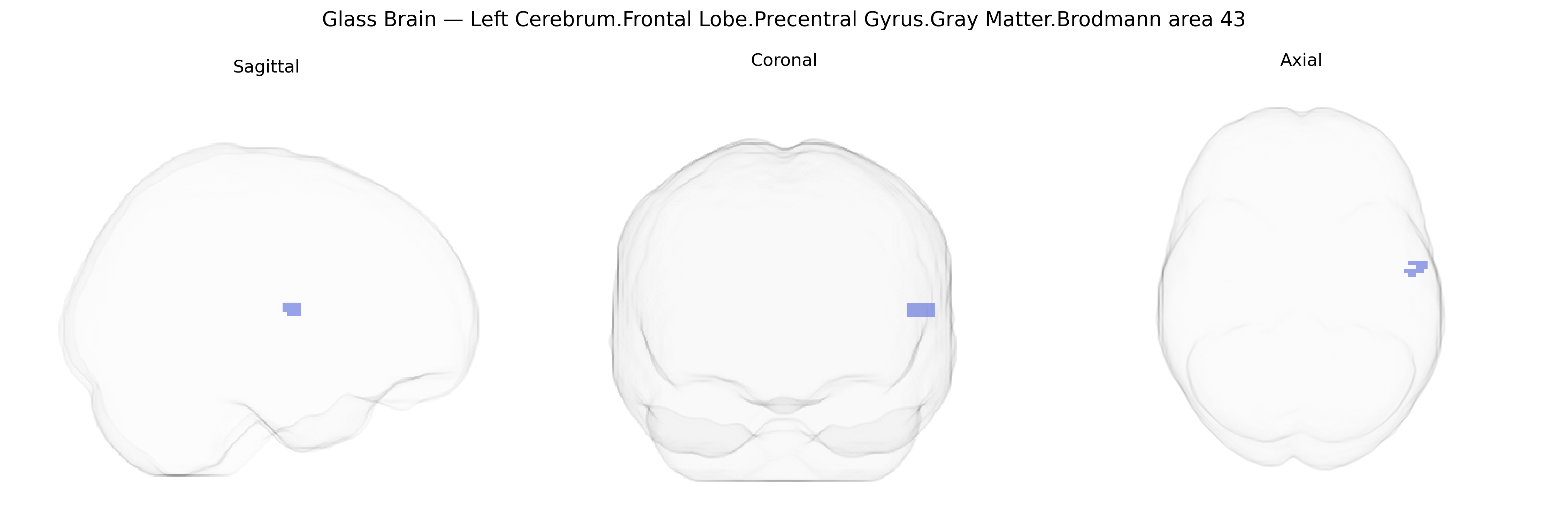
The bilateral Left Cerebrum.Frontal Lobe.Precentral Gyrus.Gray Matter.Brodmann area 43, as defined in the Talairach 2 mm Atlas, corresponds to a small cortical region classically associated with the subcentral area at the junction of the frontal and parietal lobes, bordering the primary somatosensory and motor cortices. Brodmann area 43 is linked mainly to gustatory (taste) processing and multimodal sensory integration rather than to overt motor execution, despite its proximity to the precentral (primary motor) gyrus. It receives and integrates input related to orofacial and visceral sensations and is thought to contribute to the perception of taste and possibly to sensorimotor aspects of oral functions such as chewing and swallowing. There is no direct Wikipedia article for Brodmann area 43; a closely related structure involved in taste processing is the Gustatory cortex.
The bilateral Left Cerebrum Frontal Lobe Precentral Gyrus Gray Matter Brodmann area 43 (Talairach labels 2 mm Atlas) corresponds primarily to ventral primary sensorimotor cortex involved in orofacial somatosensation and speech-related motor control, and genetic associations are typically reported for broader precentral/sensorimotor or frontal regions rather than this micro-anatomical label specifically. Large-scale neuroimaging GWAS (e.g., ENIGMA, UK Biobank) have linked common variants in genes involved in neurodevelopment, synaptic signaling, and axon guidance (such as MAPT on 17q21, genes in the glutamatergic pathway, and multiple loci near cortical development regulators like FOXP2, DLG2, and CACNA1C) to cortical thickness and surface area in frontal and precentral regions that encompass BA43. Structural and functional characteristics of this region are indirectly implicated in genetic risk for speech and language traits, stuttering, developmental language disorder, and aspects of motor speech control, where variants in FOXP2 and related networks show associations with activation and morphology in adjacent inferior frontal and ventral precentral areas. In neurological disease GWAS and imaging–genetics studies, precentral and peri-sylvian cortex that overlap BA43 show atrophy or altered activation associated with risk loci for amyotrophic lateral sclerosis, frontotemporal dementia (e.g., C9orf72, GRN, MAPT), and, more diffusely, schizophrenia and bipolar disorder (where polygenic risk scores correlate with frontal cortical measures). Pain and somatosensory GWAS have also linked variants in ion channel and neurotransmission genes (including SCN9A and other nociception-related loci) to functional responses and gray matter measures in sensorimotor regions that include ventral precentral gyrus. However, no robust, widely replicated GWAS has isolated Brodmann area 43 as a unique genetic target; instead, genetic findings relate to wider frontal and sensorimotor circuits that incorporate this area within larger cortical phenotypes.
Overview generated by GPT-4o (2026).
Region ID: 739
Hemisphere: bilateral
Atlas: Talairach labels 2mm
Full Quality Version: Download MP4
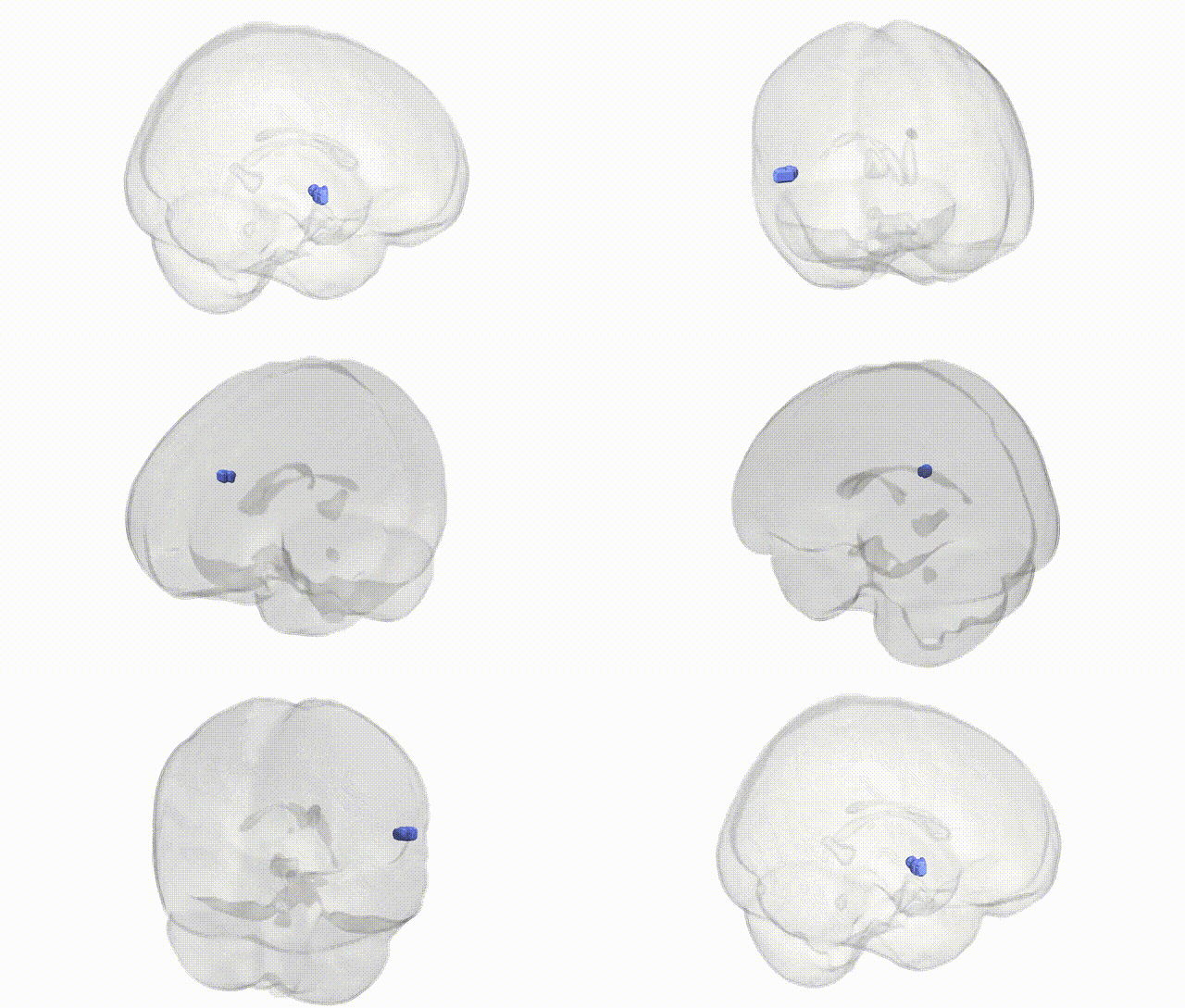
Full Quality Version: Download MP4
Wali Sidiqyar*, Gaurav Rudravaram*, Elyssa M. McMaster, Trent M. Schwartz, Adam M. Saunders, Kurt G. Schilling, Bennett A. Landman "Introducing SPINS: A Shared Public Visualization Library of Neuroanatomical Structures." Medical Imaging with Deep Learning- short paper
This resource is licensed under CC0 1.0 Universal (Public Domain).