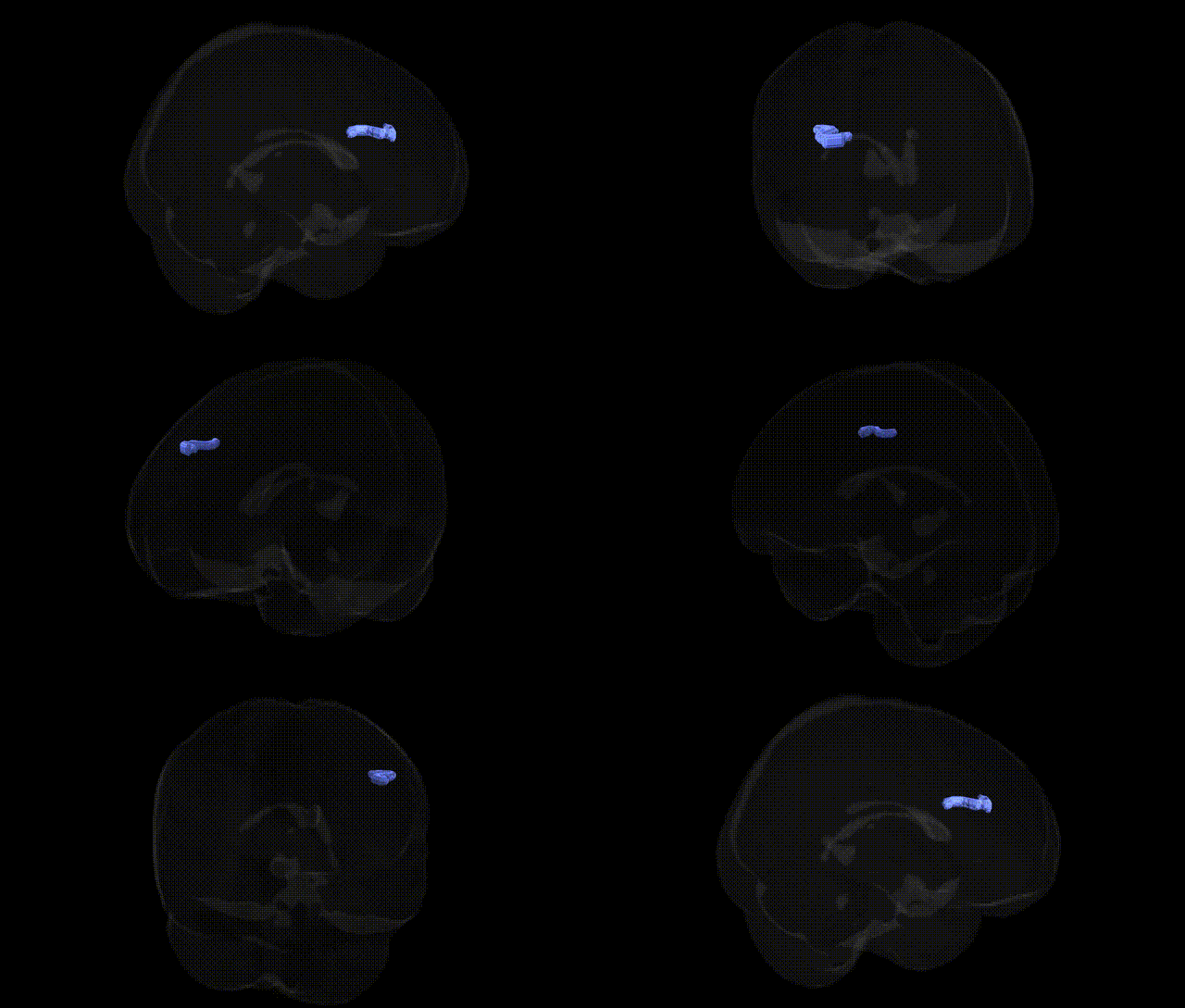
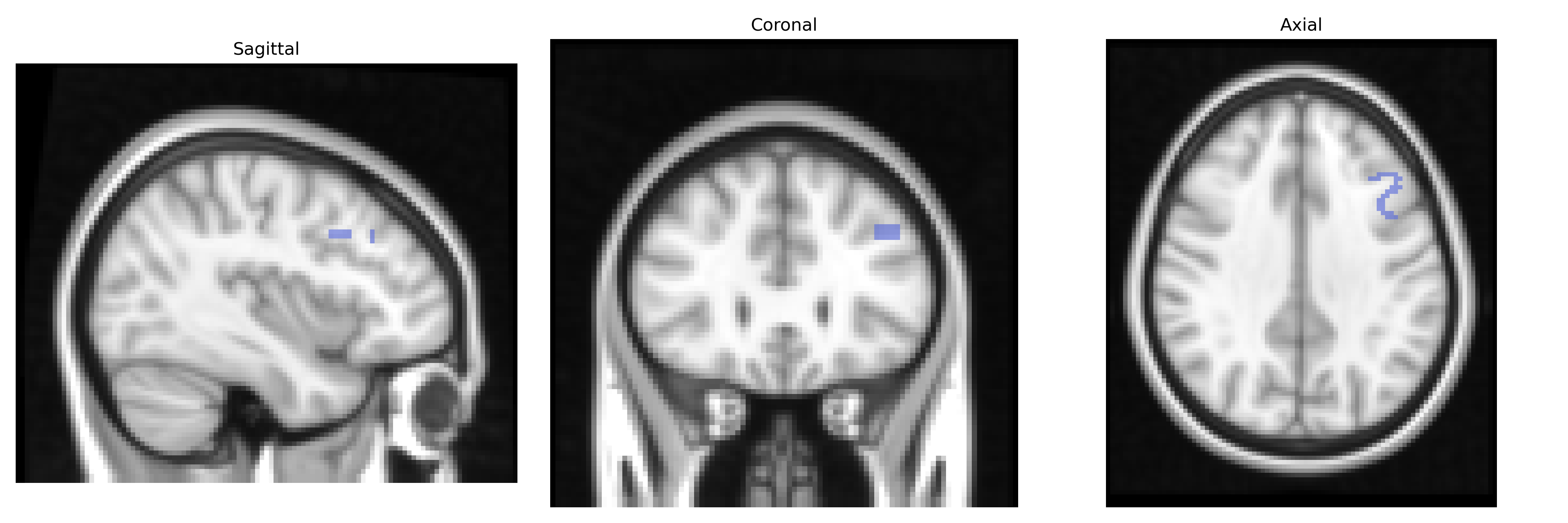
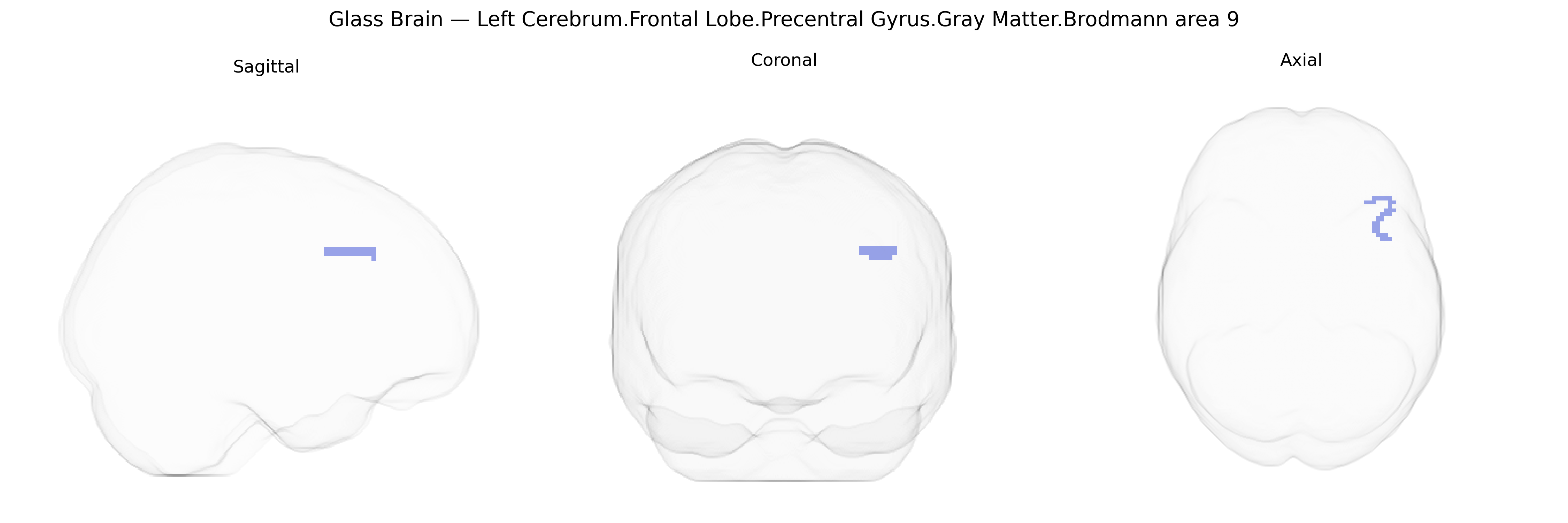
The bilateral Left Cerebrum.Frontal Lobe.Precentral Gyrus.Gray Matter.Brodmann area 9 corresponds to a dorsal frontal cortical territory situated anterior to the primary motor cortex, spanning portions of the middle frontal and superior frontal regions in the left hemisphere as defined in the Talairach 2 mm Atlas. Although labeled with “Precentral Gyrus,” Brodmann area 9 is classically associated with the dorsolateral prefrontal cortex and is implicated in higher-order executive functions, including working memory, cognitive control, planning, and aspects of decision-making and attention regulation. Cytoarchitectonically, BA9 is characterized by a granular frontal cortex pattern, with a well-developed layer IV and prominent pyramidal neurons in layers III and V, supporting extensive cortico-cortical and cortico-subcortical connectivity with association cortices, limbic structures, and thalamic nuclei. Functional neuroimaging frequently demonstrates activation of BA9 during tasks requiring manipulation of information in mind, rule-guided behavior, and integration of sensory and mnemonic inputs for goal-directed actions. There is no single dedicated Wikipedia page specifically for “Brodmann area 9” as defined in the Talairach labels; a closely related and encompassing structure is the Dorsolateral prefrontal cortex.
The bilateral Left Cerebrum Frontal Lobe Precentral Gyrus (Talairach Brodmann area 9 labeling here partly reflects atlas-specific parcellation; functionally BA9 is usually considered dorsolateral prefrontal cortex rather than precentral gyrus) has been implicated in multiple genetic and GWAS-based neuroimaging and neuropsychiatric findings, largely through studies of cortical thickness, surface area, and activation patterns rather than region-specific candidate genes. Large-scale imaging genetics consortia such as ENIGMA and UK Biobank have identified common variants in loci including HMGA2, IGF1, microtubule and synaptic genes (e.g., MAPT region on 17q21, variants near CENPW, WNT signaling and chromatin-remodeling genes) that associate with frontal lobe cortical thickness and surface area measures overlapping BA9, with downstream links to general cognitive ability, educational attainment and working memory performance. Polygenic risk scores for schizophrenia, bipolar disorder, major depressive disorder and ADHD consistently correlate with structural and functional alterations in dorsolateral prefrontal regions encompassing BA9, including reduced gray matter volume or altered activation during executive function and inhibitory control tasks, suggesting that many risk variants for these disorders converge on development and plasticity of this frontal circuitry. GWAS of traits such as intelligence, neuroticism, risk-taking and smoking behavior have shown that genetic risk is partly mediated through BA9-related morphology or connectivity to motor and premotor areas, and rare variant or CNV studies (e.g., 22q11.2 deletion, 16p11.2 CNVs) reveal prominent effects on frontal cortical structure including BA9, with associated cognitive and psychiatric phenotypes. Overall, current evidence supports a polygenic, highly distributed genetic architecture in which numerous common and rare variants affect the structure and function of BA9 and adjacent frontal regions, contributing to variation in executive control, motor planning integration, and vulnerability to major psychiatric and cognitive disorders, though no single gene is uniquely or specifically tied to this Talairach-defined subregion.
Overview generated by GPT-4o (2026).
Region ID: 1004
Hemisphere: bilateral
Atlas: Talairach labels 2mm
Full Quality Version: Download MP4
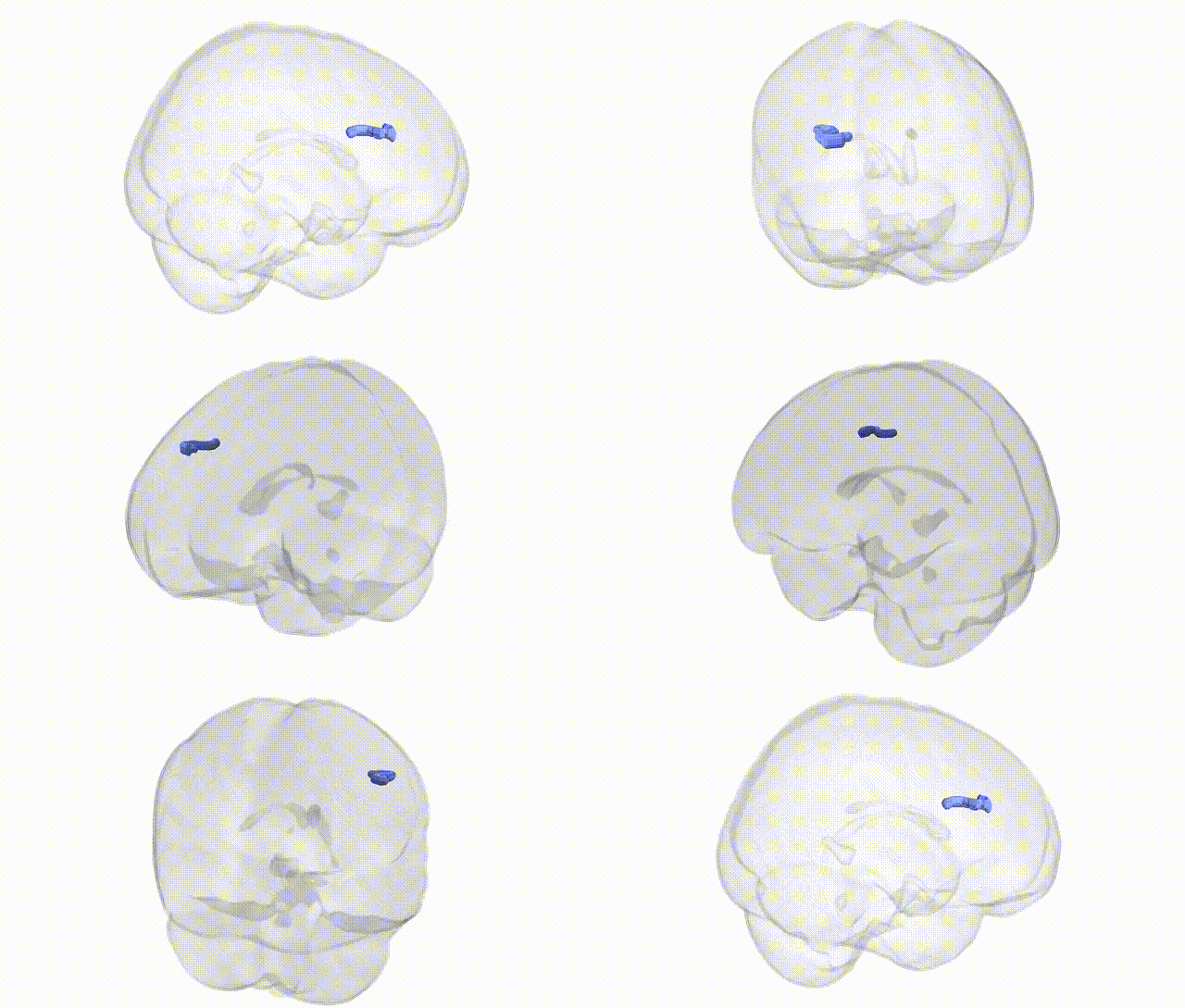
Full Quality Version: Download MP4
Wali Sidiqyar*, Gaurav Rudravaram*, Elyssa M. McMaster, Trent M. Schwartz, Adam M. Saunders, Kurt G. Schilling, Bennett A. Landman "Introducing SPINS: A Shared Public Visualization Library of Neuroanatomical Structures." Medical Imaging with Deep Learning- short paper
This resource is licensed under CC0 1.0 Universal (Public Domain).