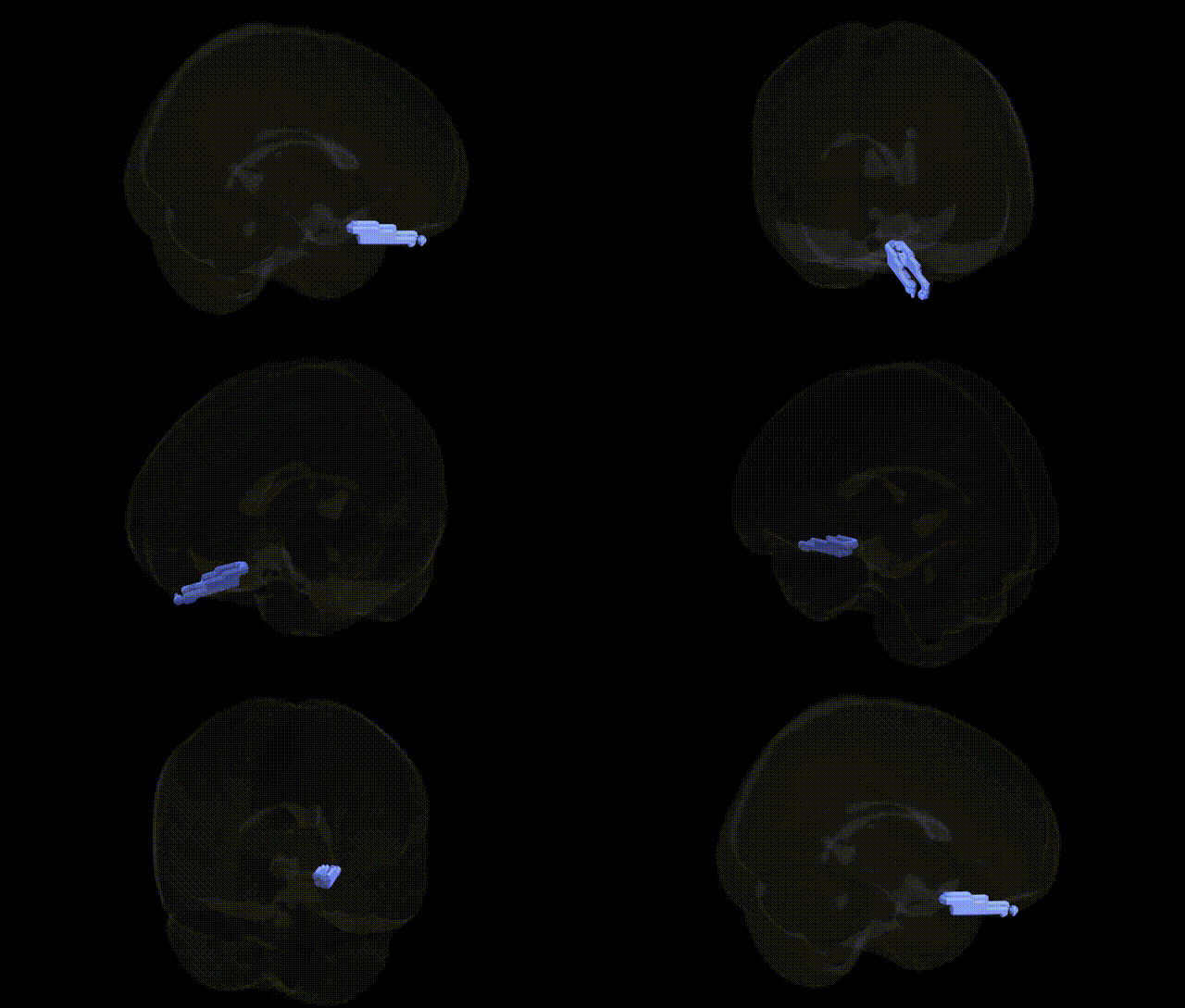
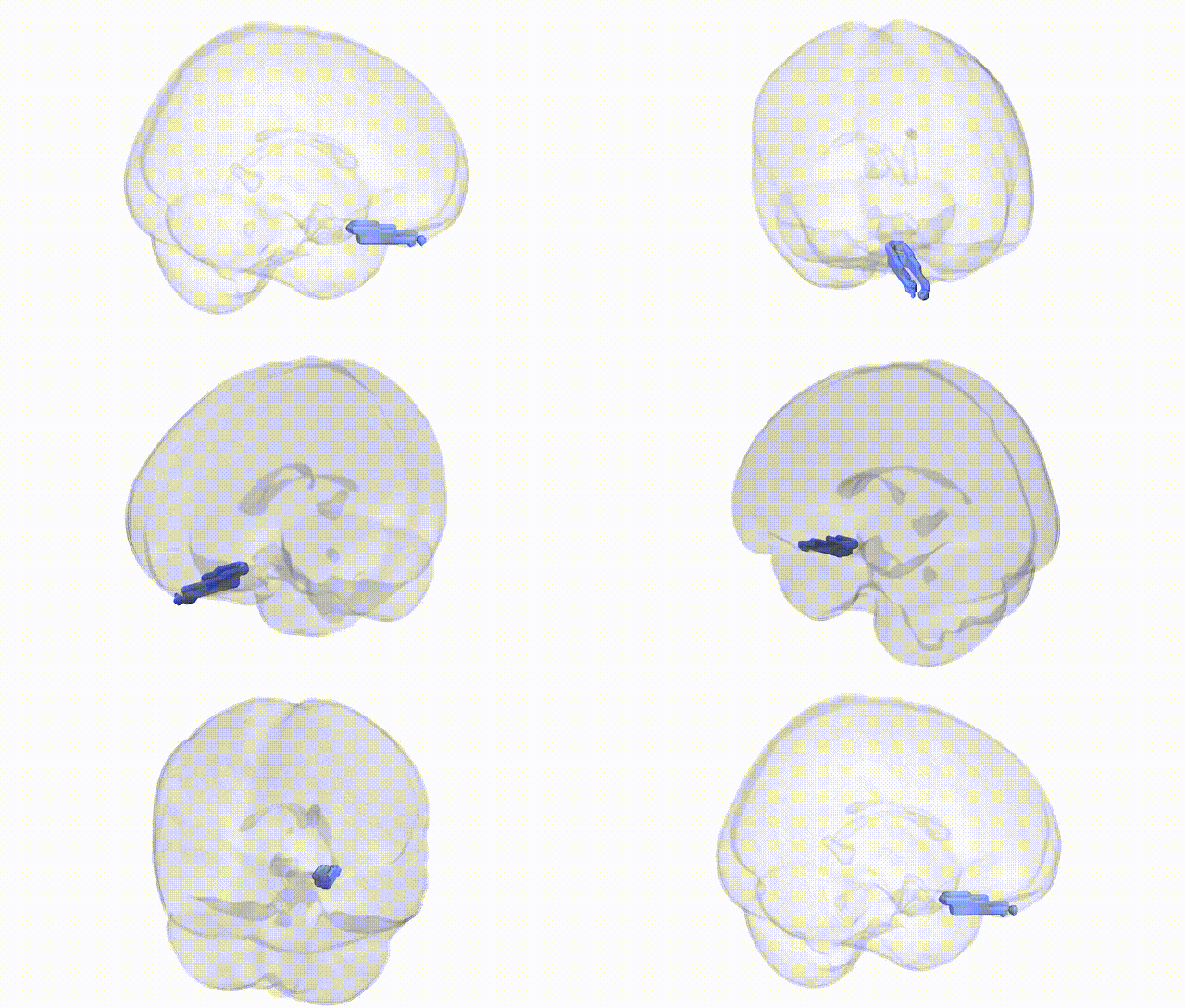
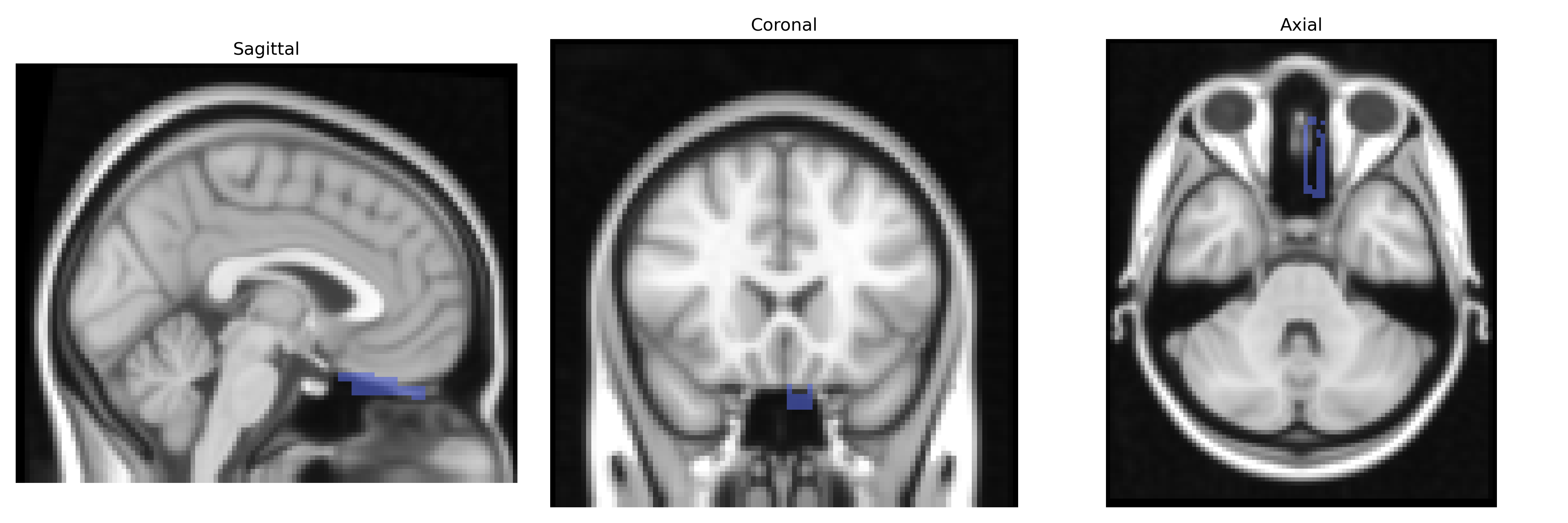
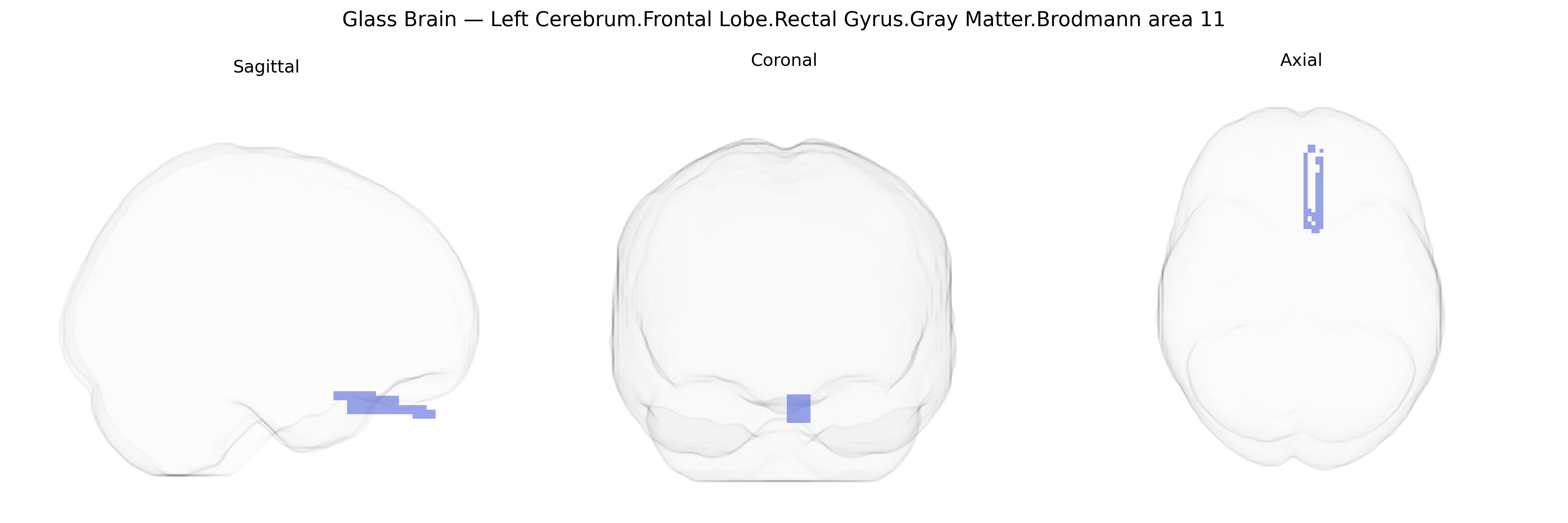
The bilateral Left Cerebrum.Frontal Lobe.Rectal Gyrus.Gray Matter.Brodmann area 11 corresponds to gray matter within the orbitofrontal cortex, specifically the gyrus rectus (straight gyrus) along the medial orbital surface of the frontal lobe, classified cytoarchitectonically as Brodmann area 11. This region is part of prefrontal association cortex involved in reward valuation, emotion regulation, decision-making, and social behavior, integrating sensory, limbic, and autonomic information to guide adaptive, goal-directed actions. It has strong connections with the amygdala, hypothalamus, and other prefrontal areas and plays a role in processing affective and motivational aspects of stimuli, as well as in inhibitory control and flexible updating of behavioral strategies. There is no direct Wikipedia article for this exact Talairach-defined label; a closely related structure is Orbitofrontal cortex.
The bilateral rectus gyrus (gyrus rectus) in Brodmann area 11, part of the orbitofrontal cortex, has been implicated in genetic studies primarily through its role in decision-making, reward processing, and emotion regulation rather than as a standalone locus. GWAS and imaging-genetics work (e.g., ENIGMA and UK Biobank) have linked common variants in genes related to synaptic function and neurodevelopment—such as BDNF, SLC6A4, CACNA1C, and genes in glutamatergic and GABAergic pathways—to structural and functional variation in orbitofrontal regions that include BA11, with downstream associations to depression, bipolar disorder, schizophrenia, anxiety, and substance-use disorders. Polygenic risk scores for major psychiatric disorders frequently correlate with cortical thickness or volume changes in orbitofrontal/BA11 territories, and some risk alleles for obsessive-compulsive disorder, impulsivity, and neuroticism show effects on orbitofrontal activation or connectivity during tasks involving reward valuation or emotional processing. Additionally, GWAS of personality traits (e.g., neuroticism, extraversion), cognitive control, and risk-taking have reported associations between trait-related polygenic profiles and rectus gyrus/orbitofrontal morphology or activation, suggesting that genetic influences on complex behavior and affect are partly mediated through this BA11 region, although specific variants uniquely tied to the Talairach-defined rectal gyrus 2 mm label remain incompletely characterized and are typically reported at the broader orbitofrontal or frontal-lobe level.
Overview generated by GPT-4o (2026).
Region ID: 142
Hemisphere: bilateral
Atlas: Talairach labels 2mm
Full Quality Version: Download MP4
Full Quality Version: Download MP4
Wali Sidiqyar*, Gaurav Rudravaram*, Elyssa M. McMaster, Trent M. Schwartz, Adam M. Saunders, Kurt G. Schilling, Bennett A. Landman "Introducing SPINS: A Shared Public Visualization Library of Neuroanatomical Structures." Medical Imaging with Deep Learning- short paper
This resource is licensed under CC0 1.0 Universal (Public Domain).