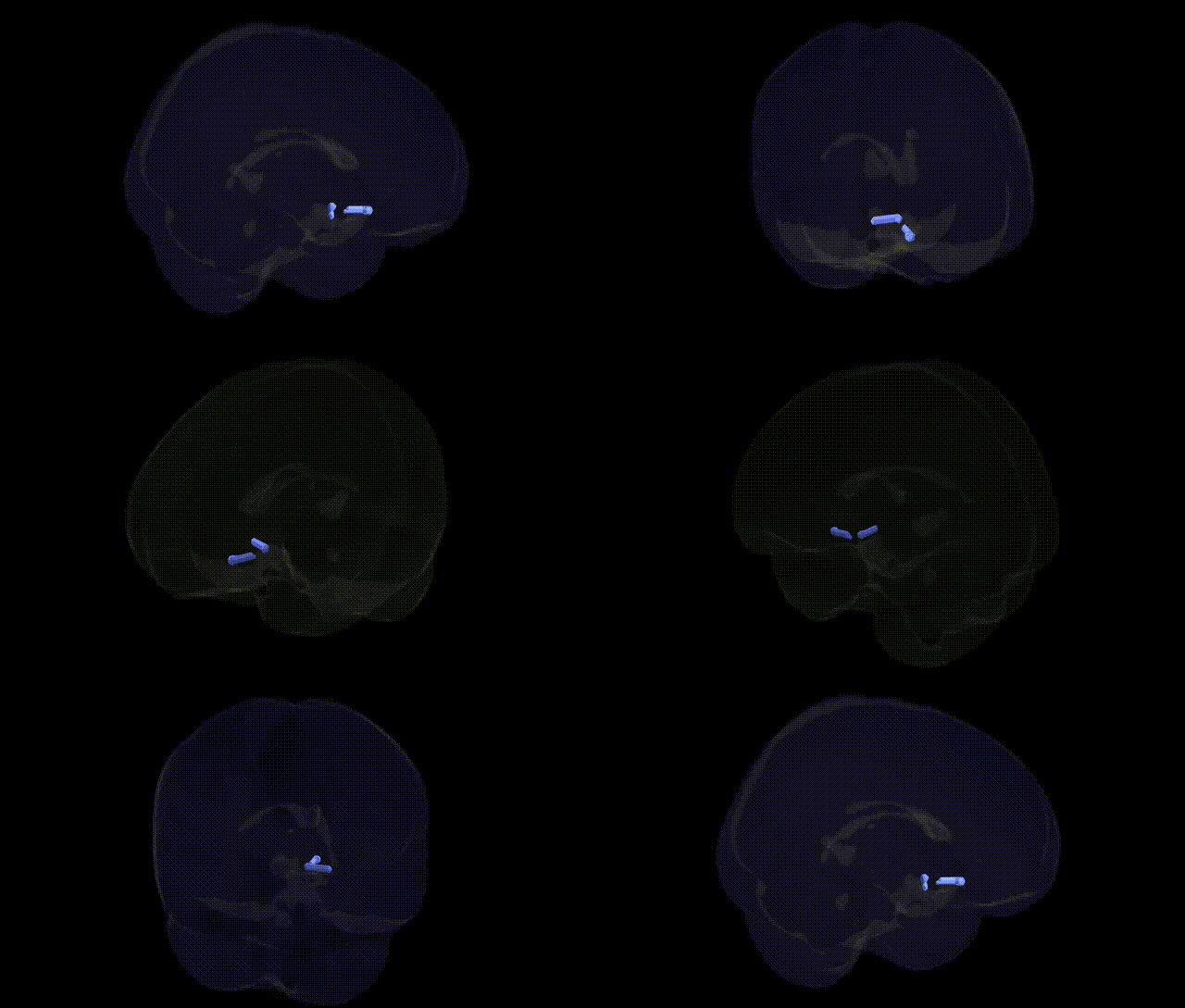
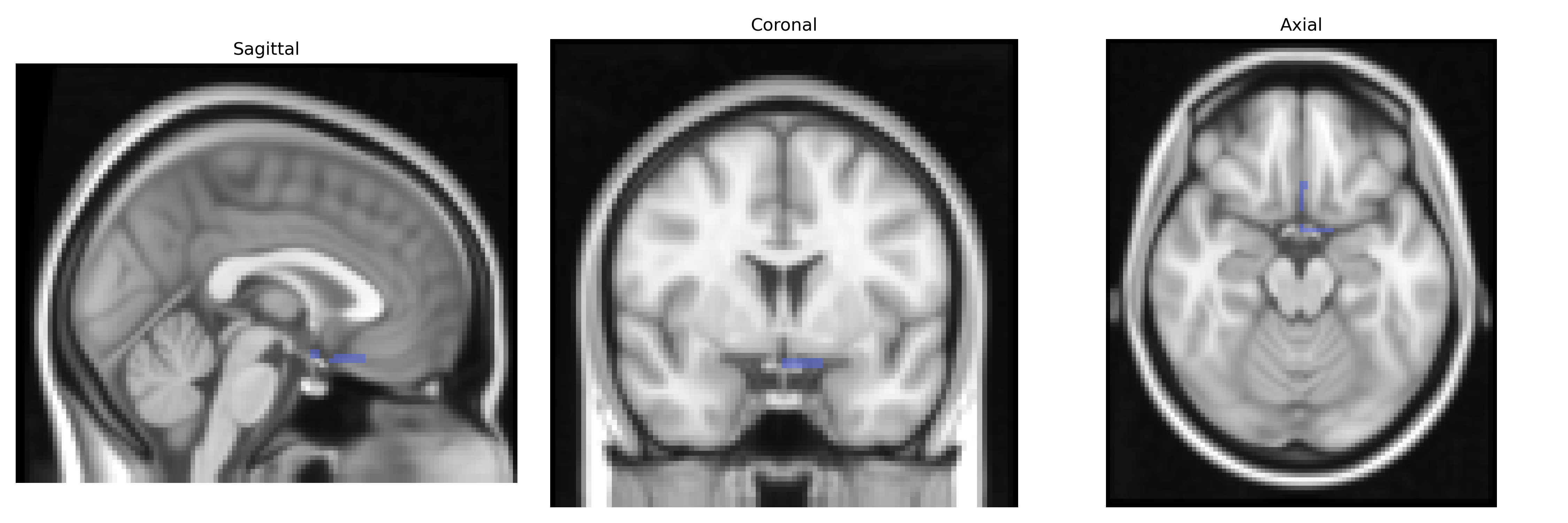
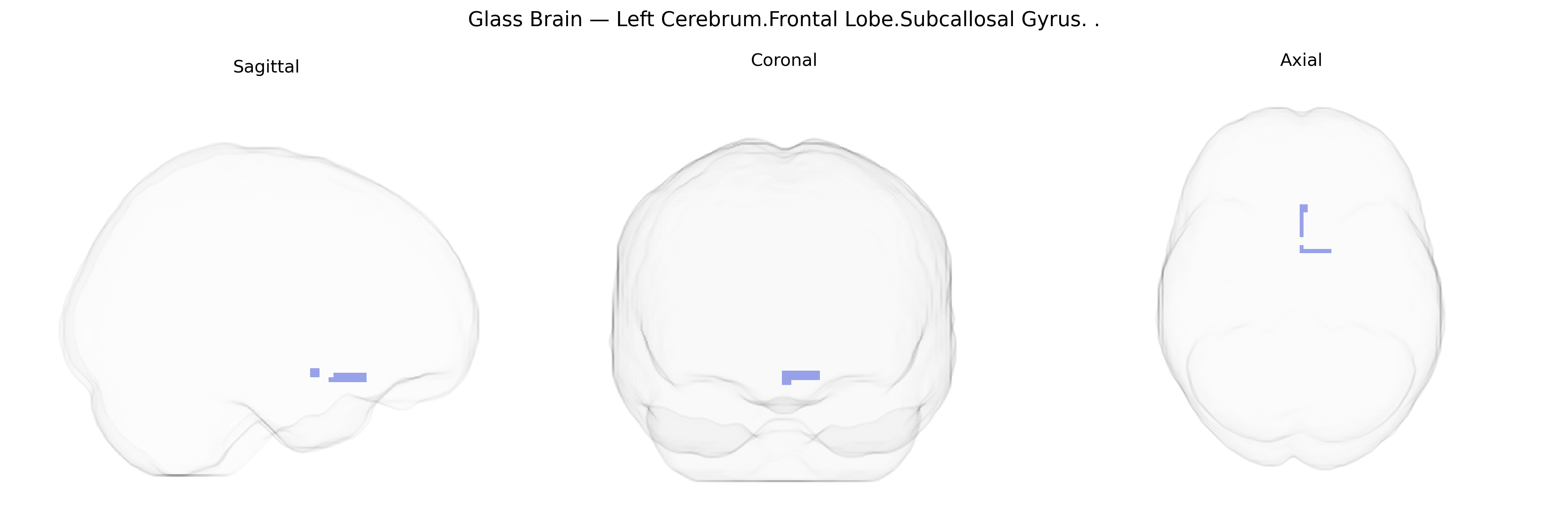
The bilateral Left Cerebrum.Frontal Lobe.Subcallosal Gyrus corresponds to the subcallosal area (subcallosal gyrus), a ventromedial frontal lobe region located inferior to the genu of the corpus callosum and adjacent to the septal area and cingulate gyrus. This region forms part of the limbic system–related ventral frontal circuitry, integrating affective, autonomic, and visceral information and contributing to mood regulation, emotional processing, and behavioral drive. It is heavily interconnected with the anterior cingulate cortex, orbitofrontal cortex, hypothalamus, and basal forebrain structures, and is implicated in the neurobiology of depression and other affective disorders, including as a target area in deep brain stimulation for treatment-resistant depression. There is no direct link for “Subcallosal Gyrus”; see the related limbic structure Anterior cingulate cortex.
The subcallosal gyrus (often overlapping with subgenual anterior cingulate/ventromedial prefrontal regions in the Talairach 2 mm atlas) has been repeatedly implicated in genetic studies of mood and affective disorders, particularly major depressive disorder and bipolar disorder, where risk variants identified in large GWAS—such as those in genes regulating synaptic function, neuronal development, and stress response (e.g., GRM3, CACNA1C, BDNF, FKBP5, SLC6A4)—have been associated with altered volume, connectivity, or activity in this region. Imaging–genetics work shows that polygenic risk scores for depression, bipolar disorder, schizophrenia, and neuroticism correlate with structural and functional measures in subcallosal/sgACC territory, supporting its role as a convergent neural substrate of genetic liability for mood dysregulation, negative affect, and suicidality. Variants in serotonin and glutamate system genes, as well as those implicated in HPA axis regulation, have been linked to differential subcallosal activation in emotional processing and stress paradigms, and GWAS of brain imaging phenotypes (e.g., ENIGMA, UK Biobank) report associations between common variants in neurodevelopmental and synaptic genes and cortical thickness or surface area in adjacent ventromedial prefrontal regions that encompass the subcallosal gyrus. Collectively, genetic findings converge on this bilateral frontal lobe region as a key hub through which polygenic risk for mood and stress-related psychopathology influences brain structure and function, although specific gene–region mappings remain probabilistic and subject to ongoing refinement.
Overview generated by GPT-4o (2026).
Region ID: 277
Hemisphere: bilateral
Atlas: Talairach labels 2mm
Full Quality Version: Download MP4
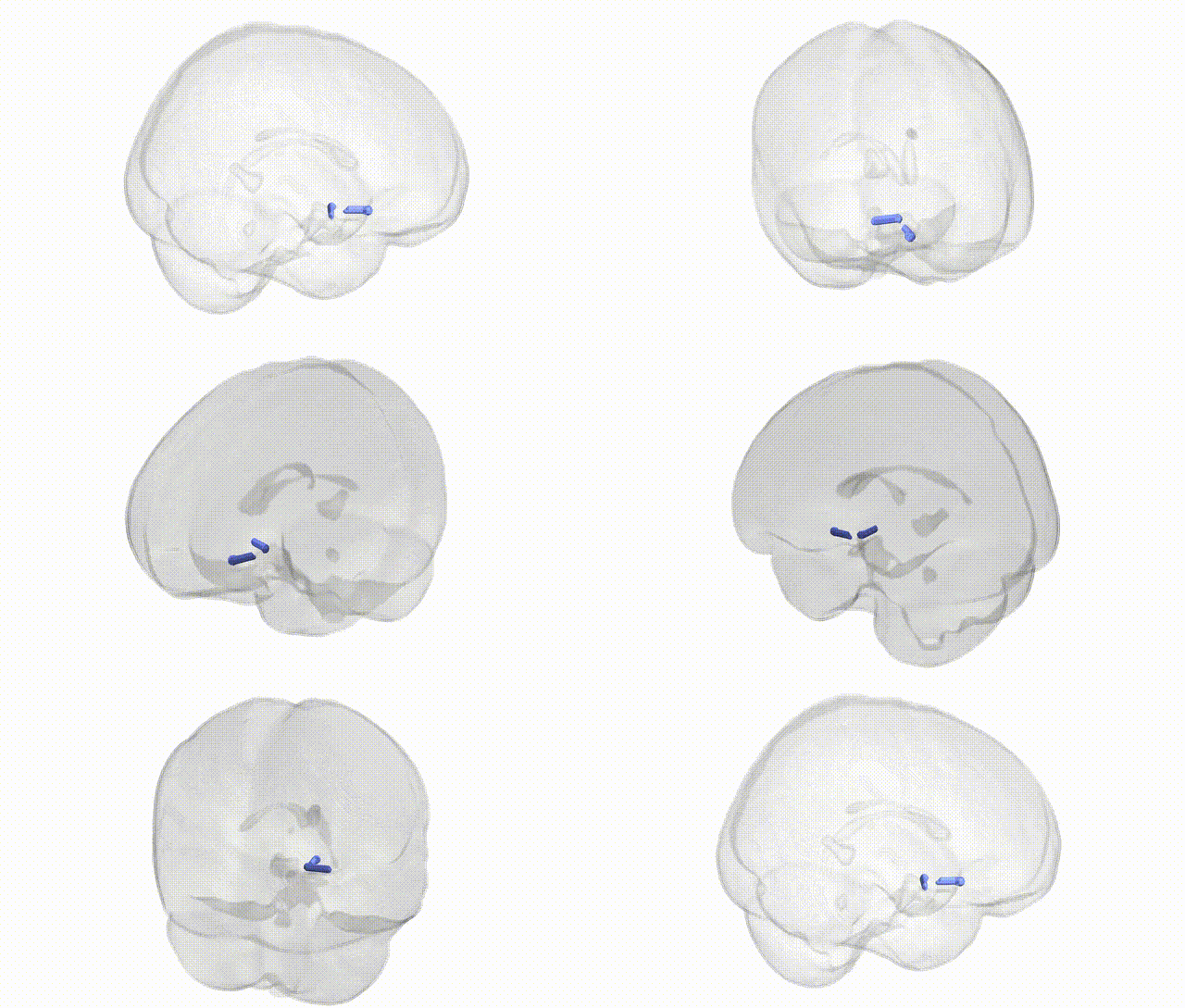
Full Quality Version: Download MP4
Wali Sidiqyar*, Gaurav Rudravaram*, Elyssa M. McMaster, Trent M. Schwartz, Adam M. Saunders, Kurt G. Schilling, Bennett A. Landman "Introducing SPINS: A Shared Public Visualization Library of Neuroanatomical Structures." Medical Imaging with Deep Learning- short paper
This resource is licensed under CC0 1.0 Universal (Public Domain).