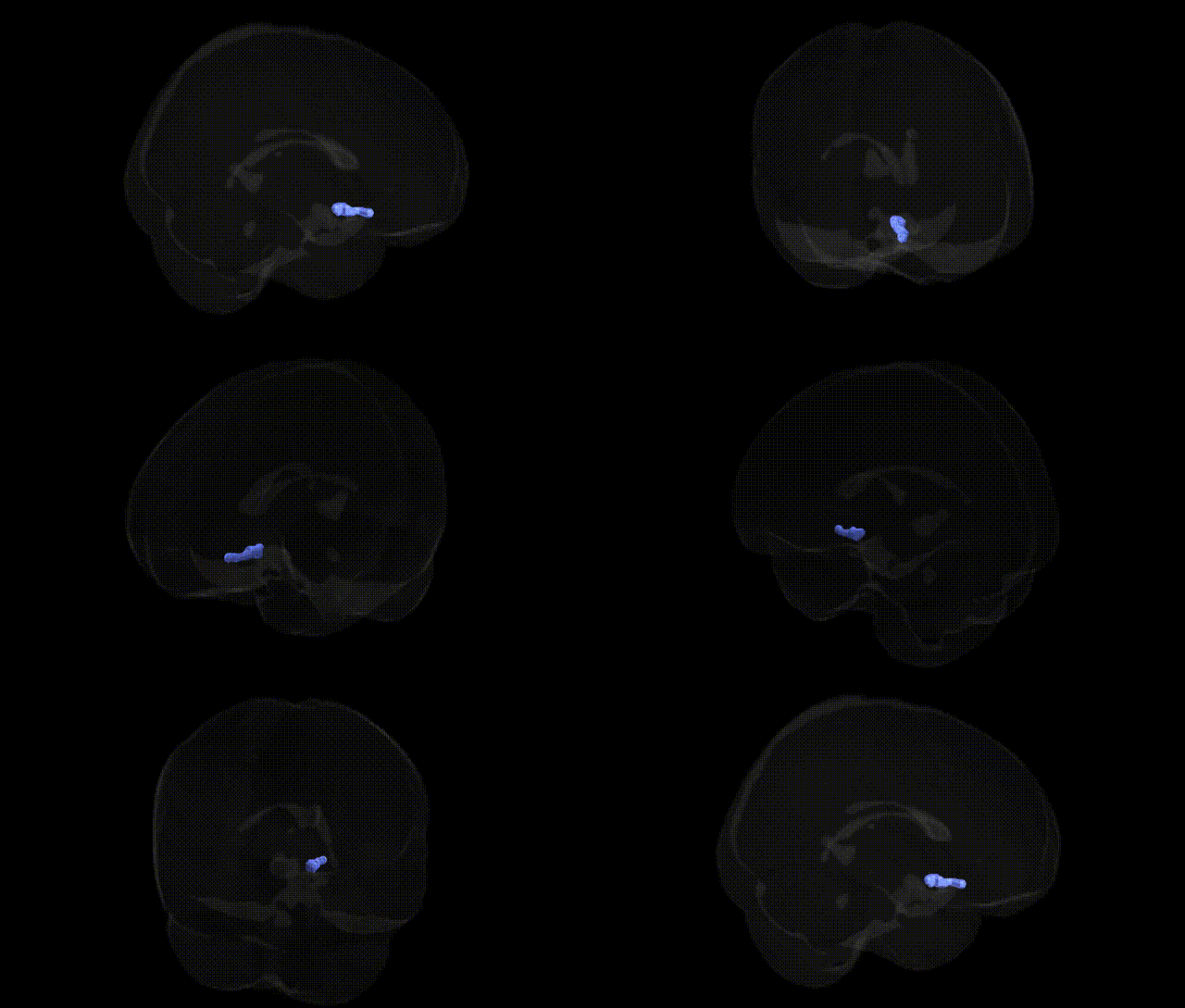
The bilateral Left Cerebrum.Frontal Lobe.Subcallosal Gyrus.Gray Matter.Brodmann area 25, as defined in the Talairach 2 mm Atlas, corresponds to a ventromedial prefrontal/limbic cortical region situated beneath the genu of the corpus callosum, forming part of the subcallosal gyrus in the frontal lobe. Brodmann area 25 (BA25) is a key node in the anterior cingulate–ventromedial prefrontal network and is critically involved in mood regulation, autonomic control, and integration of visceral/emotional signals with higher-order frontal processing. It has dense connections with the hypothalamus, amygdala, hippocampus, and other limbic and paralimbic regions, supporting roles in stress responses, affective evaluation, and homeostatic regulation. BA25 has been strongly implicated in major depressive disorder, with structural and functional alterations observed in neuroimaging studies, and is a target for neuromodulatory interventions such as deep brain stimulation in treatment-resistant depression. There is no direct Wikipedia article for this exact Talairach label; a closely related and commonly referenced structure is Subgenual anterior cingulate cortex.
The bilateral Left Cerebrum Frontal Lobe Subcallosal Gyrus Gray Matter Brodmann area 25 (BA25), a key node in the subgenual anterior cingulate cortex, has been repeatedly implicated in genetic studies of mood and stress-related psychopathology, particularly major depressive disorder (MDD). BA25 volume, thickness, and functional activity show heritability in imaging–genetics studies, and several large-scale GWAS of MDD and related traits (e.g., anxiety, neuroticism) have identified risk loci in genes involved in synaptic function and glutamatergic/GABAergic signaling (such as CACNA1C, SLC6A4, and genes in the glutamate receptor and calcium channel pathways) whose carriers exhibit structural or functional alterations in subgenual ACC/BA25. Polygenic risk scores for MDD, bipolar disorder, and schizophrenia have been associated with altered BA25 activation and connectivity, particularly within limbic and default mode networks, supporting a genetically influenced vulnerability mechanism. Variants in genes regulating the hypothalamic–pituitary–adrenal axis (e.g., FKBP5, NR3C1) and inflammatory signaling have also been linked both to stress-related disorders and to BA25-related phenotypes, including abnormal resting-state activity and volumetric changes. GWAS of antidepressant response and deep brain stimulation outcomes for treatment-resistant depression highlight BA25 as a critical modulation target whose structure and response patterns are partly shaped by common genetic variation, although specific locus–region relationships remain largely polygenic and distributed rather than tied to single, BA25-specific genes.
Overview generated by GPT-4o (2026).
Region ID: 281
Hemisphere: bilateral
Atlas: Talairach labels 2mm
Full Quality Version: Download MP4
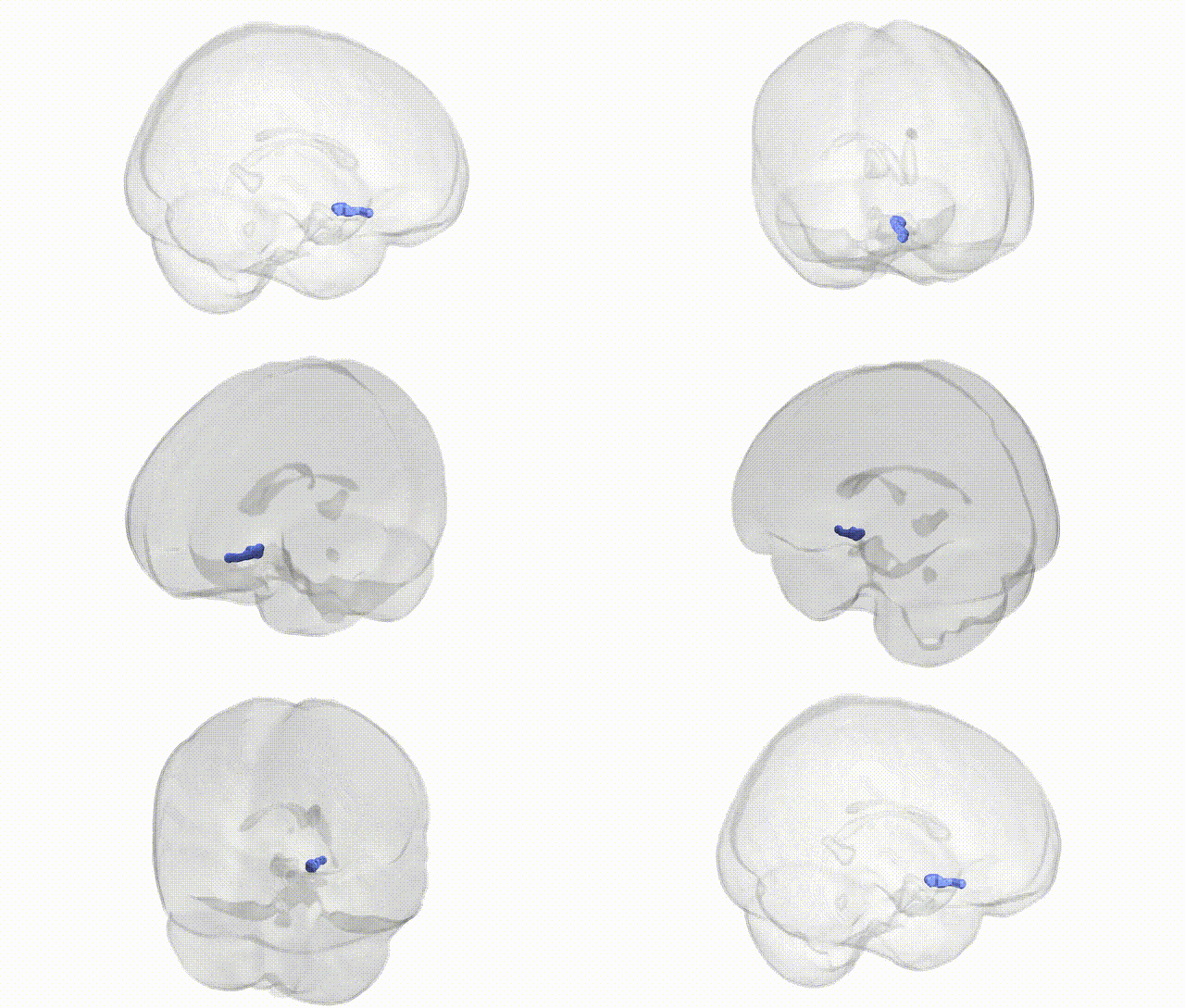
Full Quality Version: Download MP4
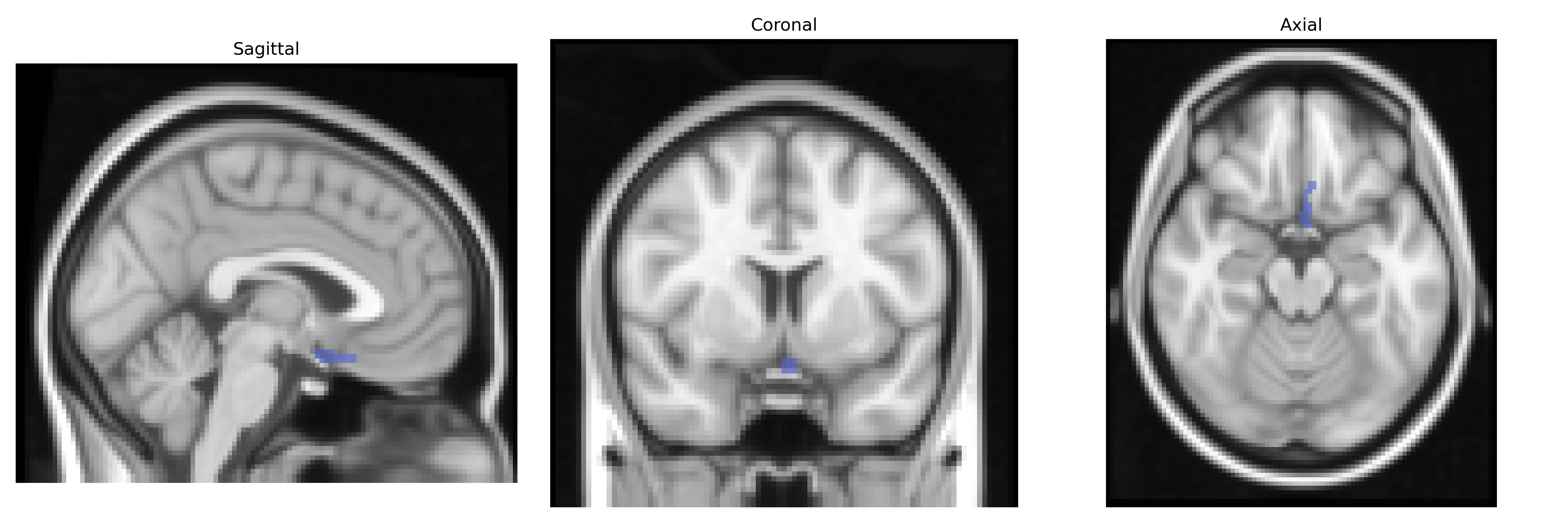
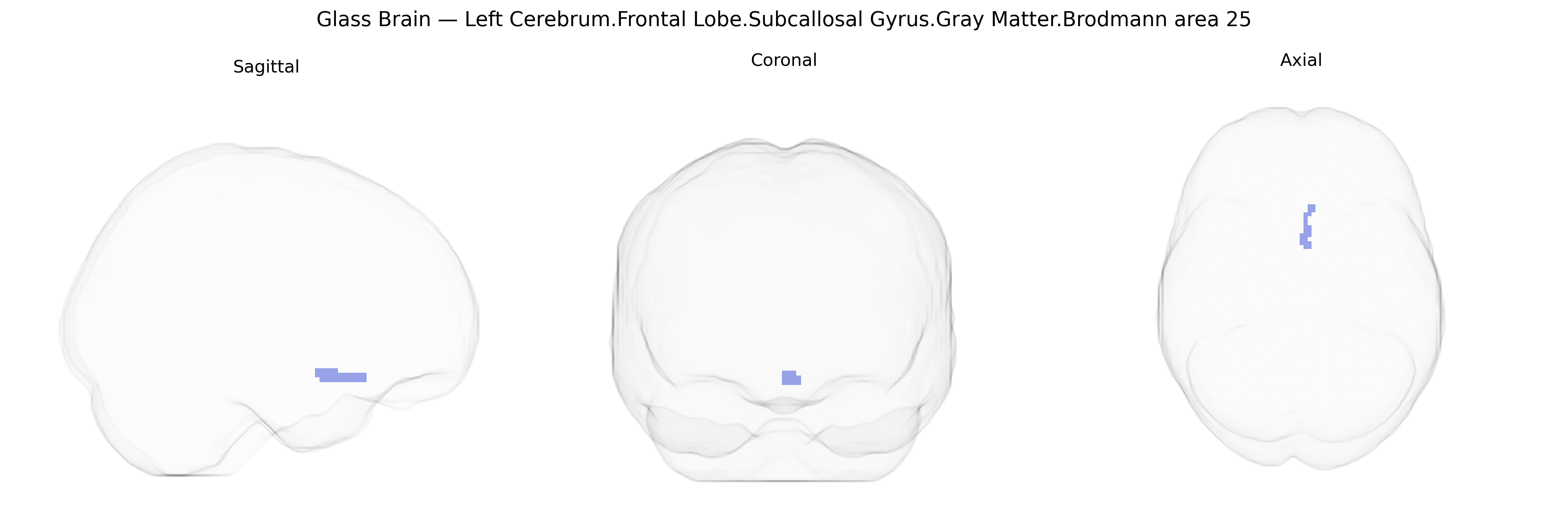
Wali Sidiqyar*, Gaurav Rudravaram*, Elyssa M. McMaster, Trent M. Schwartz, Adam M. Saunders, Kurt G. Schilling, Bennett A. Landman "Introducing SPINS: A Shared Public Visualization Library of Neuroanatomical Structures." Medical Imaging with Deep Learning- short paper
This resource is licensed under CC0 1.0 Universal (Public Domain).