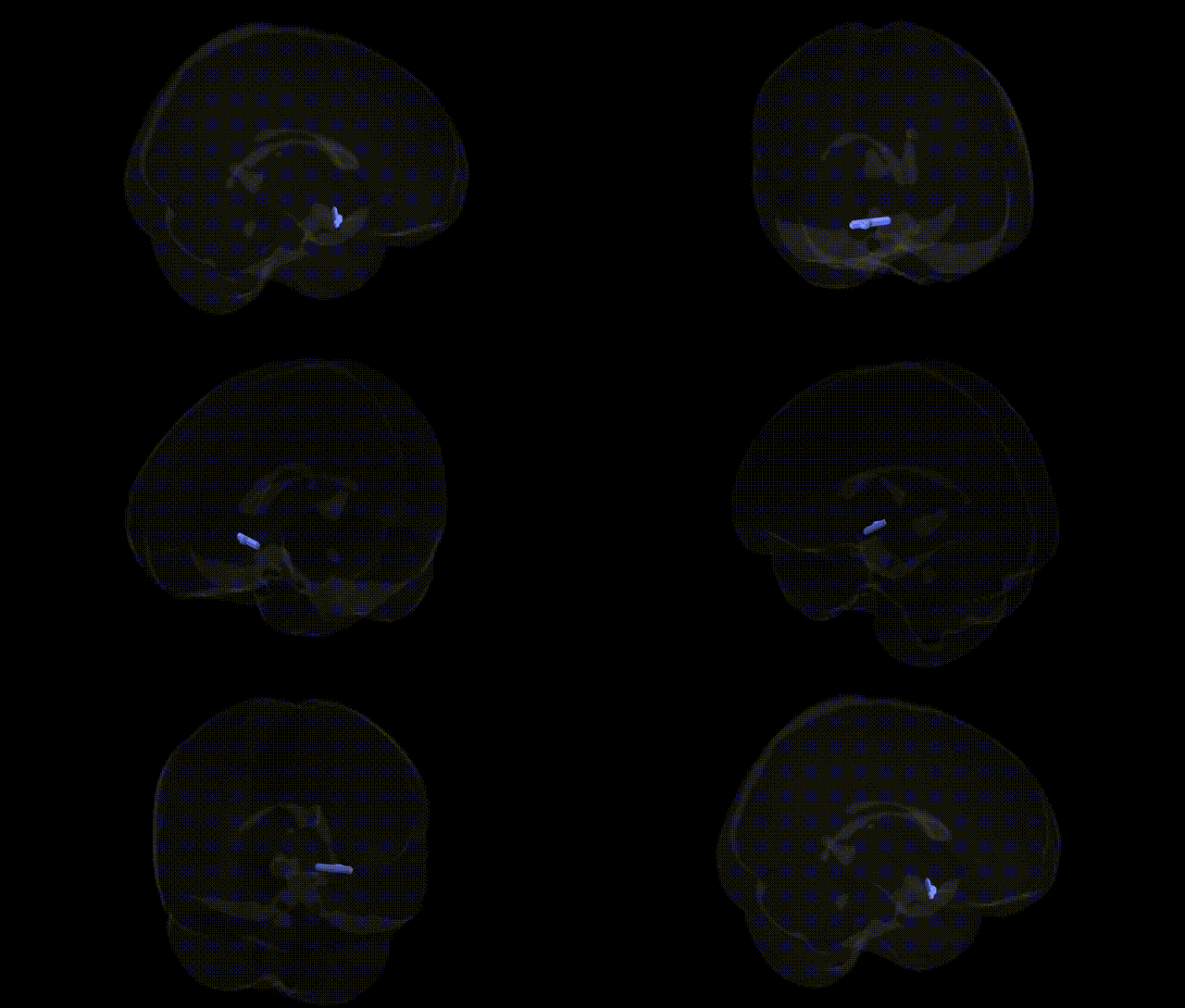
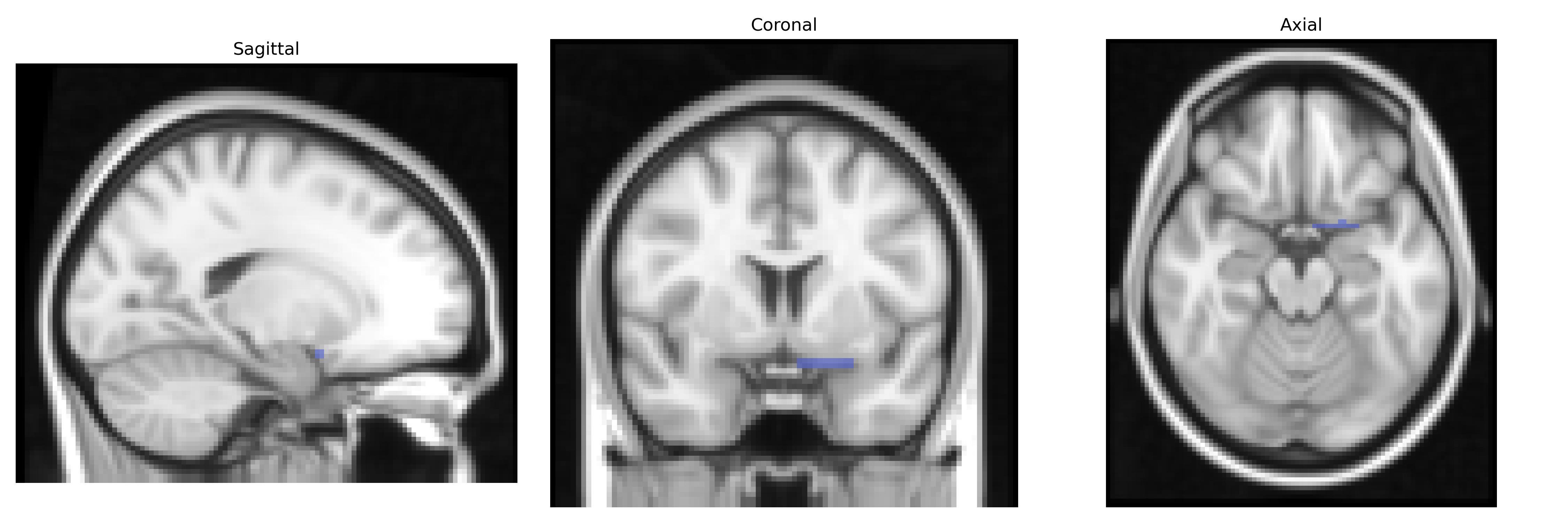
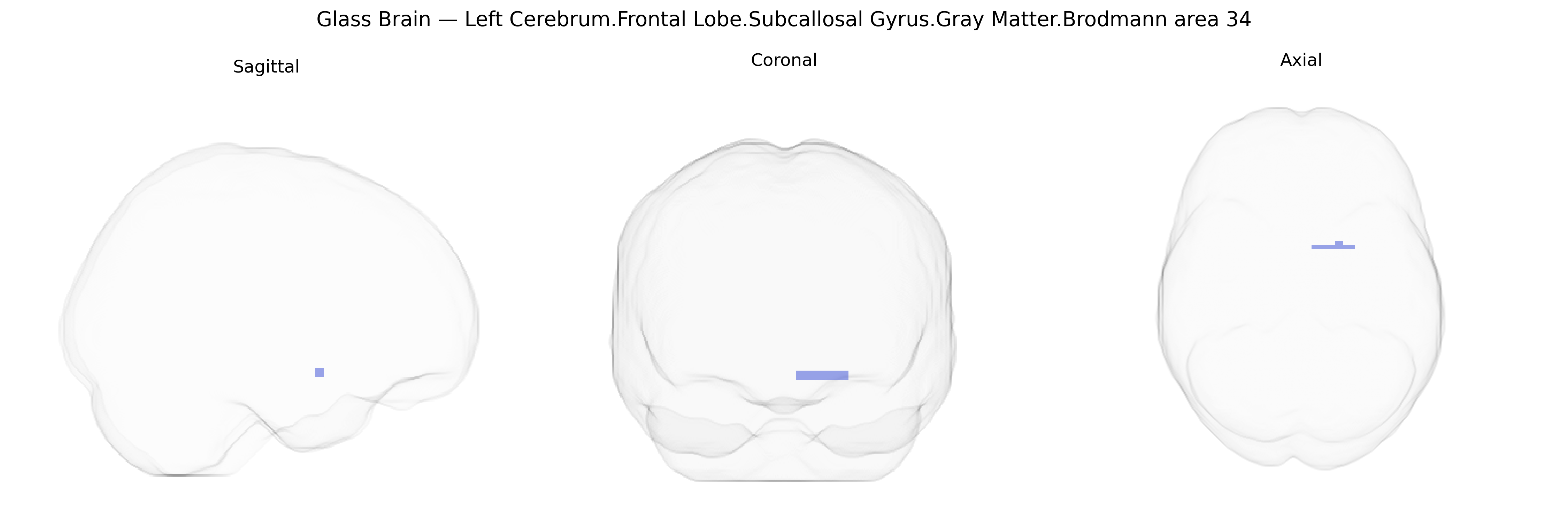
The bilateral Left Cerebrum.Frontal Lobe.Subcallosal Gyrus.Gray Matter.Brodmann area 34 corresponds to cortex located in the subcallosal gyrus at the base of the frontal lobe, adjacent to the corpus callosum and ventral to the rostral cingulate cortex. Although labeled as frontal in the Talairach atlas, Brodmann area 34 is classically associated with the parahippocampal/entorhinal region and is part of the medial limbic circuitry involved in olfactory processing, memory encoding, and emotional regulation. This area receives multimodal sensory input and projects to hippocampal and amygdalar structures, contributing to the integration of visceral-emotional states with higher-order cognitive processes. There is no direct link for this exact Talairach-defined region; a closely related structure is the entorhinal cortex: Entorhinal cortex.
The subcallosal area corresponding to Talairach “Left Cerebrum.Frontal Lobe.Subcallosal Gyrus.Gray Matter.Brodmann area 34” lies within ventromedial/ventral anterior cingulate–subgenual cingulate circuitry that has been repeatedly implicated in psychiatric and mood-related genetic studies. Large neuroimaging GWAS consortia (e.g., ENIGMA, UK Biobank) have identified common variants near genes involved in synaptic function, neurodevelopment, and glutamatergic signaling (such as GRM3, CACNA1C, and other calcium channel and synaptic genes) that associate with cortical thickness, volume, or functional activity in medial frontal and subgenual cingulate regions overlapping the subcallosal gyrus. This region is a key node in depression circuits, and genetic risk scores for major depressive disorder, bipolar disorder, and schizophrenia have been linked to altered structure and connectivity of subcallosal/BA34–like areas, as well as differential treatment response to antidepressants and deep brain stimulation targeting the subcallosal cingulate. Additionally, polygenic risk for neuroticism, anxiety, and related personality traits correlates with imaging-derived phenotypes in this ventromedial frontal region, supporting a role for common variants in affective and stress‑regulation pathways influencing its morphology and function, although specific, uniquely “subcallosal gyrus/BA34–exclusive” loci have not been definitively established.
Overview generated by GPT-4o (2026).
Region ID: 280
Hemisphere: bilateral
Atlas: Talairach labels 2mm
Full Quality Version: Download MP4
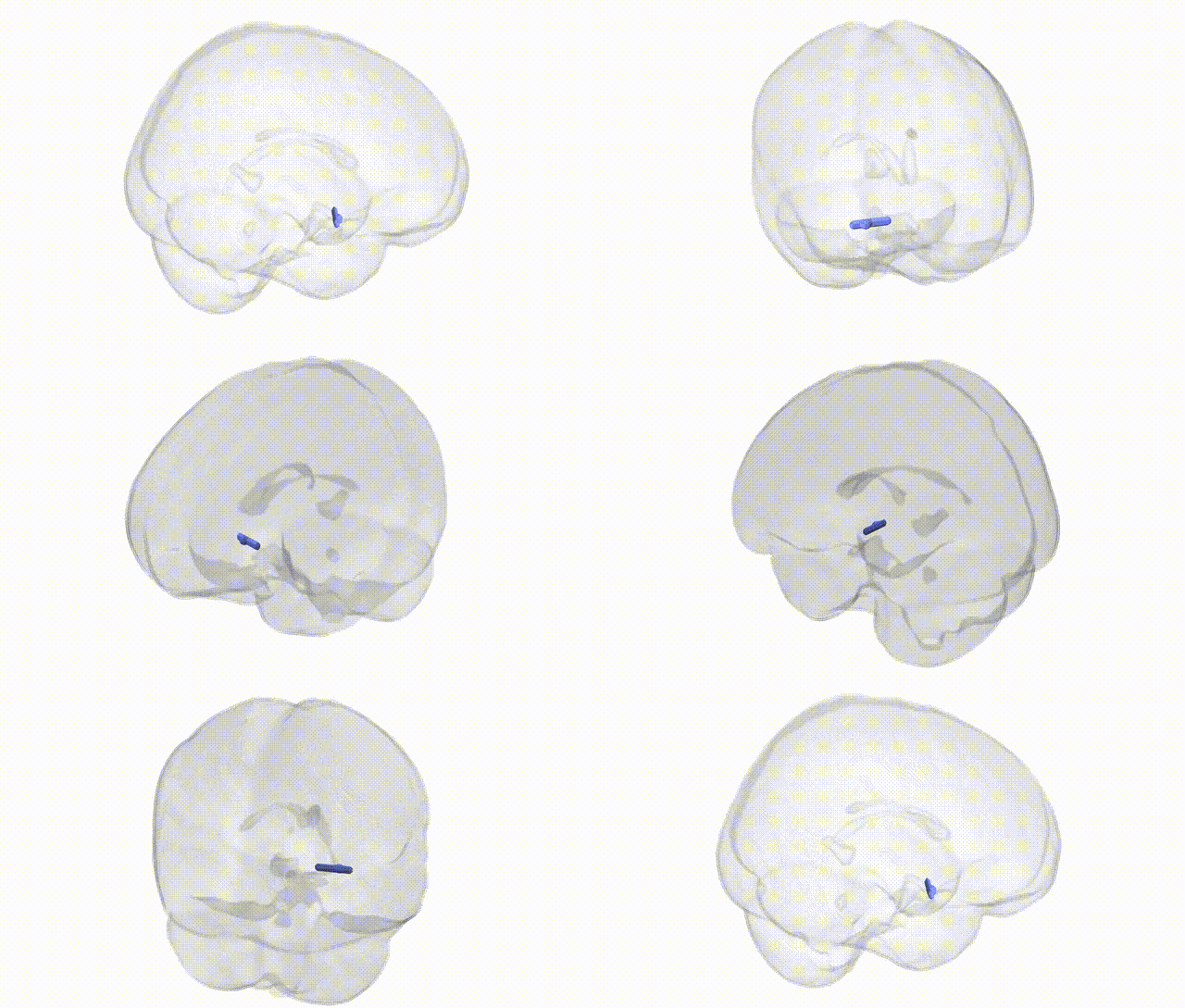
Full Quality Version: Download MP4
Wali Sidiqyar*, Gaurav Rudravaram*, Elyssa M. McMaster, Trent M. Schwartz, Adam M. Saunders, Kurt G. Schilling, Bennett A. Landman "Introducing SPINS: A Shared Public Visualization Library of Neuroanatomical Structures." Medical Imaging with Deep Learning- short paper
This resource is licensed under CC0 1.0 Universal (Public Domain).