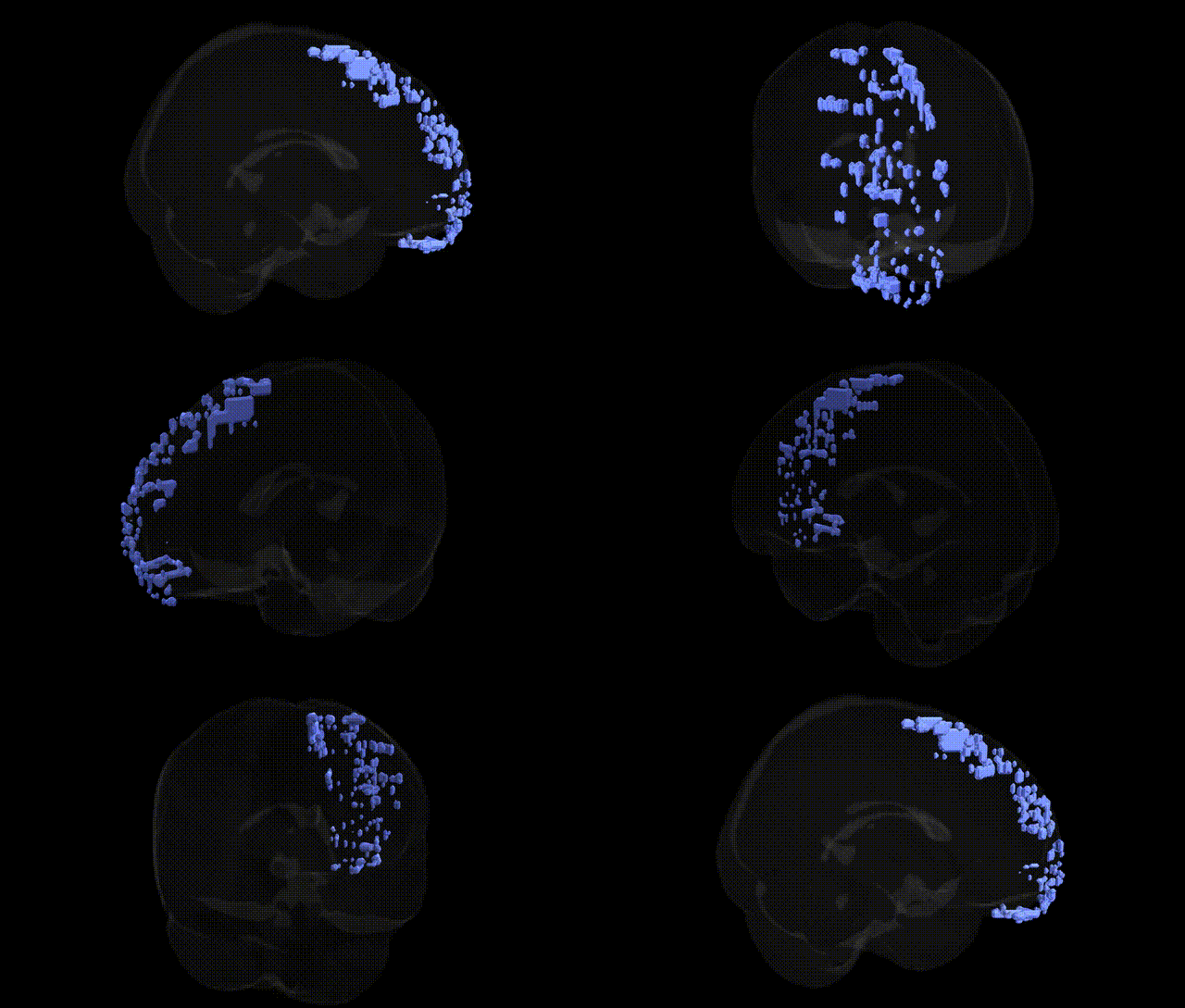
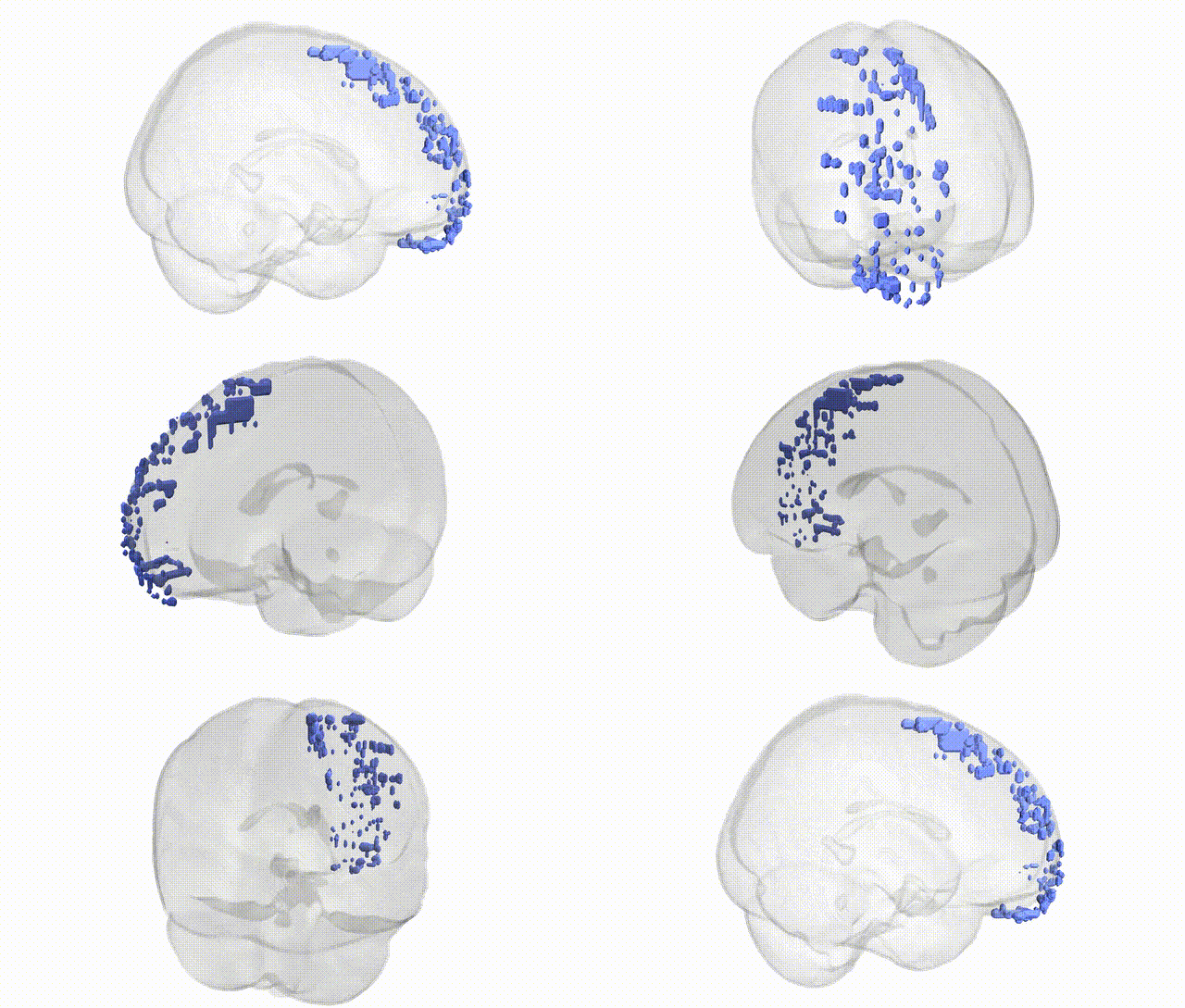
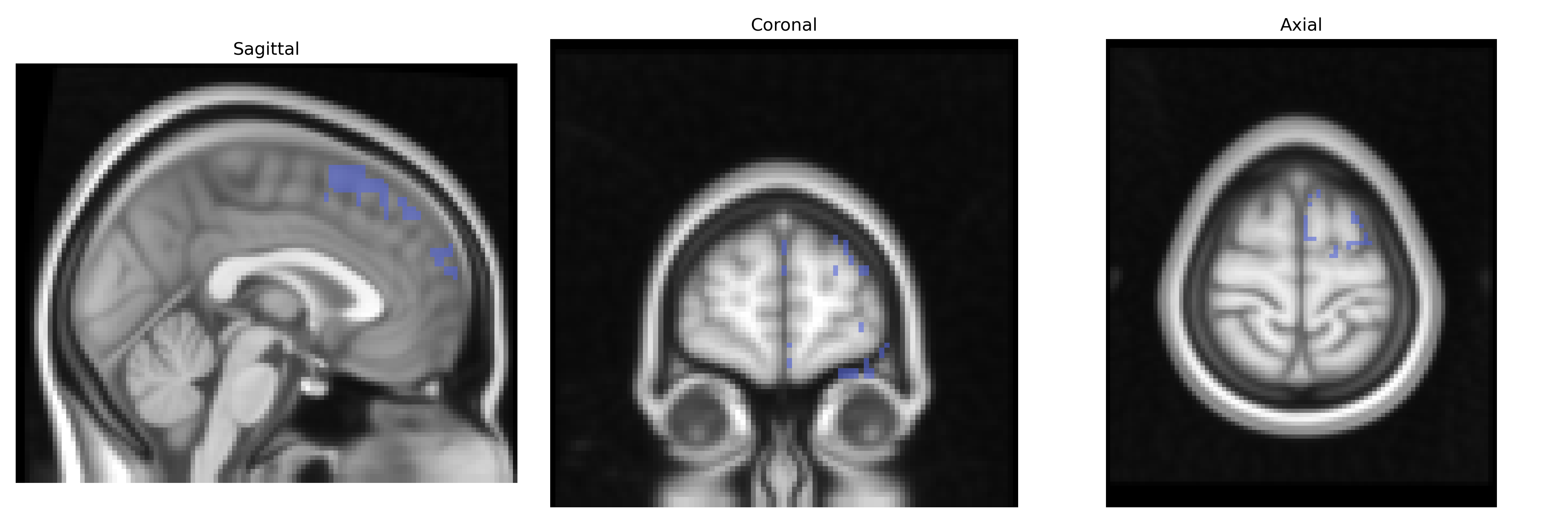
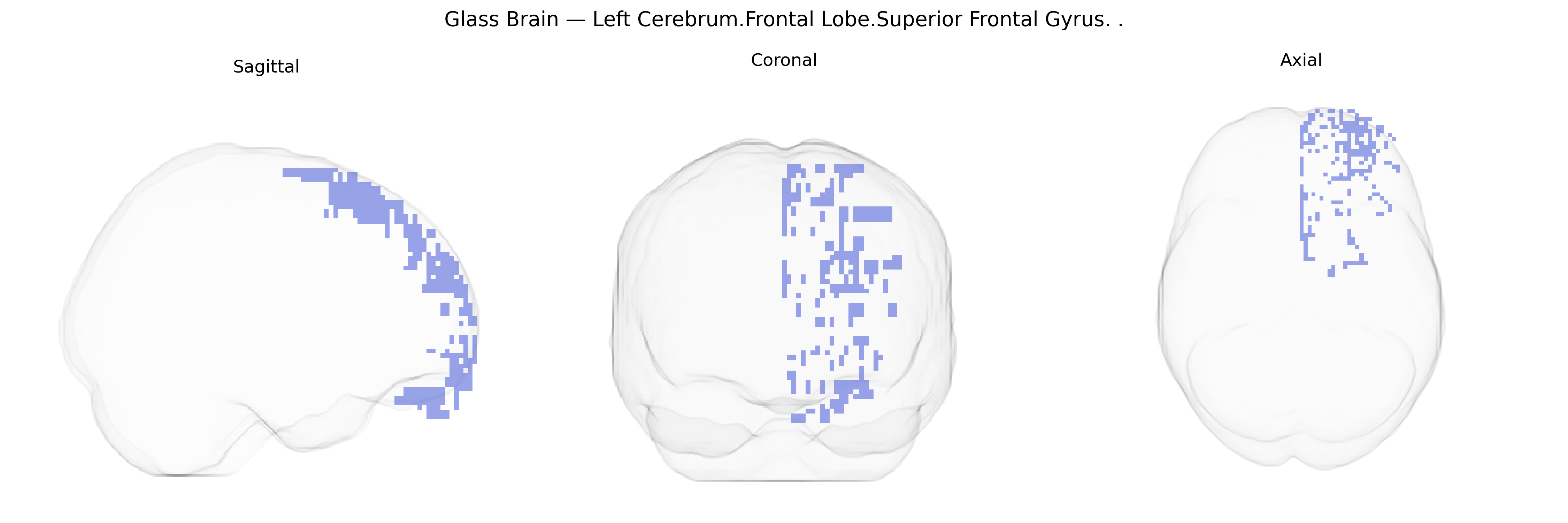
The bilateral Left Cerebrum.Frontal Lobe.Superior Frontal Gyrus corresponds to the superior frontal gyrus of the frontal lobe in the left hemisphere, extending across medial and dorsal aspects of the prefrontal cortex. This region is implicated in higher-order executive functions, including working memory, attention control, and decision-making, as well as aspects of self-referential processing and metacognition. It contributes to motor planning and the control of voluntary actions through connectivity with premotor and supplementary motor areas, and participates in large-scale networks such as the default mode and frontoparietal control networks. Cytoarchitectonically, it includes portions of Brodmann areas 6, 8, and 9, and exhibits rich reciprocal connections with other prefrontal, parietal, and limbic structures. Superior frontal gyrus
The bilateral Left Cerebrum.Frontal Lobe.Superior Frontal Gyrus, as defined in the Talairach 2mm atlas, has been implicated in genetic studies primarily through imaging genetics and large-scale GWAS of brain structure, cognitive phenotypes, and psychiatric disorders, though few findings map specifically and exclusively to this exact label. GWAS of cortical thickness and surface area (e.g., ENIGMA, UK Biobank) have identified multiple loci influencing morphology in the frontal cortex, including variants near genes such as HMGA2, KIAA0586, DACT1, and others that show associations with superior frontal and adjacent medial frontal regions. Polygenic risk scores for schizophrenia, bipolar disorder, major depression, ADHD, and autism spectrum disorder have been linked to altered frontal cortical thickness or volume, including superior frontal regions involved in executive control and self-referential processing. APOE, particularly the ε4 allele, and other Alzheimer’s disease–related loci show associations with prefrontal atrophy and functional changes that encompass superior frontal territories. GWAS of intelligence, educational attainment, and working memory report genetic correlations with frontal cortical measures, and individual variants in genes involved in synaptic plasticity (e.g., BDNF), neuronal development (e.g., DISC1-related pathways), and glutamatergic signaling have been associated with activity or structural differences in the superior frontal gyrus in candidate gene and fMRI genetics studies. Overall, genetic influences on this region appear highly polygenic and pleiotropic, intersecting with risk architectures for cognition, mood and psychotic disorders, and neurodegeneration, but current evidence focuses on broader frontal and prefrontal phenotypes rather than this Talairach label in isolation.
Overview generated by GPT-4o (2026).
Region ID: 151
Hemisphere: bilateral
Atlas: Talairach labels 2mm
Full Quality Version: Download MP4
Full Quality Version: Download MP4
Wali Sidiqyar*, Gaurav Rudravaram*, Elyssa M. McMaster, Trent M. Schwartz, Adam M. Saunders, Kurt G. Schilling, Bennett A. Landman "Introducing SPINS: A Shared Public Visualization Library of Neuroanatomical Structures." Medical Imaging with Deep Learning- short paper
This resource is licensed under CC0 1.0 Universal (Public Domain).