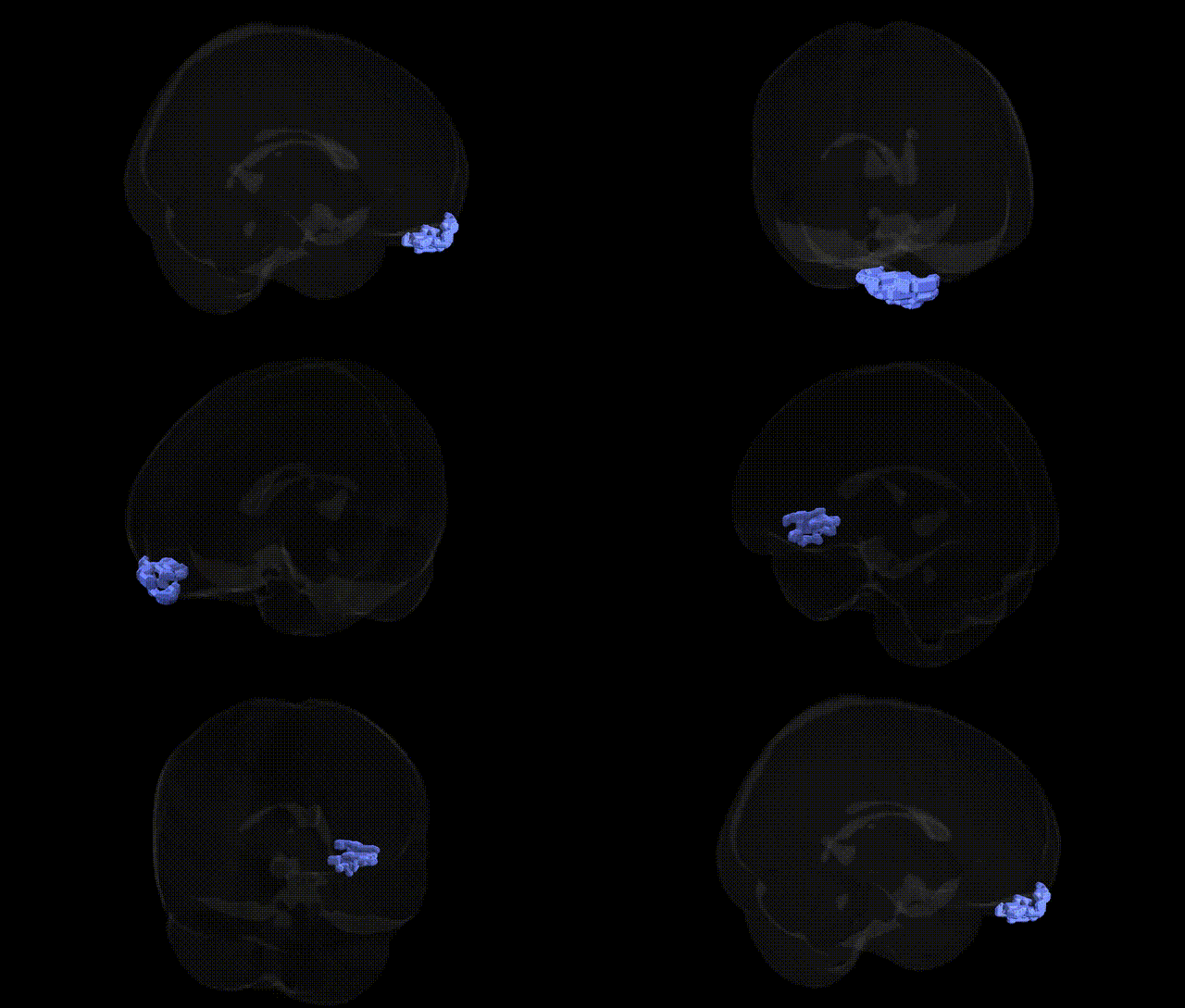
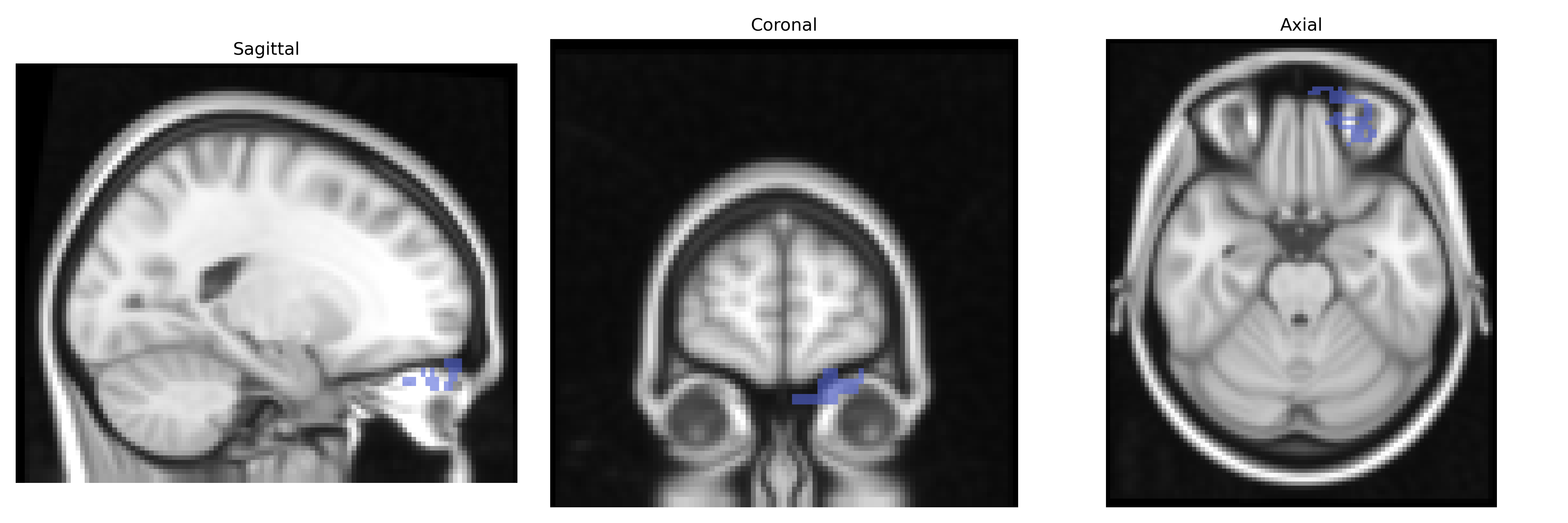
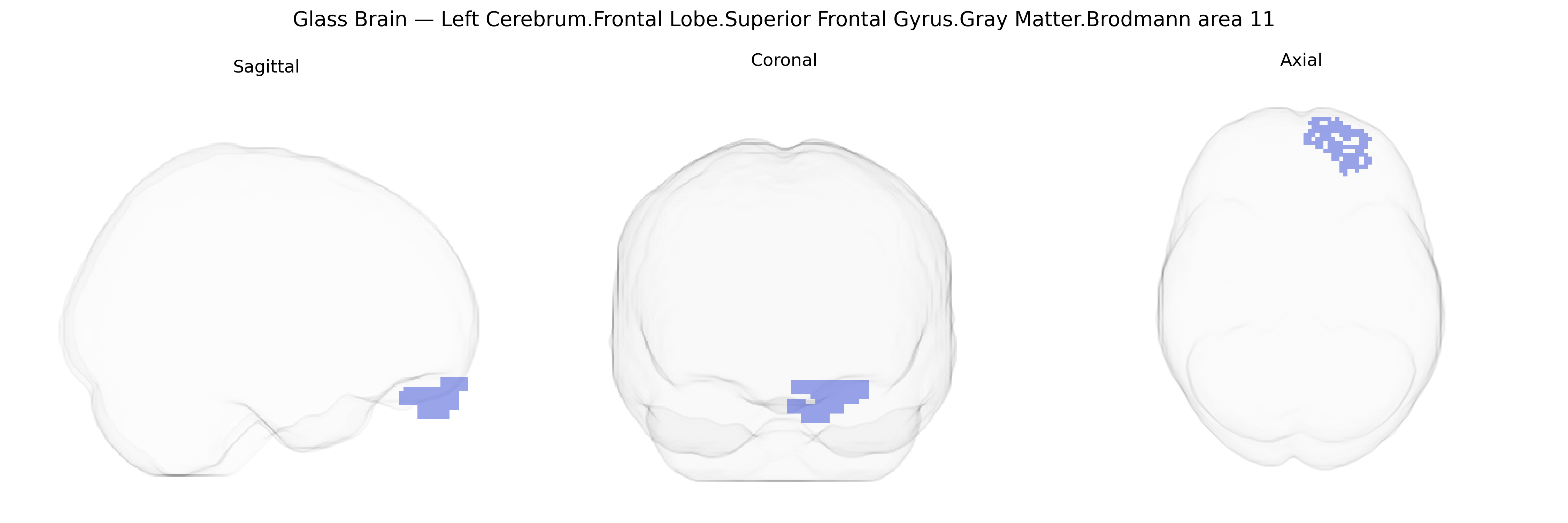
Bilateral Left Cerebrum.Frontal Lobe.Superior Frontal Gyrus.Gray Matter.Brodmann area 11 corresponds to the orbitofrontal portion of the prefrontal cortex, a key association area involved in valuation, reward-based decision-making, emotional regulation, and the integration of sensory and limbic information into goal-directed behavior. Neurons in this region participate in evaluating the emotional and motivational significance of stimuli, updating associative learning based on changing reinforcement contingencies, and modulating social behavior and impulse control. Brodmann area 11 is heavily interconnected with limbic structures (including the amygdala), other prefrontal areas, and sensory association cortices, supporting complex cognitive processes such as flexible decision-making, expectation of outcomes, and adaptive behavioral strategies. There is no direct link for this exact Talairach composite label; a closely related structure is Orbitofrontal cortex.
The bilateral Left Cerebrum.Frontal Lobe.Superior Frontal Gyrus.Gray Matter.Brodmann area 11—part of orbitofrontal/medial prefrontal cortex—is implicated in genetic studies of decision-making, emotion regulation, and psychiatric risk. GWAS and imaging-genetics analyses (e.g., ENIGMA, UK Biobank) have associated structural and functional variation in orbitofrontal BA11 with variants in genes involved in synaptic plasticity and neurodevelopment, including CACNA1C, ANK3, GRIN2B, and genes in glutamatergic and GABAergic pathways that are repeatedly linked to schizophrenia, bipolar disorder, and major depressive disorder. Polygenic risk scores for depression, schizophrenia, and ADHD have been correlated with altered gray matter volume and connectivity in medial/orbitofrontal regions encompassing BA11, supporting a genetically mediated contribution to mood and cognitive control phenotypes. Genetic variants in serotonin-related genes (e.g., SLC6A4, HTR1A/2A) and stress-regulation genes (e.g., FKBP5, CRHR1) have been tied to orbitofrontal activation changes during reward, punishment, and emotional tasks, relating BA11 to anxiety, harm avoidance, impulsivity, and neuroticism. GWAS of personality traits and risk behaviors (risk tolerance, delay discounting, substance use, obesity-related eating behaviors) report associations with loci regulating dopaminergic and opioid signaling that modulate orbitofrontal circuitry, consistent with BA11’s role in reward valuation and behavioral inhibition. Although most studies report regionally broader orbitofrontal or medial prefrontal effects rather than Talairach-specific BA11, converging genetic evidence links variation in this area to affective disorders, psychosis risk, addiction, and individual differences in personality and decision-making.
Overview generated by GPT-4o (2026).
Region ID: 152
Hemisphere: bilateral
Atlas: Talairach labels 2mm
Full Quality Version: Download MP4
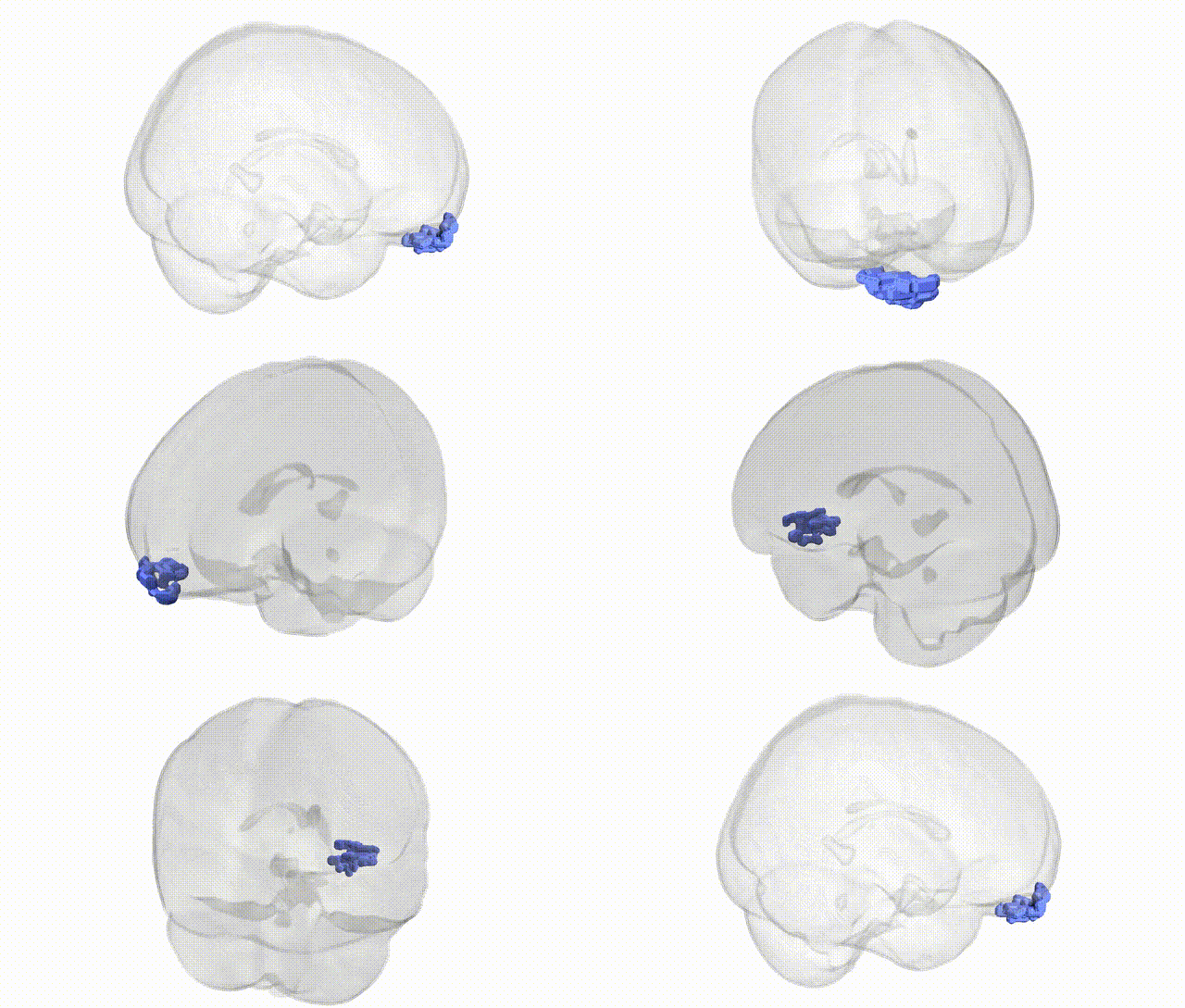
Full Quality Version: Download MP4
Wali Sidiqyar*, Gaurav Rudravaram*, Elyssa M. McMaster, Trent M. Schwartz, Adam M. Saunders, Kurt G. Schilling, Bennett A. Landman "Introducing SPINS: A Shared Public Visualization Library of Neuroanatomical Structures." Medical Imaging with Deep Learning- short paper
This resource is licensed under CC0 1.0 Universal (Public Domain).