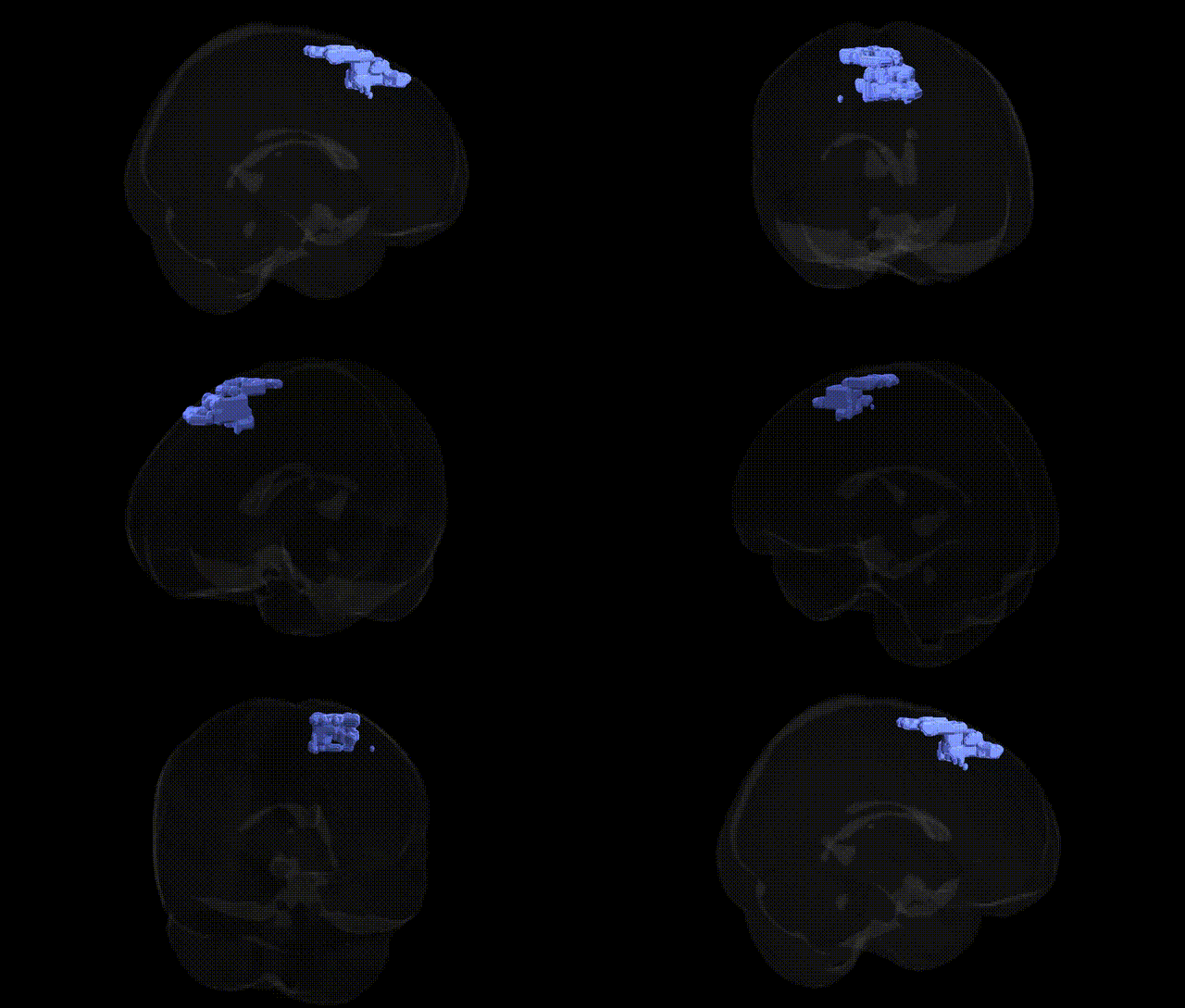
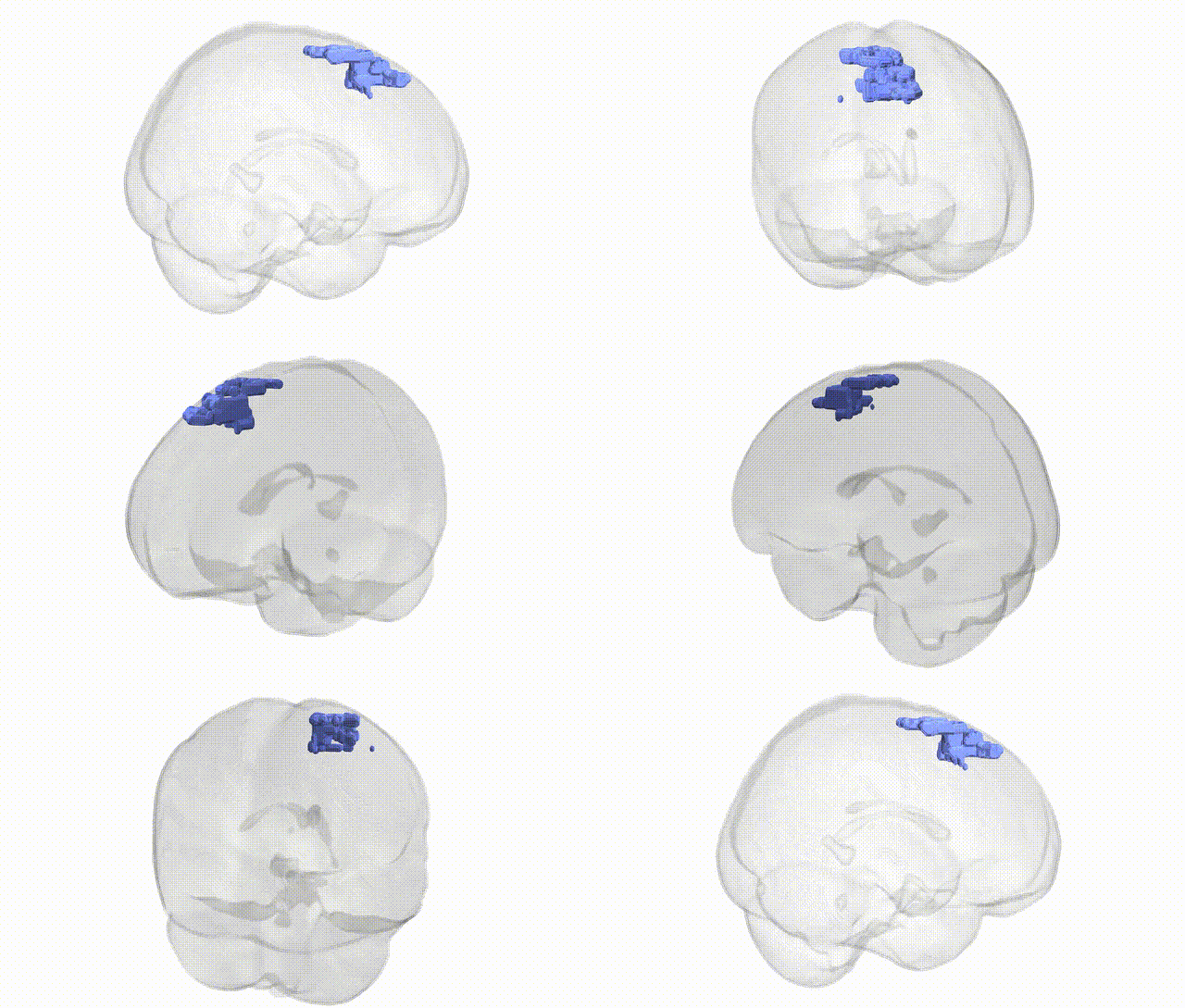
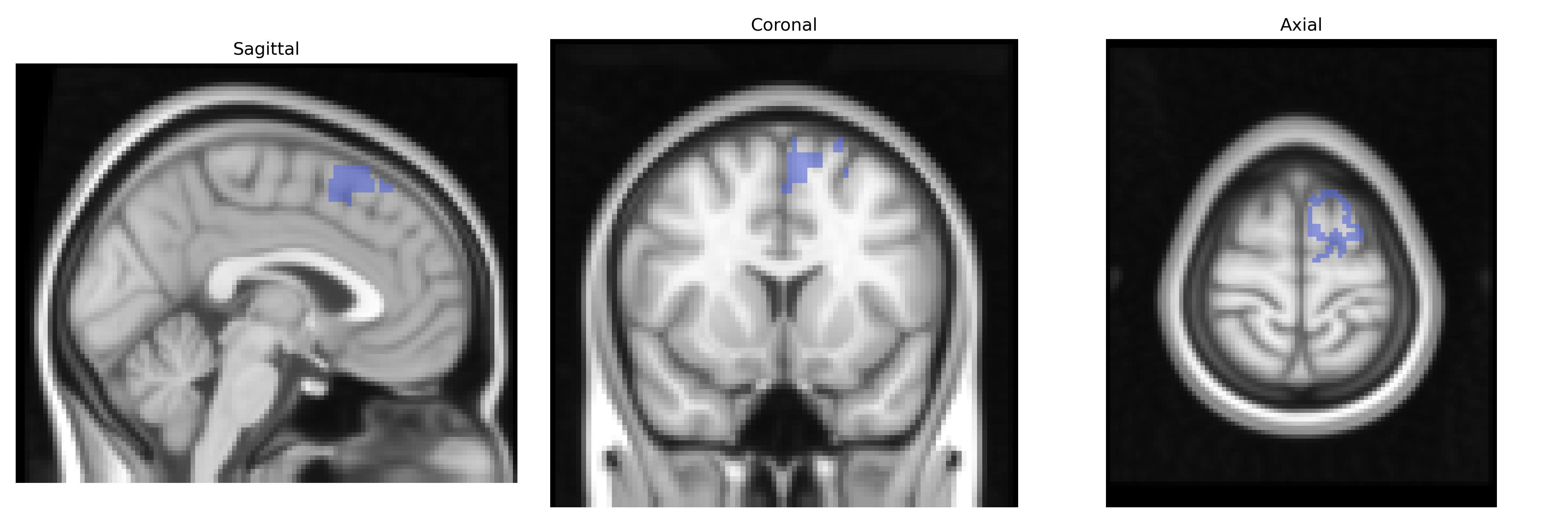
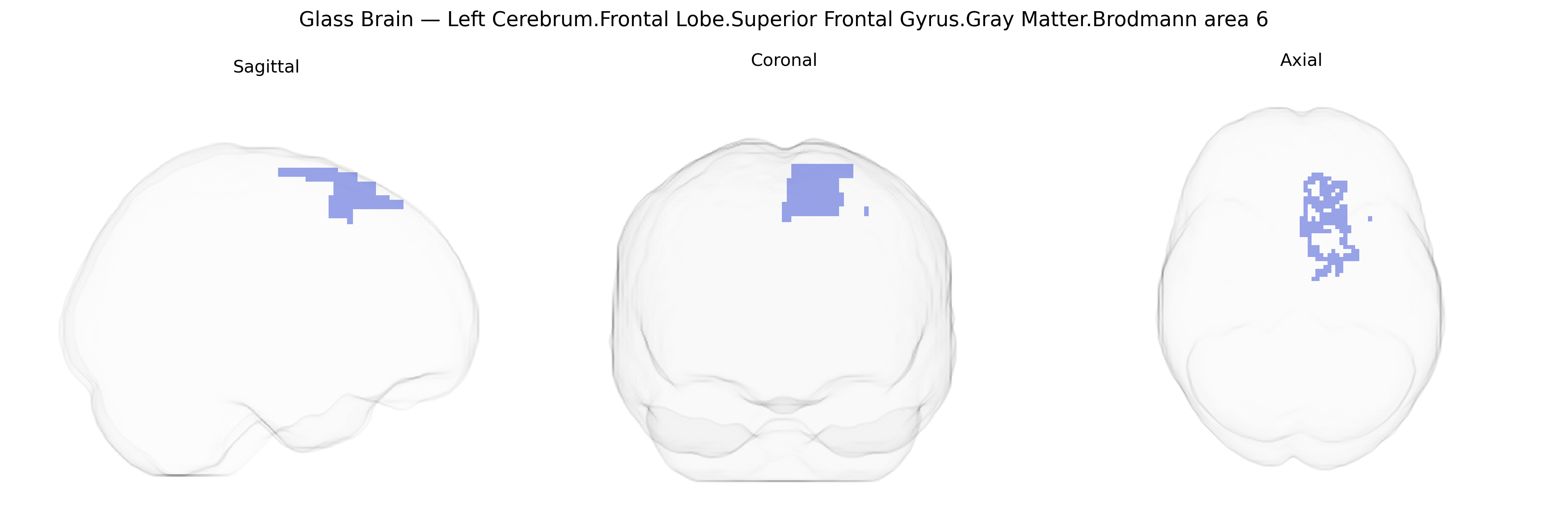
The bilateral Left Cerebrum.Frontal Lobe.Superior Frontal Gyrus.Gray Matter.Brodmann area 6, as defined in the Talairach 2 mm atlas, corresponds predominantly to premotor and supplementary motor cortical regions anterior to the primary motor cortex (area 4) on the medial and dorsal aspects of the frontal lobe. This agranular frontal cortex is critically involved in planning, selection, and sequencing of voluntary movements, integration of sensory information for motor preparation, and coordination of complex motor programs, including bimanual and internally generated actions. Neuronal populations in this region contribute to motor set, posture control, and the temporal organization of movement, and they interact extensively with basal ganglia, cerebellar, and parietal networks to support higher-order motor cognition and action monitoring. There is no direct Wikipedia article for “Brodmann area 6” as a standalone entry; a closely related and overlapping functional region is the supplementary motor area: Supplementary motor area.
The bilateral Left Cerebrum.Frontal Lobe.Superior Frontal Gyrus.Gray Matter.Brodmann area 6 (premotor/supplementary motor cortex) has been repeatedly implicated in imaging genetics and GWAS studies focused on brain structure, motor control, and higher-order cognition. Variants in genes such as CNTNAP2, FOXP2, and DCDC2, often studied for language, motor sequencing, and developmental disorders, have been associated with altered cortical thickness or activation in BA6-related premotor regions. Large-scale neuroimaging GWAS (e.g., ENIGMA, UK Biobank) have identified common variants in loci including HMGA2, IGF1, and other growth and neurodevelopmental genes that influence global and frontal cortical volume and thickness, with spatial maps frequently encompassing superior frontal and BA6 territories. BA6 involvement in motor planning and response inhibition links it indirectly to genetic risk for attention-deficit/hyperactivity disorder, obsessive–compulsive disorder, and Tourette syndrome, where risk alleles in synaptic and dopaminergic genes (e.g., DRD2, SLC6A3, SLITRK1, glutamatergic and GABAergic genes) correlate with functional and structural abnormalities in frontal motor networks. In schizophrenia and bipolar disorder, polygenic risk scores and specific variants in CACNA1C, ZNF804A, and other synaptic/neurodevelopmental loci have been associated with altered activation and connectivity in superior frontal and premotor areas during working memory and cognitive control tasks. Additionally, genetic influences on physical activity, motor skill learning, and reaction time, captured in behavioral GWAS, show convergent neuroimaging evidence for BA6 involvement, suggesting that this region is a key convergence point where common polygenic variation in neurodevelopmental, synaptic, and motor-related genes shapes both structural properties and functional engagement of the superior frontal premotor circuitry.
Overview generated by GPT-4o (2026).
Region ID: 1077
Hemisphere: bilateral
Atlas: Talairach labels 2mm
Full Quality Version: Download MP4
Full Quality Version: Download MP4
Wali Sidiqyar*, Gaurav Rudravaram*, Elyssa M. McMaster, Trent M. Schwartz, Adam M. Saunders, Kurt G. Schilling, Bennett A. Landman "Introducing SPINS: A Shared Public Visualization Library of Neuroanatomical Structures." Medical Imaging with Deep Learning- short paper
This resource is licensed under CC0 1.0 Universal (Public Domain).