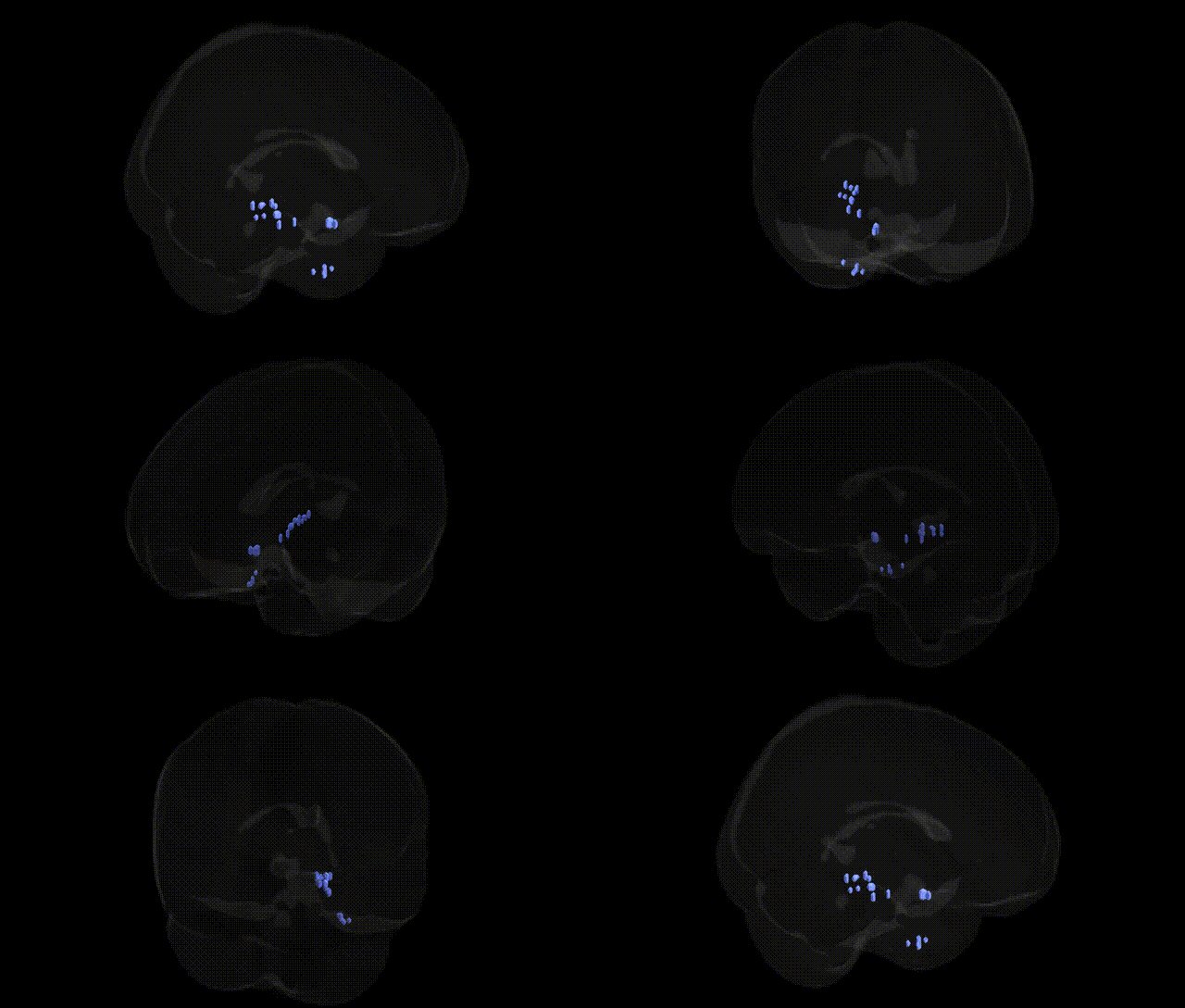
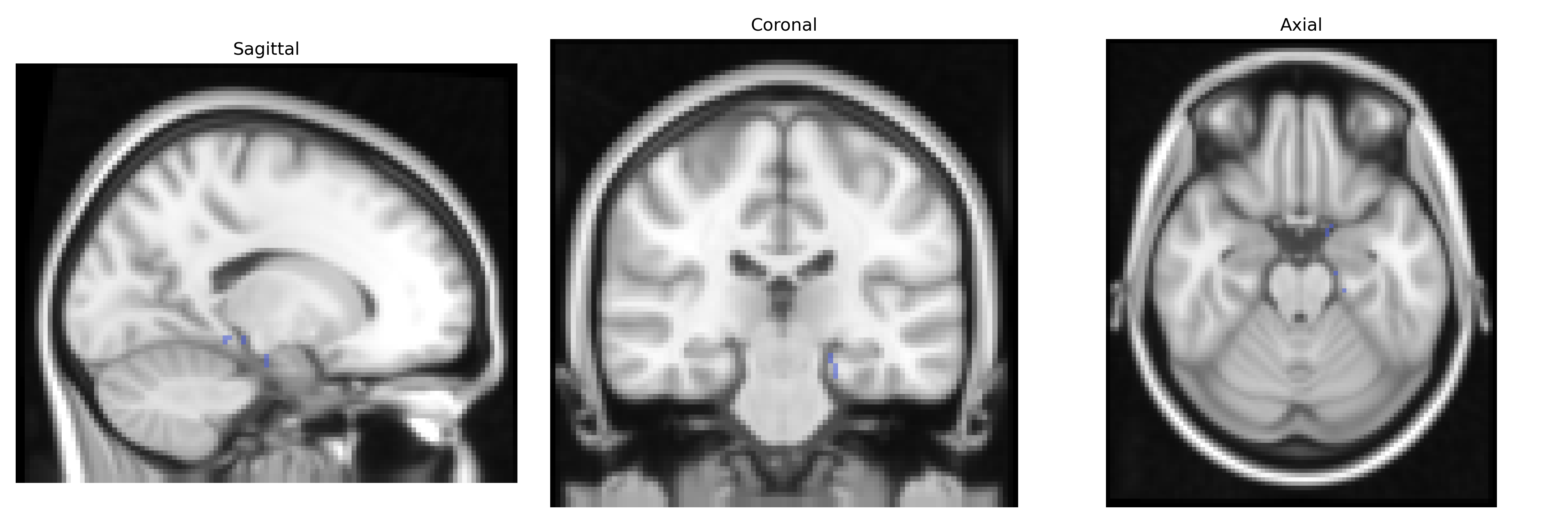
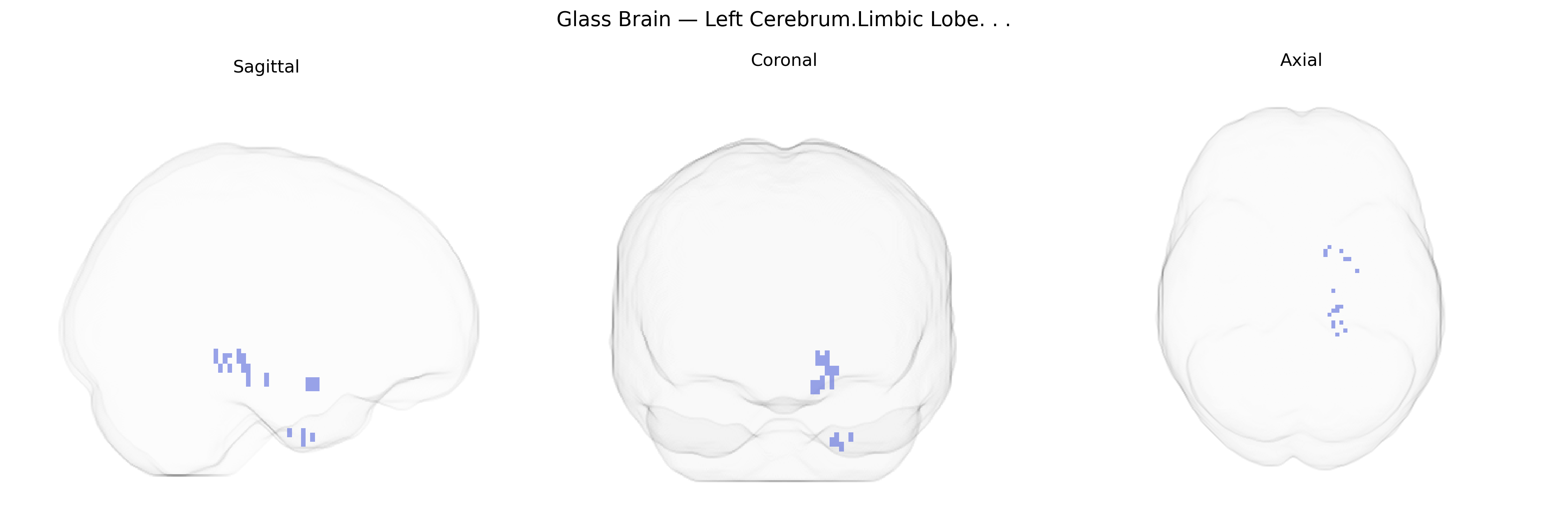
The bilateral Left Cerebrum Limbic Lobe, as defined in the Talairach 2 mm atlas, refers to limbic structures located in the left cerebral hemisphere that are involved in emotional processing, memory formation, motivation, and autonomic regulation. This lobe encompasses interconnected regions such as the cingulate gyrus, parahippocampal gyrus, hippocampal formation, and adjacent cortical and subcortical areas that participate in the limbic circuitry. Functionally, these structures integrate visceral and emotional information with higher-order cognitive processes, contribute to the encoding and retrieval of episodic and contextual memories, and modulate affective states and behavior via extensive connections with the prefrontal cortex, hypothalamus, and other limbic nuclei. There is no direct link for “Limbic Lobe” as a standalone Wikipedia article; a closely related and encompassing structure is the Limbic system.
The bilateral left cerebrum limbic lobe region in the Talairach 2 mm atlas encompasses key structures such as the hippocampus, amygdala, parahippocampal gyrus, and cingulate cortex, each of which has rich genetic associations from GWAS and imaging-genetics studies. Variants in genes including APOE, CLU, CR1, BIN1, TREM2, and ABCA7 have been linked to limbic atrophy and functional changes in Alzheimer’s disease, particularly affecting hippocampal and parahippocampal regions. Schizophrenia and bipolar disorder GWAS highlight risk loci in CACNA1C, ANK3, GRM3, and ZNF804A that influence limbic connectivity and volumes, especially in the hippocampus and anterior cingulate. PTSD and anxiety-related traits show associations with genes such as FKBP5, SLC6A4, BDNF (notably the Val66Met variant), and COMT, which modulate amygdala reactivity, fear circuitry, and stress responsivity within the limbic system. Large-scale imaging GWAS (e.g., ENIGMA and UK Biobank) have identified polygenic influences on hippocampal and amygdala volumes, implicating multiple loci across neurodevelopmental and synaptic genes such as DLG2, NRXN1, and genes in glutamatergic and GABAergic pathways. Limbic structures in this atlas region are thus repeatedly implicated as anatomical mediators through which psychiatric, neurodegenerative, and stress-related genetic risk factors exert effects on emotion regulation, memory, and vulnerability to disorders.
Overview generated by GPT-4o (2026).
Region ID: 21
Hemisphere: bilateral
Atlas: Talairach labels 2mm
Full Quality Version: Download MP4
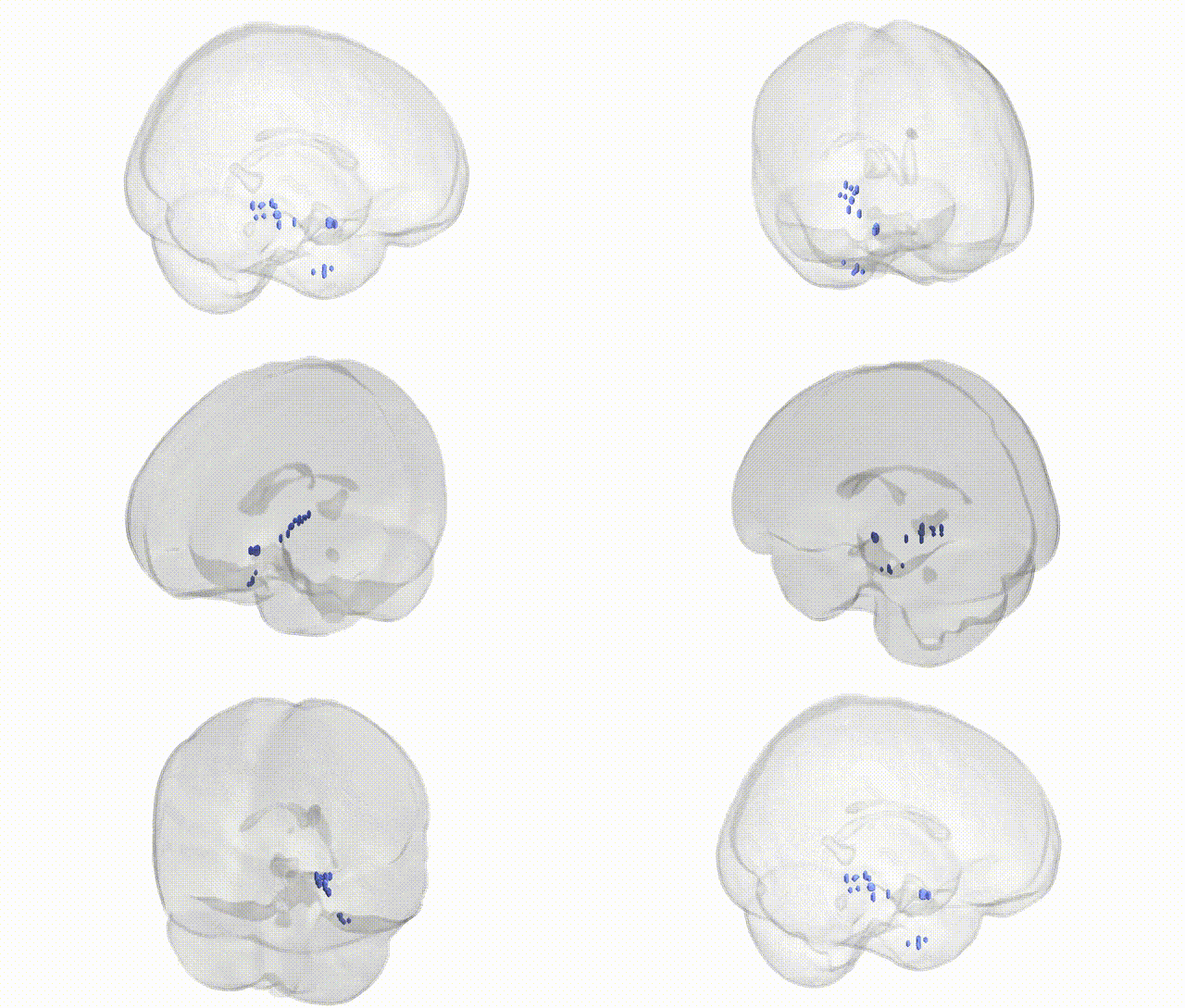
Full Quality Version: Download MP4
Wali Sidiqyar*, Gaurav Rudravaram*, Elyssa M. McMaster, Trent M. Schwartz, Adam M. Saunders, Kurt G. Schilling, Bennett A. Landman "Introducing SPINS: A Shared Public Visualization Library of Neuroanatomical Structures." Medical Imaging with Deep Learning- short paper
This resource is licensed under CC0 1.0 Universal (Public Domain).