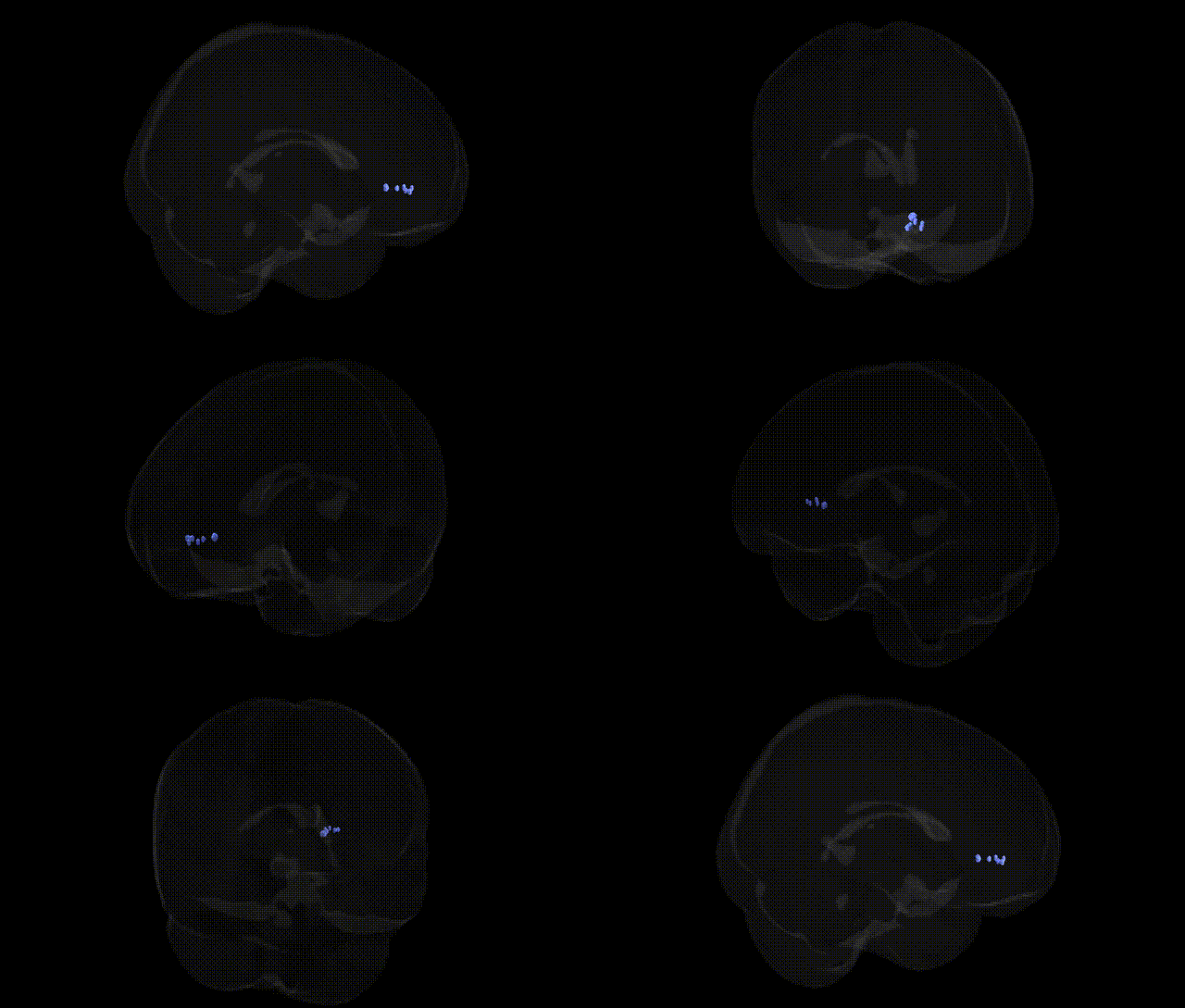
The bilateral Left Cerebrum.Limbic Lobe.Anterior Cingulate.Gray Matter corresponds to gray matter of the anterior cingulate cortex (ACC), a mesial frontal component of the limbic system arching around the corpus callosum. This region integrates emotional, autonomic, and cognitive information, contributing to functions such as error detection, conflict monitoring, motivation, pain affect, and regulation of autonomic responses. Cytoarchitectonically, it includes portions of Brodmann areas 24, 32, and adjacent regions, with dense reciprocal connections to prefrontal, parietal, insular, and limbic (including amygdalar and hippocampal) structures. It plays a central role in top-down control of behavior, modulation of emotional salience, and adjustment of cognitive strategies based on feedback, and is frequently implicated in mood disorders, anxiety, chronic pain, and disorders of cognitive control.
Anterior cingulate cortex
The bilateral anterior cingulate cortex (ACC) in the limbic lobe is a key hub for emotion regulation, cognitive control, and pain processing, and genetic studies—including GWAS and imaging-genetics—have linked variation in ACC gray matter volume, thickness, and functional activity to multiple psychiatric and behavioral traits. Common variants in genes involved in synaptic function and neurodevelopment, such as CACNA1C, ZNF804A, DISC1, and BDNF (notably Val66Met), have been associated with ACC structure and connectivity, often in the context of schizophrenia, bipolar disorder, and major depressive disorder. Large imaging GWAS consortia (e.g., ENIGMA) have identified polygenic influences on ACC morphology, showing that genetic risk scores for depression, schizophrenia, ADHD, and anxiety disorders correlate with alterations in ACC gray matter and functional activation during tasks requiring conflict monitoring and emotional appraisal. ACC-related genetic effects are also reported in pain sensitivity and chronic pain conditions (with variants in COMT, OPRM1, and genes in inflammatory pathways influencing ACC responses to nociceptive stimuli) and in traits such as neuroticism, stress reactivity, and cognitive control, where loci associated with these personality and cognitive dimensions show convergent effects on ACC structure and function. Overall, the ACC emerges as a genetically sensitive node where polygenic risk across mood, psychotic, anxiety, and pain-related phenotypes manifests in measurable changes in limbic-frontal circuitry.
Overview generated by GPT-4o (2026).
Region ID: 605
Hemisphere: bilateral
Atlas: Talairach labels 2mm
Full Quality Version: Download MP4
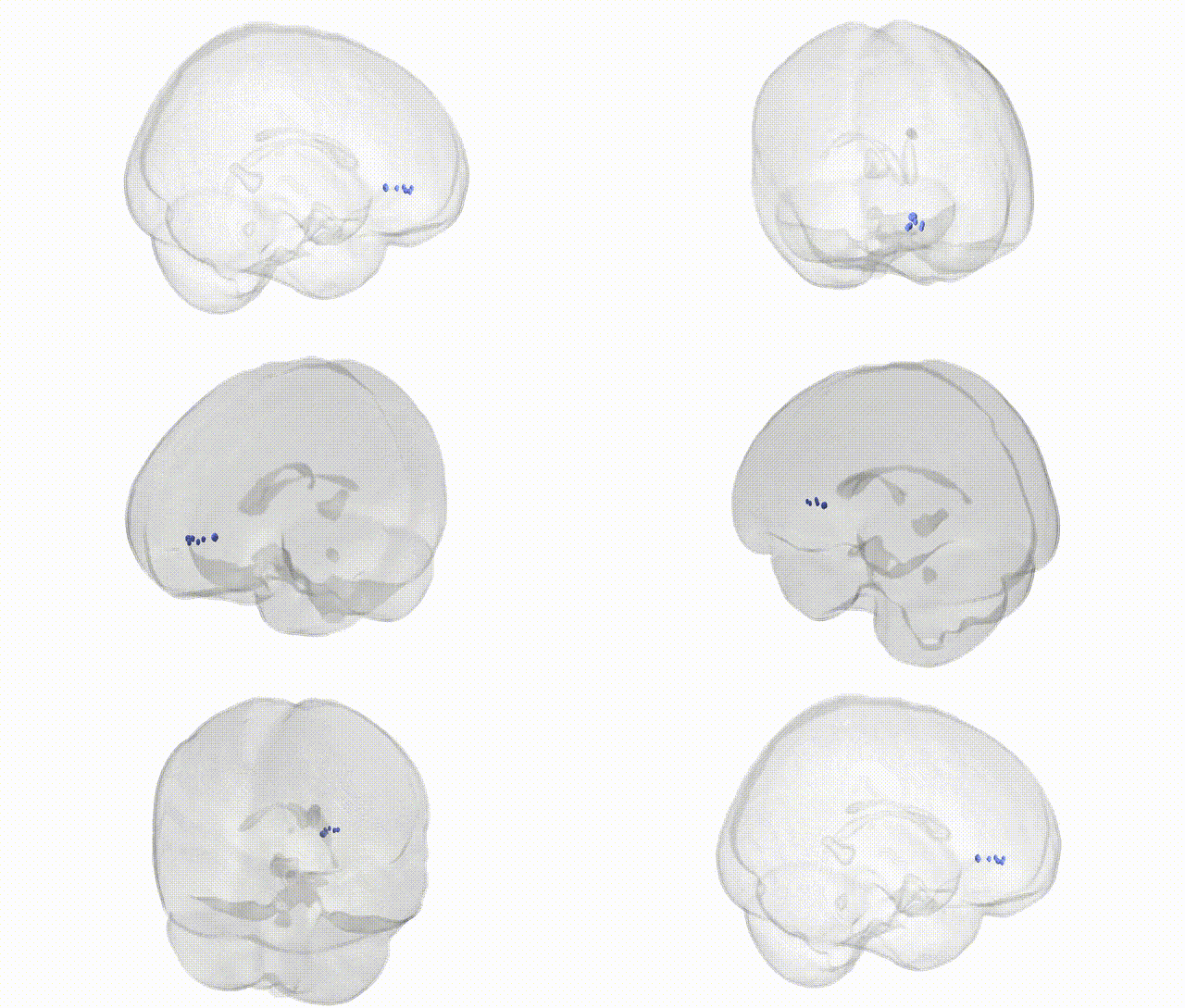
Full Quality Version: Download MP4
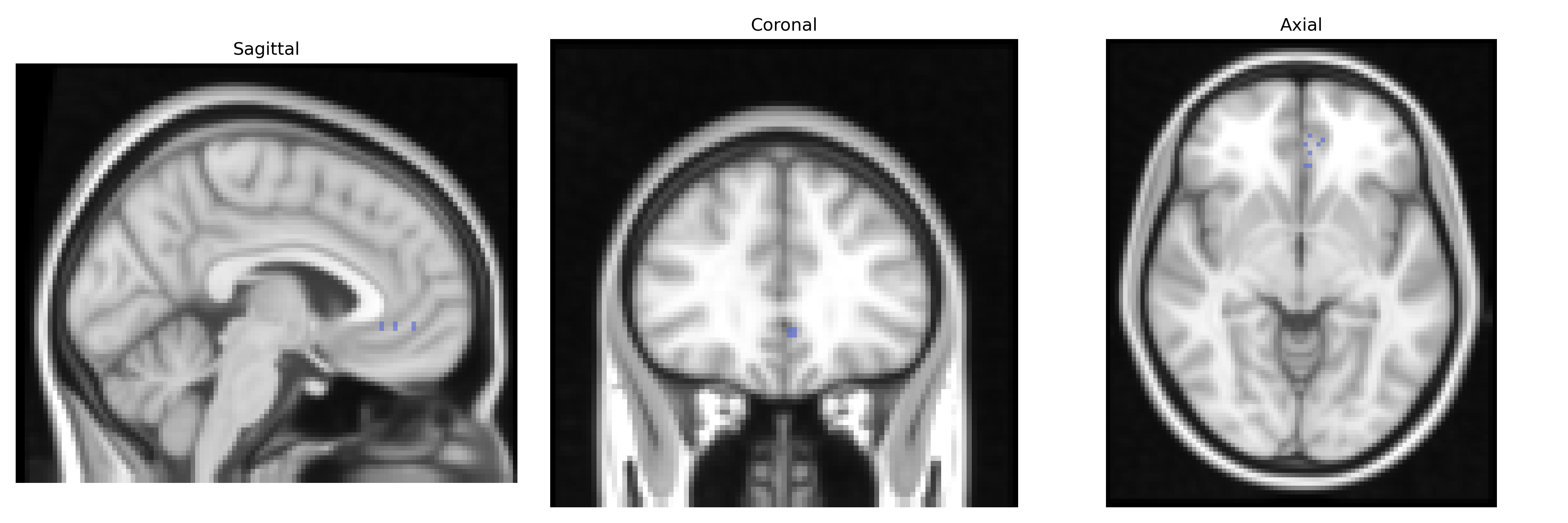
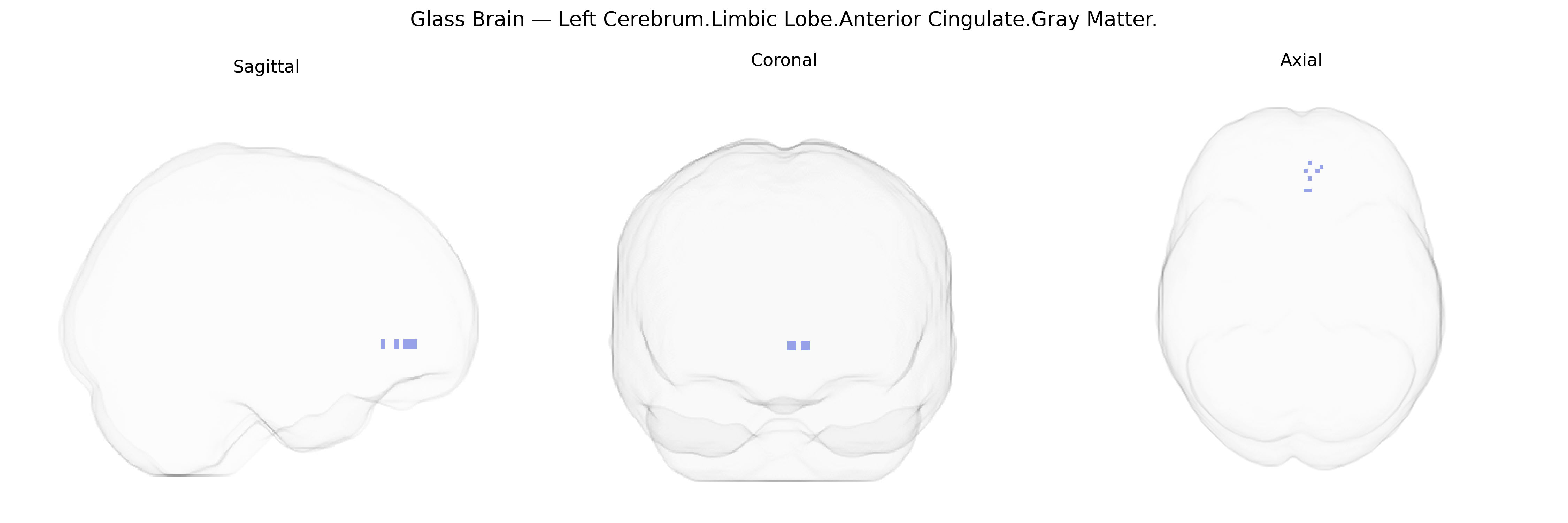
Wali Sidiqyar*, Gaurav Rudravaram*, Elyssa M. McMaster, Trent M. Schwartz, Adam M. Saunders, Kurt G. Schilling, Bennett A. Landman "Introducing SPINS: A Shared Public Visualization Library of Neuroanatomical Structures." Medical Imaging with Deep Learning- short paper
This resource is licensed under CC0 1.0 Universal (Public Domain).