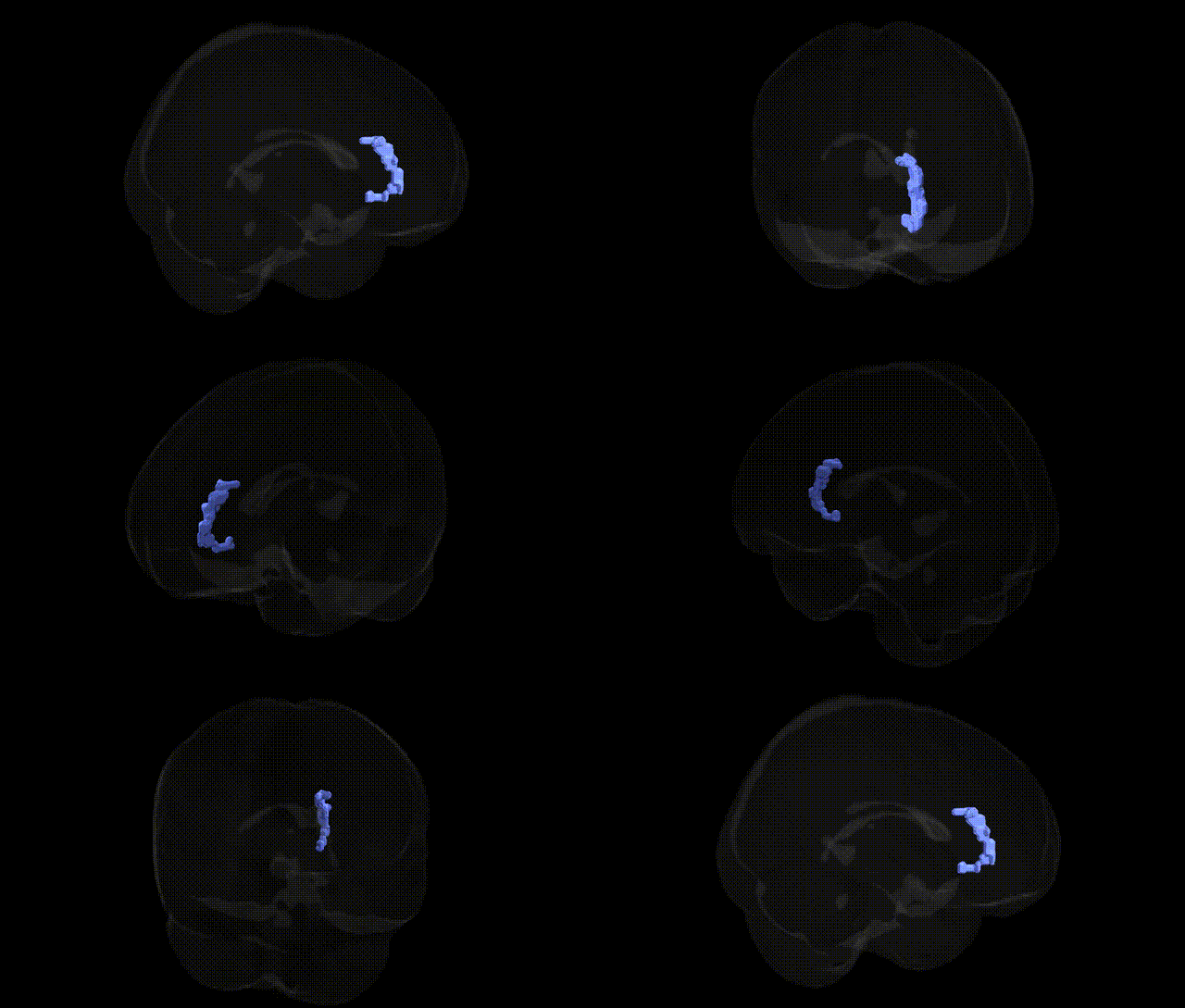
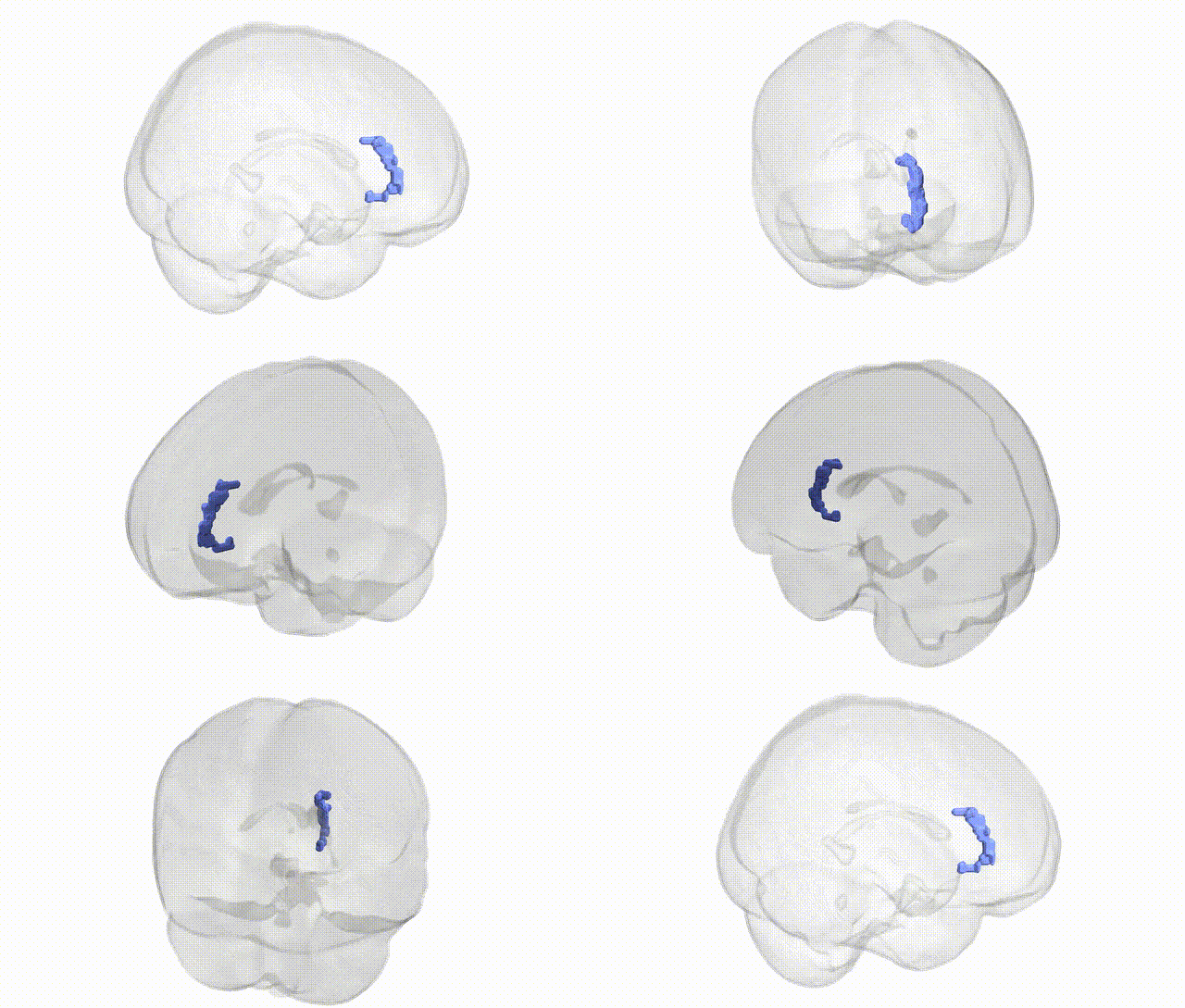
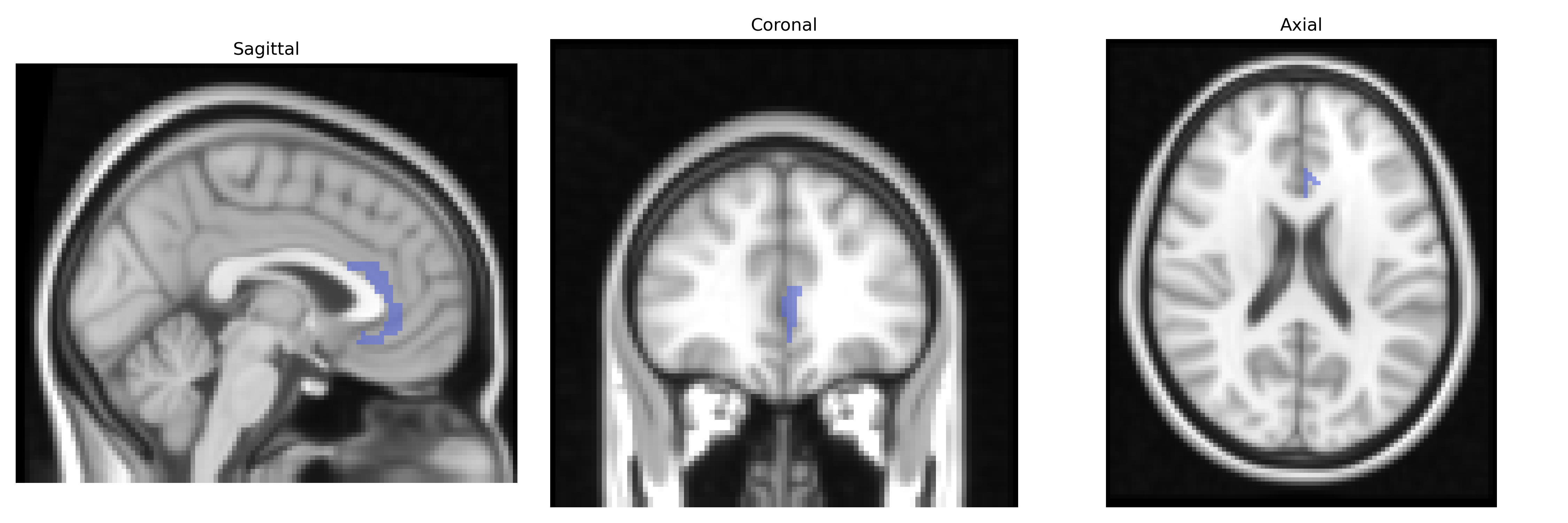
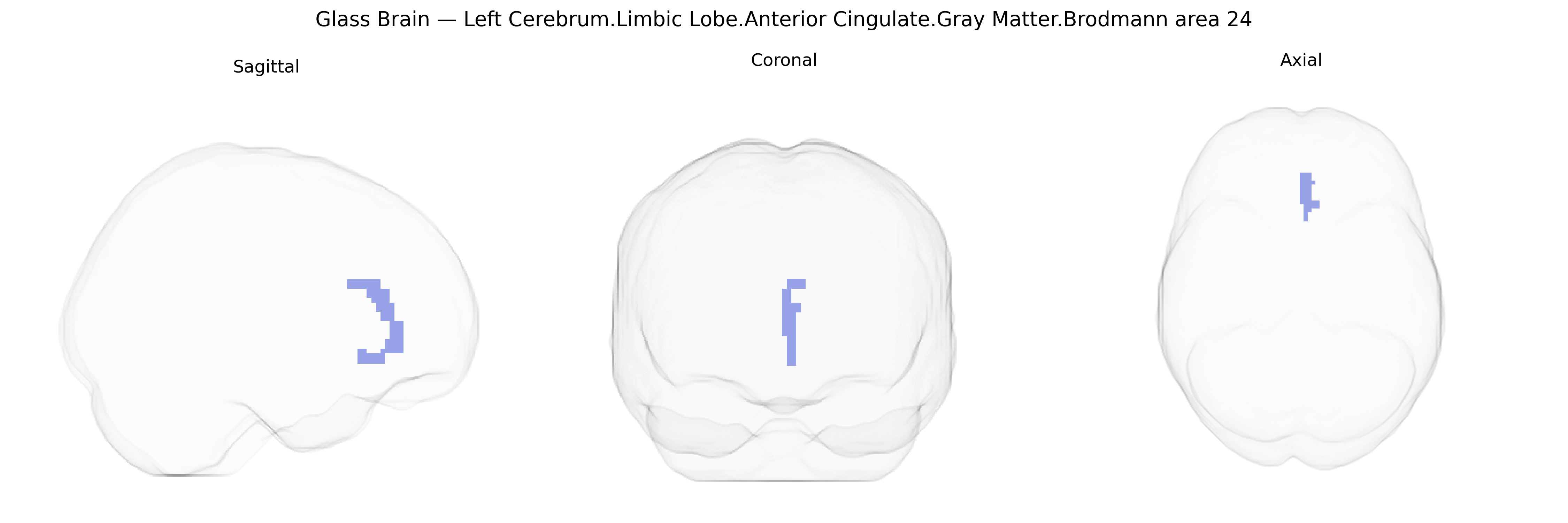
Bilateral Left Cerebrum Limbic Lobe Anterior Cingulate Gray Matter Brodmann area 24 corresponds to a cortical field within the anterior cingulate cortex, situated on the medial surface of the frontal lobe above the corpus callosum and forming part of the limbic system. Cytoarchitectonically defined by Korbinian Brodmann, area 24 is agranular cortex involved in integrating affective, autonomic, and cognitive processes, including regulation of emotion, pain perception and modulation, motivational drive, and components of executive control such as conflict monitoring and decision-making under uncertainty. It maintains dense connections with prefrontal, premotor, limbic, and autonomic centers, and shows functional specialization across its dorsal and ventral portions, with dorsal aspects more associated with cognitive control and ventral aspects with emotional and visceromotor functions. No direct Wikipedia article exists for Brodmann area 24; a closely related structure is the Anterior cingulate cortex.
The bilateral left anterior cingulate cortex (ACC; Brodmann area 24 in the limbic lobe) has been repeatedly implicated in genetic studies of psychiatric, cognitive, and pain-related traits, although most genome-wide association studies (GWAS) report genes and loci rather than region-specific effects. Structural and functional variation in ACC has been associated with common risk variants for major depressive disorder, schizophrenia, bipolar disorder, anxiety disorders, and obsessive-compulsive disorder, often involving genes related to synaptic function, glutamatergic signaling, and neurodevelopment (e.g., COMT, BDNF, DISC1, and CACNA1C in candidate and imaging-genetics work), with ACC gray matter volume and activity frequently serving as intermediate phenotypes. Large neuroimaging GWAS consortia such as ENIGMA and UK Biobank have identified polygenic influences on cortical thickness and surface area in cingulate regions, with distributed genetic architectures overlapping loci for general cognitive ability, educational attainment, and neuroticism, suggesting shared genetic factors influencing both ACC morphology and behavioral traits. ACC activation and connectivity in pain processing and emotion regulation have been linked to variants in dopaminergic and opioid system genes (e.g., OPRM1), as well as polygenic risk for chronic pain and depression, and ACC involvement in error monitoring and conflict processing shows associations with genes affecting dopaminergic and glutamatergic transmission. Overall, genetic influences on ACC structure and function appear highly polygenic and pleiotropic, with many loci contributing small effects across multiple disorders and traits, rather than a small set of region-specific “ACC genes.”
Overview generated by GPT-4o (2026).
Region ID: 469
Hemisphere: bilateral
Atlas: Talairach labels 2mm
Full Quality Version: Download MP4
Full Quality Version: Download MP4
Wali Sidiqyar*, Gaurav Rudravaram*, Elyssa M. McMaster, Trent M. Schwartz, Adam M. Saunders, Kurt G. Schilling, Bennett A. Landman "Introducing SPINS: A Shared Public Visualization Library of Neuroanatomical Structures." Medical Imaging with Deep Learning- short paper
This resource is licensed under CC0 1.0 Universal (Public Domain).