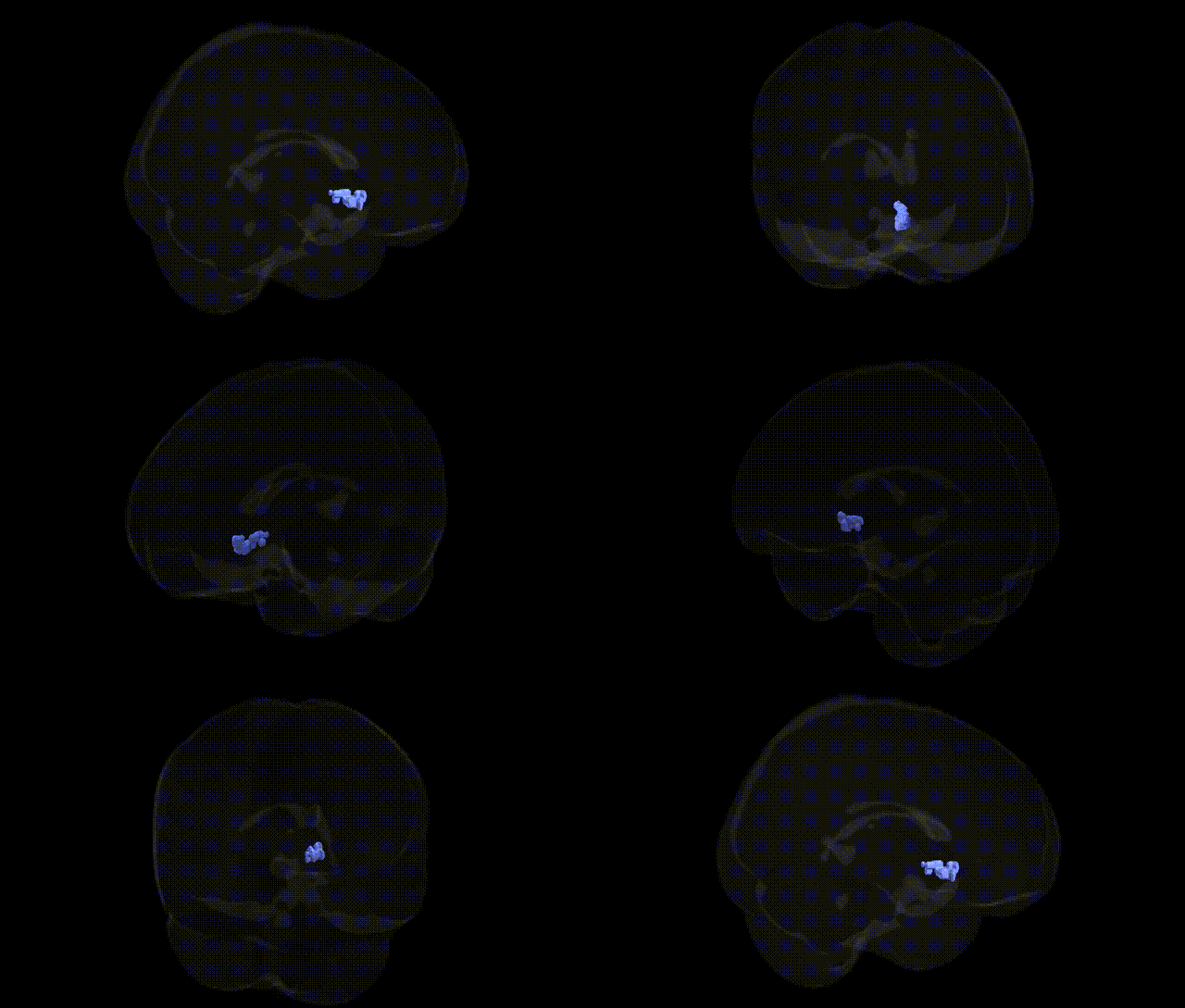
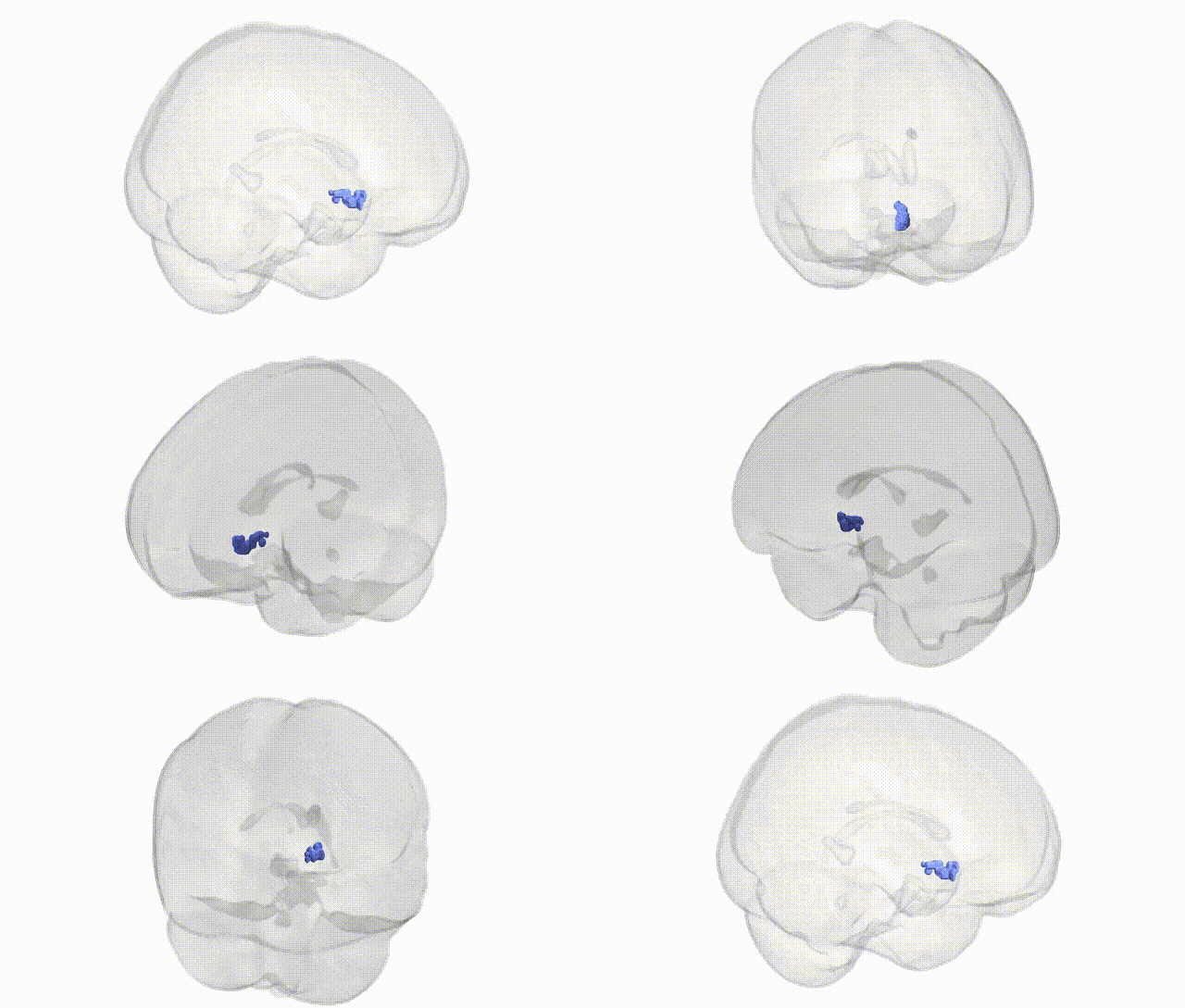
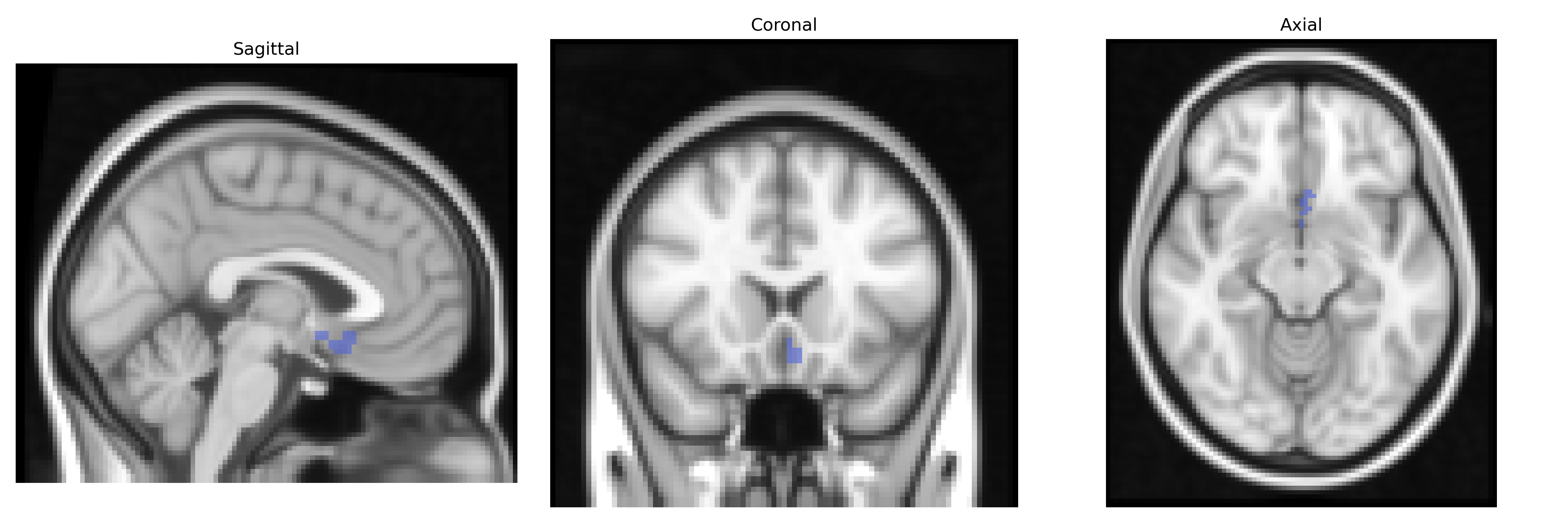
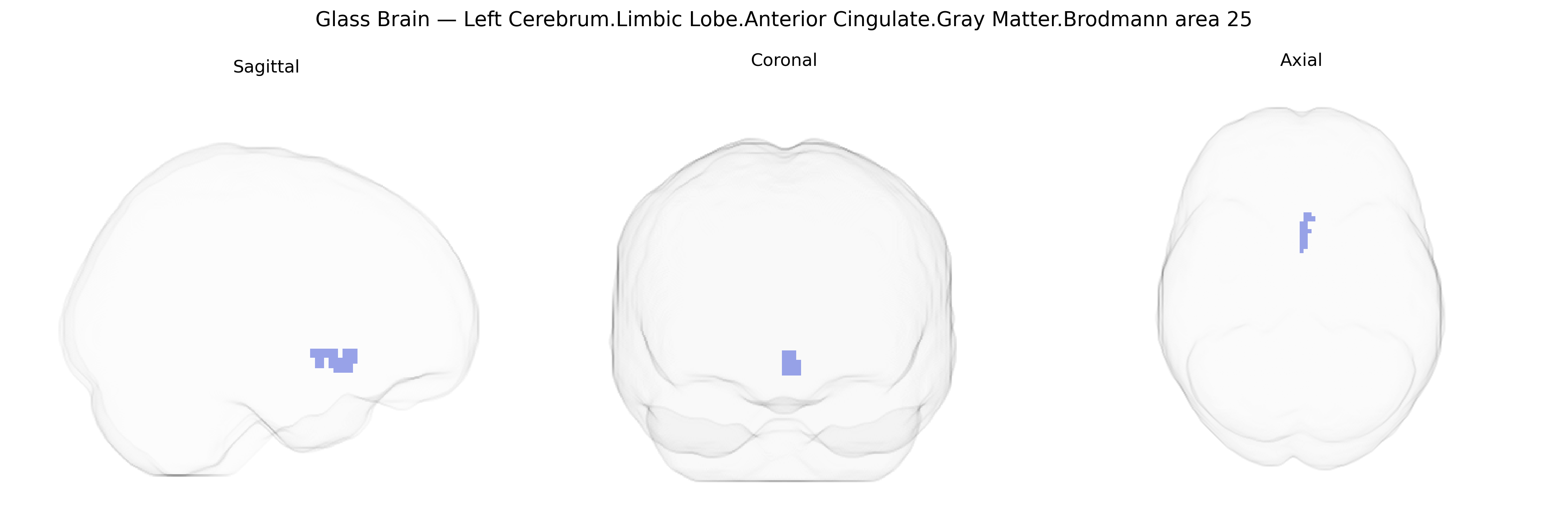
Bilateral Left Cerebrum Limbic Lobe Anterior Cingulate Gray Matter Brodmann area 25 corresponds to a ventromedial prefrontal/limbic cortical region located in the subgenual portion of the anterior cingulate gyrus, situated below the genu of the corpus callosum. This area is cytoarchitectonically defined by its relatively thin cortical layers and dense connectivity with the amygdala, hypothalamus, ventral striatum, and other limbic and autonomic control centers, positioning it as a key hub in affective regulation, mood, and stress-response circuits. Brodmann area 25 has been strongly implicated in the pathophysiology of major depressive disorder and is a target for deep brain stimulation and other neuromodulatory interventions aimed at normalizing dysfunctional mood and emotional processing networks. There is no direct link for Brodmann area 25 as a standalone entry; a related structure is the Anterior cingulate cortex.
The bilateral anterior cingulate cortex (ACC), including Brodmann area 25 in the limbic lobe, has been repeatedly implicated in genetic studies of mood and stress-related psychopathology, although most findings are region-level rather than BA25-specific. GWAS and imaging–genetics studies link ACC structure and function to common variants in genes regulating serotonin (e.g., SLC6A4, HTR2A), glutamate (e.g., GRM3), neurotrophic signaling (e.g., BDNF Val66Met), and stress response (e.g., FKBP5), with these variants associated with altered gray matter volume, cortical thickness, or functional activation in ACC circuits. Large-scale neuroimaging GWAS (e.g., ENIGMA, UK Biobank) have identified multiple loci affecting anterior cingulate morphology, including variants near genes involved in synaptic development and neuronal migration, although specific attribution to BA25 is limited by the spatial resolution of most parcellations relative to Talairach 2 mm labels. Clinically, BA25 and adjacent subgenual ACC have been genetically connected to major depressive disorder, bipolar disorder, anxiety, suicidality, and stress reactivity through polygenic risk scores that correlate with ACC volume and activity, as well as through rare variant and copy number studies affecting fronto–limbic networks. Moreover, GWAS of traits such as neuroticism, negative affect, and cognitive control have shown that higher polygenic risk is associated with functional alterations in ACC/BA25 circuitry, supporting a role for genetically influenced ACC structure and connectivity in vulnerability to affective and stress-related disorders, though no single gene–BA25 association has emerged as uniquely specific or deterministic.
Overview generated by GPT-4o (2026).
Region ID: 380
Hemisphere: bilateral
Atlas: Talairach labels 2mm
Full Quality Version: Download MP4
Full Quality Version: Download MP4
Wali Sidiqyar*, Gaurav Rudravaram*, Elyssa M. McMaster, Trent M. Schwartz, Adam M. Saunders, Kurt G. Schilling, Bennett A. Landman "Introducing SPINS: A Shared Public Visualization Library of Neuroanatomical Structures." Medical Imaging with Deep Learning- short paper
This resource is licensed under CC0 1.0 Universal (Public Domain).