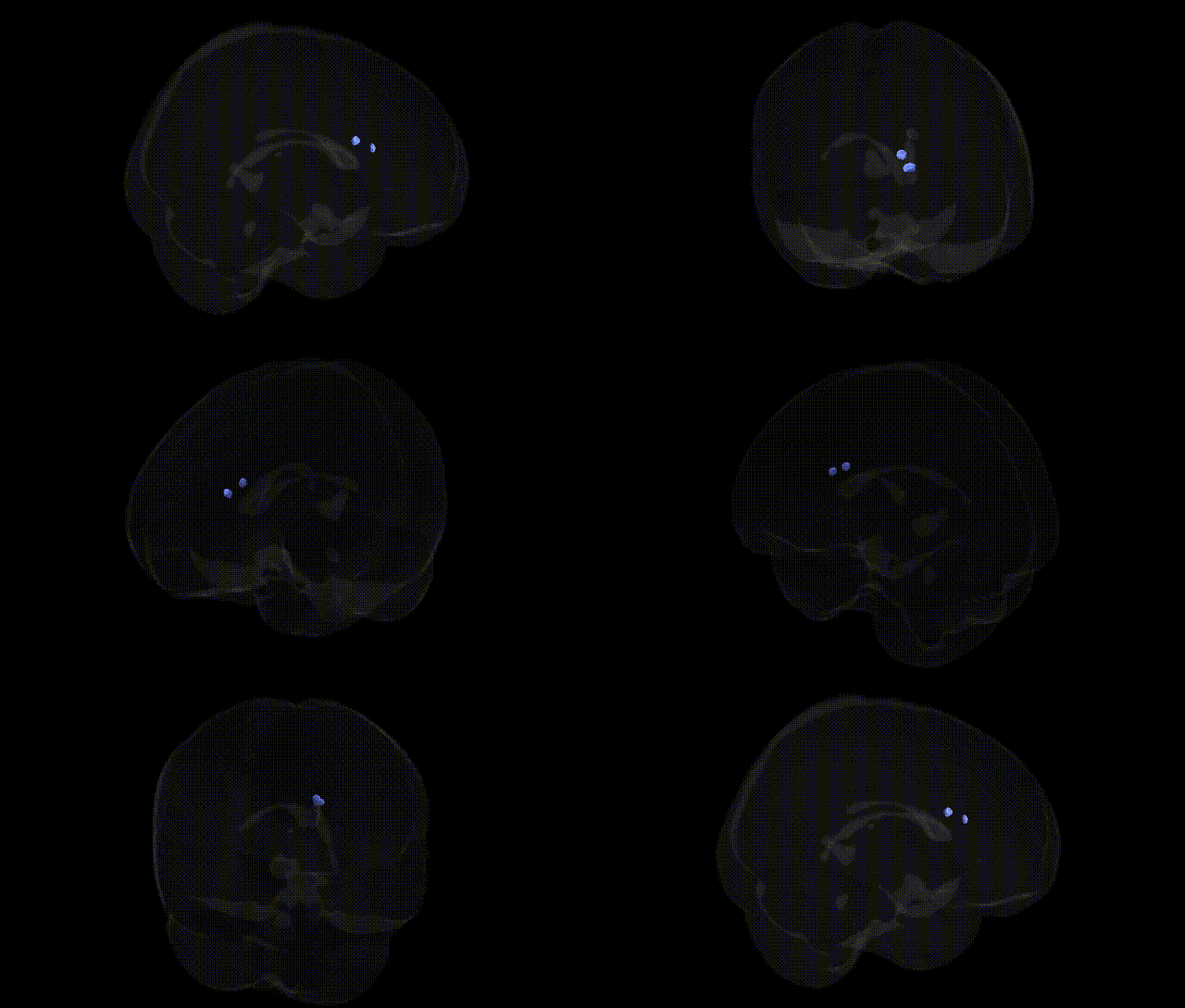
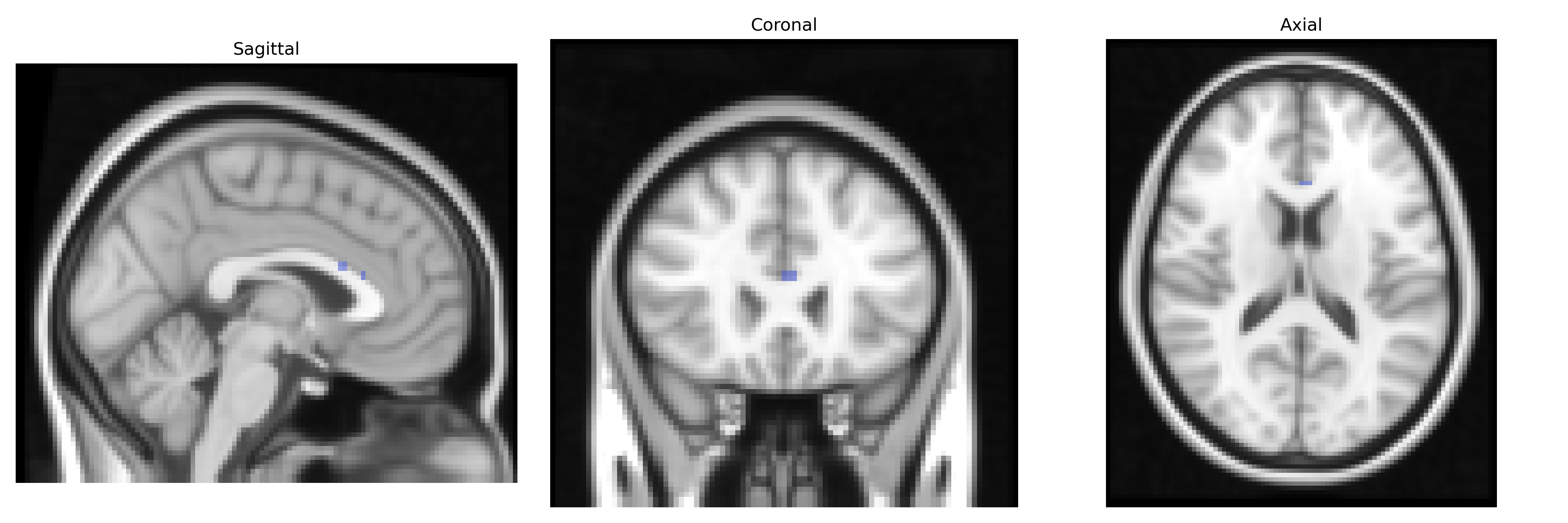
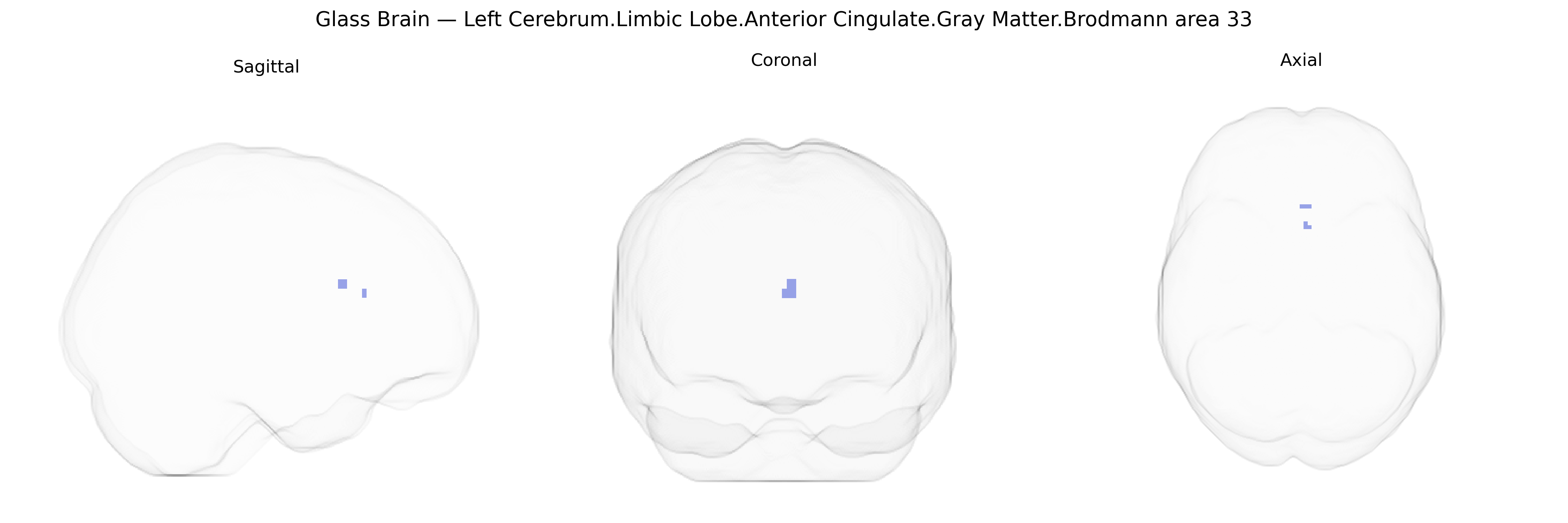
The bilateral Left Cerebrum.Limbic Lobe.Anterior Cingulate.Gray Matter.Brodmann area 33 corresponds to a narrow strip of cortex located deep within the anterior cingulate gyrus, adjacent to the genu of the corpus callosum. Classified as part of the limbic lobe, this agranular cortical field is implicated in affective and emotional processing, particularly in the modulation of pain, autonomic responses, and the integration of visceral states with motivational and decision-related processes. Brodmann area 33 is often considered a ventral or subcallosal subdivision of the anterior cingulate cortex and is anatomically and functionally connected with other limbic and paralimbic regions, including the amygdala, orbitofrontal cortex, and medial prefrontal cortex. There is no direct link for Brodmann area 33; a related structure is the Anterior cingulate cortex.
Genetic associations specific to Brodmann area 33 of the anterior cingulate cortex (ACC) are rarely isolated in the literature, as most imaging-genetics and GWAS work treats the ACC or limbic networks more broadly, but several converging lines of evidence implicate this region in heritable risk for psychiatric and behavioral traits. Large neuroimaging GWAS (e.g., ENIGMA, UK Biobank) have shown that common variants in genes involved in synaptic function, neurodevelopment, and myelination (such as CACNA1C, GRIN2A, BDNF, and multiple loci near MAPT and synaptic scaffolding genes) are associated with ACC cortical thickness or volume, supporting a polygenic contribution to anterior cingulate gray-matter structure. Case–control and polygenic risk score studies in major depressive disorder, bipolar disorder, schizophrenia, and anxiety disorders consistently link higher genetic load for these conditions to structural or functional alterations in dorsal and rostral ACC, which includes BA33 in most Talairach-based parcellations, and to altered ACC activation during emotion regulation and conflict monitoring. GWAS of chronic pain, pain sensitivity, and nociceptive thresholds have implicated loci regulating glutamatergic transmission and opioid receptor signaling that correlate with ACC activation and connectivity, consistent with BA33’s role in affective pain processing. Furthermore, genetic variants associated with neuroticism, harm avoidance, and stress reactivity (including polymorphisms in SLC6A4, FKBP5, and CRHR1) have been linked through imaging-genetics studies to ACC functional responses and connectivity within limbic circuits. Although few studies target BA33 as a standalone region, current evidence indicates that the bilateral anterior cingulate limbic gray matter encompassing Brodmann area 33 is a key anatomical substrate through which polygenic risk for mood and psychotic disorders, pain-related traits, and affective personality dimensions exerts its influence on brain structure and function.
Overview generated by GPT-4o (2026).
Region ID: 838
Hemisphere: bilateral
Atlas: Talairach labels 2mm
Full Quality Version: Download MP4
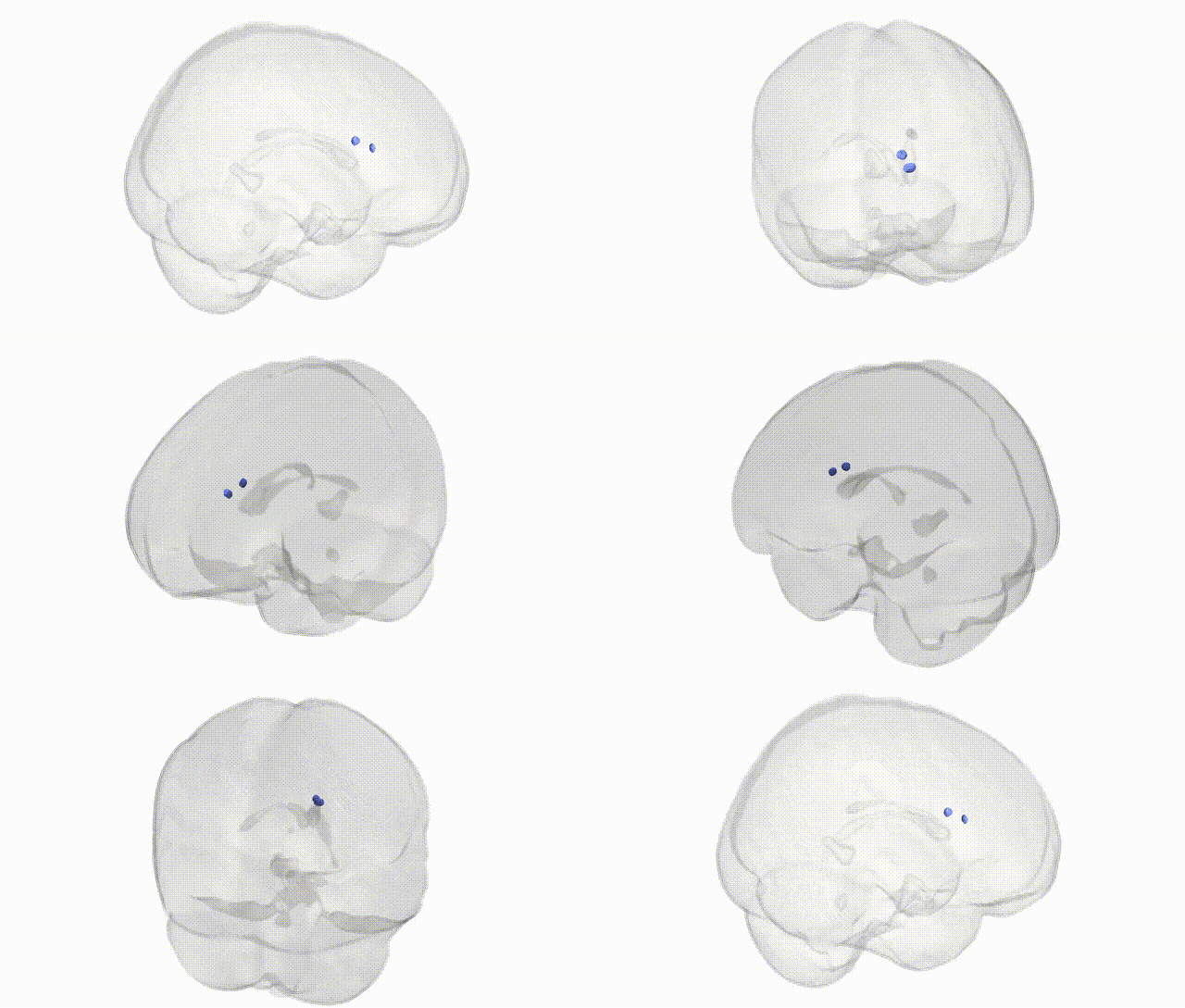
Full Quality Version: Download MP4
Wali Sidiqyar*, Gaurav Rudravaram*, Elyssa M. McMaster, Trent M. Schwartz, Adam M. Saunders, Kurt G. Schilling, Bennett A. Landman "Introducing SPINS: A Shared Public Visualization Library of Neuroanatomical Structures." Medical Imaging with Deep Learning- short paper
This resource is licensed under CC0 1.0 Universal (Public Domain).