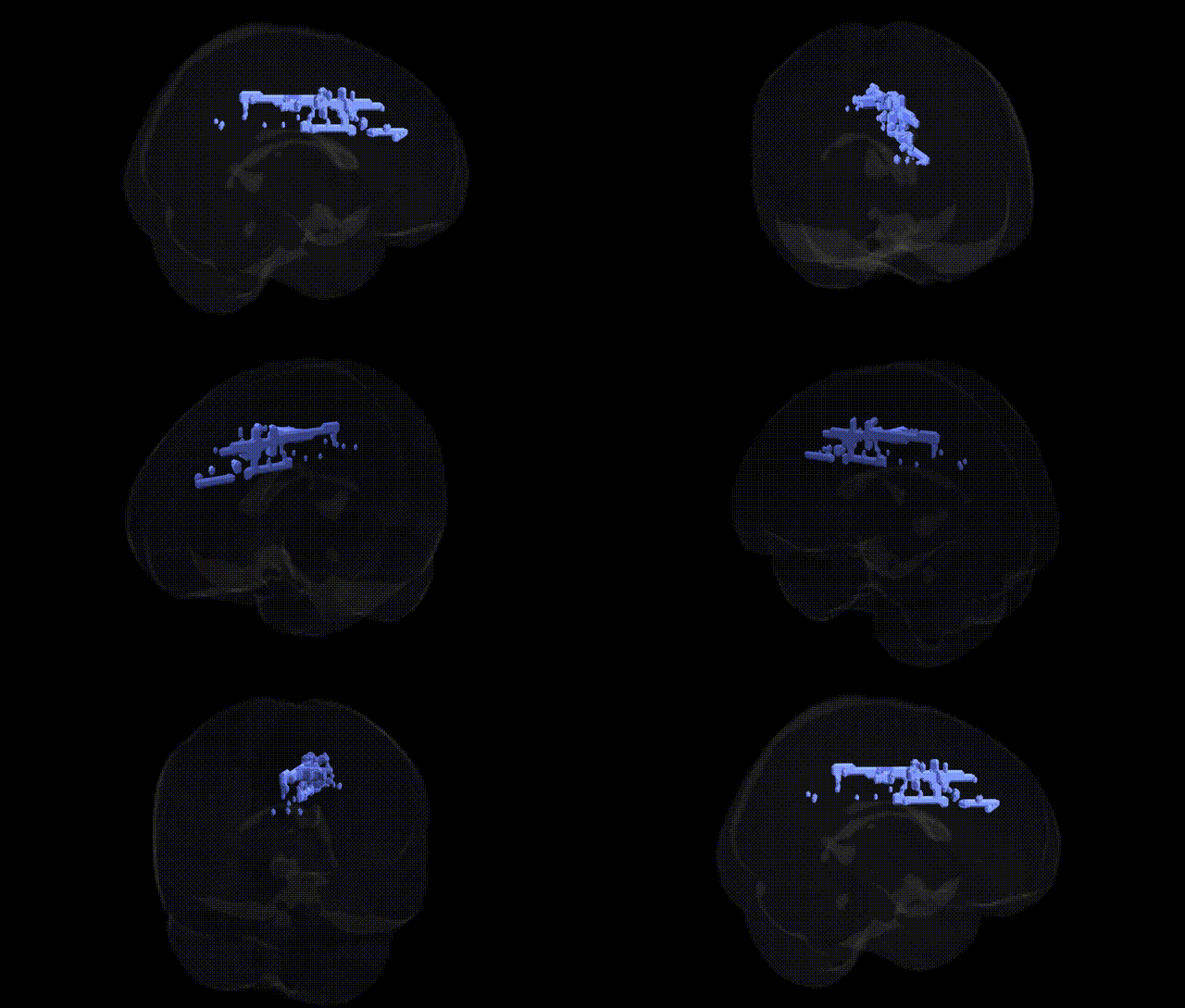
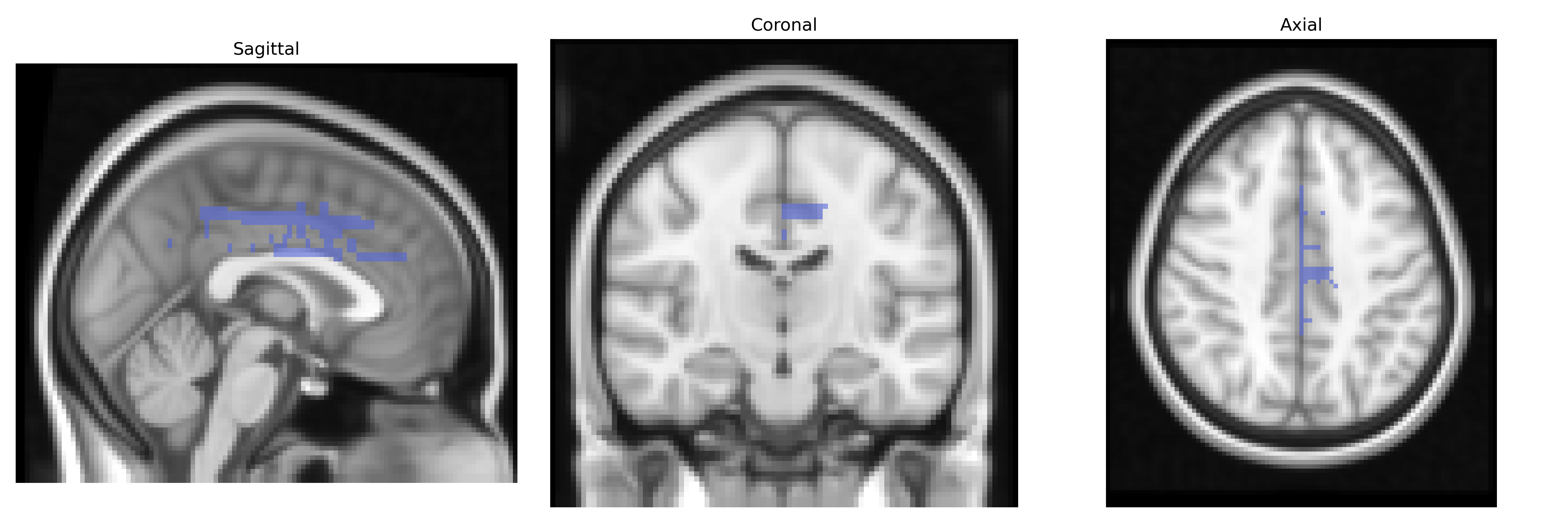
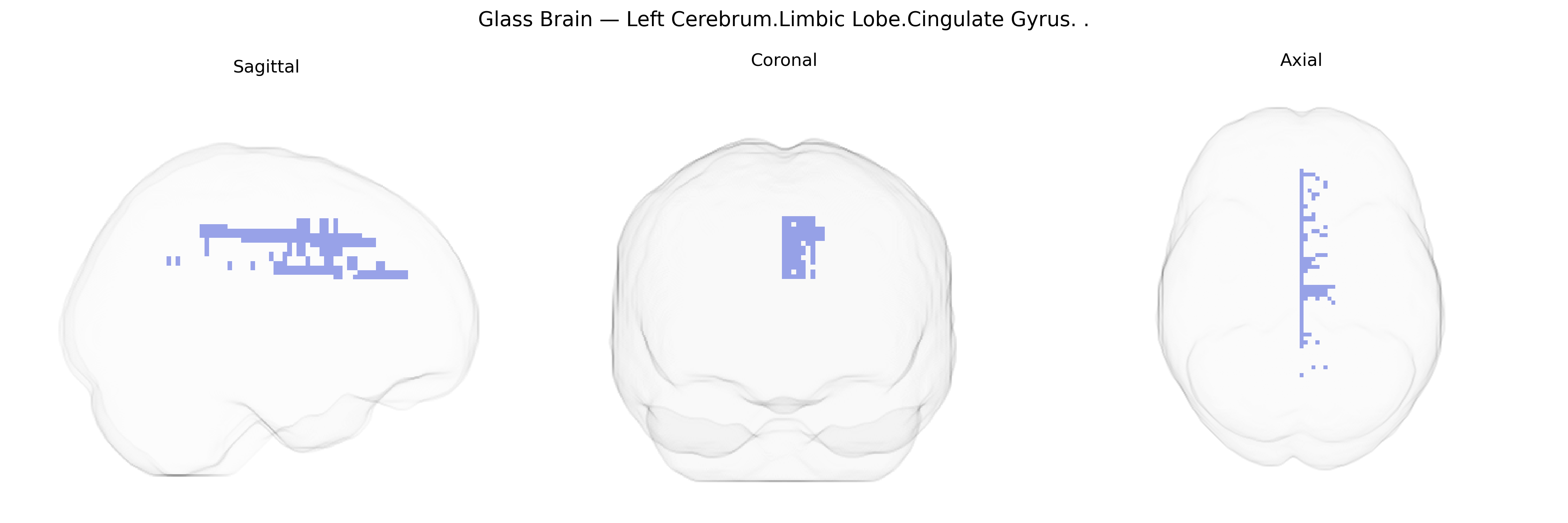
The bilateral Left Cerebrum, Limbic Lobe, Cingulate Gyrus is a medial cortical structure arching above the corpus callosum and forming a major component of the limbic system, involved in emotional processing, motivation, autonomic regulation, and aspects of attention and cognitive control. It is cytoarchitectonically divided into anterior and posterior portions, with the anterior cingulate gyrus contributing to affective regulation, decision-making, and error monitoring, and the posterior portion participating more in visuospatial orientation, memory, and integration of internal states with environmental context. The cingulate gyrus has extensive connectivity with prefrontal, parietal, and medial temporal regions, including the hippocampus and amygdala, supporting its role in linking emotion, cognition, and behavior.
Cingulate gyrus
The bilateral left cerebrum limbic lobe cingulate gyrus, as defined in the Talairach 2 mm atlas, has been implicated in numerous genetic and GWAS findings through its role in emotion regulation, pain processing, cognitive control, and self-referential thought. Variants in genes influencing glutamatergic and GABAergic signaling (e.g., GRM3, GRIN2B, GAD1) and synaptic plasticity (e.g., BDNF Val66Met) have been associated with structural and functional alterations in cingulate cortex, contributing to risk for major depressive disorder, schizophrenia, bipolar disorder, anxiety disorders, and post-traumatic stress disorder. Large neuroimaging GWAS consortia such as ENIGMA and UK Biobank have identified polygenic influences on cingulate cortical thickness and surface area, with loci in or near genes related to neurodevelopment (e.g., MAPT region on chromosome 17, various cell-adhesion and axon-guidance genes) overlapping with genetic risk for psychiatric disorders and cognitive traits. Common variants in genes involved in serotonergic and dopaminergic systems (e.g., SLC6A4, DRD2, COMT) show associations with anterior and mid-cingulate activation patterns and connectivity in tasks involving reward, conflict monitoring, and emotional processing, linking cingulate function to traits such as neuroticism, impulsivity, and stress reactivity. GWAS of chronic pain, migraine, and pain sensitivity highlight polygenic effects on limbic and cingulate circuitry, with some risk loci affecting neuroinflammatory and opioid-related pathways. In addition, risk variants for Alzheimer’s disease and frontotemporal dementia (e.g., APOE, MAPT, and several immune-related loci) have been associated with cingulate atrophy or hypometabolism, while GWAS of resting-state functional connectivity and default mode network organization indicate that common genetic variants modulate cingulate-centered network architecture, mediating associations with general cognitive ability and vulnerability to mood and psychotic disorders.
Overview generated by GPT-4o (2026).
Region ID: 912
Hemisphere: bilateral
Atlas: Talairach labels 2mm
Full Quality Version: Download MP4
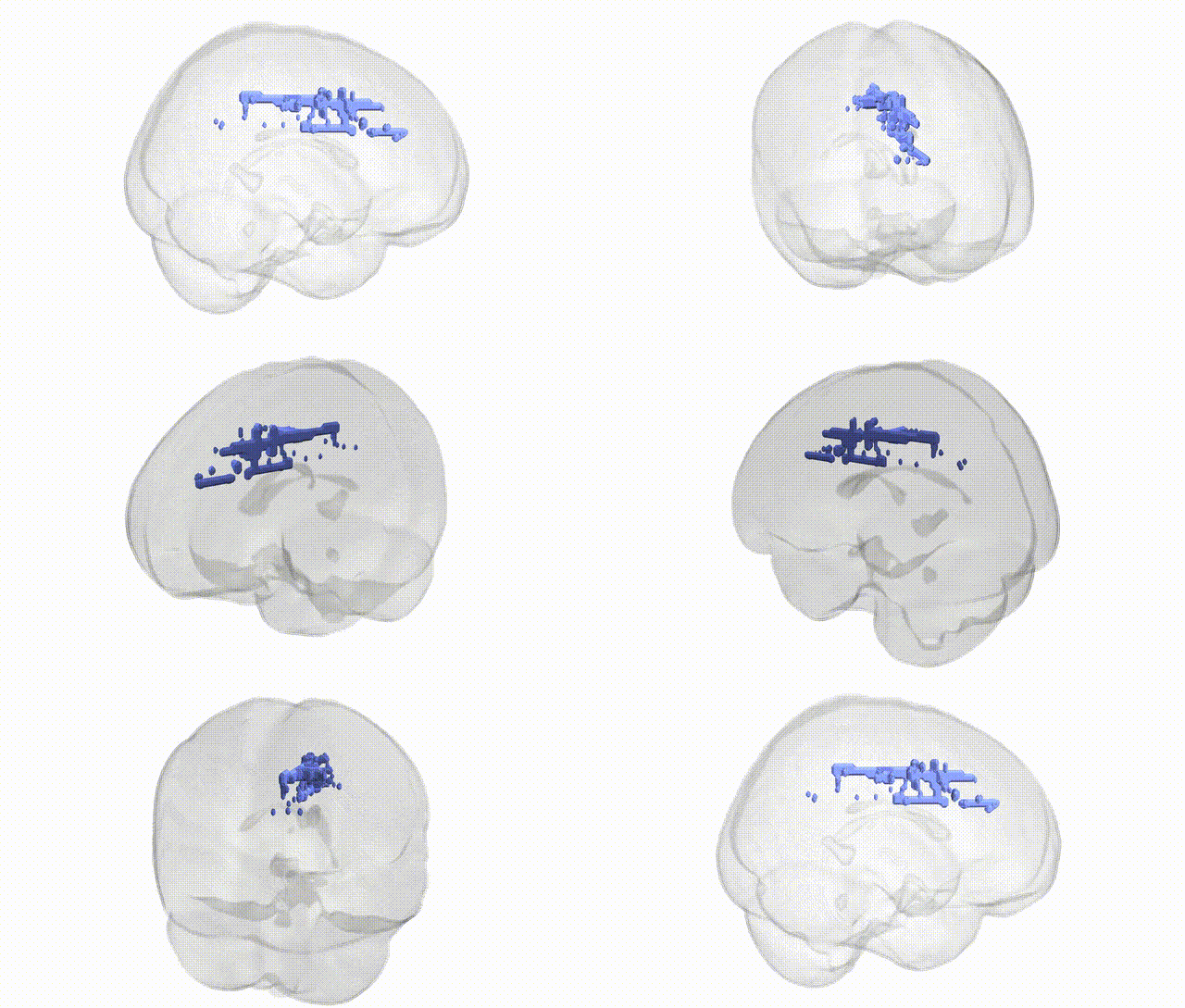
Full Quality Version: Download MP4
Wali Sidiqyar*, Gaurav Rudravaram*, Elyssa M. McMaster, Trent M. Schwartz, Adam M. Saunders, Kurt G. Schilling, Bennett A. Landman "Introducing SPINS: A Shared Public Visualization Library of Neuroanatomical Structures." Medical Imaging with Deep Learning- short paper
This resource is licensed under CC0 1.0 Universal (Public Domain).