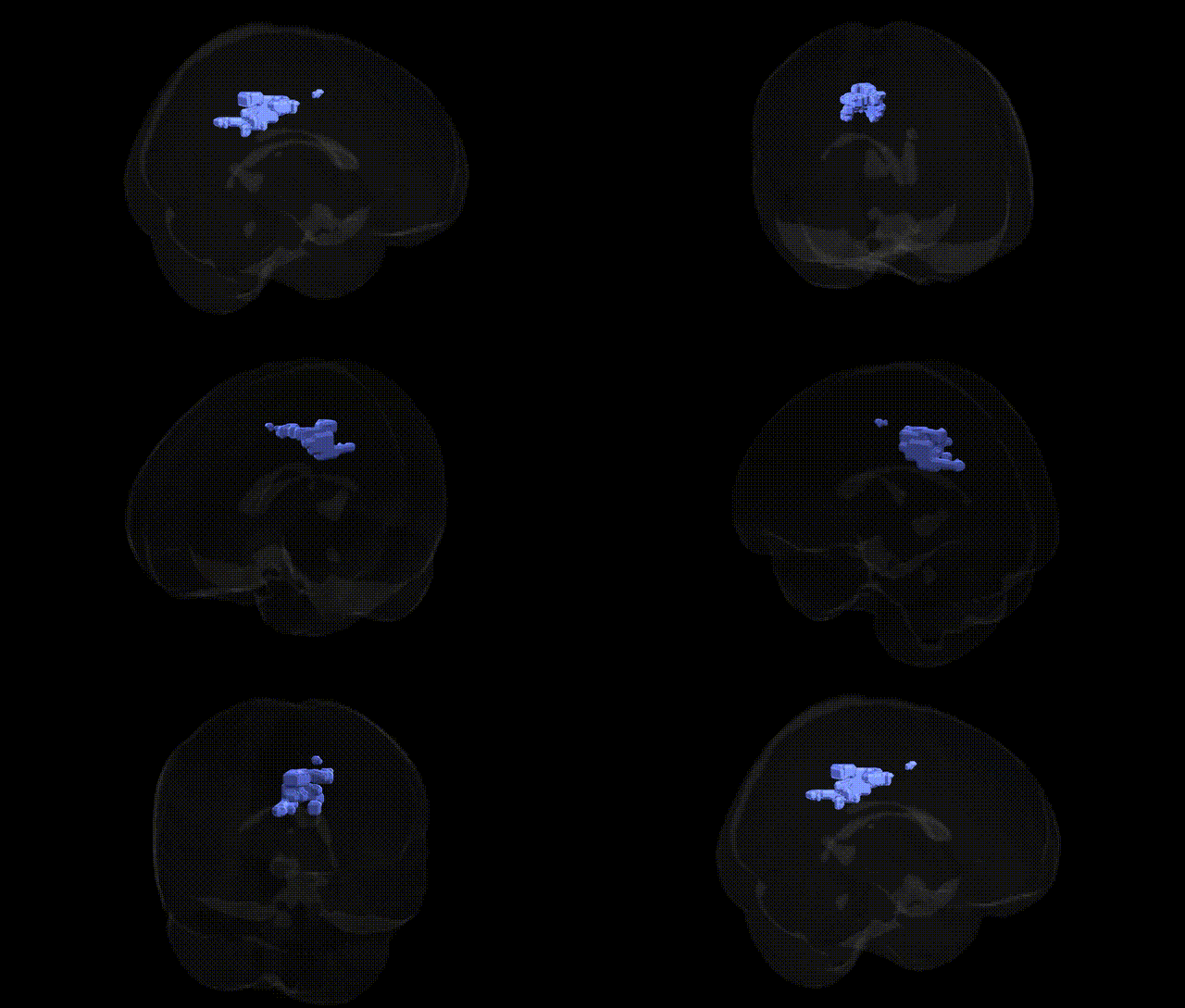
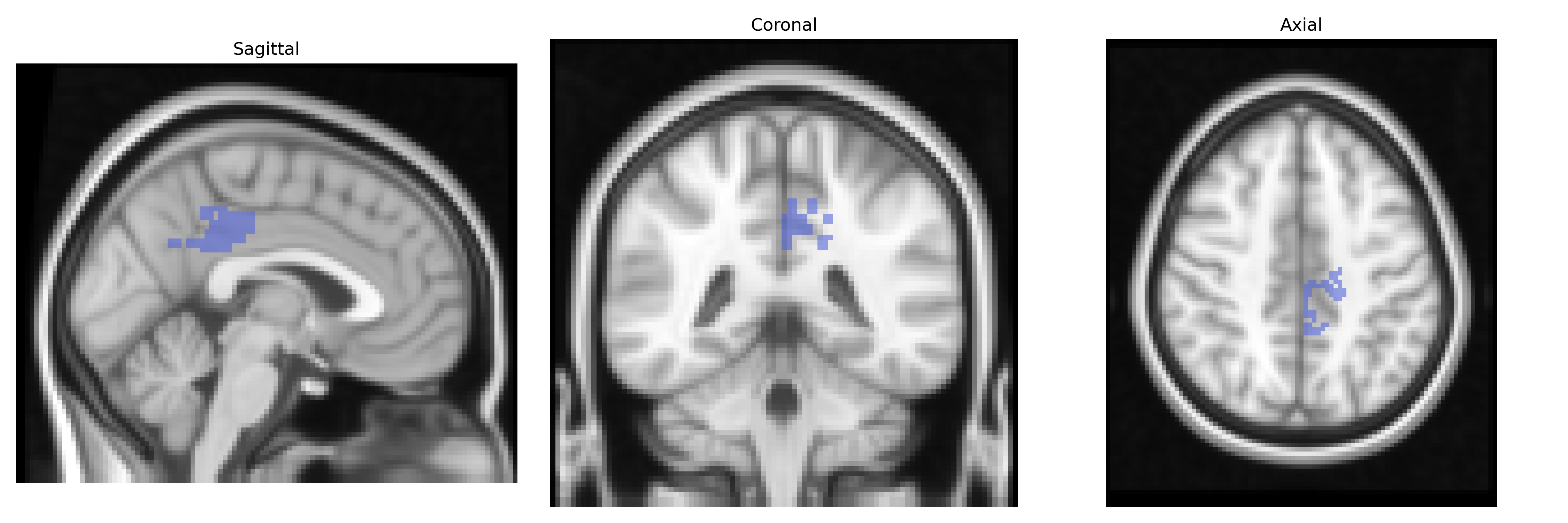
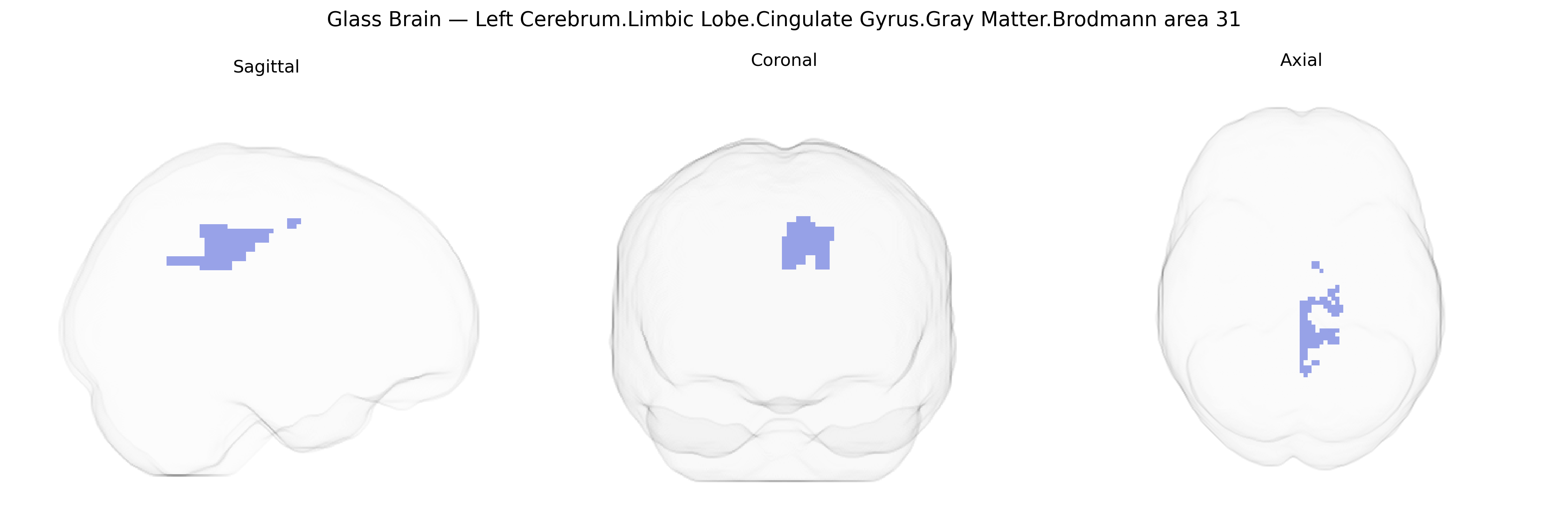
Brodmann area 31 of the cingulate gyrus is a gray matter region within the limbic lobe of the left cerebrum, situated in the dorsal posterior cingulate cortex and extending toward the medial parietal cortex. It is part of the midline association cortex and contributes to high‑order integrative functions, including self-referential processing, visuospatial orientation, and aspects of episodic memory retrieval. Functionally, this area is a key node in the default mode network, showing strong connectivity with medial prefrontal and parietal regions and participating in internally directed thought and affective-cognitive integration. Cytoarchitectonically, Brodmann area 31 is characterized by a granular isocortical pattern distinct from neighboring cingulate areas, reflecting its role in associative rather than primary sensory or motor processing. There is no direct link for this specific Brodmann area; see the related structure Cingulate cortex.
Brodmann area 31 in the posterior cingulate/medial parietal limbic network has been implicated in multiple genetic and GWAS-based associations, largely through imaging genetics studies of cortical thickness, surface area, and functional connectivity, as well as case–control and polygenic risk work in neuropsychiatric disorders. Common variants in genes involved in synaptic function and neurodevelopment (including CACNA1C, GRIN2B, and BDNF) have been repeatedly associated with structural and functional alterations in the cingulate cortex, and large ENIGMA and UK Biobank GWAS meta-analyses have identified genome-wide significant loci (e.g., near GMNC, PLEKHM1, and other regulatory regions) that influence posterior cingulate/BA31 morphology or connectivity as part of broader cortical traits. BA31 shows genetically influenced vulnerability in Alzheimer’s disease and other dementias, where GWAS hits such as APOE and CR1 are linked to atrophy and hypometabolism in this hub of the default mode network, and in major depressive disorder, schizophrenia, and bipolar disorder, where polygenic risk scores correlate with cingulate structure or activation patterns. Additional genetic associations connect BA31-related networks to traits such as neuroticism, cognitive performance, and self-referential/rumination phenotypes, reflecting the region’s role in internally directed thought and emotional regulation, though these findings typically arise from analyses of larger posterior cingulate or default-mode network parcels rather than BA31 in isolation.
Overview generated by GPT-4o (2026).
Region ID: 915
Hemisphere: bilateral
Atlas: Talairach labels 2mm
Full Quality Version: Download MP4
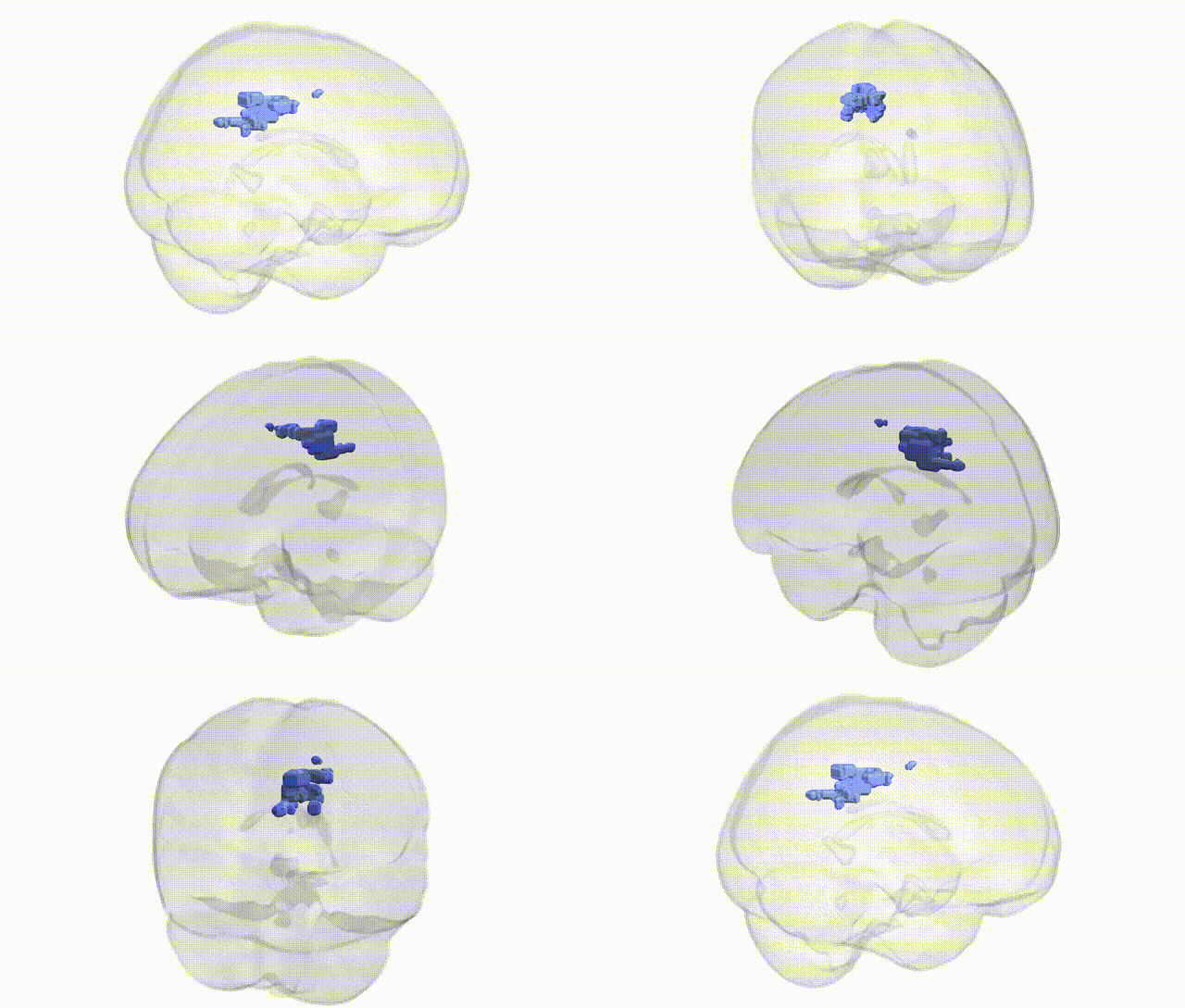
Full Quality Version: Download MP4
Wali Sidiqyar*, Gaurav Rudravaram*, Elyssa M. McMaster, Trent M. Schwartz, Adam M. Saunders, Kurt G. Schilling, Bennett A. Landman "Introducing SPINS: A Shared Public Visualization Library of Neuroanatomical Structures." Medical Imaging with Deep Learning- short paper
This resource is licensed under CC0 1.0 Universal (Public Domain).