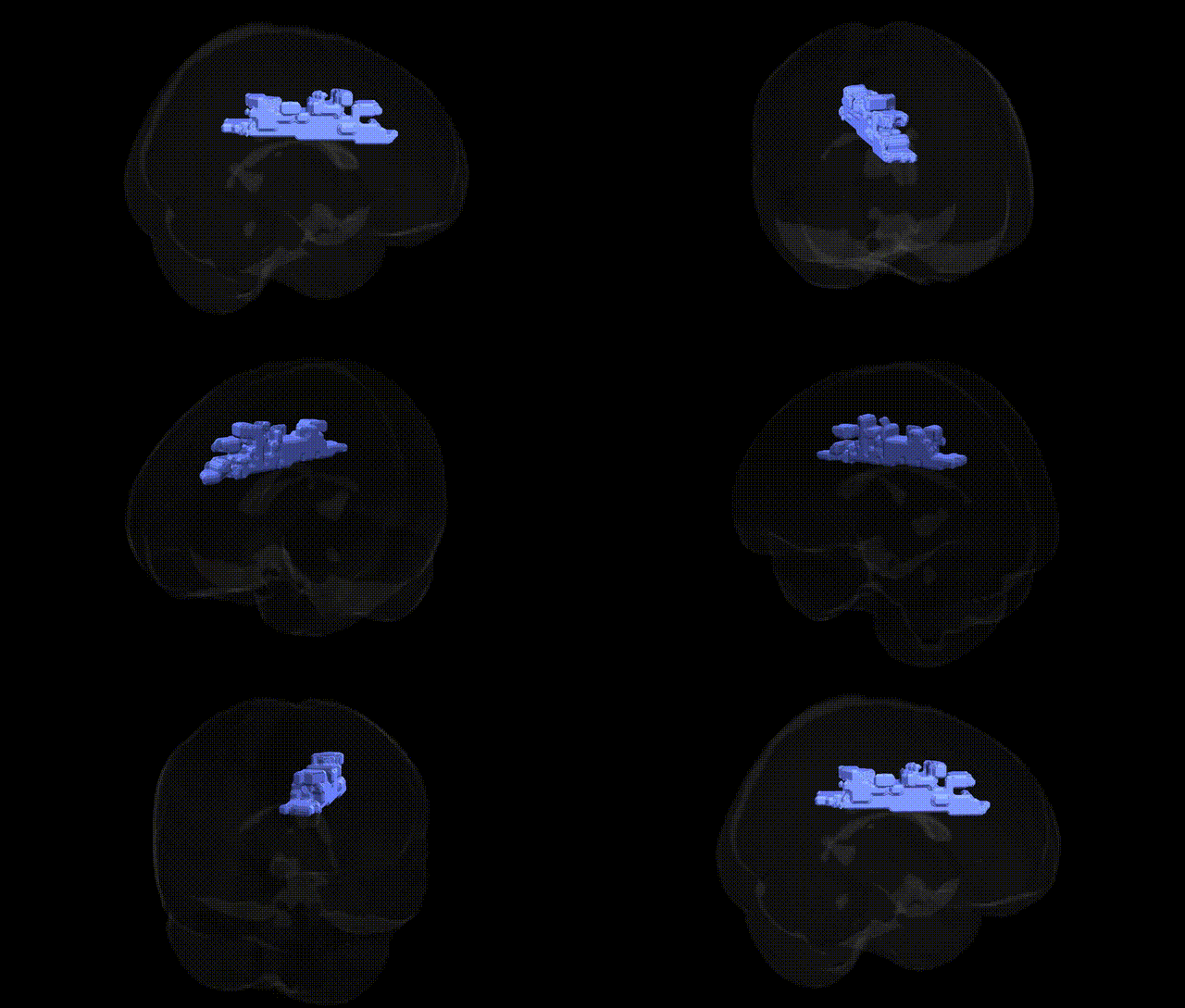
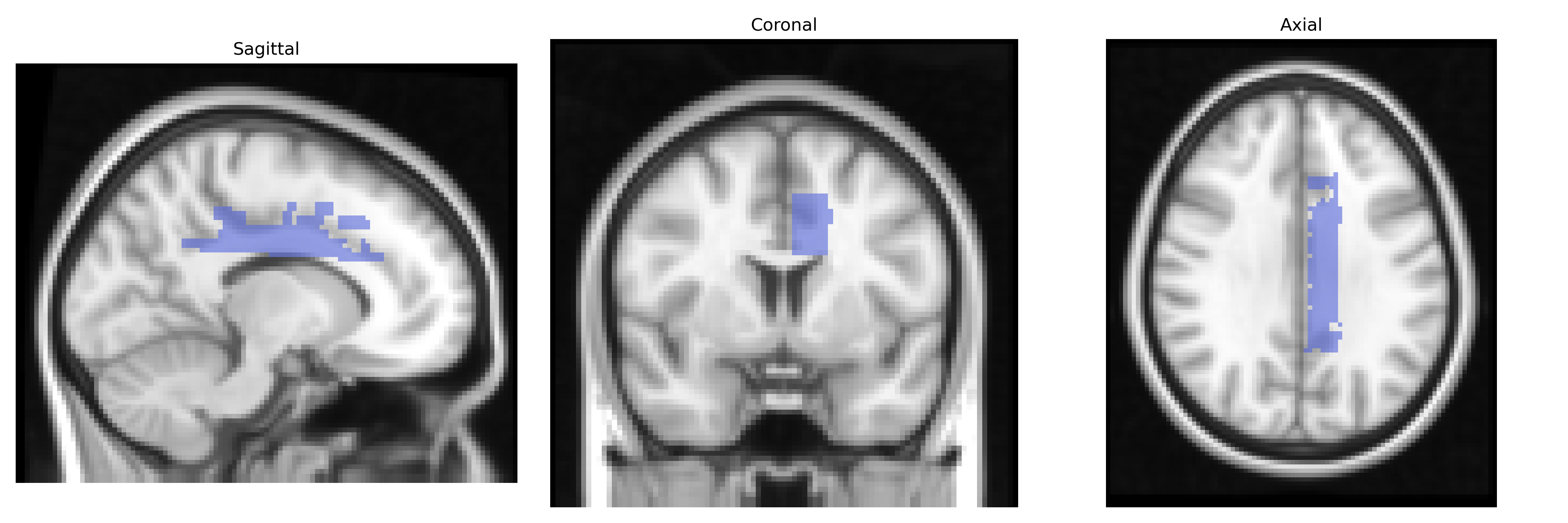
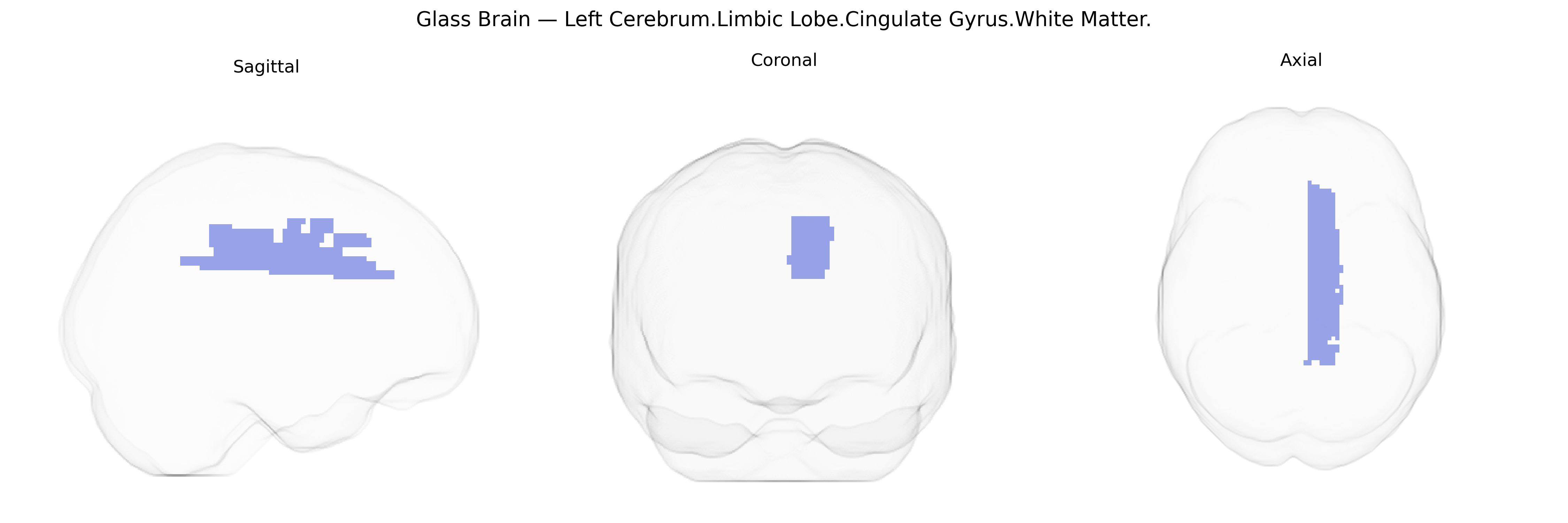
The bilateral Left Cerebrum Limbic Lobe Cingulate Gyrus White Matter corresponds to the intra-gyral fiber pathways coursing beneath the cortical mantle of the cingulate gyrus within the limbic lobe of the left hemisphere, forming part of the limbic white matter network that interconnects medial frontal, parietal, and limbic structures. These fibers facilitate communication between the anterior and posterior cingulate cortices and link them with other components of the limbic system, contributing to integration of emotional processing, motivation, attentional control, and aspects of autonomic regulation. The region includes association fibers and components of larger tracts such as the cingulum bundle, which runs longitudinally within the cingulate white matter and supports coordinated activity across distributed limbic and paralimbic territories. There is no direct Wikipedia article for this specific white matter subdivision; a closely related structure is the Cingulate gyrus.
The bilateral Left Cerebrum Limbic Lobe Cingulate Gyrus white matter, as defined in the Talairach 2 mm atlas, participates in fronto-limbic and default-mode network connectivity, and genetic associations to this region largely derive from imaging genetics and GWAS of cingulate volume, cortical thickness, and white matter microstructure (e.g., fractional anisotropy). Common variants in genes related to myelination, axonal guidance, and synaptic signaling—such as NRG1, CNTNAP2, DISC1, and CACNA1C—have been repeatedly implicated in structural and functional variation of cingulate circuitry in studies of schizophrenia, bipolar disorder, major depression, and autism spectrum disorder, although many findings are regionally broad and not restricted to the cingulate white matter. Large GWAS meta-analyses from consortia like ENIGMA have identified multiple loci associated with anterior and midcingulate cortical thickness and surface area (including variants near genes such as C15orf53, PLEKHM1, and others), some of which overlap with loci for psychiatric risk, cognitive performance, and neuroticism, suggesting shared genetic architecture between cingulate morphology and behavioral traits. Diffusion MRI GWAS examining tract-based or connectome measures have reported associations between polygenic scores for schizophrenia, depression, and ADHD and reduced integrity of cingulate and cingulum bundle white matter, with implicated genes enriched in neurodevelopmental, oligodendrocyte, and glutamatergic pathways. In neurodegenerative disease, APOE ε4 and other Alzheimer’s disease risk variants are linked to altered cingulate connectivity and white matter integrity, particularly in posterior and midcingulate components of the default-mode network. Overall, genetic influences on this cingulate white matter region appear highly polygenic and pleiotropic, overlapping with loci for multiple psychiatric and cognitive traits, while no single variant or gene is uniquely or specifically associated with the Talairach-defined bilateral Left Limbic Cingulate Gyrus white matter.
Overview generated by GPT-4o (2026).
Region ID: 921
Hemisphere: bilateral
Atlas: Talairach labels 2mm
Full Quality Version: Download MP4
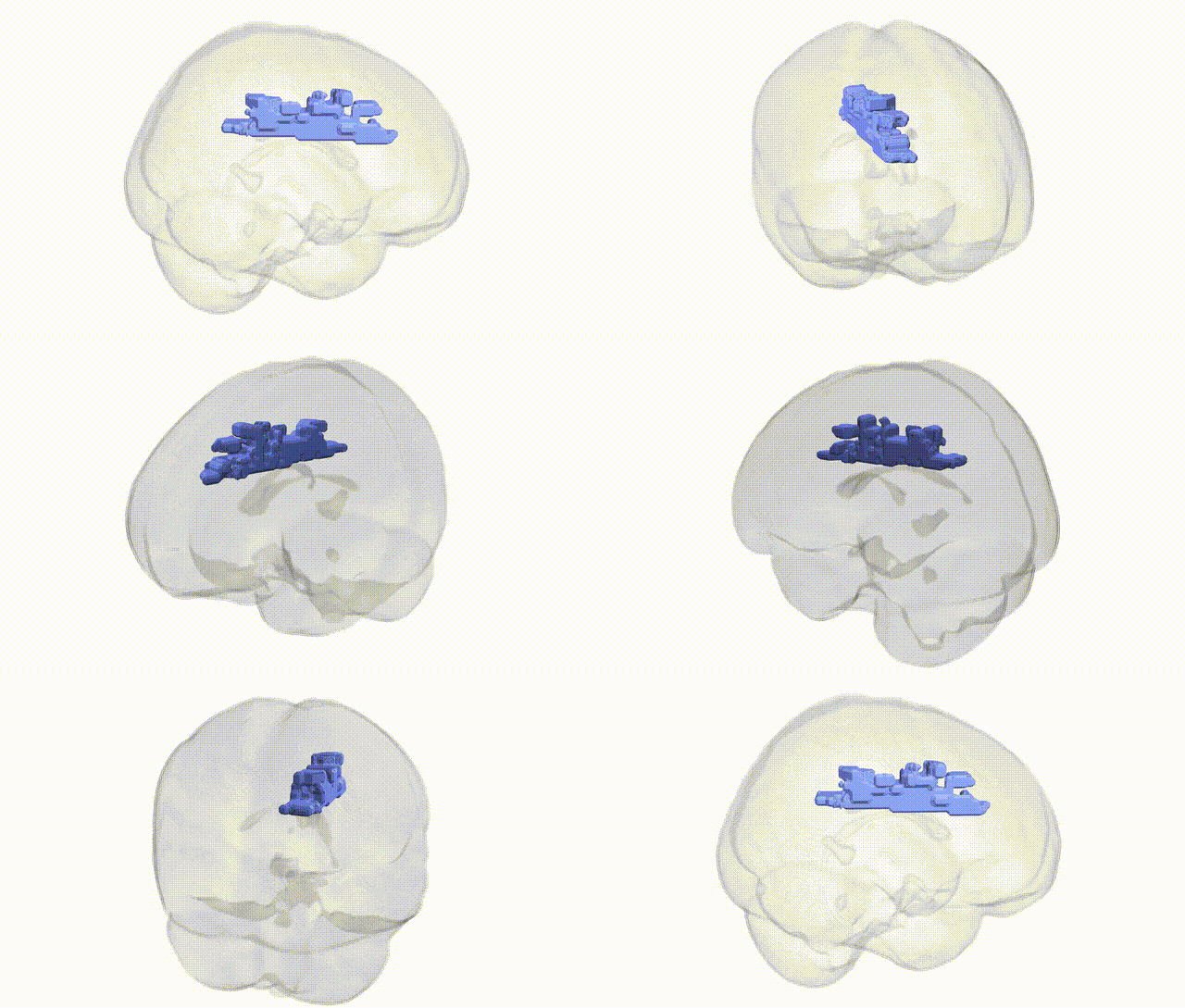
Full Quality Version: Download MP4
Wali Sidiqyar*, Gaurav Rudravaram*, Elyssa M. McMaster, Trent M. Schwartz, Adam M. Saunders, Kurt G. Schilling, Bennett A. Landman "Introducing SPINS: A Shared Public Visualization Library of Neuroanatomical Structures." Medical Imaging with Deep Learning- short paper
This resource is licensed under CC0 1.0 Universal (Public Domain).