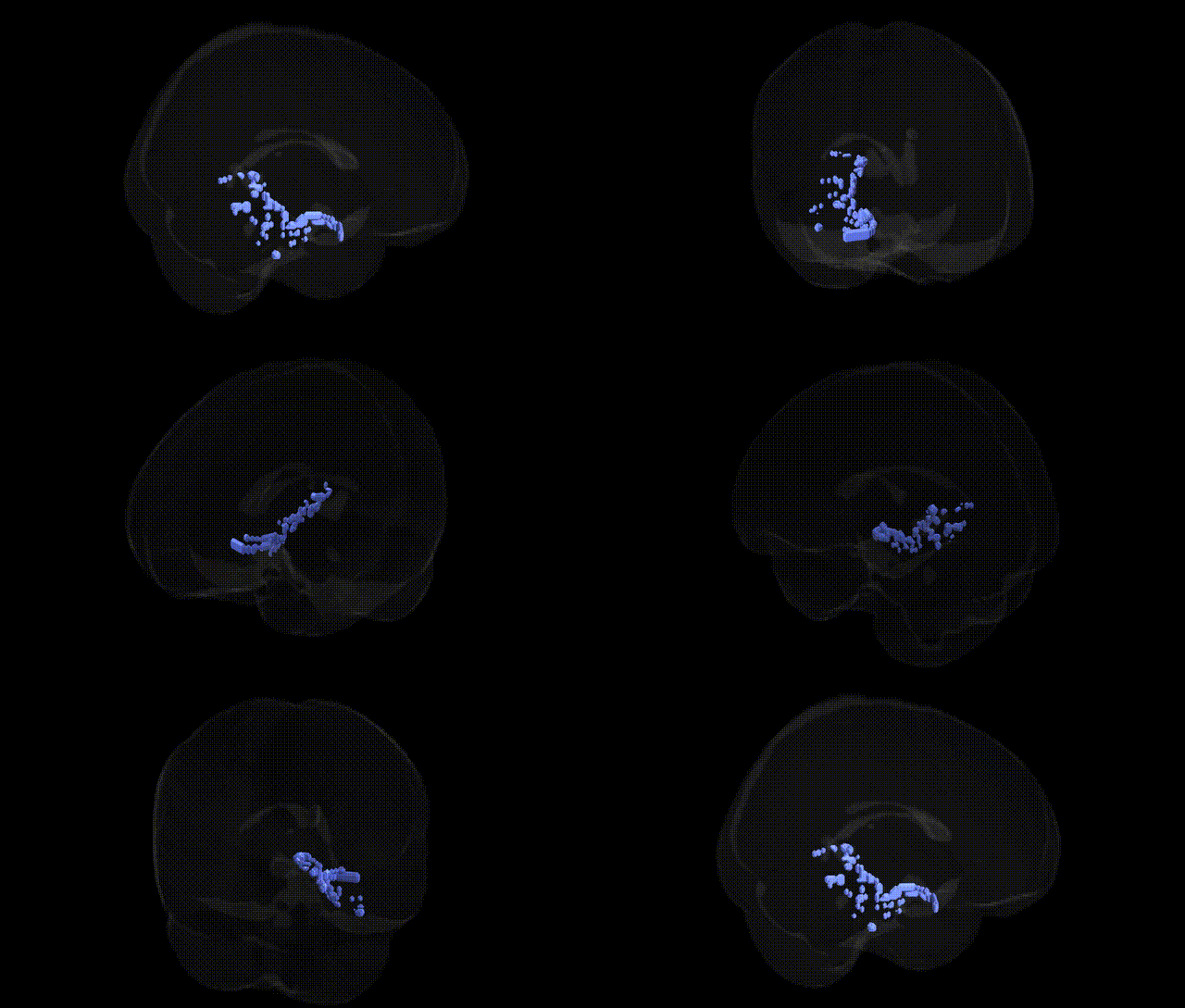
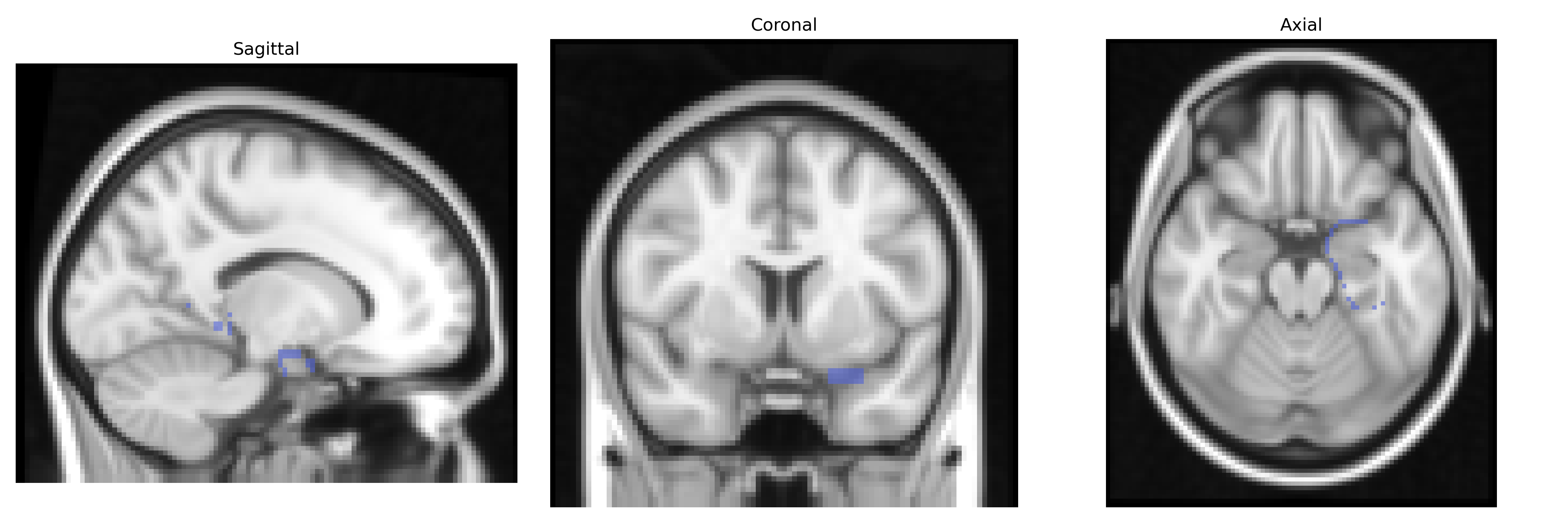
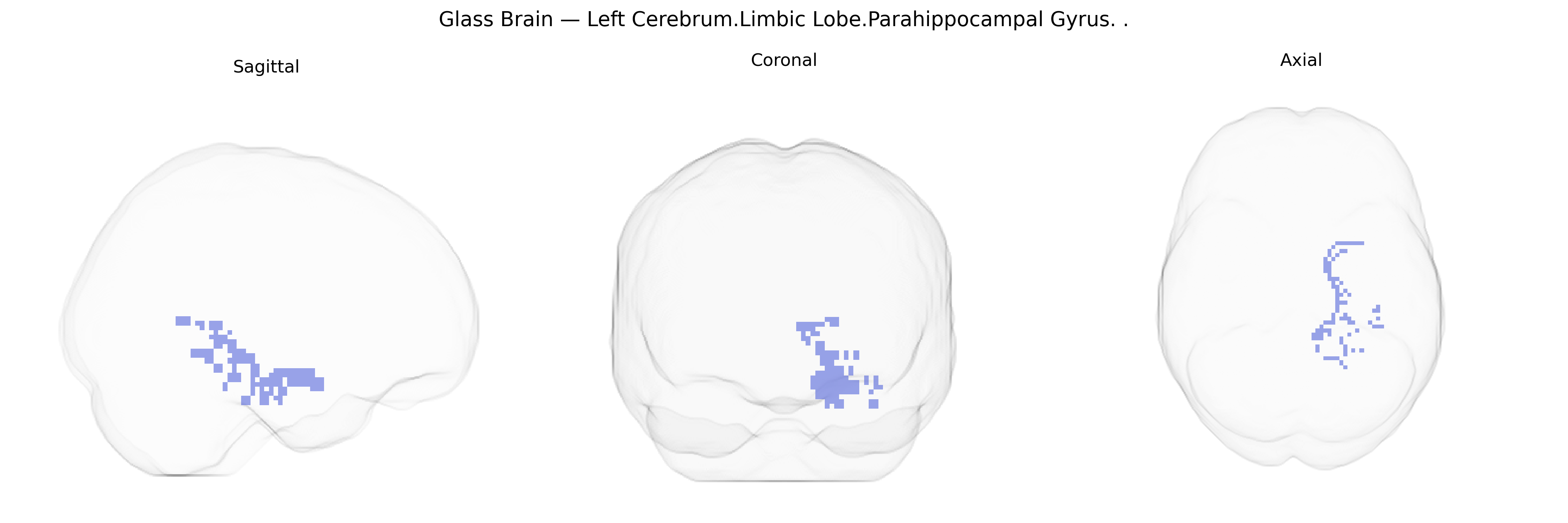
The bilateral Left Cerebrum Limbic Lobe Parahippocampal Gyrus is a medial temporal lobe structure that forms part of the limbic system and is critically involved in memory encoding, contextual association, and spatial navigation. Cytoarchitectonically, it comprises several subregions, including the entorhinal cortex, which serves as a major cortical gateway to the hippocampal formation, relaying multimodal sensory and associative information. Functionally, the parahippocampal gyrus contributes to the processing of environmental scenes and contextual cues, supports consolidation of episodic memories, and participates in emotional-mnemonic integration through its connections with the hippocampus, amygdala, and cingulate cortex. It is vascularized primarily by branches of the posterior cerebral artery and is frequently implicated in temporal lobe epilepsy, neurodegenerative conditions such as Alzheimer’s disease, and disorders of memory and spatial orientation.
The parahippocampal gyrus, a medial temporal-lobe structure critical for episodic memory, contextual processing, and scene recognition, shows robust genetic influences that have been characterized in large-scale neuroimaging GWAS and disease-focused studies. Twin and family studies implicate moderate to high heritability of parahippocampal volume and cortical thickness, and recent GWAS of MRI-derived brain measures (e.g., ENIGMA, UK Biobank) have identified associated loci near genes involved in neurodevelopment, synaptic function, and axonal guidance, including variants in or near WNT3, KIAA0586, DLG2, and genes regulating hippocampal and limbic morphogenesis. Parahippocampal structure and function are genetically linked to Alzheimer’s disease risk via APOE and other AD-related loci, with at-risk alleles associated with accelerated atrophy and altered functional connectivity in this region. Additional GWAS and candidate-gene studies have connected parahippocampal abnormalities to schizophrenia (e.g., variants in CACNA1C, ZNF804A and broader polygenic risk scores influencing medial temporal volume), major depressive disorder (where polygenic load for depression correlates with parahippocampal and hippocampal morphology), PTSD and anxiety-related traits (with risk alleles in stress-response genes such as FKBP5 and CRHR1 affecting medial temporal and limbic circuitry), and cognitive traits including general intelligence and memory performance (where polygenic scores for cognition map partly onto parahippocampal and hippocampal structure). Overall, convergent evidence indicates that common and rare variants influencing neurodevelopment, synaptic plasticity, and neurodegeneration exert measurable effects on the bilateral parahippocampal gyrus, linking its genetically shaped morphology and connectivity to susceptibility for neurodegenerative, psychotic, mood, and anxiety disorders, as well as to interindividual differences in memory and spatial/contextual cognition.
Overview generated by GPT-4o (2026).
Region ID: 125
Hemisphere: bilateral
Atlas: Talairach labels 2mm
Full Quality Version: Download MP4
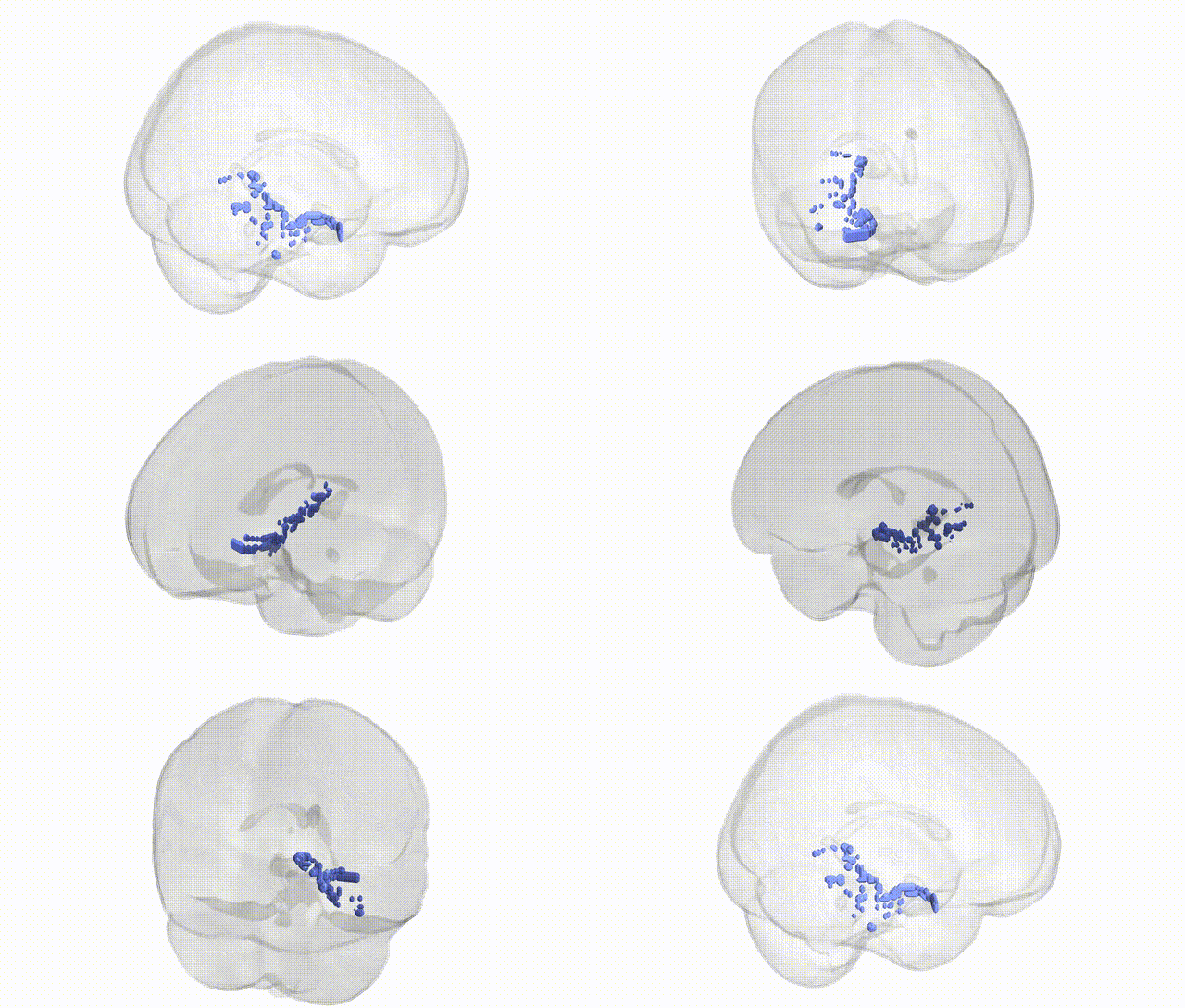
Full Quality Version: Download MP4
Wali Sidiqyar*, Gaurav Rudravaram*, Elyssa M. McMaster, Trent M. Schwartz, Adam M. Saunders, Kurt G. Schilling, Bennett A. Landman "Introducing SPINS: A Shared Public Visualization Library of Neuroanatomical Structures." Medical Imaging with Deep Learning- short paper
This resource is licensed under CC0 1.0 Universal (Public Domain).