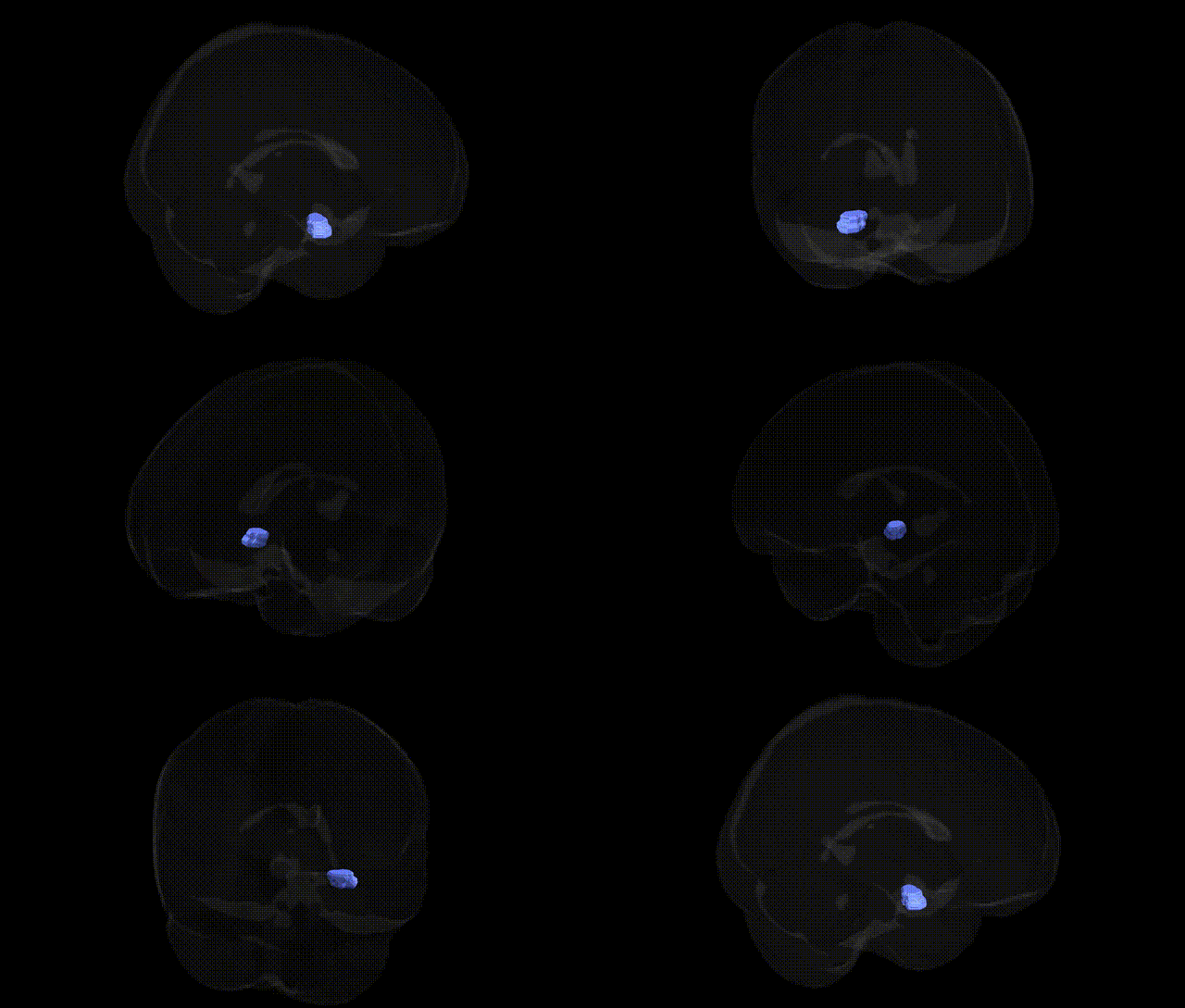
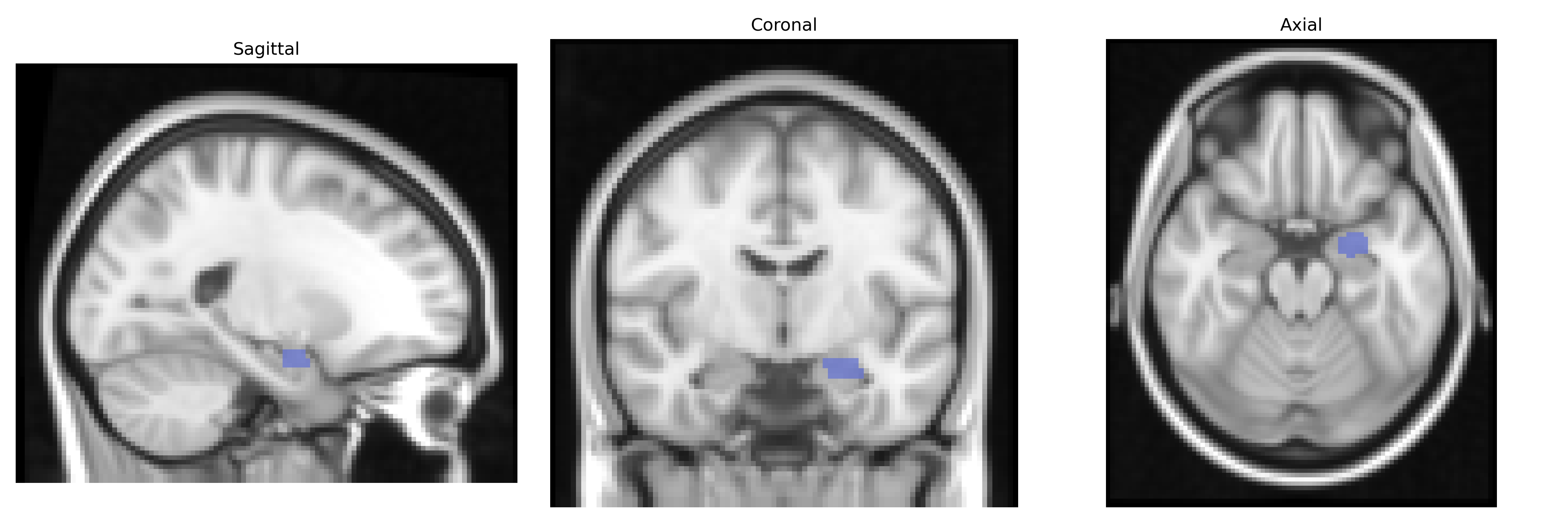
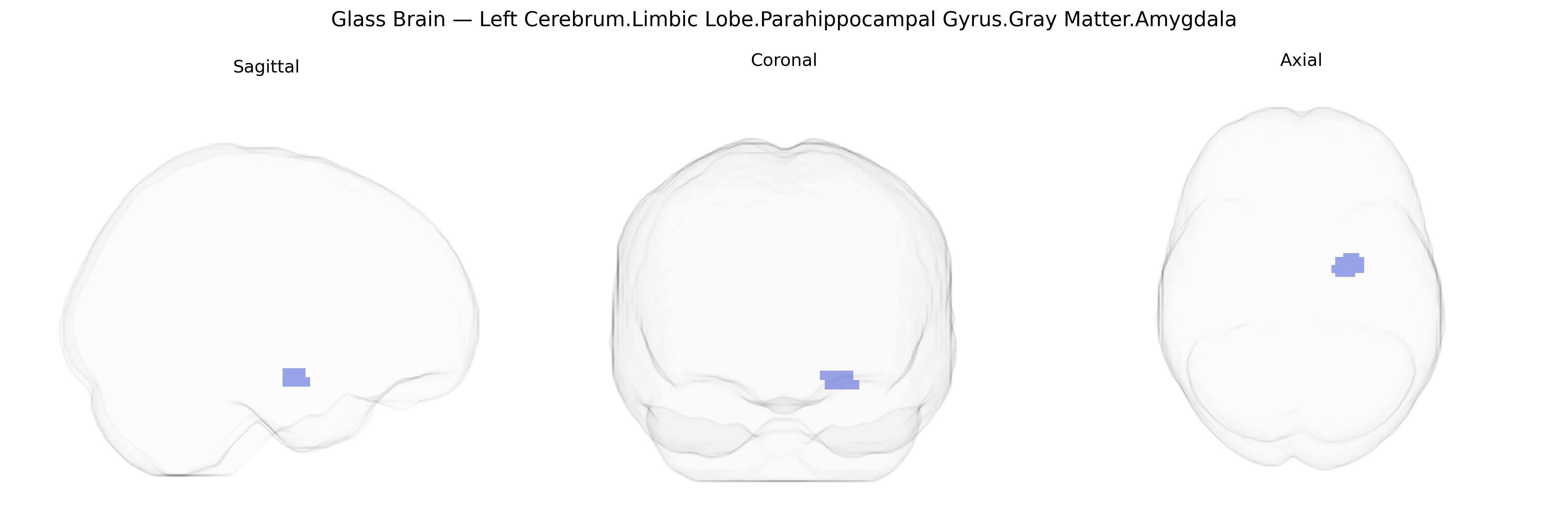
The bilateral Left Cerebrum.Limbic Lobe.Parahippocampal Gyrus.Gray Matter.Amygdala corresponds to the gray matter nuclei of the amygdala embedded in the anterior portion of the parahippocampal region within the limbic lobe of the left cerebral hemisphere. The amygdala is a complex of nuclei (including basolateral, centromedial, and cortical groups) situated in the medial temporal lobe, adjacent to the hippocampus and uncus, and receives multimodal sensory input from cortical and subcortical regions. It plays a central role in emotional processing, particularly fear and threat detection, contributes to emotional learning and memory consolidation, and participates in autonomic and endocrine responses via connections with the hypothalamus and brainstem. Functionally, this region is part of the broader limbic circuitry involved in affective regulation, social behavior, and modulation of attention and perception by emotionally salient stimuli. Amygdala
The bilateral left parahippocampal–amygdala complex, as defined in the Talairach 2 mm atlas, has been repeatedly implicated in genetic studies of psychiatric and neurodevelopmental disorders, emotional processing, and structural brain variation. Twin and imaging-genetics studies show high heritability of amygdala and parahippocampal gray matter volume and function, with numerous GWAS linking variants in genes involved in synaptic plasticity, neurodevelopment, and stress regulation (e.g., BDNF, SLC6A4, CACNA1C, COMT, APOE, and genes in glutamatergic and GABAergic signaling pathways) to structural and functional differences in this region. Large-scale GWAS of brain imaging phenotypes (such as ENIGMA and UK Biobank) have identified common variants associated with amygdala and hippocampal/parahippocampal volumes, including loci near MIR137, DPP4, SORL1, and other genes related to neuronal growth, neurodegeneration, and immune function. Genetic risk for major depressive disorder, anxiety disorders, bipolar disorder, schizophrenia, and PTSD is associated with altered activation and connectivity of the amygdala–parahippocampal circuitry, often in relation to fear, threat, and emotional memory processing, with PRS (polygenic risk scores) for these conditions predicting structural and functional variation in this region. Risk alleles for Alzheimer’s disease (most notably APOE ε4 and other GWAS-identified loci) correlate with parahippocampal atrophy and early memory impairment, while variants linked to autism spectrum disorder and social behavior traits are associated with atypical amygdala development and social-emotional processing differences. In addition, GWAS of personality and affect-related traits (neuroticism, extraversion, impulsivity), as well as stress reactivity and aggression, often highlight this limbic region as a key intermediate phenotype, with genetic influences on amygdala/parahippocampal structure and reactivity mediating the association between risk alleles and behavioral outcomes.
Overview generated by GPT-4o (2026).
Region ID: 219
Hemisphere: bilateral
Atlas: Talairach labels 2mm
Full Quality Version: Download MP4
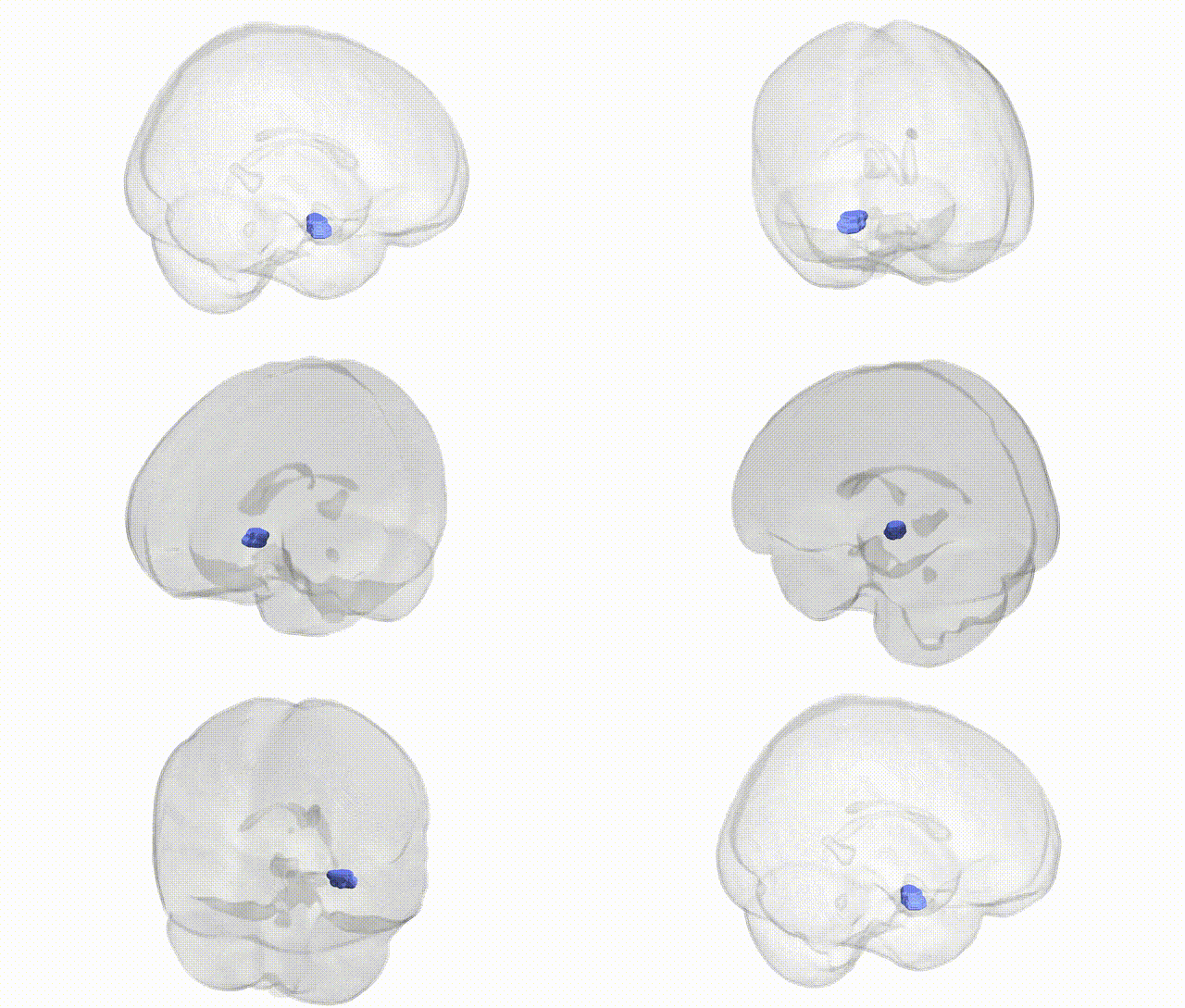
Full Quality Version: Download MP4
Wali Sidiqyar*, Gaurav Rudravaram*, Elyssa M. McMaster, Trent M. Schwartz, Adam M. Saunders, Kurt G. Schilling, Bennett A. Landman "Introducing SPINS: A Shared Public Visualization Library of Neuroanatomical Structures." Medical Imaging with Deep Learning- short paper
This resource is licensed under CC0 1.0 Universal (Public Domain).