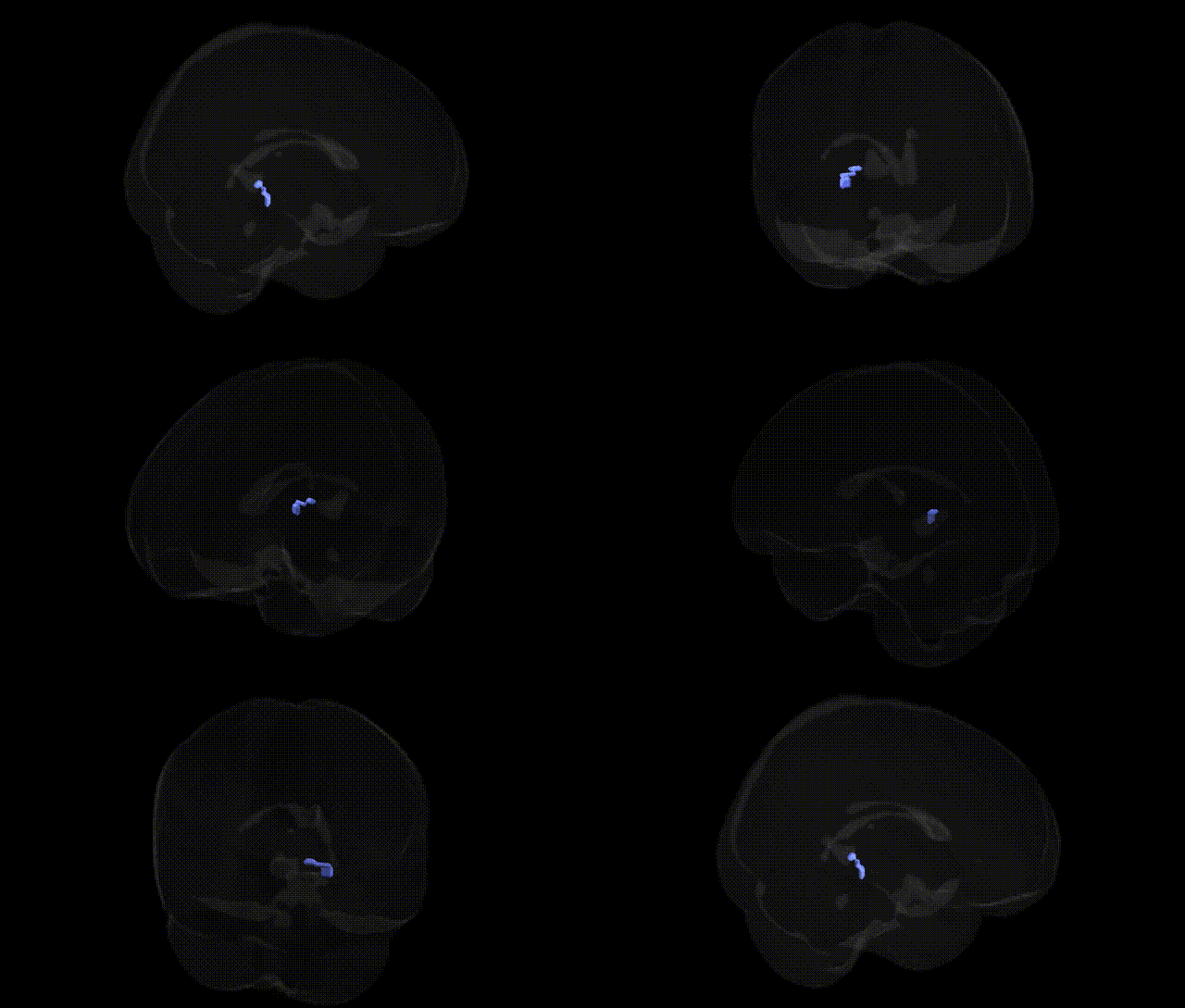
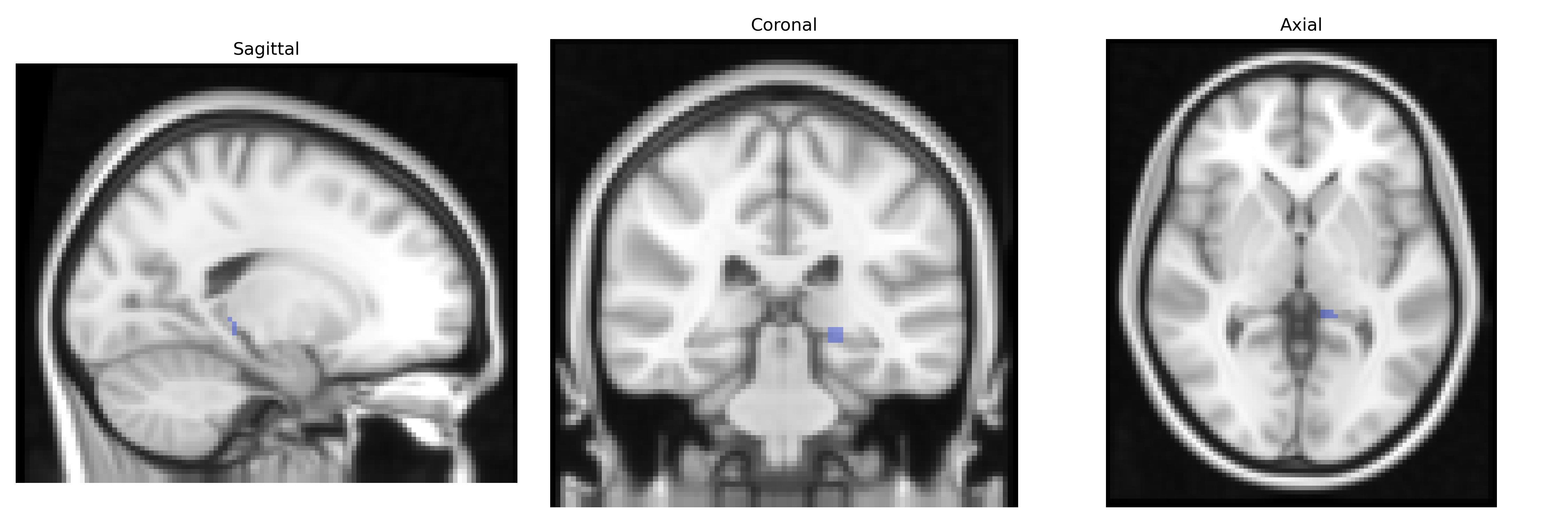
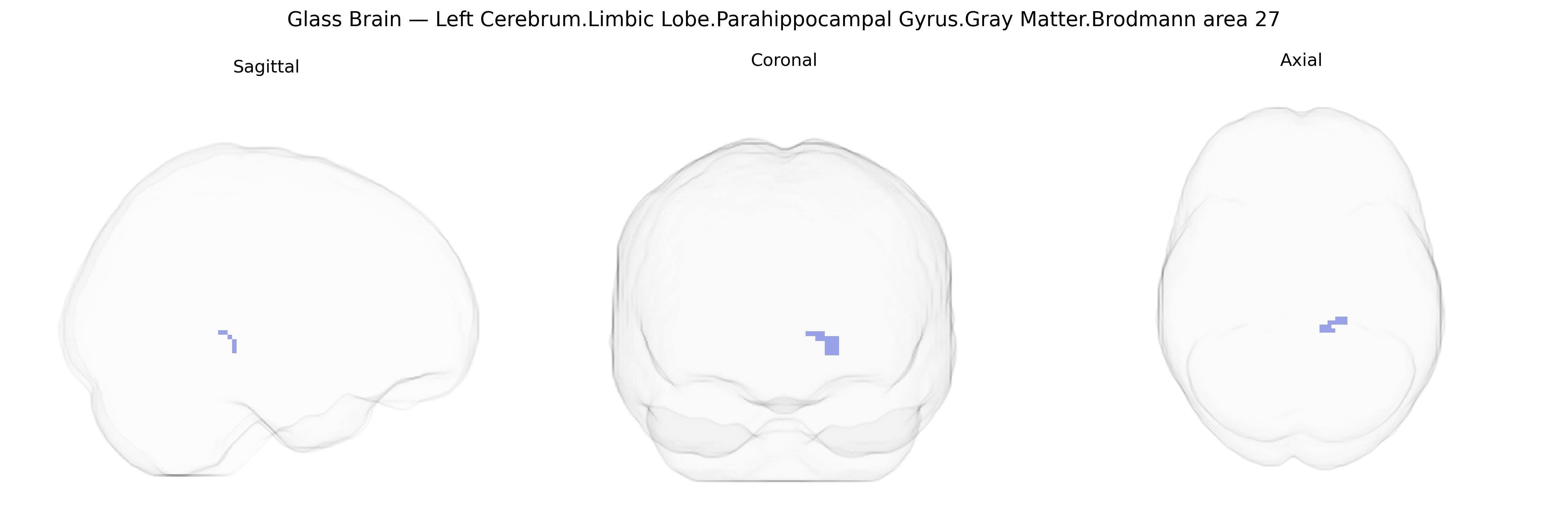
The bilateral Left Cerebrum.Limbic Lobe.Parahippocampal Gyrus.Gray Matter.Brodmann area 27 corresponds to the presubiculum, a small cortical region located in the medial temporal lobe along the parahippocampal gyrus, adjacent to the hippocampal formation. This area is part of the limbic system and is strongly involved in spatial orientation, head-direction signaling, and integration of visuospatial and mnemonic information, contributing to navigation and contextual memory. BA27 receives multimodal inputs from the entorhinal cortex, hippocampus, and other parahippocampal regions, and projects to limbic and associative cortices, helping to form a functional network for memory-guided behavior and spatial cognition. There is no direct link for Brodmann area 27; a closely related structure is the Presubiculum.
The parahippocampal gyrus gray matter corresponding roughly to Brodmann area 27 (including presubiculum/parasubiculum in the Talairach 2 mm atlas) is strongly implicated in genetic influences on episodic memory, spatial navigation, and risk for neuropsychiatric and neurodegenerative disorders, although specific GWAS hits are typically reported for broader medial temporal or hippocampal regions rather than BA27 alone. Large-scale imaging genetics studies from ENIGMA and UK Biobank have identified multiple loci (e.g., in or near genes such as APOE, TOMM40, SLC39A8, and MAPT) associated with medial temporal and hippocampal volume and cortical thickness, which encompass the parahippocampal region and have been linked to Alzheimer’s disease risk, age-related cognitive decline, and memory performance. GWAS of schizophrenia, bipolar disorder, and major depression have found polygenic risk scores associated with structural and functional alterations in medial temporal and parahippocampal circuitry, implicating genes involved in synaptic plasticity, glutamatergic signaling, and neurodevelopment (e.g., CACNA1C, GRM3, and complement pathway genes) in shaping this region’s morphology and connectivity. Additionally, genetic variants affecting tau pathology (MAPT haplotypes), amyloid processing (including APOE ε4), and immune regulation have been related to atrophy patterns and functional changes in parahippocampal and adjacent hippocampal areas in Alzheimer’s disease and frontotemporal dementia. GWAS of traits such as general cognitive ability, educational attainment, and neuroticism have shown downstream associations with parahippocampal structure and function in imaging genetics follow-ups, suggesting that common polygenic variation modulates this limbic region as part of broader cortico-limbic networks underlying memory, emotion regulation, and vulnerability to psychiatric and neurodegenerative disease, even though BA27-specific genetic associations remain relatively undercharacterized.
Overview generated by GPT-4o (2026).
Region ID: 432
Hemisphere: bilateral
Atlas: Talairach labels 2mm
Full Quality Version: Download MP4
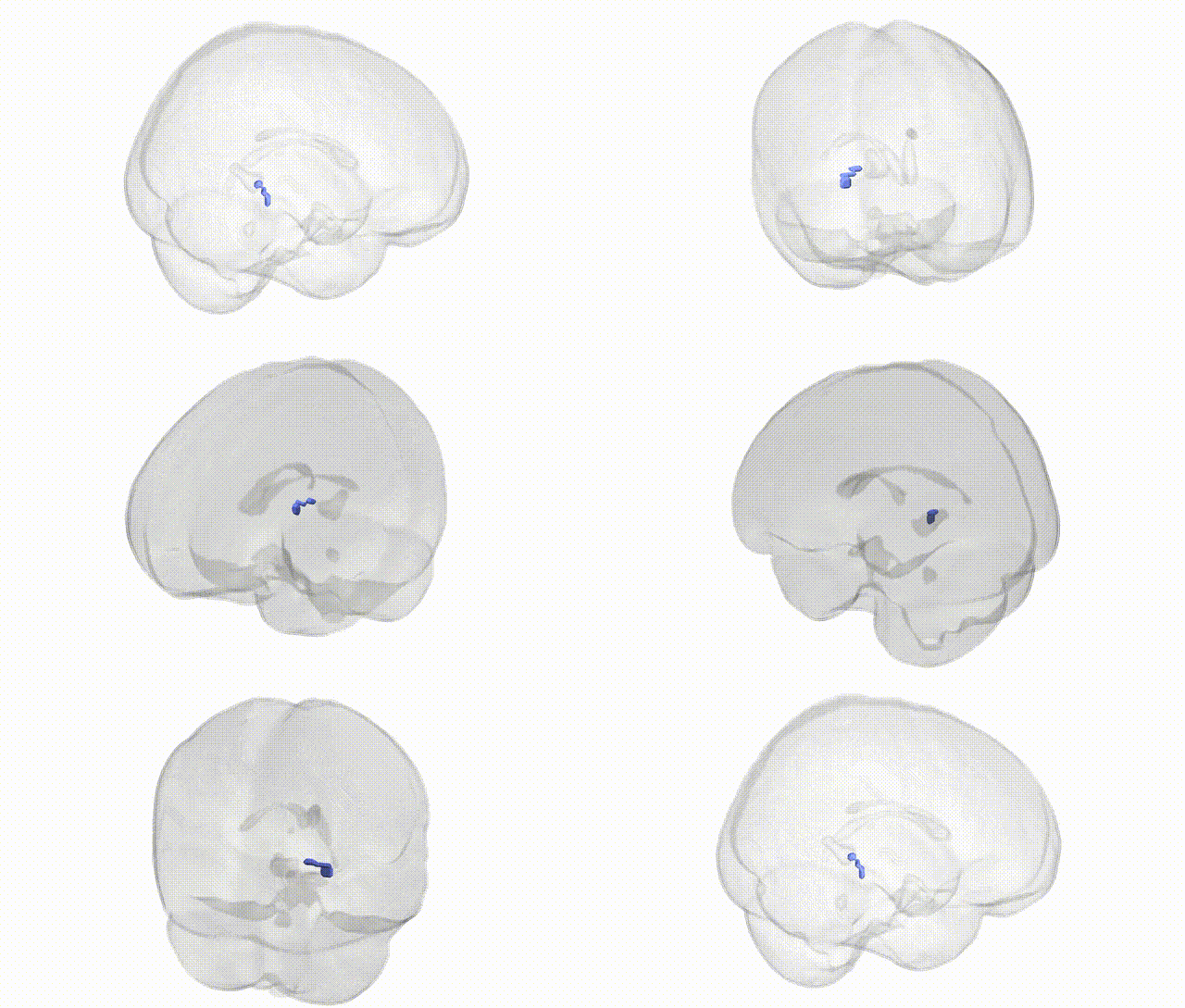
Full Quality Version: Download MP4
Wali Sidiqyar*, Gaurav Rudravaram*, Elyssa M. McMaster, Trent M. Schwartz, Adam M. Saunders, Kurt G. Schilling, Bennett A. Landman "Introducing SPINS: A Shared Public Visualization Library of Neuroanatomical Structures." Medical Imaging with Deep Learning- short paper
This resource is licensed under CC0 1.0 Universal (Public Domain).