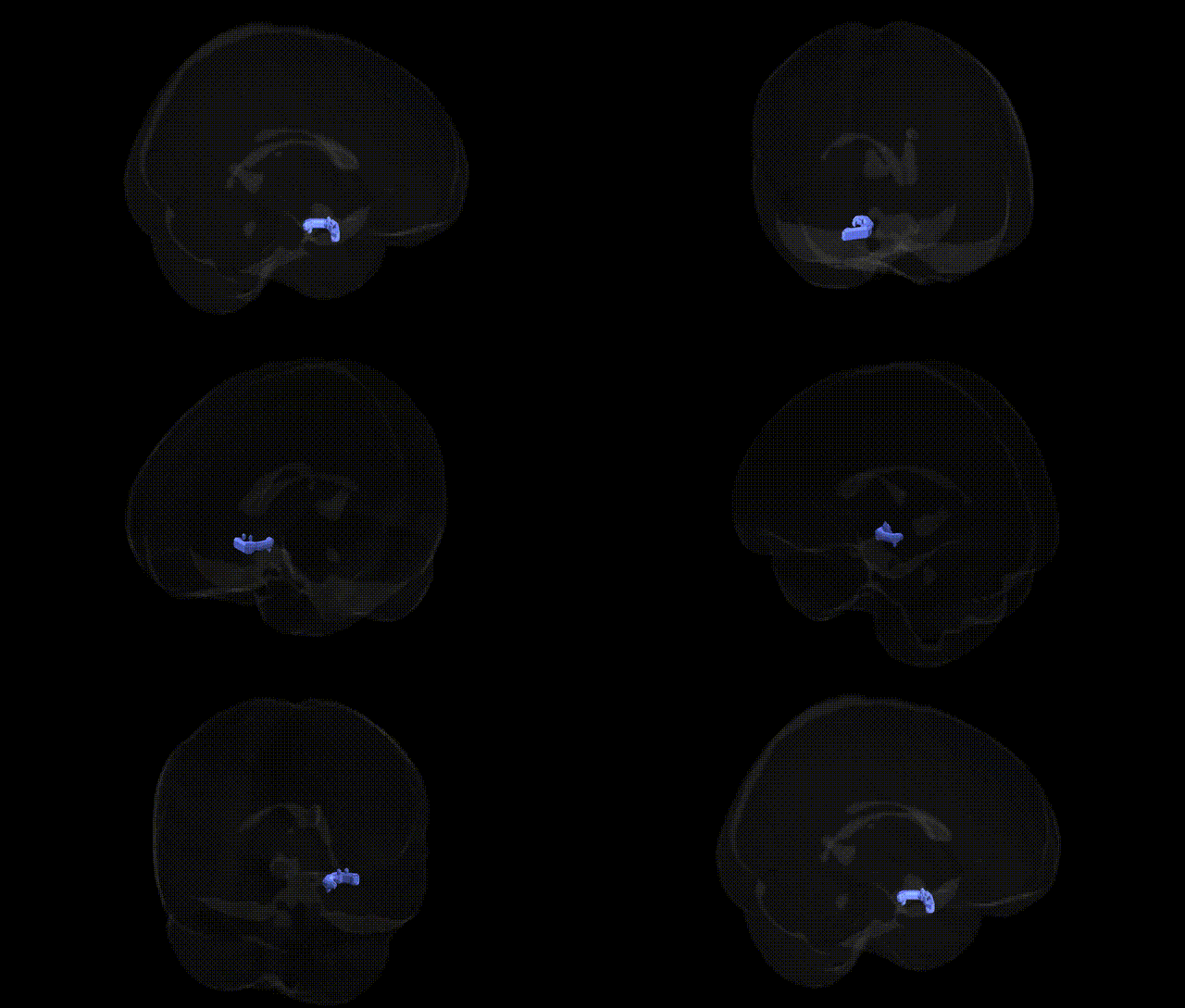
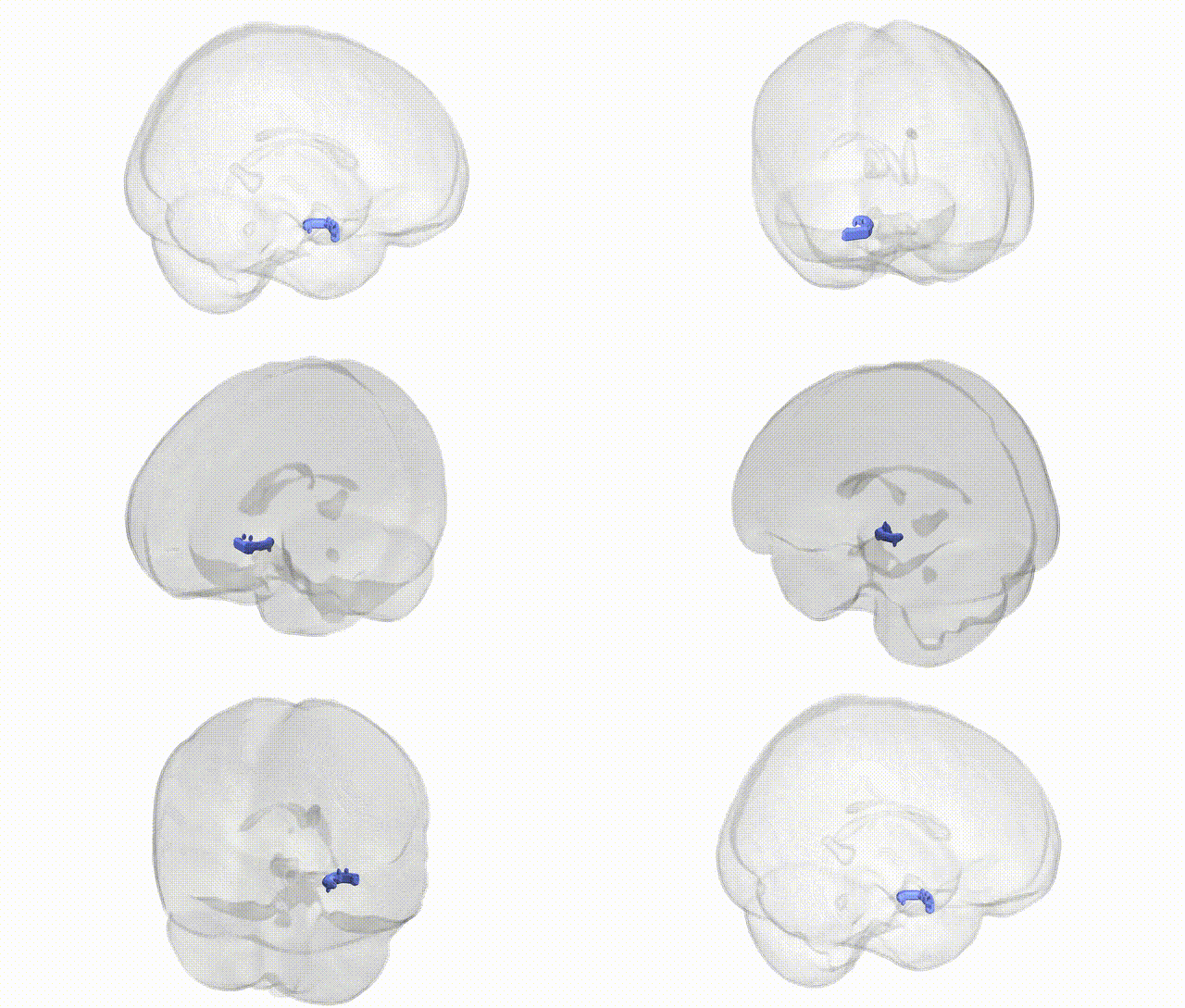
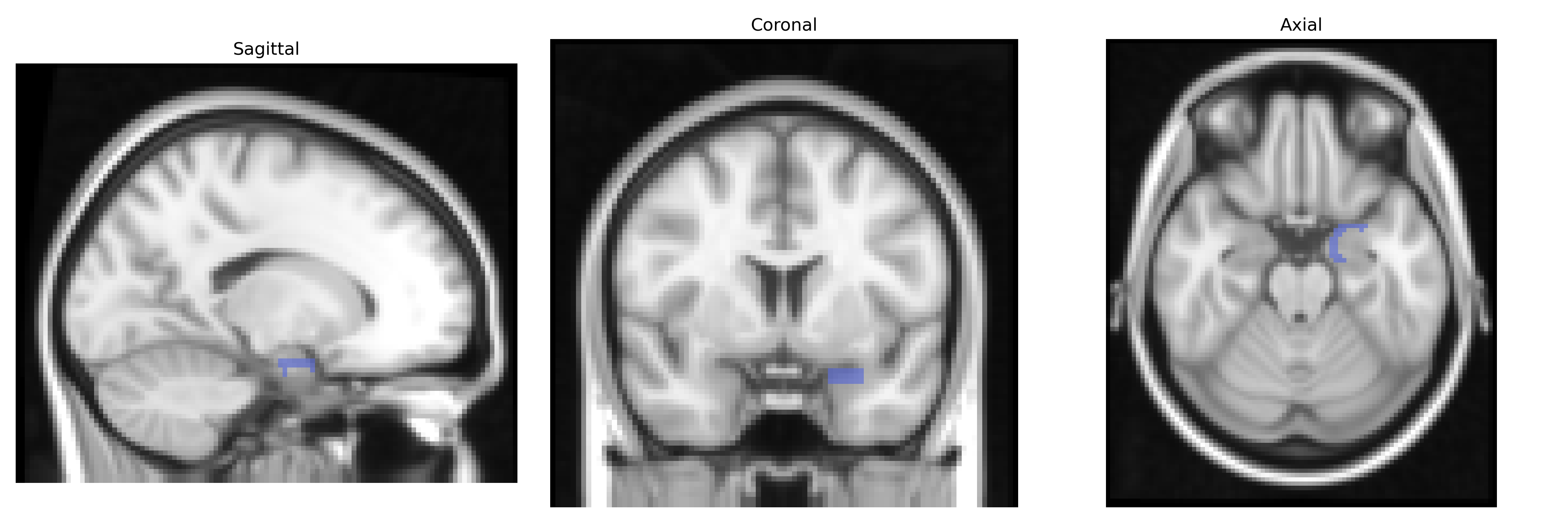
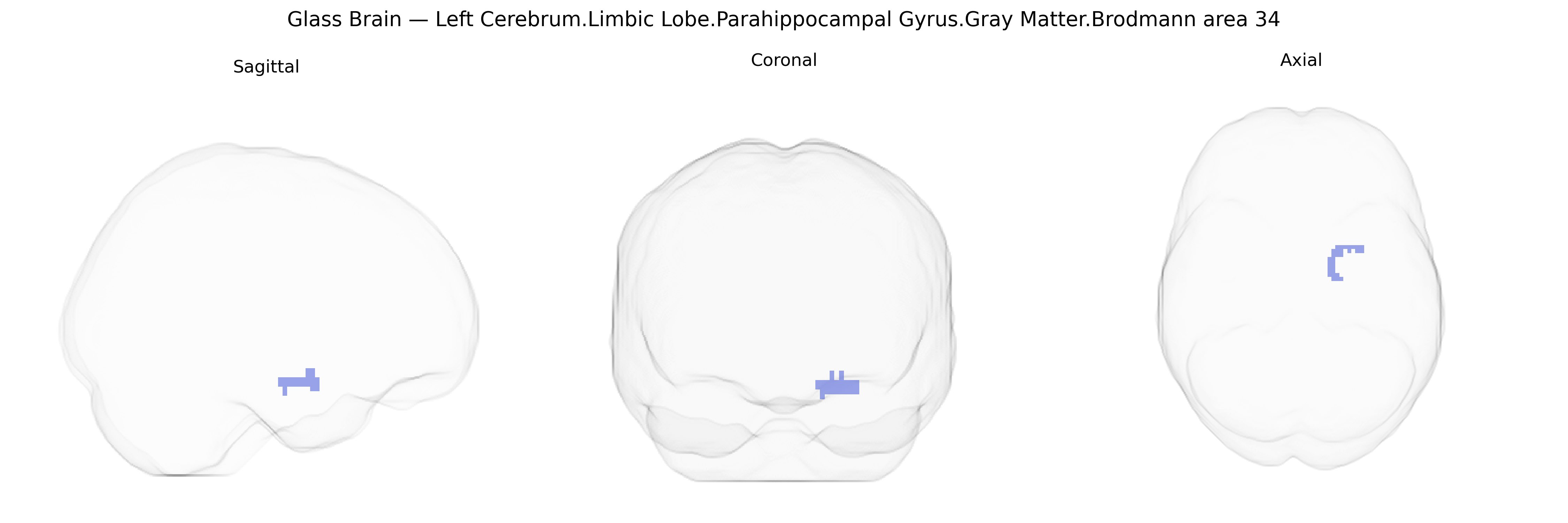
The bilateral Left Cerebrum Limbic Lobe Parahippocampal Gyrus Gray Matter Brodmann area 34 corresponds to the dorsal portion of the parahippocampal gyrus, traditionally termed the dorsal entorhinal cortex, a key gateway between neocortex and hippocampal formation. Cytoarchitectonically, BA34 is a transitional allocortical region characterized by relatively simple cortical layering compared with isocortex, and it plays crucial roles in memory encoding, spatial navigation, and associative processing by integrating multimodal sensory inputs before transmitting them to the hippocampus. Functionally, activity in BA34 is associated with episodic memory, contextual representation, and aspects of olfactory and emotional processing typical of limbic circuitry. There is no direct Wikipedia article for Brodmann area 34; see the related region Entorhinal cortex.
The bilateral parahippocampal gyrus gray matter in Brodmann area 34 (left cerebrum, limbic lobe) has been implicated in genetic studies primarily via imaging genetics and GWAS of brain structure and neuropsychiatric phenotypes, despite limited work specifically isolating BA34. Variants in genes related to synaptic plasticity and glutamatergic transmission—such as BDNF (e.g., Val66Met), GRM3, and genes in the major histocompatibility complex (notably complement component C4)—have been associated with parahippocampal/medial temporal lobe volume, activation, or connectivity in schizophrenia, major depressive disorder, and bipolar disorder. APOE ε4 and other Alzheimer’s disease–risk loci (e.g., CLU, CR1, BIN1) influence medial temporal atrophy and functional changes that extend into parahippocampal regions, consistent with this area’s role in episodic memory and early AD pathology. Large-scale GWAS of subcortical and cortical volumes (ENIGMA and UK Biobank) have identified multiple loci (including on 12q24, 17q21, and 3p24 near genes such as WNT3, MAPT, and others) associated with hippocampal and parahippocampal morphology, indirectly implicating BA34. Genetic variants linked to anxiety-related traits and PTSD (e.g., in FKBP5 and serotonin-related genes such as SLC6A4) have been tied to altered medial temporal and parahippocampal responses to emotional stimuli. Overall, genetic associations converge on pathways involving synaptic signaling, neurodevelopment, immune-complement function, and neurodegeneration, with effects observed in parahippocampal and closely adjacent entorhinal/BA34 territory, though relatively few GWAS explicitly map findings at the resolution of this specific Talairach-defined region.
Overview generated by GPT-4o (2026).
Region ID: 177
Hemisphere: bilateral
Atlas: Talairach labels 2mm
Full Quality Version: Download MP4
Full Quality Version: Download MP4
Wali Sidiqyar*, Gaurav Rudravaram*, Elyssa M. McMaster, Trent M. Schwartz, Adam M. Saunders, Kurt G. Schilling, Bennett A. Landman "Introducing SPINS: A Shared Public Visualization Library of Neuroanatomical Structures." Medical Imaging with Deep Learning- short paper
This resource is licensed under CC0 1.0 Universal (Public Domain).