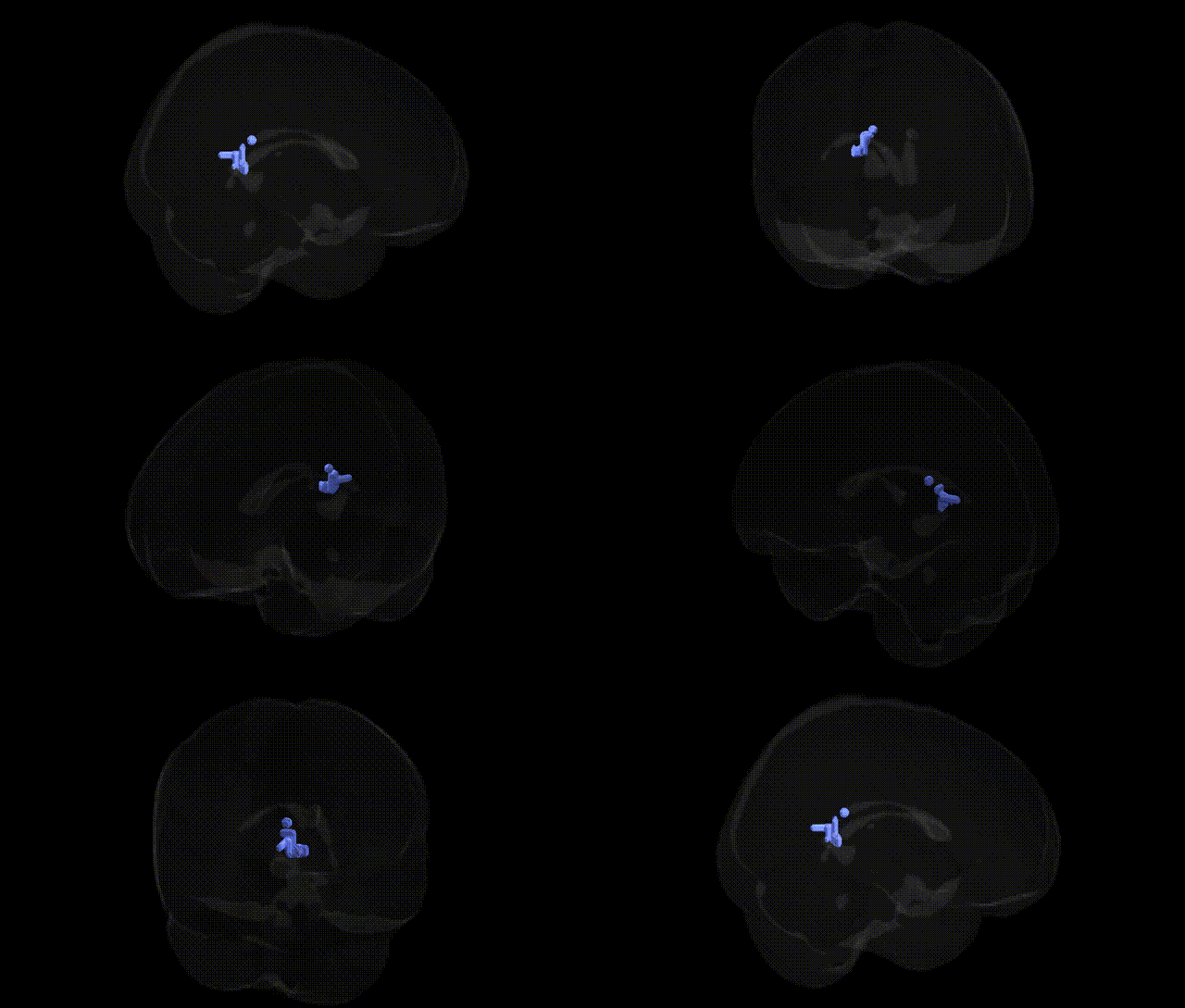
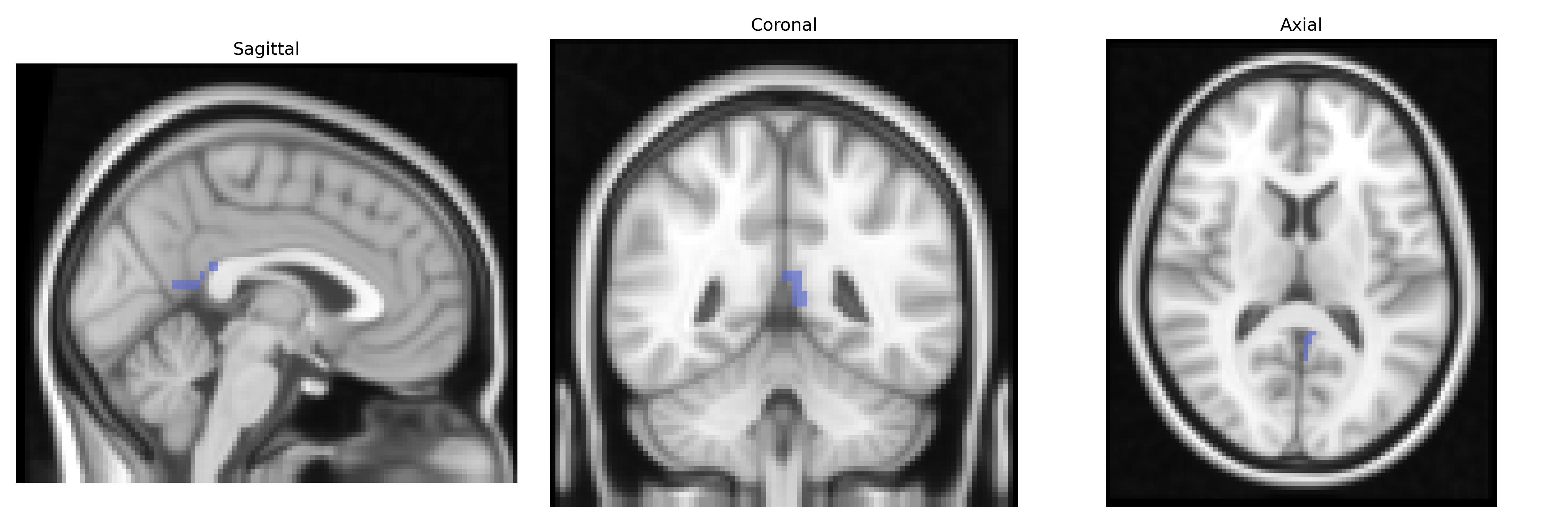
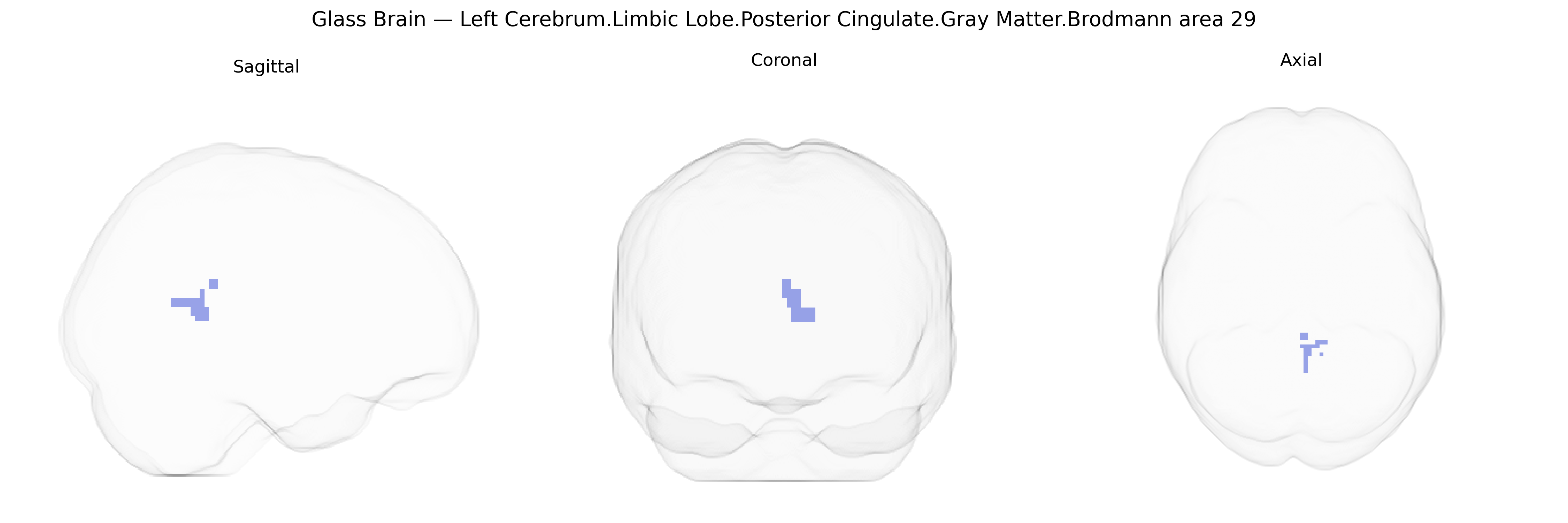
The bilateral Left Cerebrum.Limbic Lobe.Posterior Cingulate.Gray Matter.Brodmann area 29 corresponds to retrosplenial cortex located in the posterior cingulate region of the limbic lobe. Brodmann area 29 is a small, phylogenetically older agranular cortical field lying adjacent to the splenium of the corpus callosum and is heavily interconnected with the hippocampal formation, parahippocampal cortex, thalamus, and other limbic structures. Functionally, this region is implicated in episodic memory, spatial navigation, contextual association, and integration of internal states with environmental cues, and is considered part of the broader posteromedial cortex network involved in self-referential processing. There is no direct Wikipedia article for Brodmann area 29; a related structure is the Retrosplenial cortex.
Genetic associations specifically targeting the bilateral Left Cerebrum Limbic Lobe Posterior Cingulate Gray Matter Brodmann area 29 (BA29) as defined in the Talairach 2 mm atlas are sparse, because most genome-wide association studies (GWAS) and imaging genetics analyses examine broader posterior cingulate cortex (PCC) or cingulate/limbic measures rather than this narrowly defined subregion. Nonetheless, common variants in genes related to synaptic function, neuroplasticity, and amyloid processing (e.g., APOE, CLU, PICALM) have repeatedly been associated with structural and functional alterations in the PCC in Alzheimer’s disease and preclinical cognitive decline, with APOE ε4 carriers showing reduced PCC metabolism and gray matter volume. Large neuroimaging GWAS (e.g., ENIGMA, UK Biobank) have identified polygenic influences on cortical thickness and surface area in cingulate and limbic regions, implicating pathways involved in neuronal development, glutamatergic signaling, and immune function, though these are typically reported at the level of “posterior cingulate” or “cingulate gyrus” rather than BA29. The PCC, including the retrosplenial/BA29 territory, is consistently involved in the default mode network and has been linked by imaging–genetics work to risk loci for major depressive disorder, schizophrenia, and anxiety-related traits via altered connectivity and activation patterns, and to personality dimensions such as neuroticism and introversion through polygenic scores that correlate with PCC structure and function. In summary, genetic findings point to pleiotropic effects of neurodegeneration, synaptic, and immune-related genes on posterior cingulate morphology and activity, but fine-grained, BA29-specific GWAS associations remain largely uncharacterized, with most evidence derived from broader PCC/cingulate-based imaging genetics.
Overview generated by GPT-4o (2026).
Region ID: 670
Hemisphere: bilateral
Atlas: Talairach labels 2mm
Full Quality Version: Download MP4
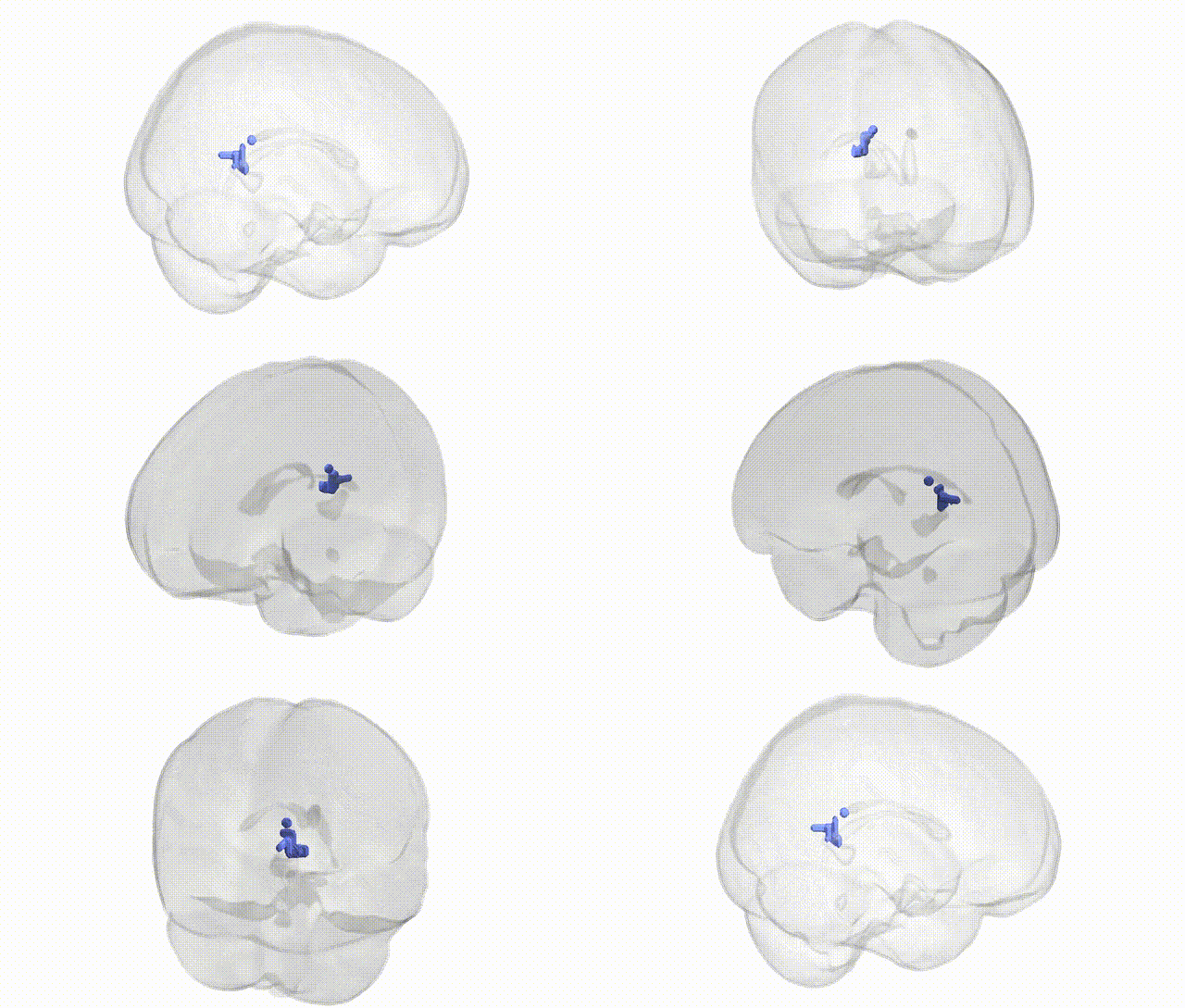
Full Quality Version: Download MP4
Wali Sidiqyar*, Gaurav Rudravaram*, Elyssa M. McMaster, Trent M. Schwartz, Adam M. Saunders, Kurt G. Schilling, Bennett A. Landman "Introducing SPINS: A Shared Public Visualization Library of Neuroanatomical Structures." Medical Imaging with Deep Learning- short paper
This resource is licensed under CC0 1.0 Universal (Public Domain).