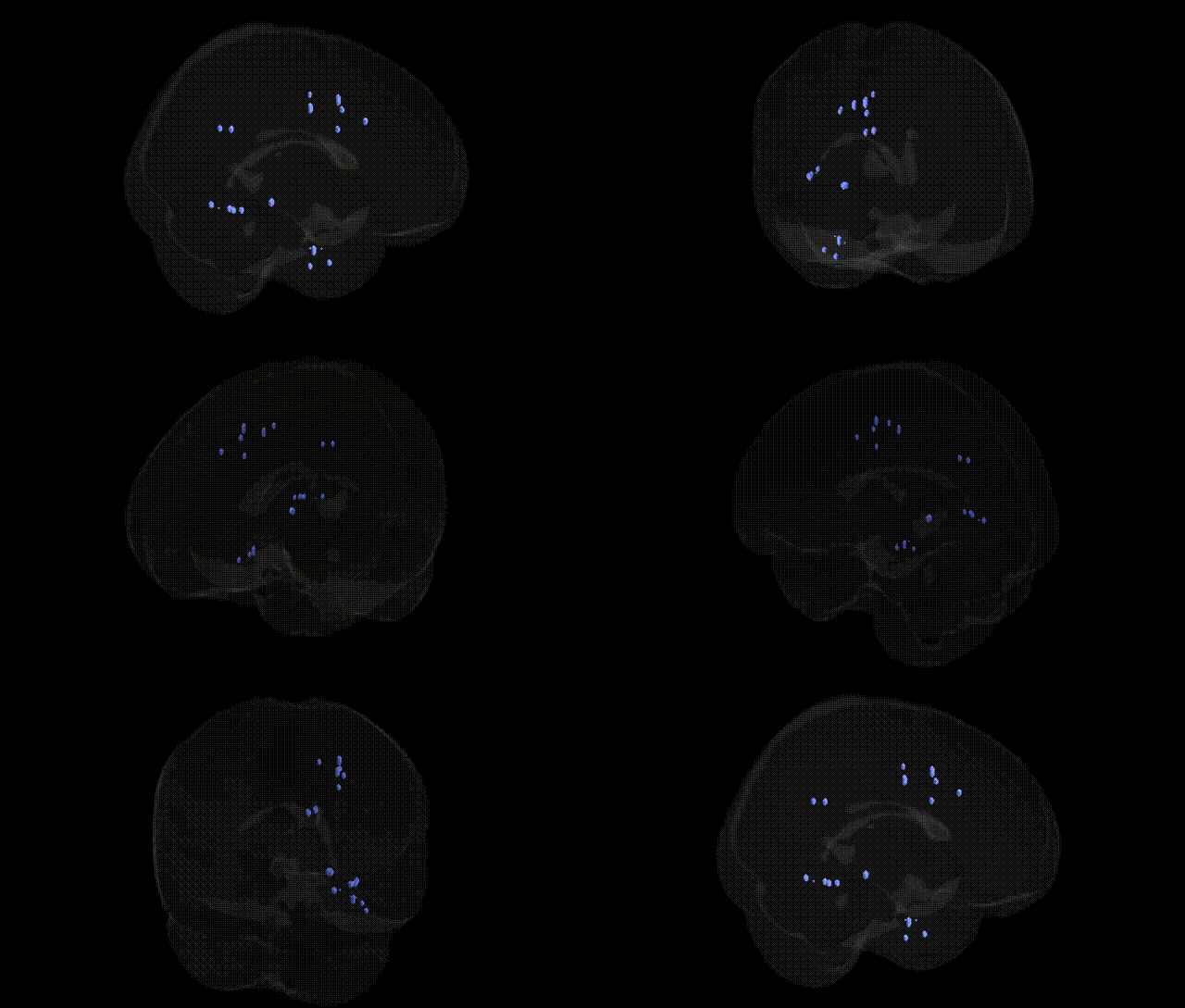
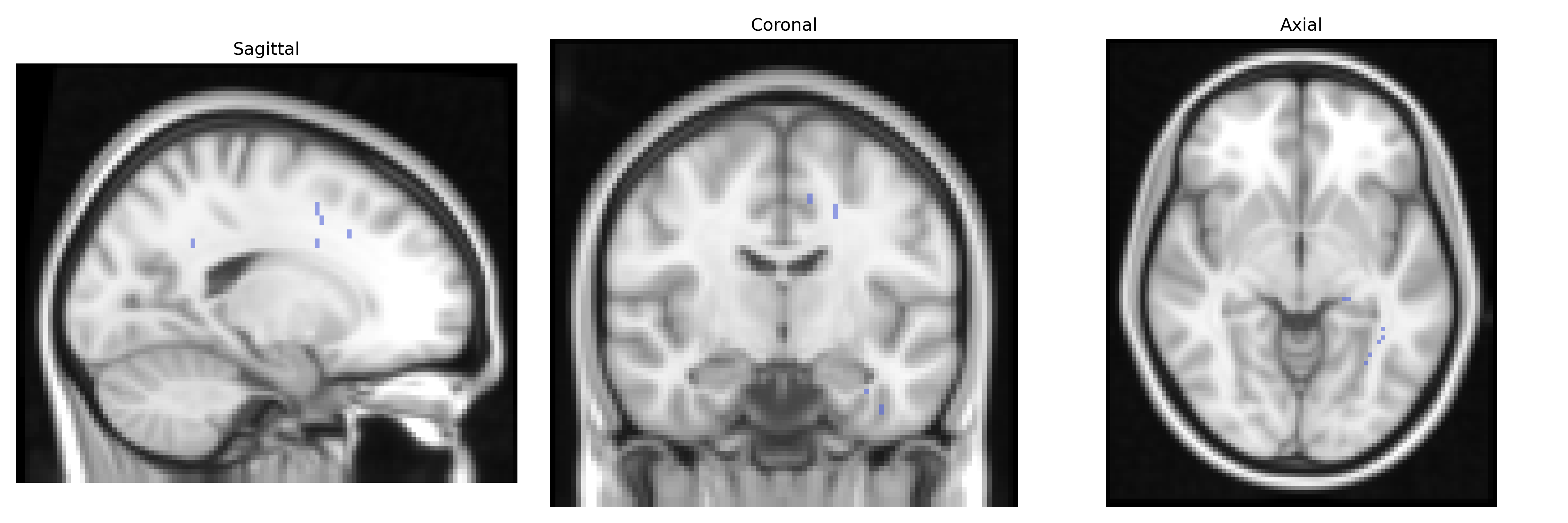
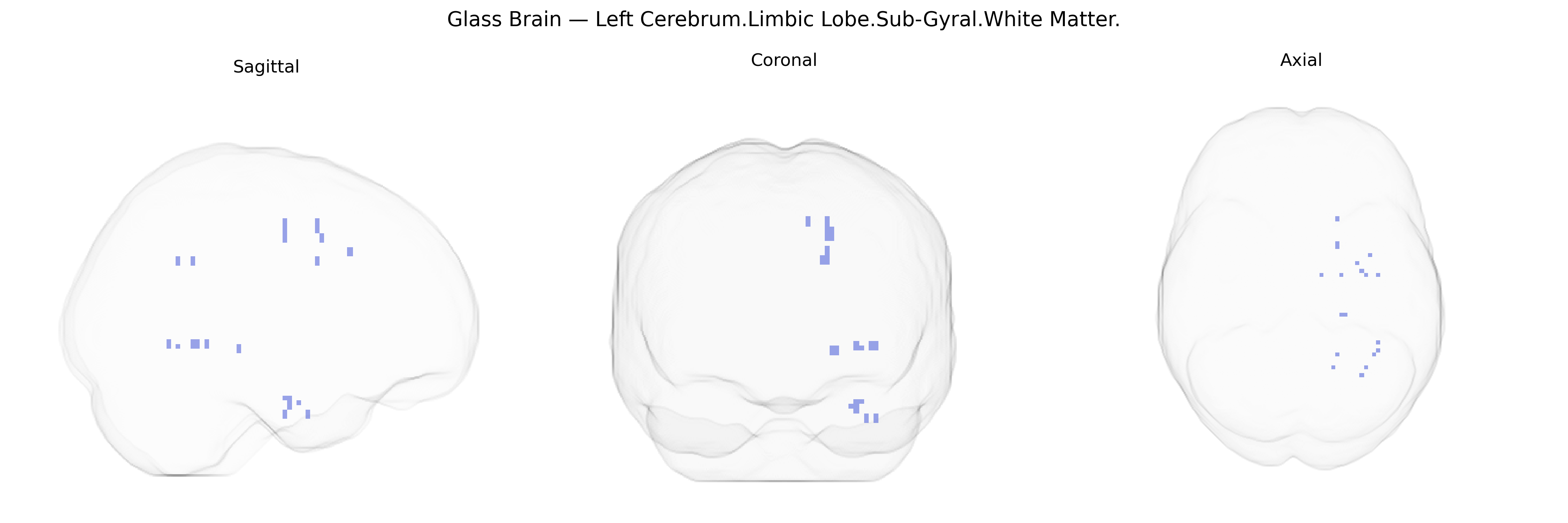
The bilateral Left Cerebrum.Limbic Lobe.Sub-Gyral.White Matter refers to deep white matter tracts located beneath the cortical gyri of the limbic lobe in the left cerebral hemisphere, encompassing fiber pathways that interconnect key limbic structures such as the cingulate gyrus, parahippocampal region, hippocampus, and other medial temporal and frontal areas. These sub-gyral white matter bundles participate in circuits involved in emotion, memory processing, motivation, and autonomic regulation, forming part of the limbic connectivity that links cortical and subcortical nuclei including the thalamus and hypothalamus. Functionally, this region contributes to the integration of affective states with cognitive processes and behavioral responses. There is no direct Wikipedia article for this specific atlas label; a closely related structure is the Limbic system.
The bilateral Left Cerebrum Limbic Lobe Sub-Gyral White Matter, as defined in the Talairach 2 mm atlas, roughly corresponds to deep limbic white matter pathways underlying structures such as the cingulate gyrus, parahippocampal regions, and adjacent medial temporal areas, and has been implicated in multiple genetic studies through its role in mood, cognition, and neurodevelopment. Large-scale neuroimaging GWAS, particularly those using ENIGMA and UK Biobank cohorts, have linked common variants in genes governing myelination and axonal integrity (e.g., NRG1, CNTNAP2, MAG, MBP, and oligodendrocyte-related loci) to limbic and cingulum bundle white matter microstructure, with associations to fractional anisotropy and mean diffusivity in tracts traversing this sub-gyral zone. Polygenic risk scores for major depressive disorder, bipolar disorder, schizophrenia, and anxiety disorders correlate with altered limbic white matter structure, including medial and cingulate pathways overlapping this region, suggesting that distributed genetic risk for psychiatric illness partly manifests through limbic white matter connectivity. GWAS of cognitive traits, educational attainment, and neuroticism have also reported associations with variants that influence limbic white matter integrity, with the cingulum and adjacent medial frontal–temporal tracts frequently highlighted as mediators of executive function and emotional regulation. Additionally, some risk loci for neurodegenerative and neuroinflammatory disorders (e.g., APOE for Alzheimer’s disease, HLA and other immune-related genes for multiple sclerosis) show downstream effects on limbic white matter, including sub-gyral pathways, through demyelination and axonal loss. Although genetic studies typically focus on tracts and lobes rather than this exact Talairach label, converging evidence from GWAS of white matter microstructure, psychiatric and cognitive traits, and neurodegeneration supports a substantial genetic contribution to structural variability and disease vulnerability in limbic sub-gyral white matter.
Overview generated by GPT-4o (2026).
Region ID: 96
Hemisphere: bilateral
Atlas: Talairach labels 2mm
Full Quality Version: Download MP4
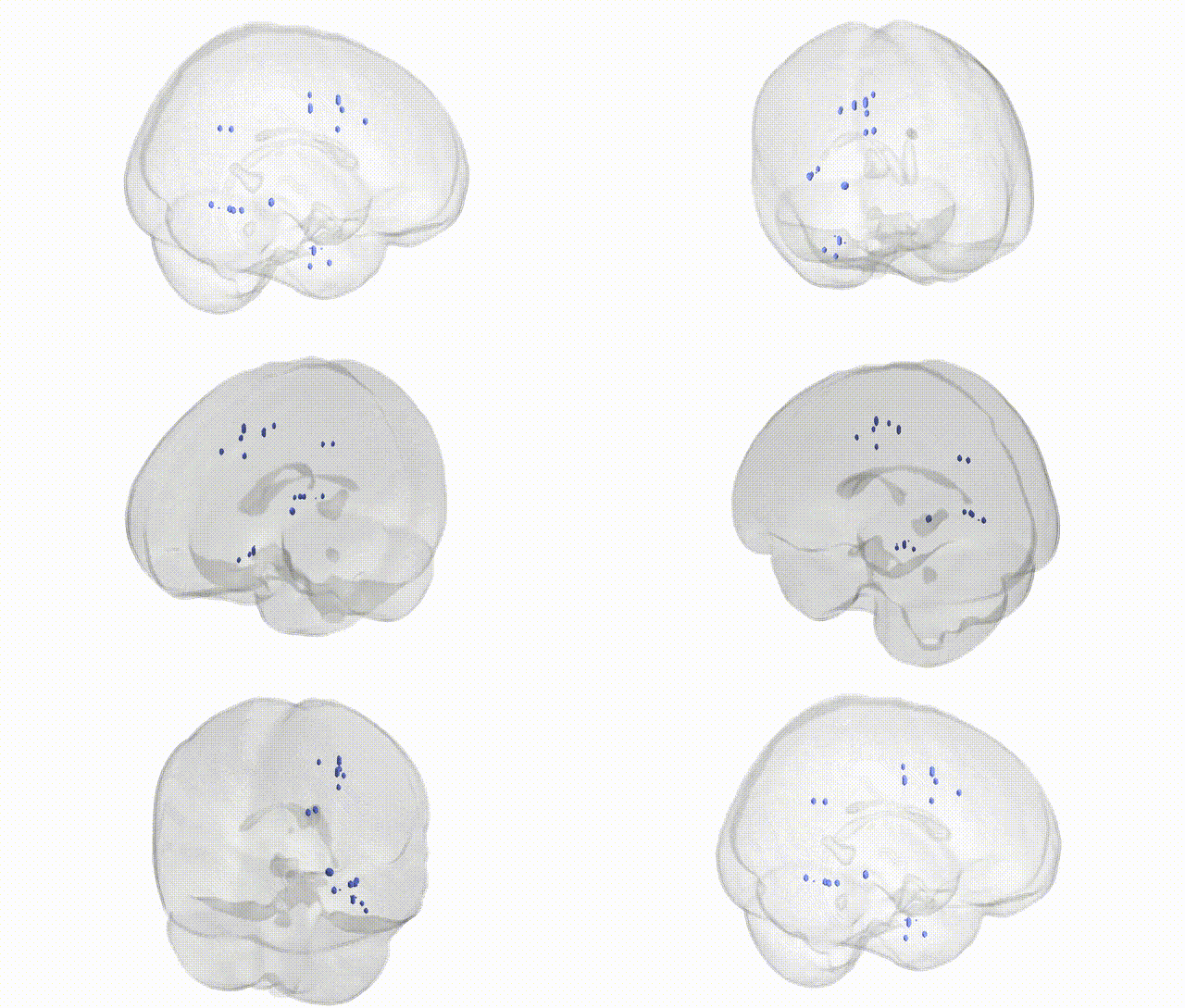
Full Quality Version: Download MP4
Wali Sidiqyar*, Gaurav Rudravaram*, Elyssa M. McMaster, Trent M. Schwartz, Adam M. Saunders, Kurt G. Schilling, Bennett A. Landman "Introducing SPINS: A Shared Public Visualization Library of Neuroanatomical Structures." Medical Imaging with Deep Learning- short paper
This resource is licensed under CC0 1.0 Universal (Public Domain).