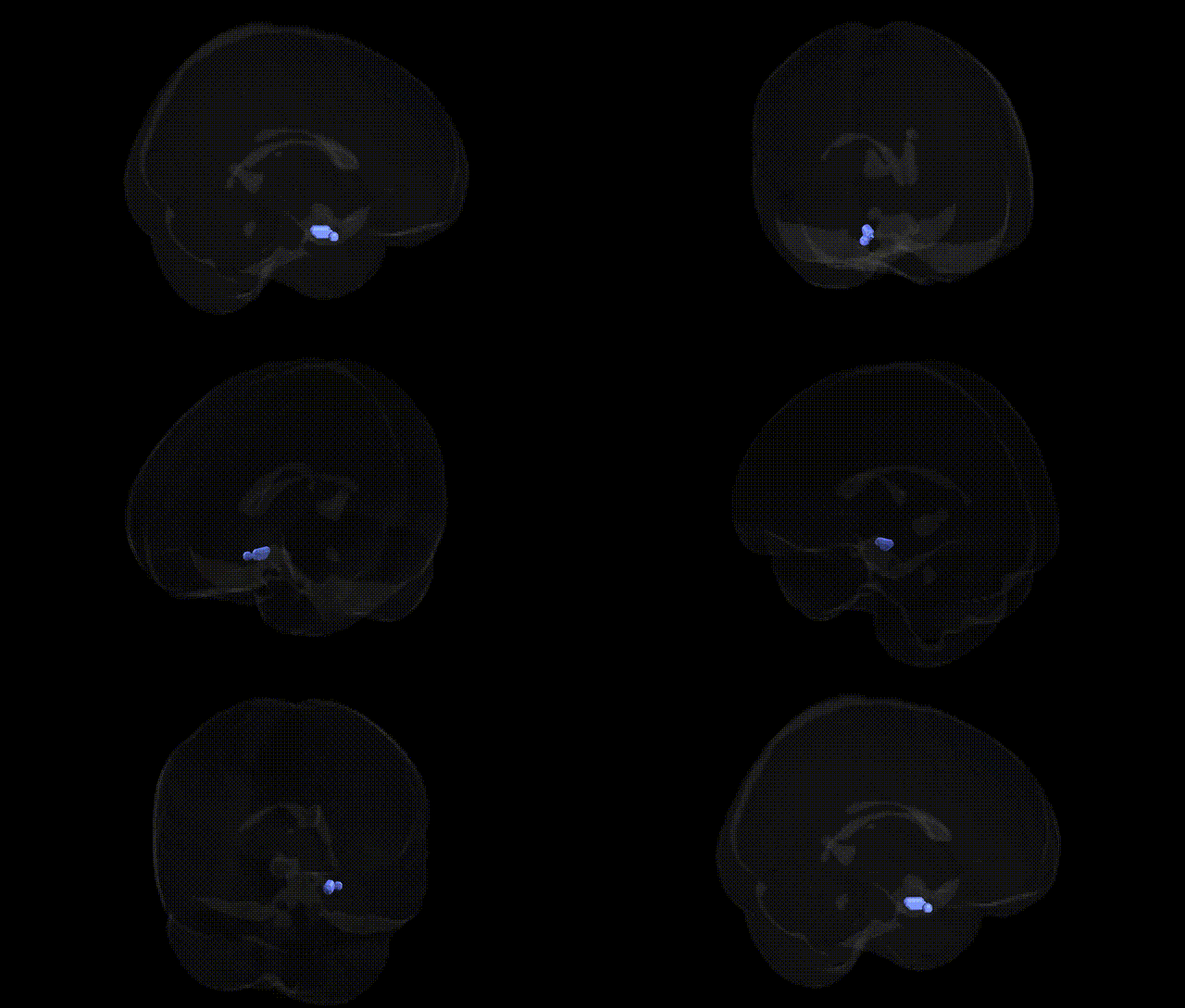
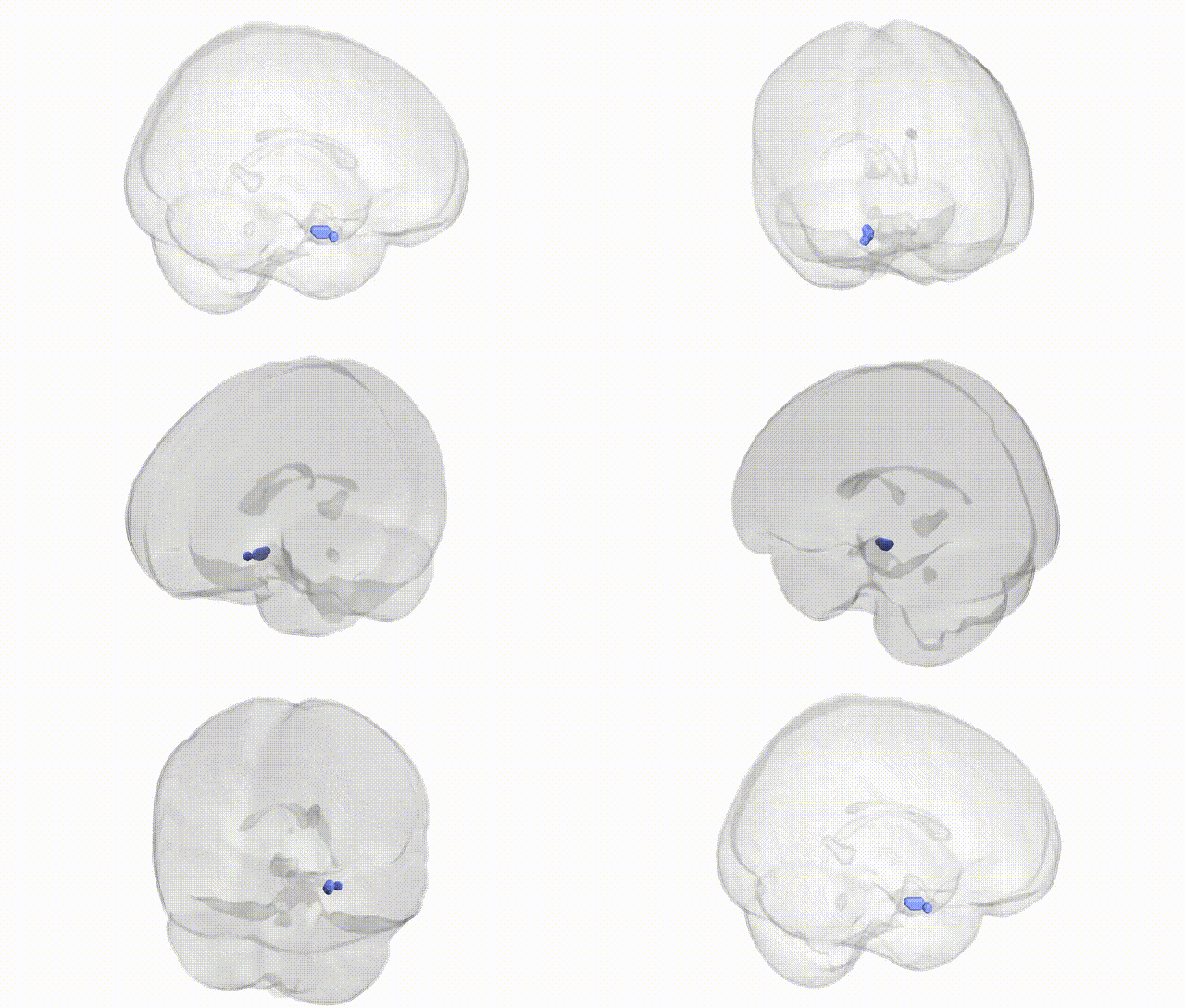
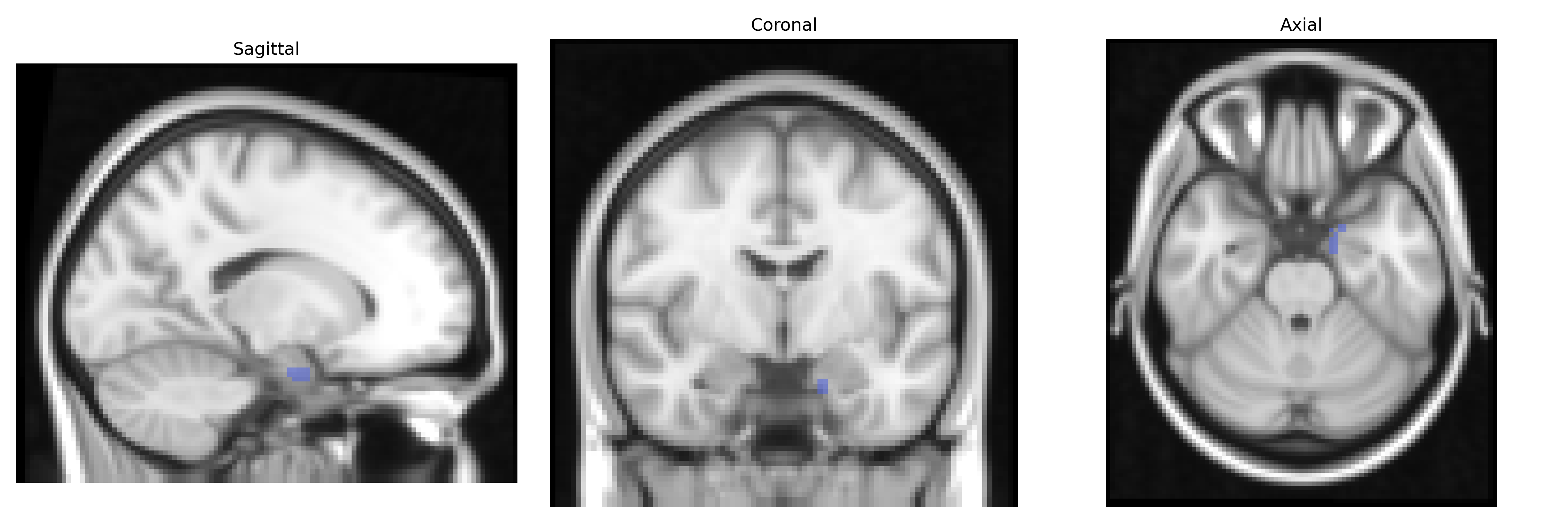
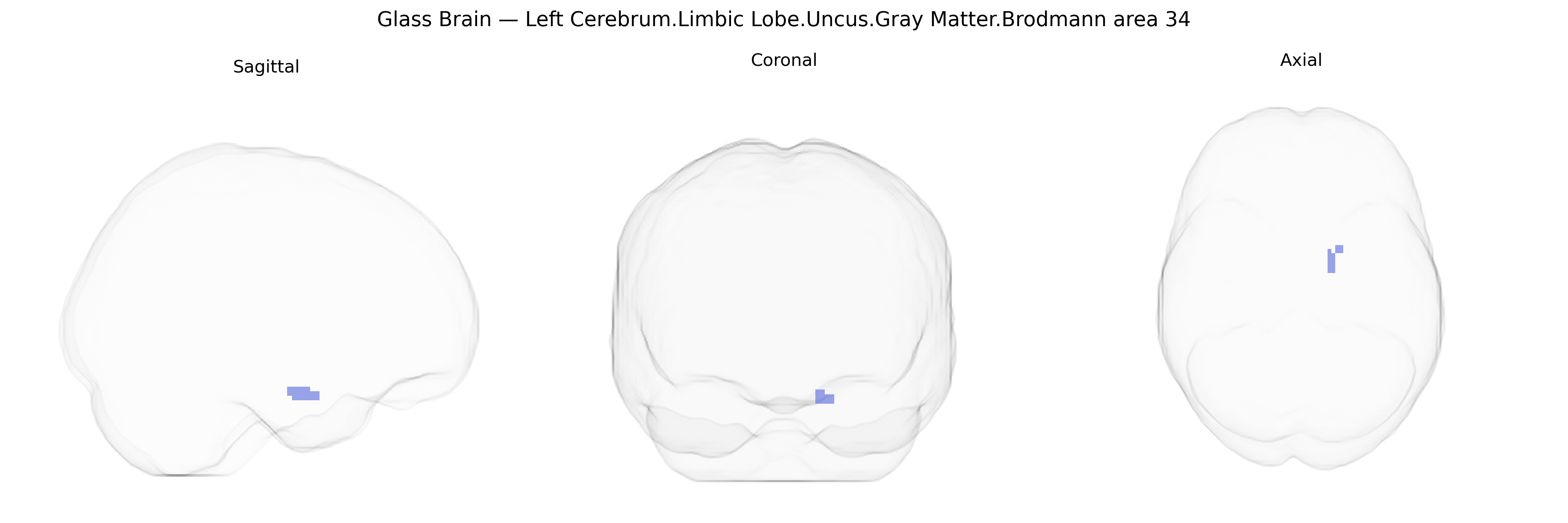
The bilateral Left Cerebrum.Limbic Lobe.Uncus.Gray Matter.Brodmann area 34 corresponds to a cytoarchitectonic region located in the anterior medial temporal lobe, specifically within the uncus, forming part of the primary olfactory cortex and closely associated with the hippocampal formation and amygdaloid complex. Brodmann area 34 is involved in processing olfactory information and contributes to the integration of odor stimuli with emotion, memory, and autonomic responses, reflecting its limbic system connectivity. Functionally, this area participates in the encoding and retrieval of odor-associated memories and may play a role in affective and visceral reactions to smells, with bilateral organization supporting redundancy and coordination of olfactory-limbic processing. There is no direct link for Brodmann area 34; a related structure is the Piriform cortex.
The left limbic uncus (Brodmann area 34), a key component of the primary olfactory cortex and anterior parahippocampal region, has been indirectly implicated in genetic studies through its roles in olfactory processing, memory, and emotional regulation. GWAS and imaging-genetics studies have linked structural and functional variation in adjacent medial temporal and parahippocampal regions—including BA34/uncal territory—to polygenic risk for major depressive disorder, schizophrenia, bipolar disorder, and anxiety-related traits, often via loci influencing synaptic plasticity and neurodevelopment (e.g., genes in glutamatergic and calcium-signaling pathways). Variants in APOE and other Alzheimer’s disease–associated genes have been associated with early atrophic and functional changes in medial temporal structures encompassing uncus and entorhinal cortex, aligning with this region’s role in episodic memory and early neurodegenerative pathology. Genetic influences on olfactory function (including loci near OR gene clusters and neurodevelopmental genes such as ANOS1) and on traits like neuroticism and harm avoidance have also been linked to activity and gray matter variation in BA34-related circuitry, though these associations typically reference broader medial temporal/limbic networks rather than BA34 specifically. Overall, current evidence supports a polygenic contribution to uncus/BA34 morphology and function, primarily inferred from multimodal studies of limbic and medial temporal regions in psychiatric and neurodegenerative disorders rather than from GWAS targeting this Brodmann area in isolation.
Overview generated by GPT-4o (2026).
Region ID: 179
Hemisphere: bilateral
Atlas: Talairach labels 2mm
Full Quality Version: Download MP4
Full Quality Version: Download MP4
Wali Sidiqyar*, Gaurav Rudravaram*, Elyssa M. McMaster, Trent M. Schwartz, Adam M. Saunders, Kurt G. Schilling, Bennett A. Landman "Introducing SPINS: A Shared Public Visualization Library of Neuroanatomical Structures." Medical Imaging with Deep Learning- short paper
This resource is licensed under CC0 1.0 Universal (Public Domain).