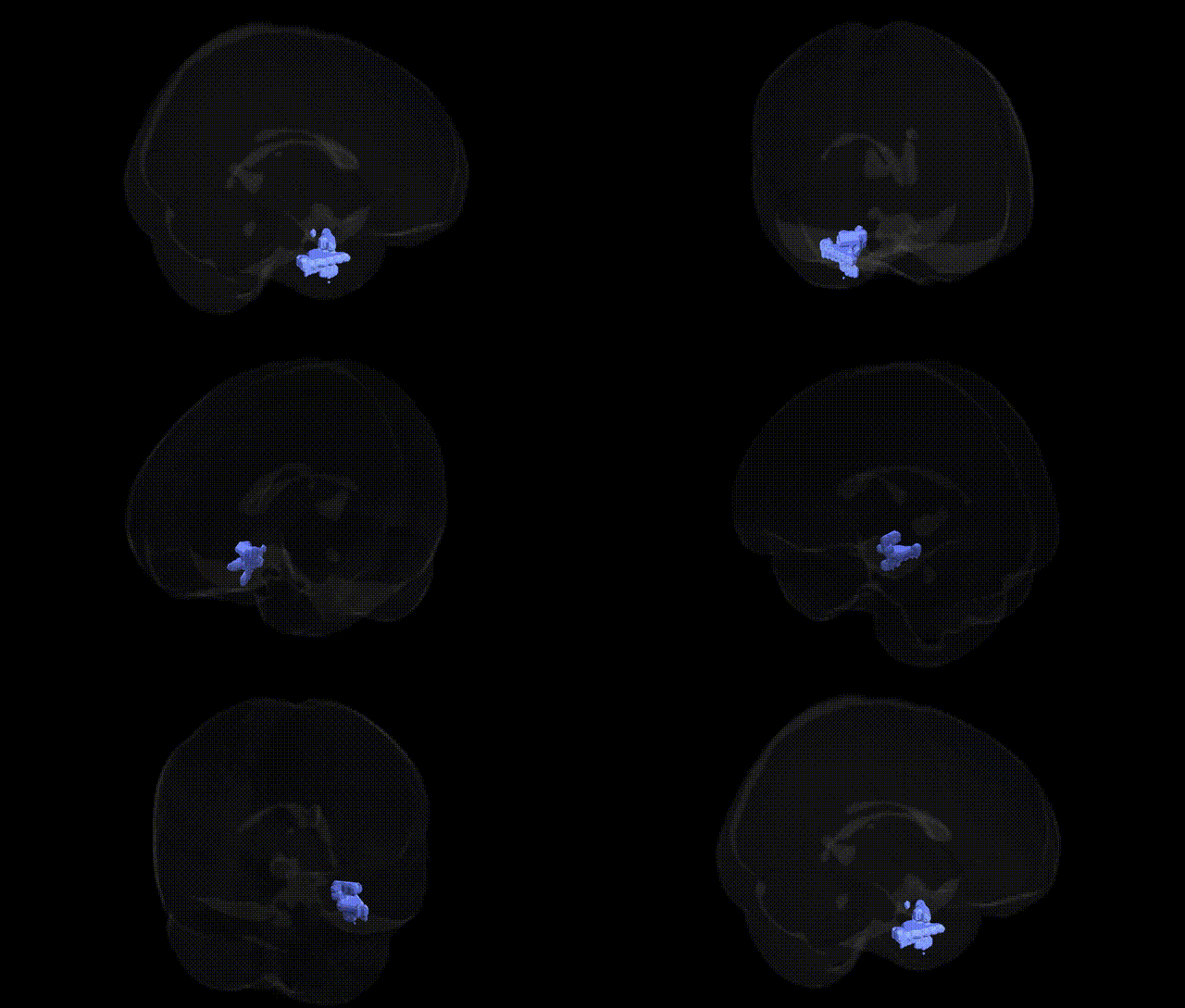
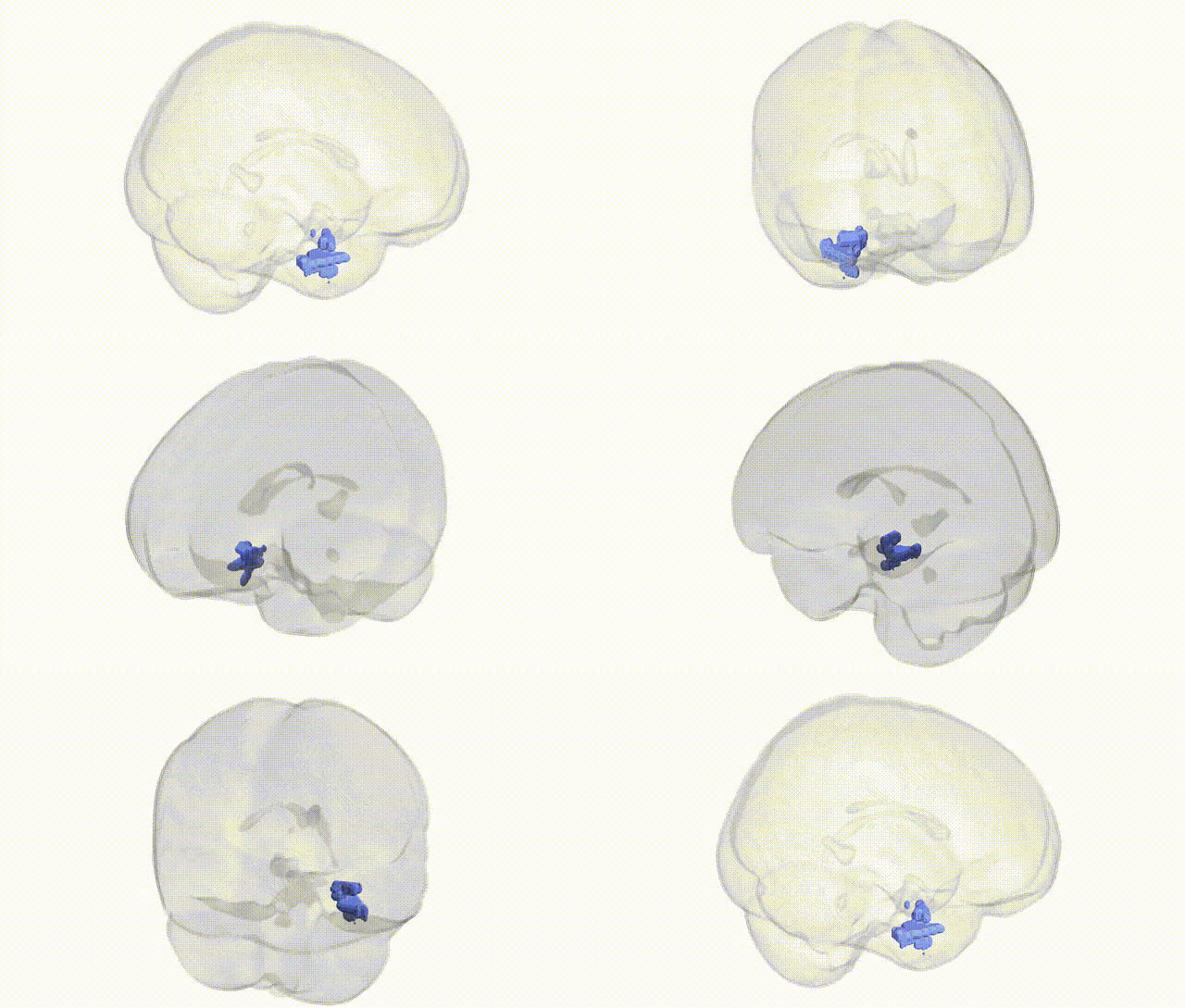
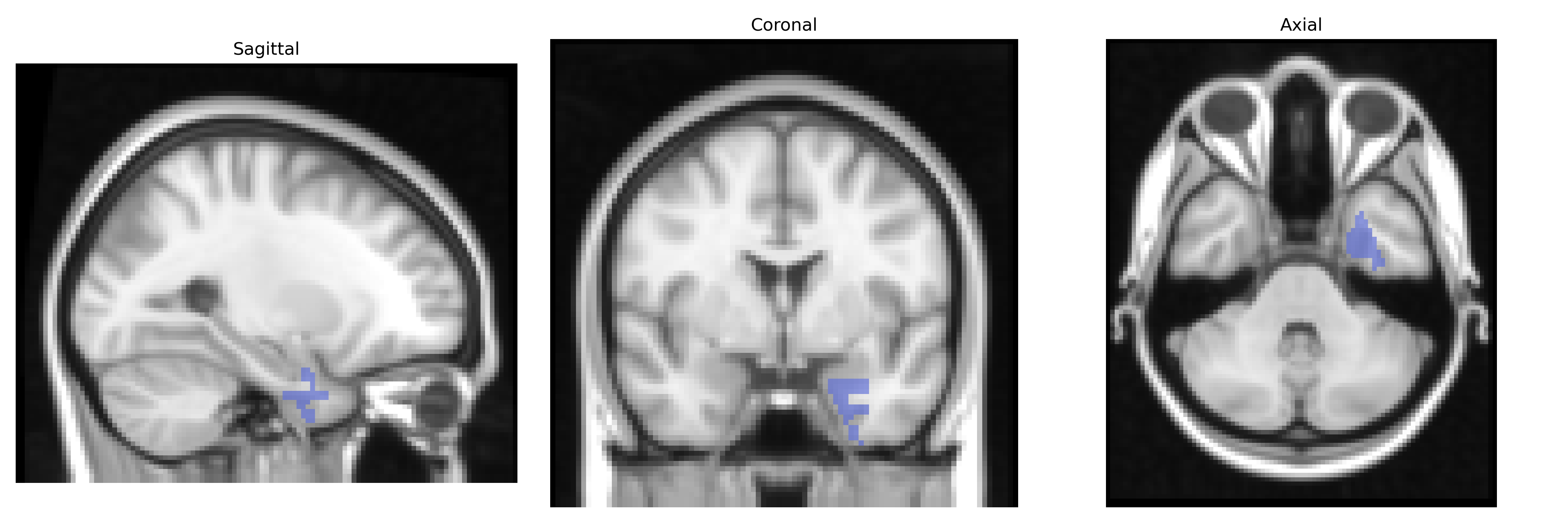
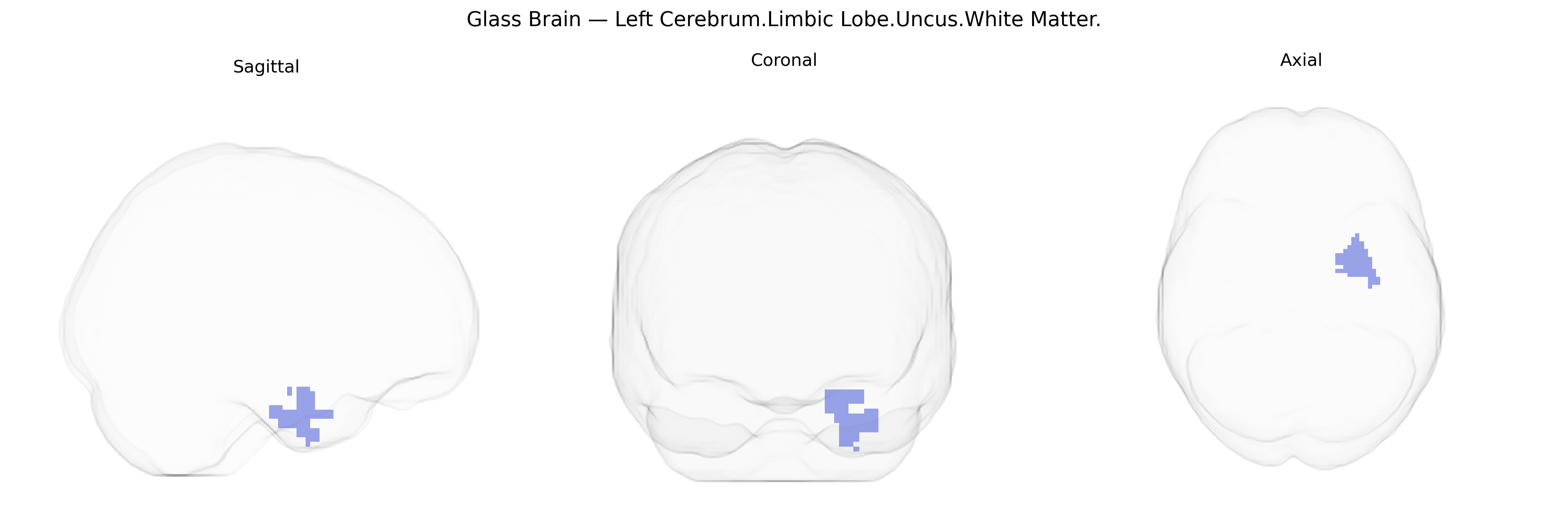
The bilateral Left Cerebrum.Limbic Lobe.Uncus.White Matter corresponds to the subcortical myelinated fiber pathways underlying the uncus, a hook-shaped medial temporal lobe structure forming part of the anterior parahippocampal gyrus and closely associated with the limbic system. These white matter tracts interconnect the uncus with adjacent limbic and temporal regions, including the amygdala, hippocampal formation, and entorhinal cortex, supporting the integration of olfactory information, emotional processing, and memory-related functions. The uncus lies at the anterior end of the parahippocampal gyrus, bordering the anterior hippocampus and amygdala, and its deep white matter participates in the broader limbic connectivity network that underpins affective and mnemonic circuitry. There is no direct Wikipedia article for the uncus white matter; a related structure is the Uncus.
The bilateral left cerebrum limbic lobe uncus white matter corresponds primarily to fibers connecting anterior medial temporal structures (including the amygdala and hippocampal head) with other limbic and association areas, so genetic associations relating to this region largely reflect broader medial temporal and limbic circuitry rather than uncus-specific white matter GWAS loci. Variants in genes implicated in axonal development and myelination (such as CNTNAP2, NRG1, ERBB4, MAG, and MBP) and risk alleles for major psychiatric disorders (including schizophrenia, bipolar disorder, and major depression in large consortia like PGC) have been associated with microstructural alterations (e.g., fractional anisotropy) in adjacent medial temporal and uncinate fasciculus white matter, which traverses near the uncus. APOE ε4 and other Alzheimer’s disease loci (e.g., CLU, PICALM, BIN1) show robust associations with medial temporal atrophy and temporal-limbic white matter changes, while epilepsy GWAS (particularly temporal lobe epilepsy) implicate risk loci in genes such as SCN1A and GRIN2A that influence excitability of nearby temporal-limbic networks. Neuroticism, anxiety, and stress-related traits show polygenic relationships with limbic white matter integrity in imaging-genetics analyses, with distributed common variant effects rather than region-specific SNPs, and several large ENIGMA-based GWAS of white matter metrics report that heritability and significant loci (e.g., in MAPT and other neurodevelopmental genes) influence global and tract-level measures that include the medial temporal limbic fibers underlying the uncus, though no major study identifies a unique, uncus-white-matter–specific genetic signal separate from broader limbic and temporofrontal connectivity.
Overview generated by GPT-4o (2026).
Region ID: 25
Hemisphere: bilateral
Atlas: Talairach labels 2mm
Full Quality Version: Download MP4
Full Quality Version: Download MP4
Wali Sidiqyar*, Gaurav Rudravaram*, Elyssa M. McMaster, Trent M. Schwartz, Adam M. Saunders, Kurt G. Schilling, Bennett A. Landman "Introducing SPINS: A Shared Public Visualization Library of Neuroanatomical Structures." Medical Imaging with Deep Learning- short paper
This resource is licensed under CC0 1.0 Universal (Public Domain).