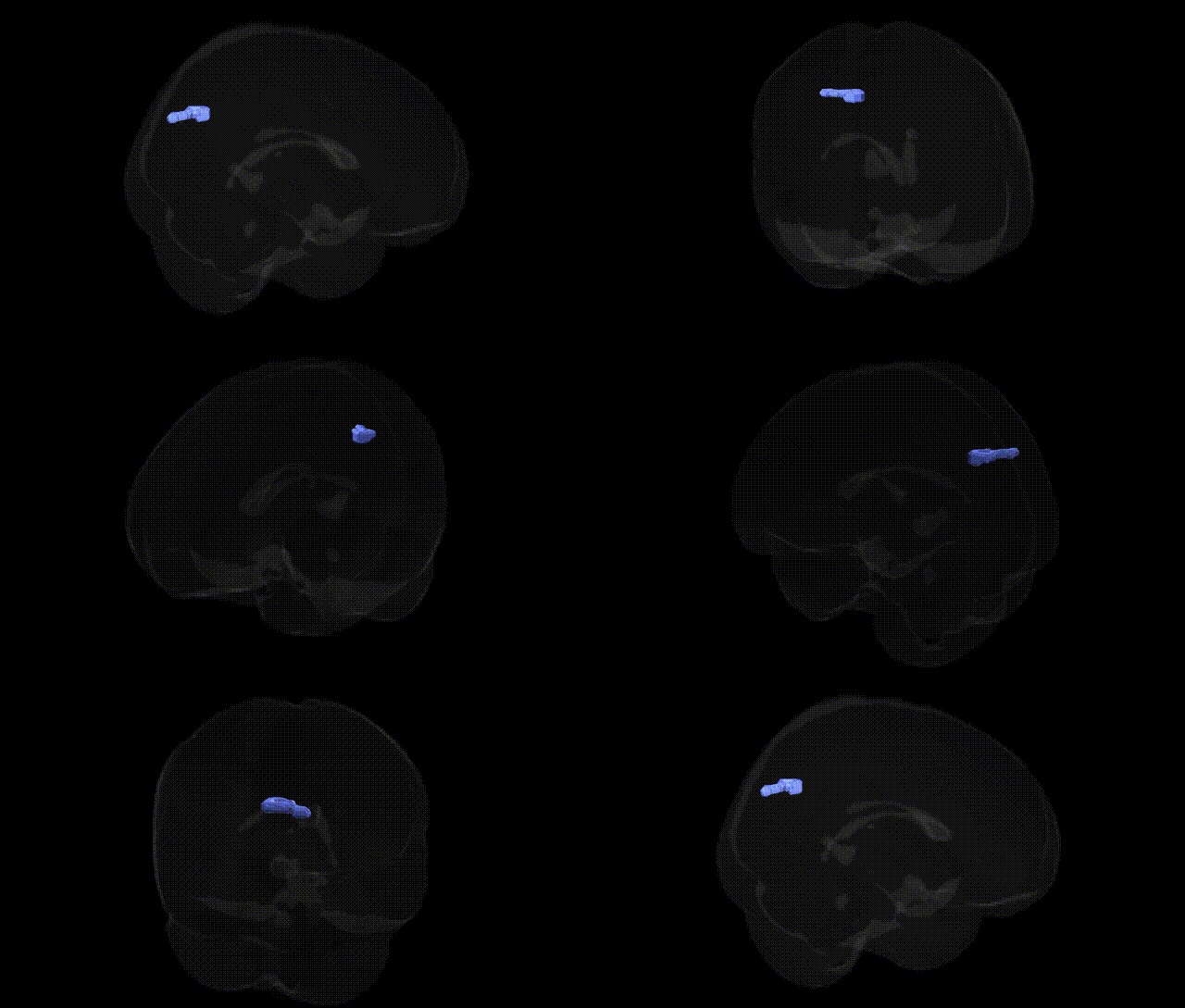
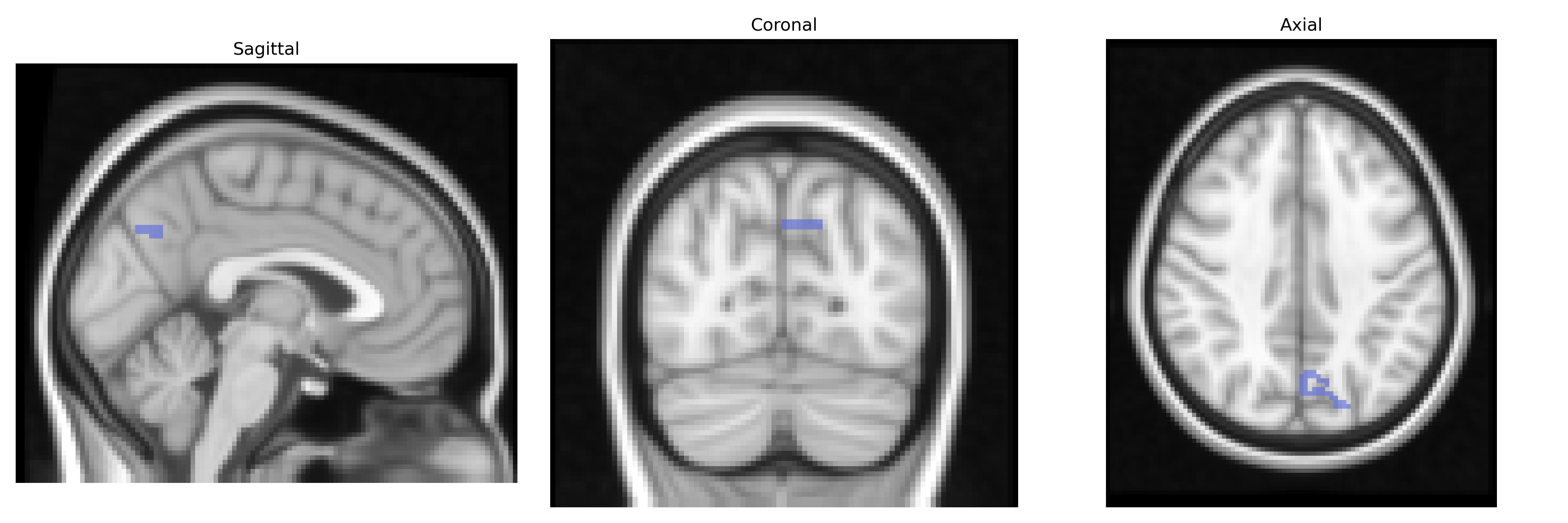
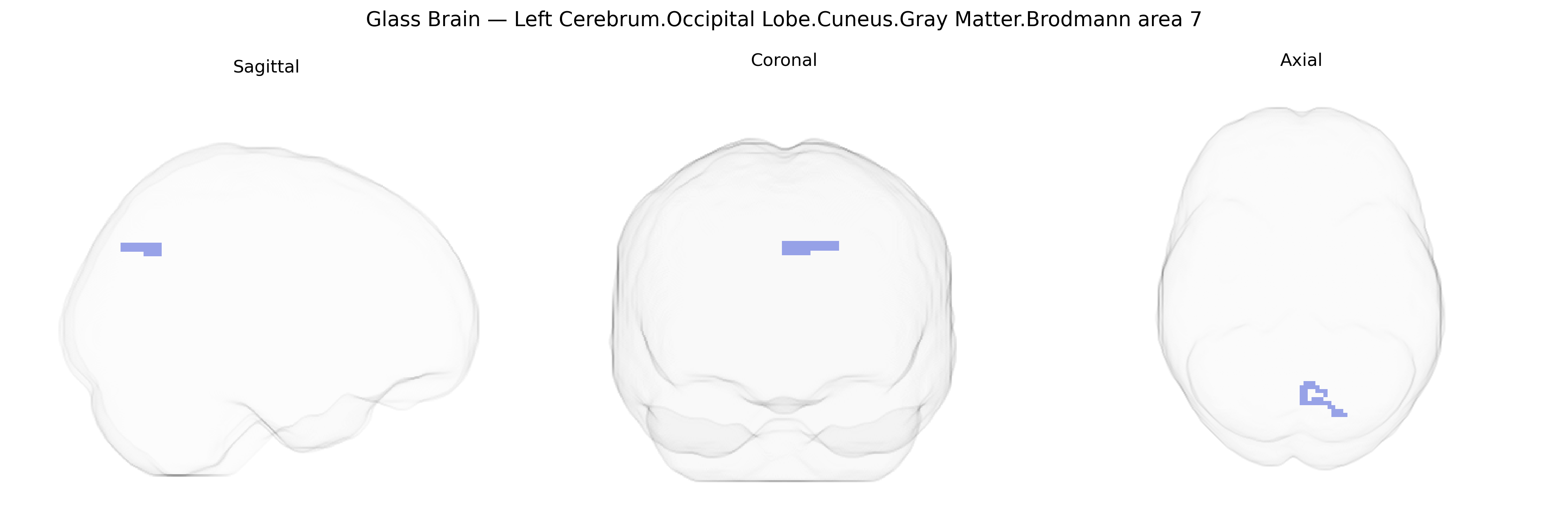
Bilateral Left Cerebrum.Occipital Lobe.Cuneus.Gray Matter.Brodmann area 7 refers to gray matter located in the cuneus of the occipital lobe in the left cerebral hemisphere, corresponding functionally to part of Brodmann area 7, which is classically described as a superior parietal association area involved in visuospatial integration, sensorimotor coordination, and attention. In the Talairach 2 mm atlas, this labeling reflects a combination of cytoarchitectonic (Brodmann) and gross anatomical (cuneus, occipital lobe) criteria, indicating a region where higher-order visual processing interfaces with multimodal spatial and attentional networks. Neurons in this territory participate in transforming visual input into spatial representations crucial for visually guided actions, integration of visual and somatosensory information, and aspects of eye–hand coordination and spatial attention. There is no direct link to this combined Talairach label; for the related structure, see Brodmann area 7.
The bilateral left cuneus gray matter in Brodmann area 7 (occipital/parietal association cortex) is implicated genetically mainly through imaging genetics and GWAS of brain morphology and functional activation, rather than region-specific candidate-gene studies. Large MRI-based GWAS (e.g., ENIGMA, UK Biobank) have identified variants near genes involved in neurodevelopment, synaptic function, and axon guidance (such as DAAM1, DCC, MAPT, and loci in 17q21, 3p24–p25, and 6p22) associated with occipital and parietal cortical thickness, surface area, and gray-matter volume that include or overlap BA7/cuneus territories. Functional imaging genetics has linked common variants in genes such as BDNF, COMT, 5-HTTLPR/SLC6A4, and dopaminergic or glutamatergic pathway genes to altered activation in the cuneus/BA7 during visuospatial attention, working memory, and mental imagery tasks. GWAS and polygenic risk studies in schizophrenia, bipolar disorder, major depression, and autism frequently show that higher polygenic risk scores correlate with structural or functional abnormalities in the cuneus and adjacent BA7 regions, suggesting these areas lie in neural circuits affected by widely distributed psychiatric risk variants rather than harboring unique, region-specific risk genes. Additionally, genetic influences on visual-spatial ability, reading and language skills, and general cognitive performance have been associated with variability in occipito-parietal regions including BA7, though specific single-locus associations targeting the bilateral left cuneus BA7 gray matter from the Talairach 2 mm atlas remain indirect and embedded within broader, network-level genetic effects on cortical development and connectivity.
Overview generated by GPT-4o (2026).
Region ID: 952
Hemisphere: bilateral
Atlas: Talairach labels 2mm
Full Quality Version: Download MP4
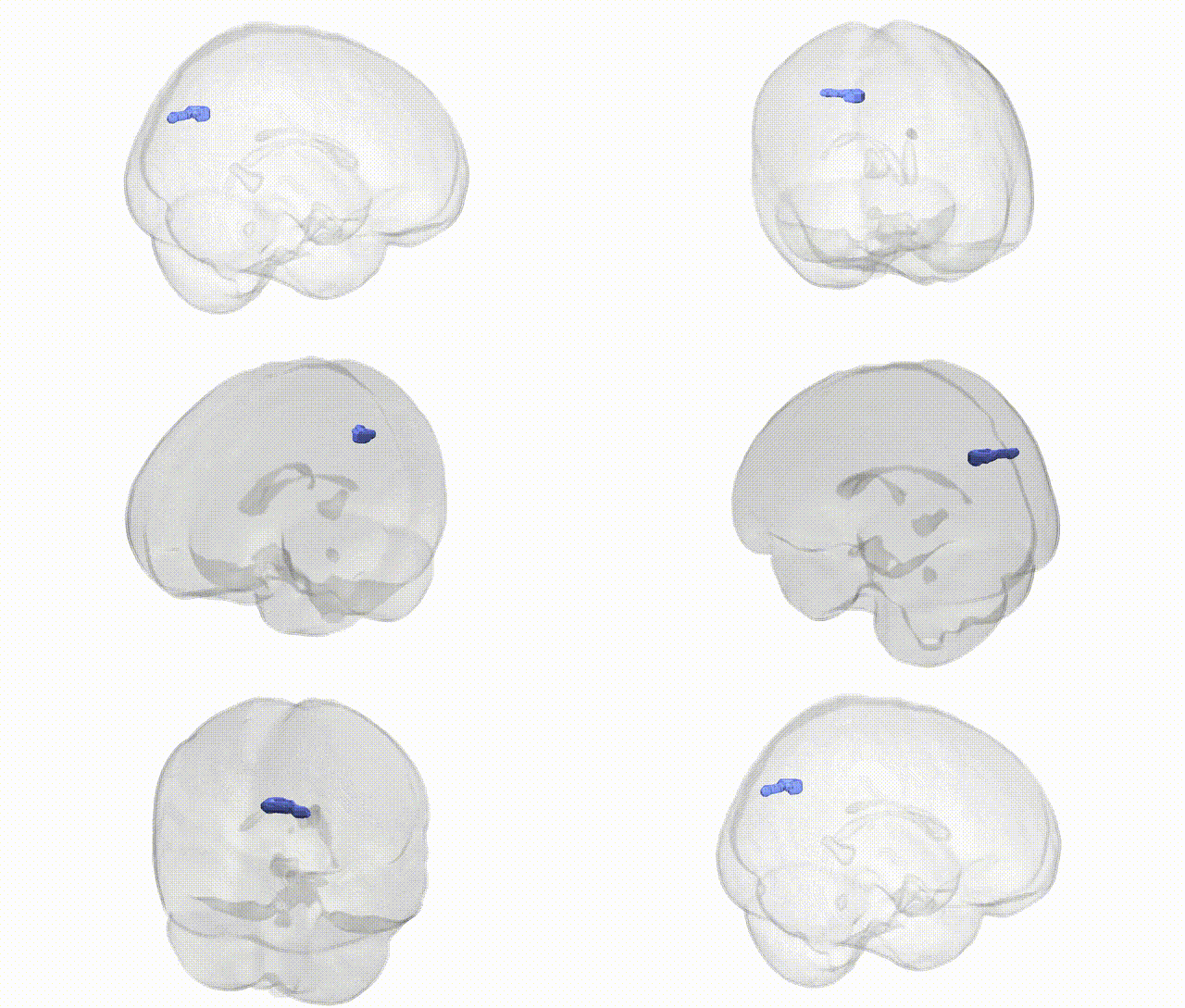
Full Quality Version: Download MP4
Wali Sidiqyar*, Gaurav Rudravaram*, Elyssa M. McMaster, Trent M. Schwartz, Adam M. Saunders, Kurt G. Schilling, Bennett A. Landman "Introducing SPINS: A Shared Public Visualization Library of Neuroanatomical Structures." Medical Imaging with Deep Learning- short paper
This resource is licensed under CC0 1.0 Universal (Public Domain).