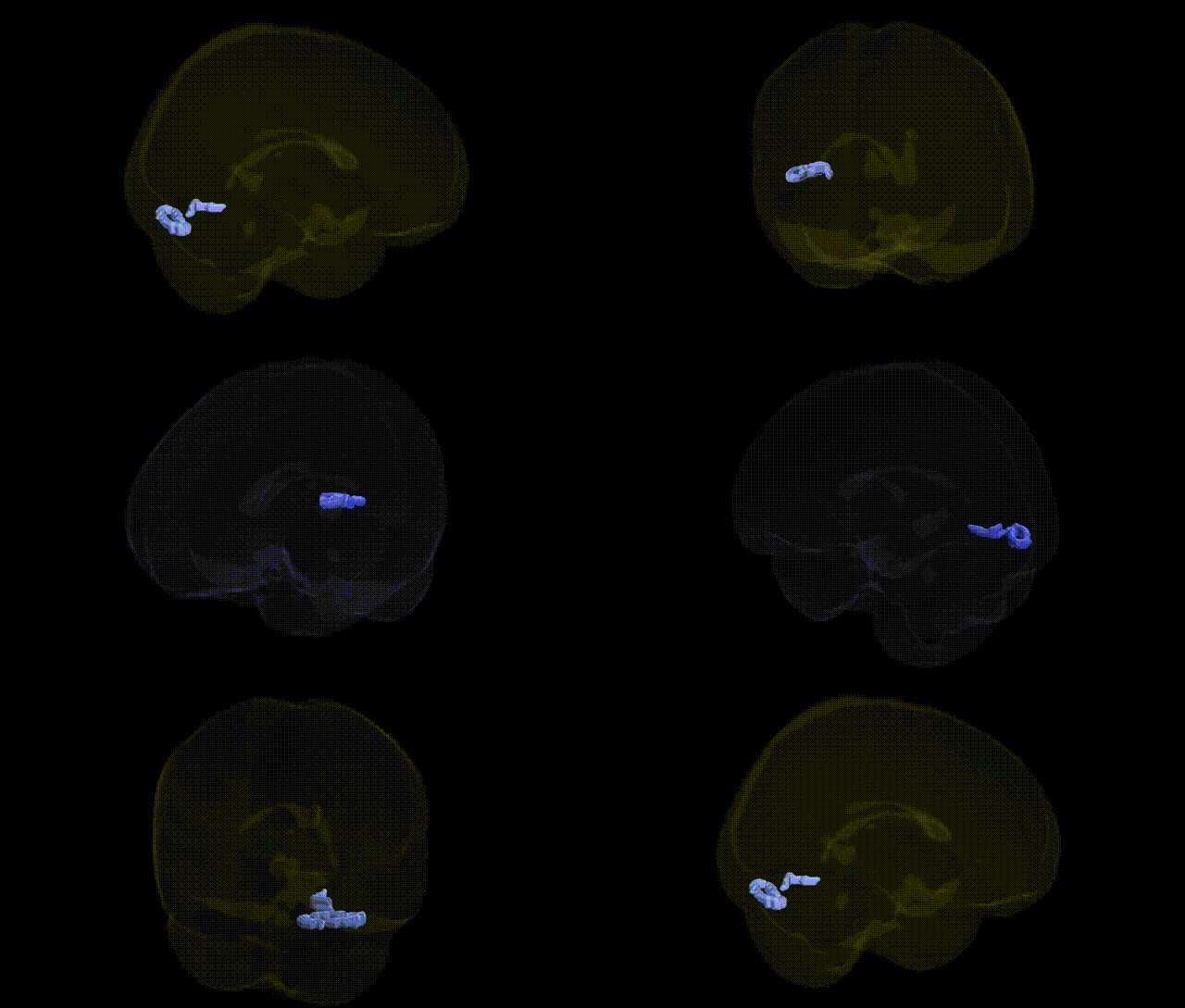
The bilateral Left Cerebrum.Occipital Lobe.Fusiform Gyrus.Gray Matter.Brodmann area 19 corresponds to higher-order visual association cortex located in the posterior fusiform portion of the occipital lobe, integrating complex visual information beyond primary and secondary visual areas. Brodmann area 19 participates in processing form, color, and motion, contributing to object recognition, visuospatial analysis, and the integration of visual input with other sensory and cognitive domains. Neuronal populations within this gray matter region receive extensive inputs from striate (BA17) and peristriate (BA18) cortex and project to temporal and parietal association areas, forming part of the ventral visual stream that supports detailed visual perception and categorization. There is no direct link for this exact composite region; a related structure is Brodmann area 19.
Genetic associations specifically targeting bilateral Left Cerebrum.Occipital Lobe.Fusiform Gyrus.Gray Matter.Brodmann area 19 as defined in the Talairach 2 mm atlas are rarely reported at that fine-grained level, but GWAS and imaging-genetics studies implicate genes and variants influencing occipital and fusiform cortical thickness, surface area, and volume, notably in pathways involved in synaptic development, axon guidance, and visual processing (e.g., genes near PAX6, DAW1, and loci in the 6q and 17q regions identified in large ENIGMA and UK Biobank datasets). BA19, part of higher-order visual association cortex bordering the fusiform gyrus, has been linked through genetic and imaging work to traits such as general cognitive ability, reading and language skills, and face/word recognition abilities, with associated loci often overlapping with neurodevelopmental and neuropsychiatric risk genes. Variants in or near genes like CNTNAP2, DCDC2, KIAA0319, and FOXP2 have been associated with dyslexia and language disorders in studies that also report structural or functional alterations in occipito-temporal regions encompassing fusiform/BA19. In autism spectrum disorder, schizophrenia, and social anxiety, risk variants in synaptic and neurodevelopmental genes (e.g., NRXN1, NRGN, GRIN2A, CACNA1C) have been linked to altered activation or morphology of fusiform and adjacent BA19 during face or emotional processing tasks. Additionally, migraine, visual epilepsy, and occipital lobe epilepsy GWAS highlight ion channel and neurotransmission genes (e.g., CACNA1A, SCN1A, KCN family genes) that modulate excitability in occipital cortex, likely including BA19, while polygenic scores for educational attainment and intelligence show associations with structural metrics in occipital association areas, supporting a genetically influenced role of this region in higher-order visual and cognitive functions.
Overview generated by GPT-4o (2026).
Region ID: 258
Hemisphere: bilateral
Atlas: Talairach labels 2mm
Full Quality Version: Download MP4
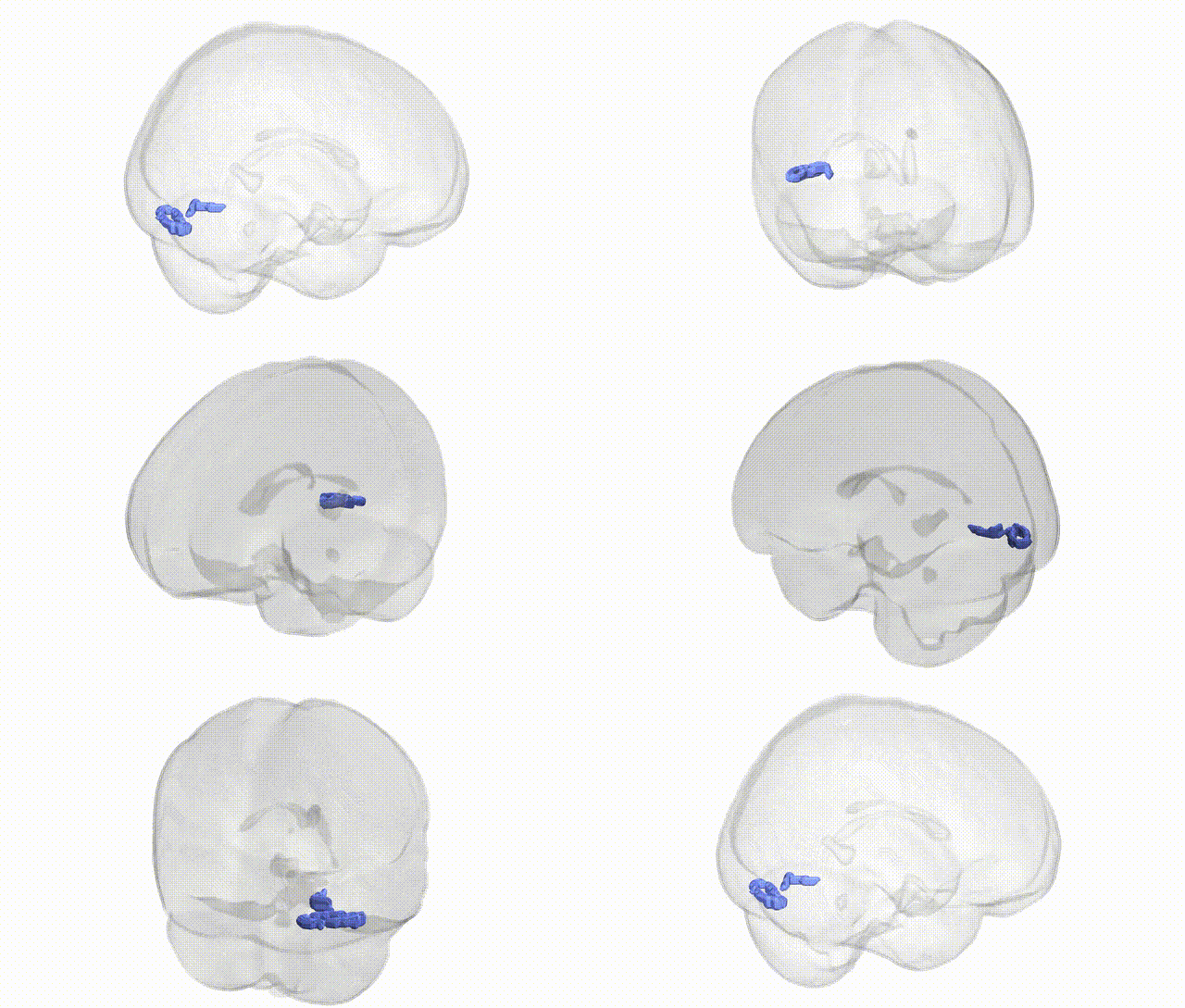
Full Quality Version: Download MP4
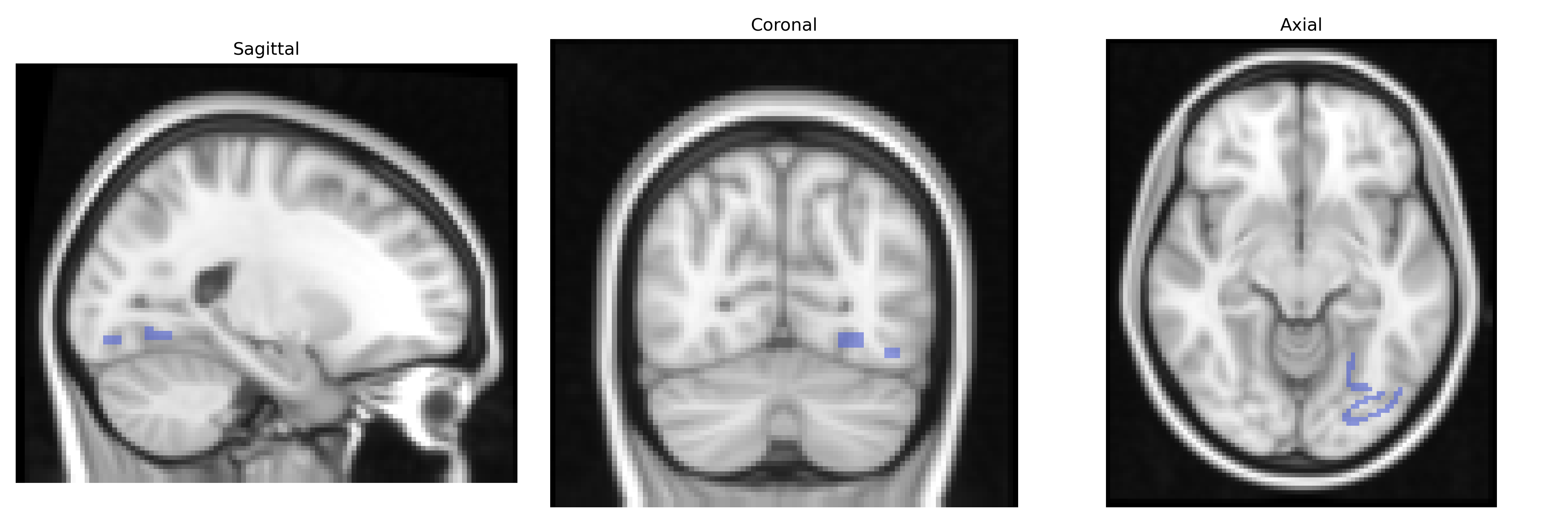
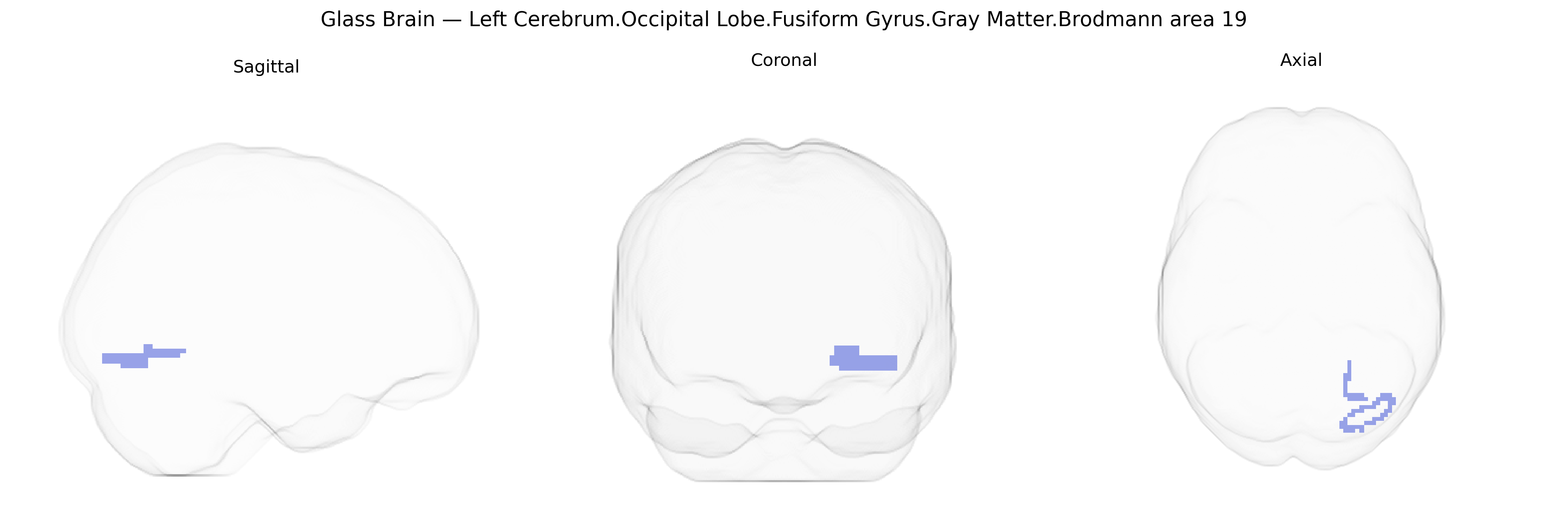
Wali Sidiqyar*, Gaurav Rudravaram*, Elyssa M. McMaster, Trent M. Schwartz, Adam M. Saunders, Kurt G. Schilling, Bennett A. Landman "Introducing SPINS: A Shared Public Visualization Library of Neuroanatomical Structures." Medical Imaging with Deep Learning- short paper
This resource is licensed under CC0 1.0 Universal (Public Domain).