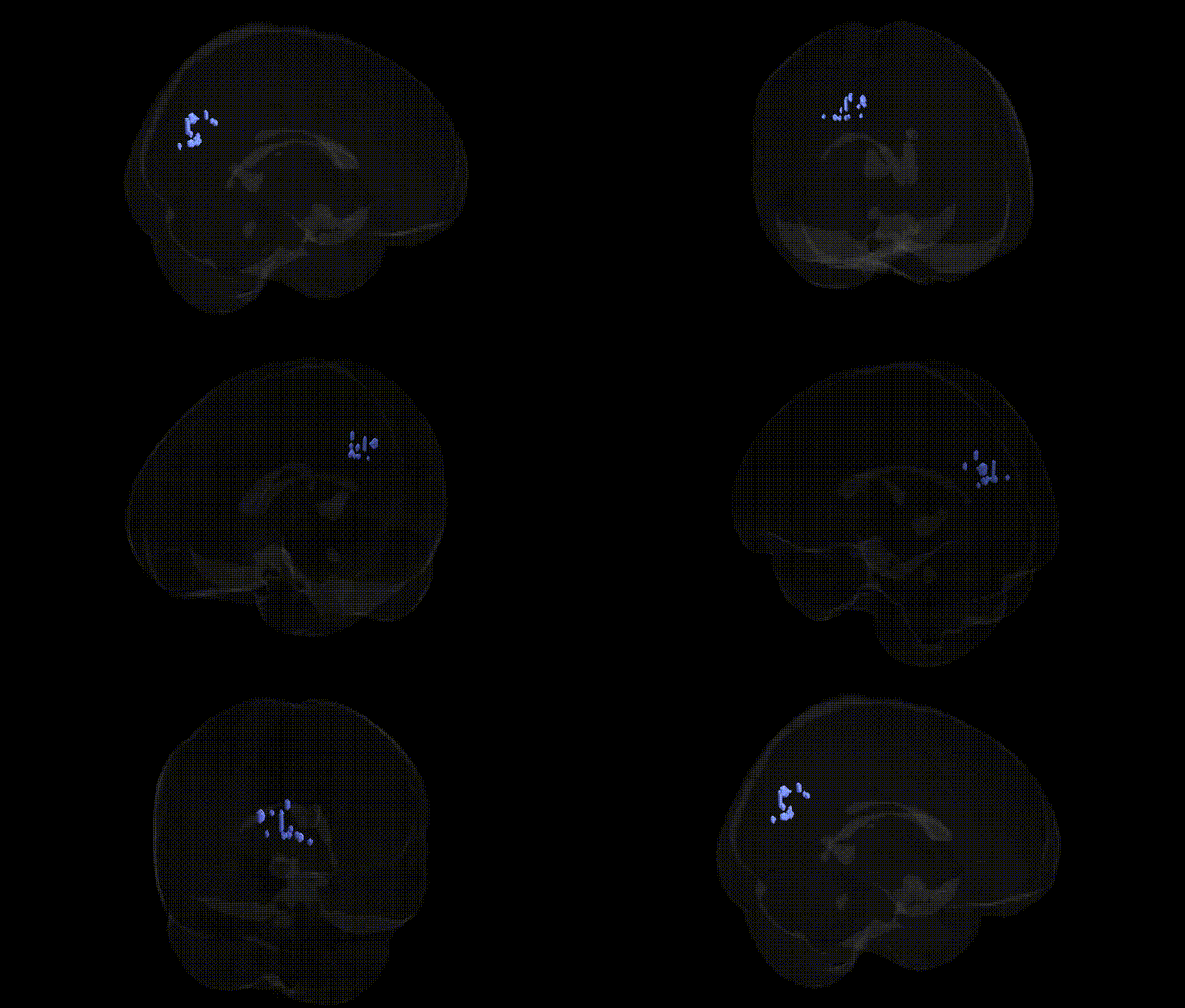
The bilateral Left Cerebrum.Occipital Lobe.Precuneus, as labeled in the Talairach 2 mm Atlas, refers to portions of the precuneus that fall within or adjacent to the occipital territory of the left cerebral hemisphere, near the parieto‑occipital junction. The precuneus is a medial cortical region of the superior parietal lobule involved in visuospatial processing, self‑related and episodic memory functions, aspects of consciousness, and integration of sensory information. In the occipital context, these precuneus subregions participate in higher‑order visual integration and coordination of visual imagery with attention and spatial orientation networks, contributing to large‑scale default mode and dorsal attention networks. There is no direct link for this precise Talairach label; a closely related structure is the Precuneus.
The bilateral left cerebrum occipital lobe precuneus (Talairach 2 mm label) lies within the medial parietal/occipital border zone and is often grouped functionally with the precuneus/posterior cingulate hub of the default mode network rather than studied in isolation, so most genetic evidence comes from imaging‑genetics and GWAS of cortical structure, connectivity, and neuropsychiatric traits that implicate this broader region. Large ENIGMA and UK Biobank imaging GWAS have identified multiple loci—particularly in genes involved in synaptic function, neuronal development, and myelination (e.g., variants near genes such as CRHR1, WNT pathway genes, and several glutamatergic and GABAergic candidates)—associated with cortical thickness, surface area, and microstructure in the medial parietal/precuneus territory, which overlaps the Talairach occipital‑precuneus label. GWAS of Alzheimer’s disease, schizophrenia, major depression, and autism spectrum conditions repeatedly show that risk polygenic scores correlate with altered precuneus/default‑mode activity and connectivity, and disease‑associated genes related to amyloid processing, tau, immune signaling, and calcium channels (e.g., APOE, CLU, TREM2, CACNA1C) are linked to atrophy or functional disruption in this area. In addition, genetic studies of traits such as general cognitive ability, self‑referential processing, and mind‑wandering implicate the precuneus via polygenic influences on resting‑state networks, while GWAS of visual and visuospatial skills sometimes show structural or functional associations in adjacent medial occipital‑parietal cortex. Overall, genetic findings support the occipital‑precuneus region as a heritable, polygenically influenced hub whose structure and function are modulated by many variants rather than by a small set of region‑specific genes, and which is frequently involved in the pathophysiology and endophenotypes of neurodegenerative and psychiatric disorders.
Overview generated by GPT-4o (2026).
Region ID: 825
Hemisphere: bilateral
Atlas: Talairach labels 2mm
Full Quality Version: Download MP4
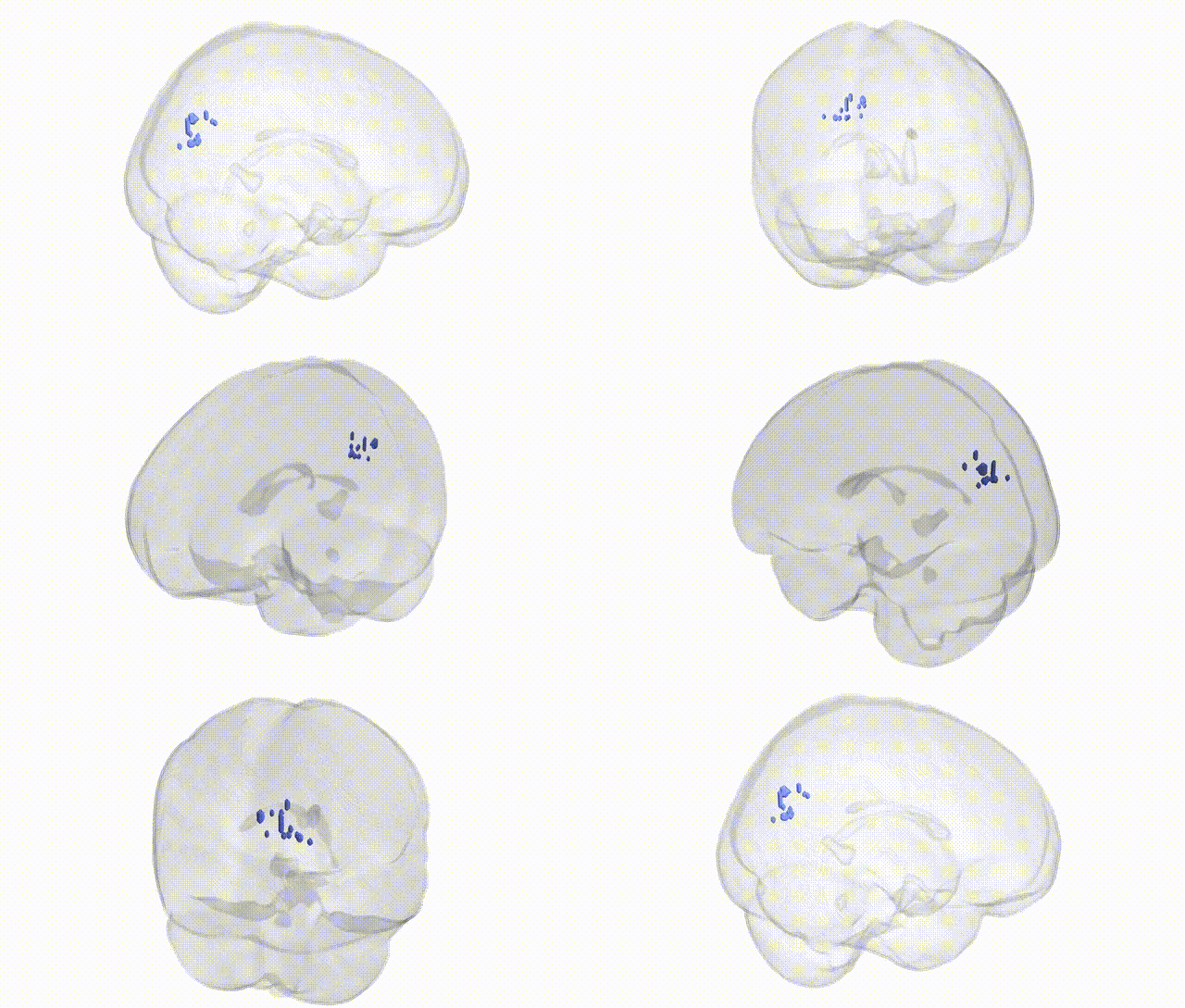
Full Quality Version: Download MP4
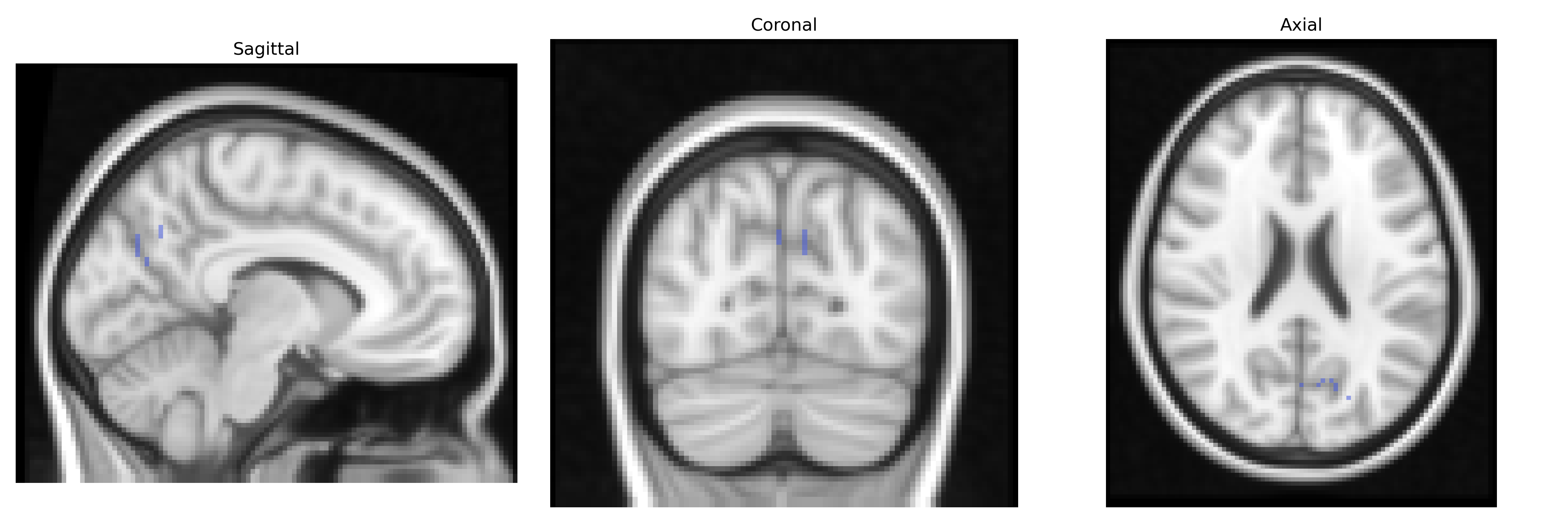
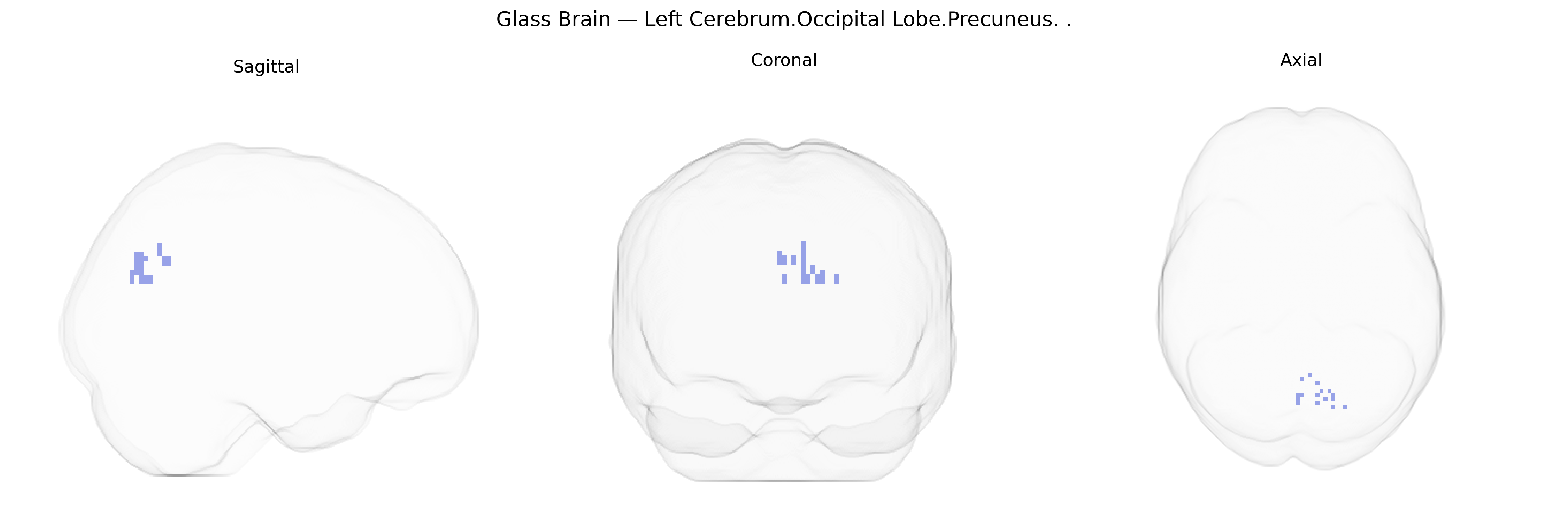
Wali Sidiqyar*, Gaurav Rudravaram*, Elyssa M. McMaster, Trent M. Schwartz, Adam M. Saunders, Kurt G. Schilling, Bennett A. Landman "Introducing SPINS: A Shared Public Visualization Library of Neuroanatomical Structures." Medical Imaging with Deep Learning- short paper
This resource is licensed under CC0 1.0 Universal (Public Domain).