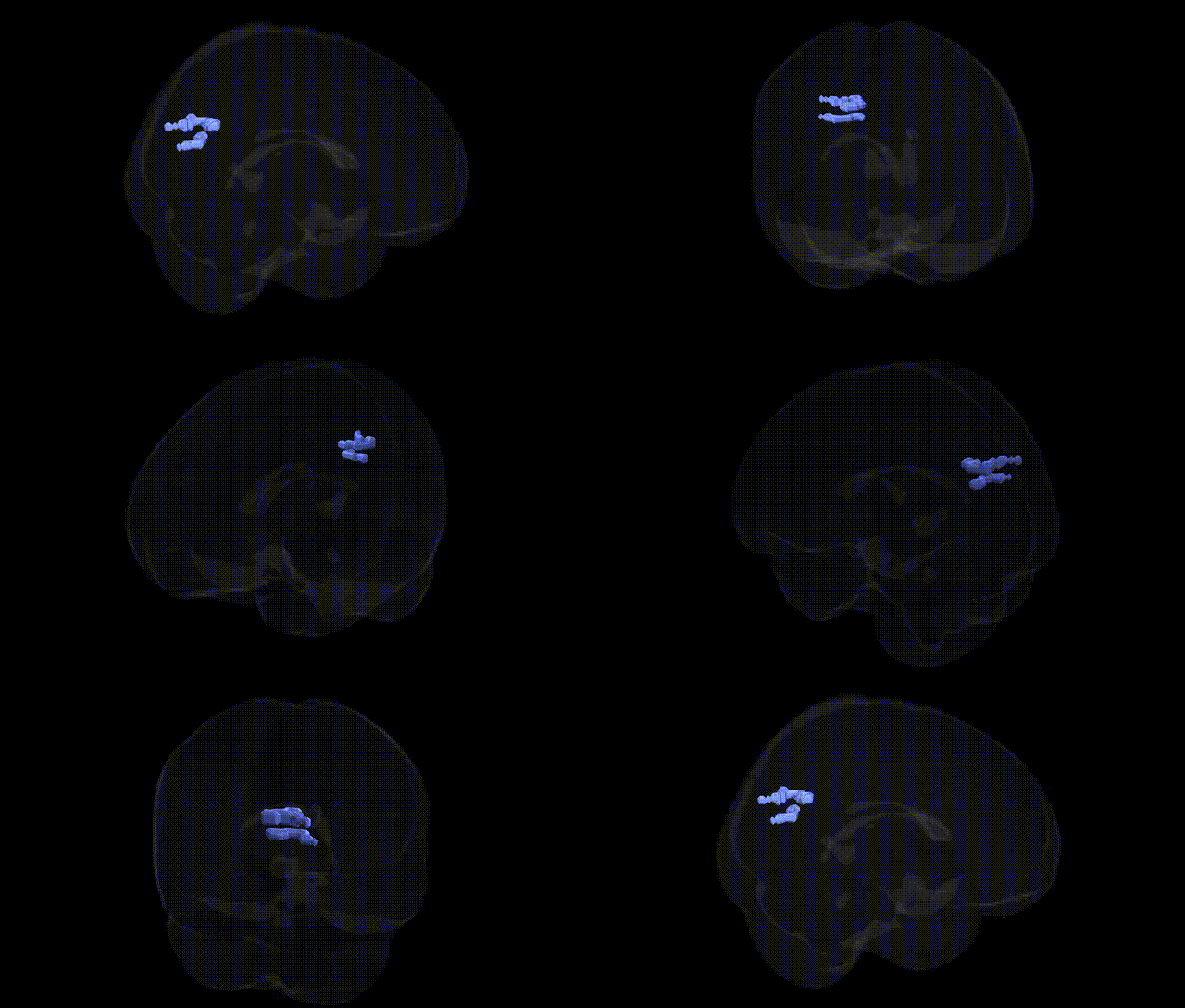
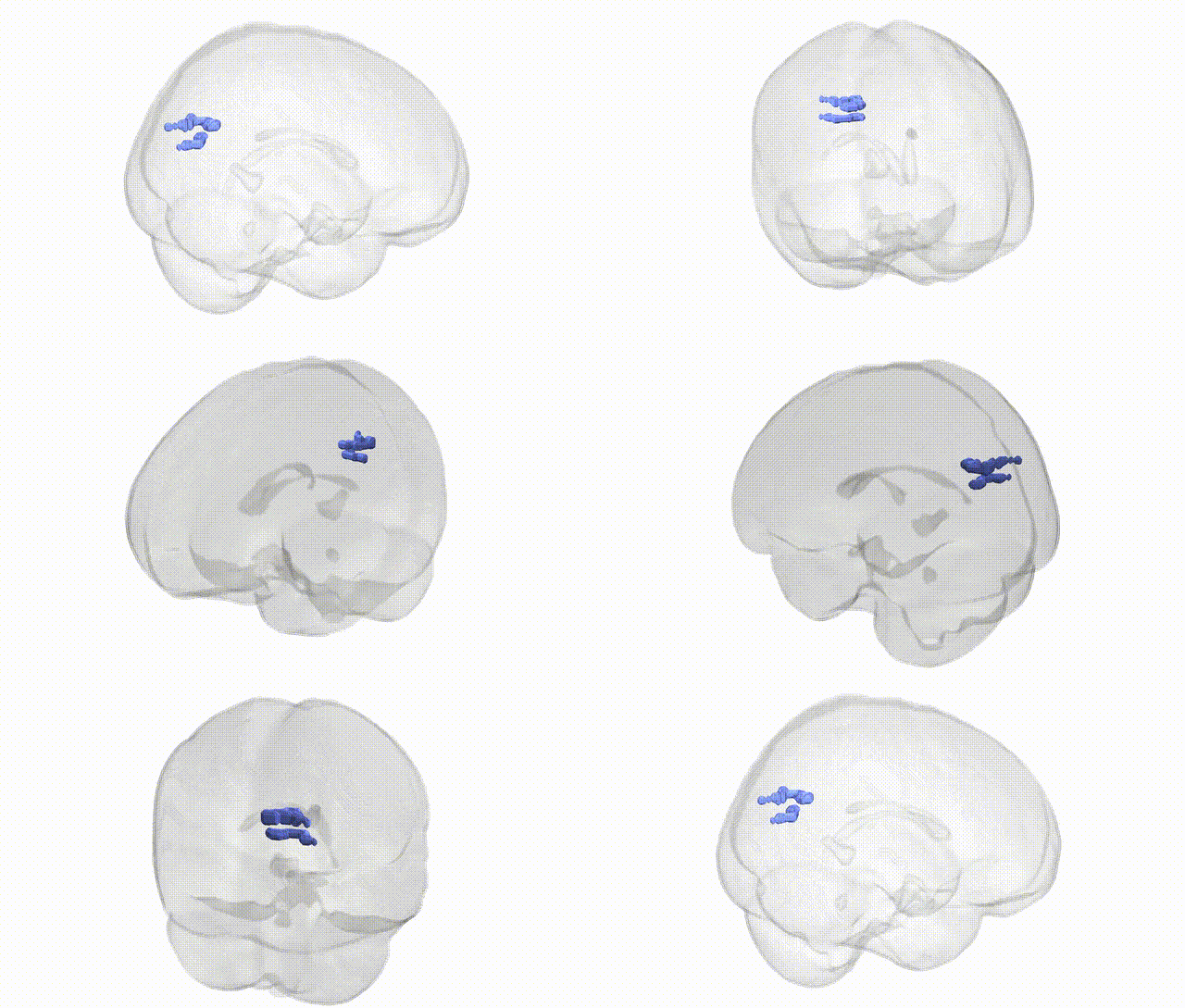
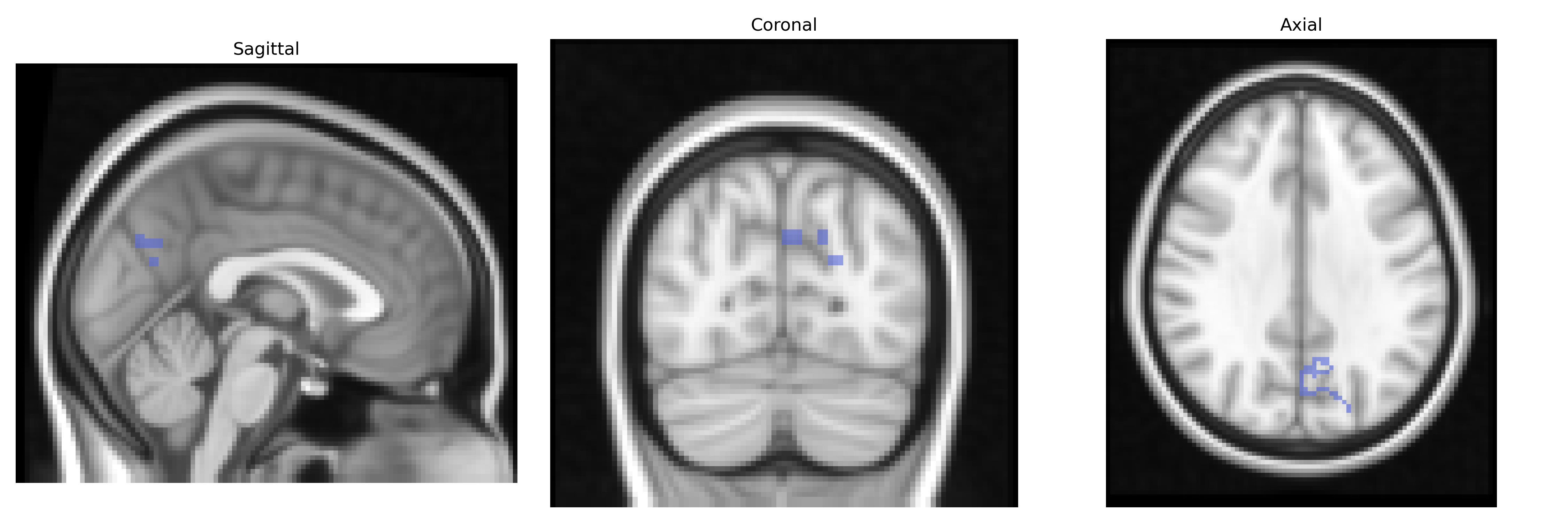
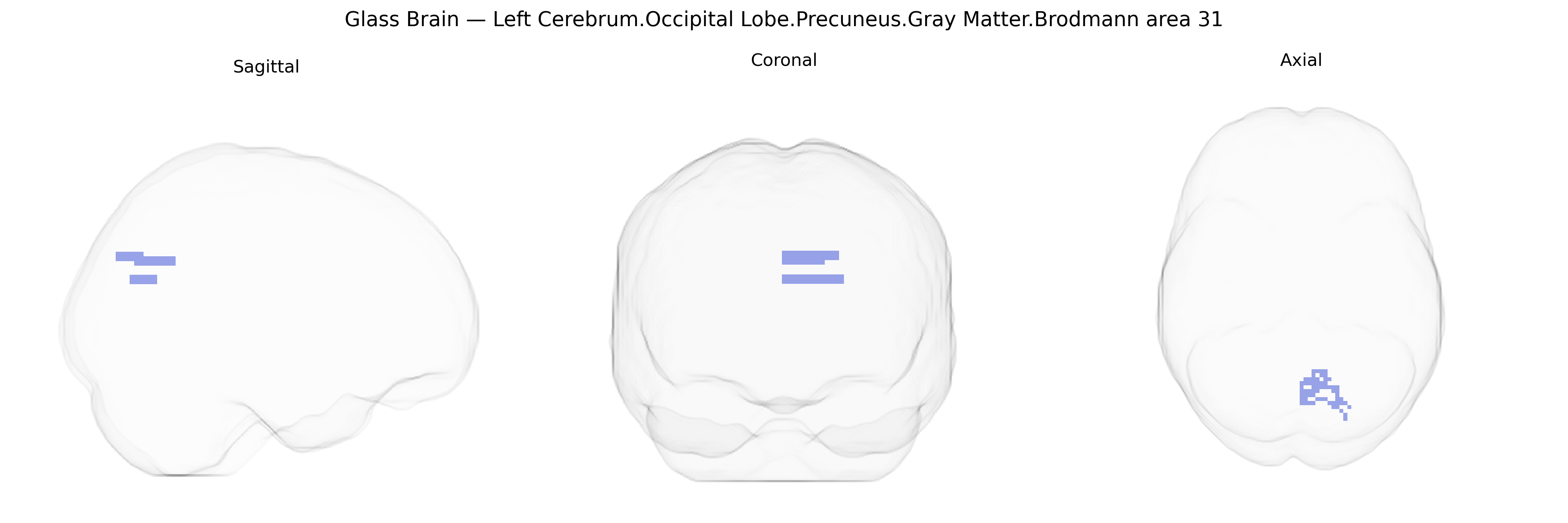
Bilateral Left Cerebrum.Occipital Lobe.Precuneus.Gray Matter.Brodmann area 31 corresponds to a cortical region in the medial posterior part of the cerebral hemisphere, located at the transition between the precuneus and posterior cingulate cortex, and often classified within the posterior medial parietal/occipital border zone. Brodmann area 31 is part of the limbic and default mode network systems, implicated in self-referential processing, autobiographical memory, visuospatial integration, and aspects of emotional and cognitive evaluation. It receives multimodal inputs from visual, parietal, and limbic structures and shows robust connectivity with the hippocampal–parahippocampal complex, medial prefrontal cortex, and other association areas, supporting higher-order integrative and introspective functions. There is no direct Wikipedia article for “Brodmann area 31”; a closely related structure is the Posterior cingulate cortex.
The bilateral precuneus gray matter in Brodmann area 31 (BA31) of the occipital/medial parietal cerebrum, as defined in the Talairach 2 mm Atlas, is a key hub of the default mode network and has been repeatedly implicated in genetic studies of brain structure and function. GWAS of cortical thickness, surface area, and subregional volumes have identified associations between precuneus morphology and variants in multiple loci, including genes involved in synaptic plasticity, neurodevelopment, and axon guidance (e.g., MECP2, BDNF, and several glutamatergic pathway genes), though findings are often regionally broader than BA31 itself. Large consortia such as ENIGMA have reported SNPs associated with parietal/precuneus measures that overlap risk loci for schizophrenia, major depressive disorder, bipolar disorder, and Alzheimer’s disease, consistent with structural and functional alterations of BA31 in these disorders. APOE ε4 and other Alzheimer’s disease risk variants show links to hypometabolism, atrophy, and amyloid deposition in posterior cingulate–precuneus regions encompassing BA31. Polygenic risk scores for schizophrenia, depression, autism spectrum conditions, and cognitive ability correlate with precuneus connectivity and default mode network integrity, while GWAS of personality traits (e.g., neuroticism), intelligence, and introspective or self-referential processing also implicate this medial parietal area. Overall, genetic influences on BA31 precuneus structure and function appear to intersect with risk architectures for neuropsychiatric and neurodegenerative disorders, higher-order cognition, and personality, though most associations are at the level of distributed networks rather than anatomically isolated BA31.
Overview generated by GPT-4o (2026).
Region ID: 823
Hemisphere: bilateral
Atlas: Talairach labels 2mm
Full Quality Version: Download MP4
Full Quality Version: Download MP4
Wali Sidiqyar*, Gaurav Rudravaram*, Elyssa M. McMaster, Trent M. Schwartz, Adam M. Saunders, Kurt G. Schilling, Bennett A. Landman "Introducing SPINS: A Shared Public Visualization Library of Neuroanatomical Structures." Medical Imaging with Deep Learning- short paper
This resource is licensed under CC0 1.0 Universal (Public Domain).