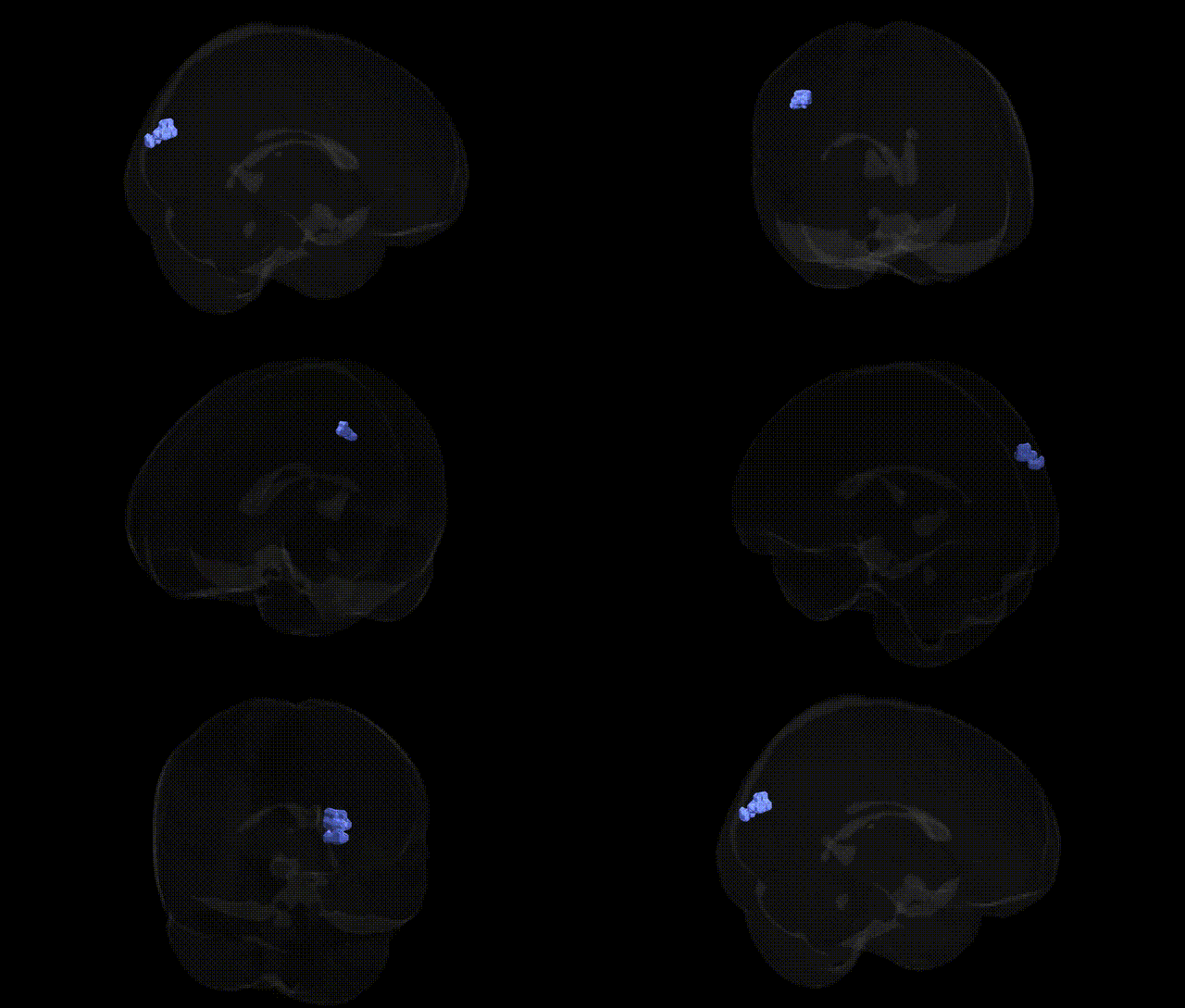
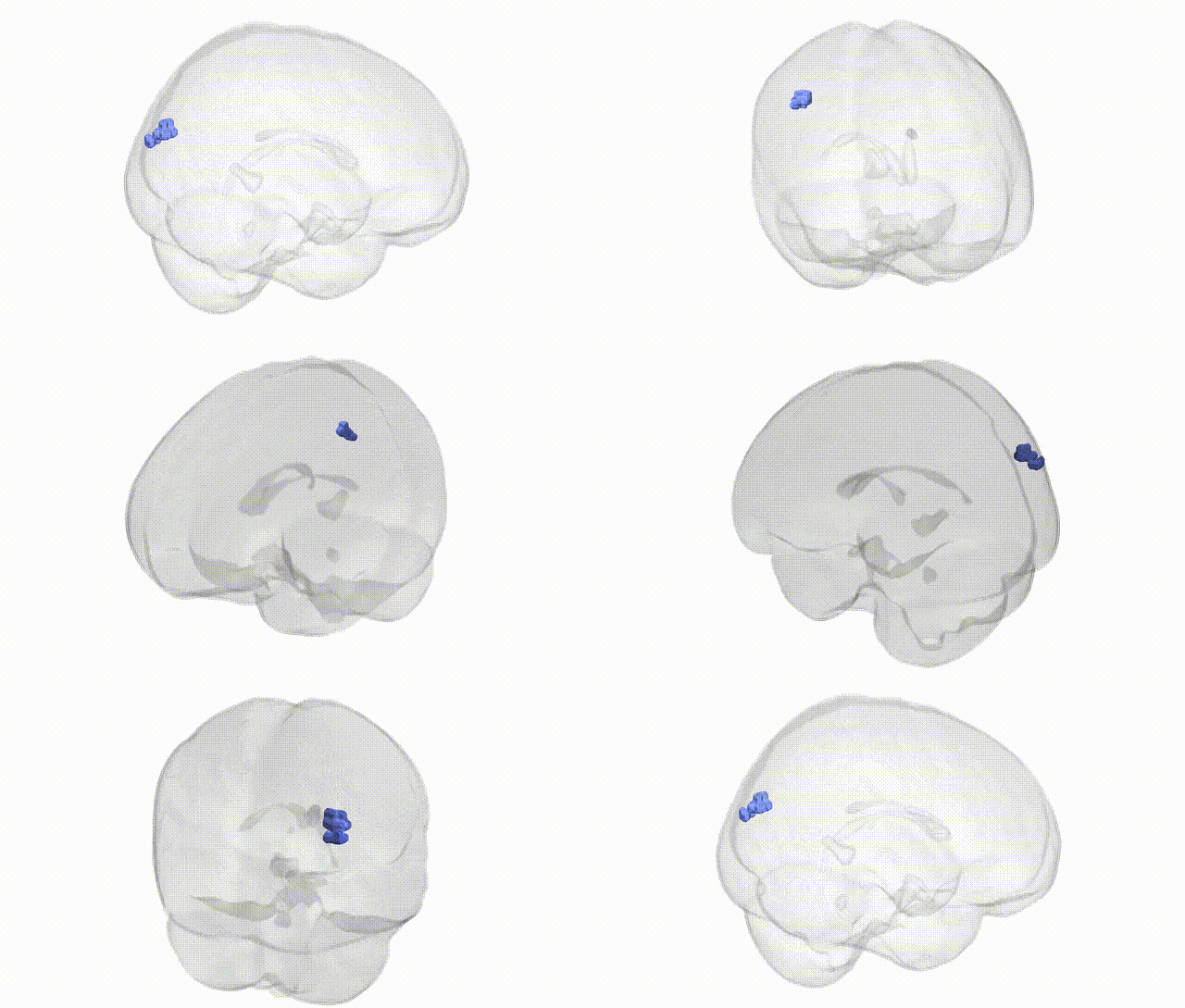
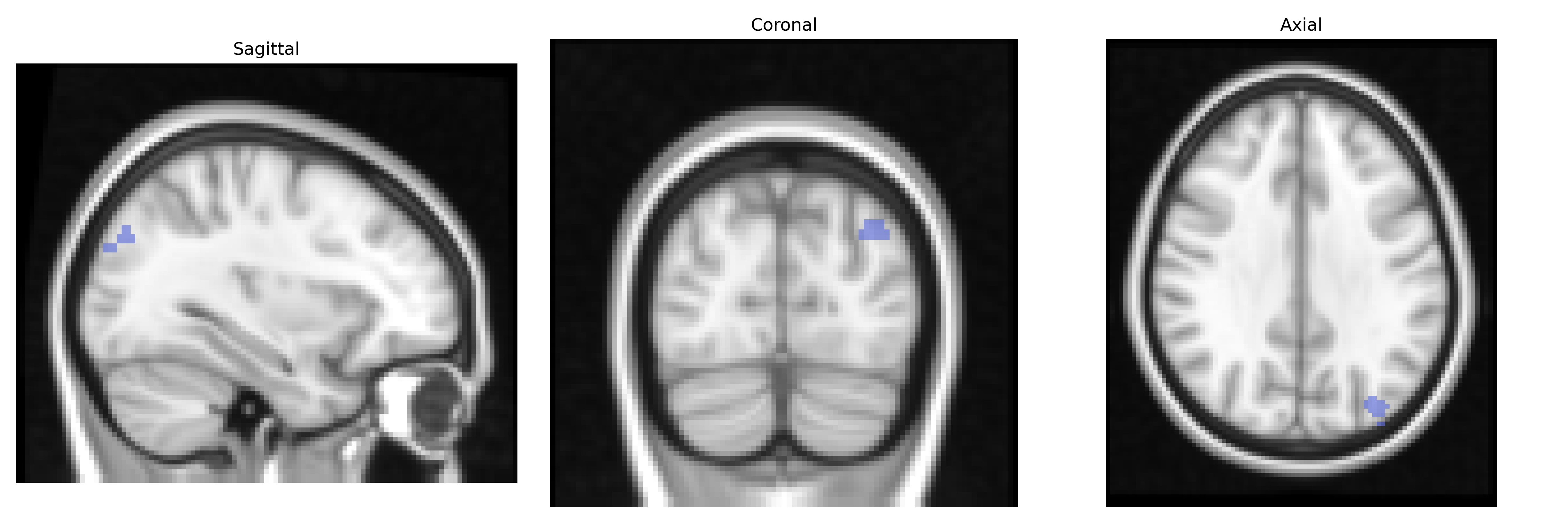
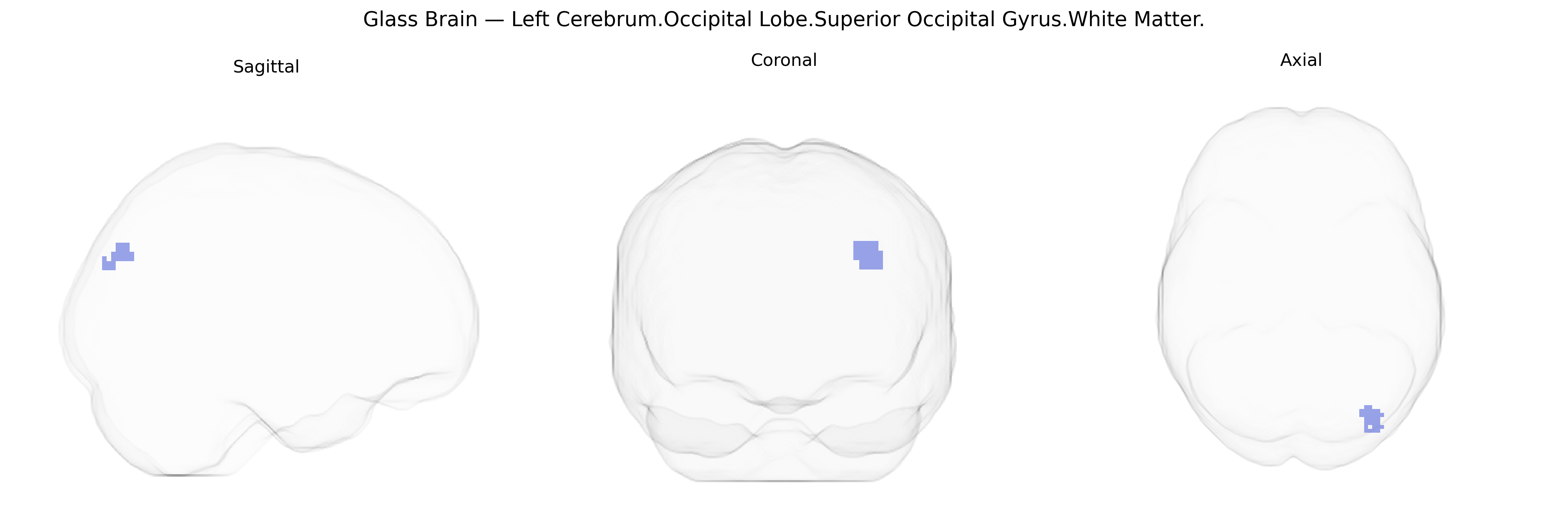
The bilateral Left Cerebrum.Occipital Lobe.Superior Occipital Gyrus.White Matter, as defined in the Talairach 2 mm Atlas, comprises the subcortical myelinated fiber tracts underlying the superior occipital gyrus in the left occipital lobe, with homologous organization in the right hemisphere. This white matter region carries visual information between primary and secondary visual cortices and higher-order associative areas, contributing to integration of visuospatial, motion, and object-related signals. It forms part of major occipital association pathways, including segments of the superior longitudinal and occipito-parietal tracts, and participates in large-scale dorsal visual stream networks involved in spatial attention and visually guided action. There is no direct link; see the related cortical region: Superior occipital gyrus.
The bilateral Left Cerebrum Occipital Lobe Superior Occipital Gyrus white matter region, as defined in the Talairach 2 mm atlas, has not been a primary focus of region‑specific genetic association studies, but large-scale neuroimaging GWAS and diffusion MRI studies implicate this and adjacent occipital white matter tracts in several heritable traits and disorders. Polygenic influences on global and regional white matter microstructure (e.g., fractional anisotropy and mean diffusivity in occipital and posterior association tracts) have been repeatedly demonstrated, with variants in genes related to axonal guidance, myelination, and synaptic signaling—such as those in the NRG1/ERBB, CNTNAP2, and MAG pathways—contributing to inter-individual differences. Occipital white matter integrity has shown genetic correlations with general cognitive ability, visual processing speed, and educational attainment in imaging–genetics consortia (e.g., ENIGMA, UK Biobank), typically via polygenic scores rather than single-locus effects. GWAS of psychiatric and neurodevelopmental disorders, including schizophrenia, autism spectrum disorder, and major depression, frequently report case–control differences in occipital and superior occipital white matter metrics, and polygenic risk for these conditions is associated with altered structural connectivity in posterior networks, although these findings reflect distributed genetic effects on brain networks rather than specific loci uniquely tied to the superior occipital gyrus white matter. Overall, genetic associations related to this region are best characterized as part of broader, polygenic influences on occipital–parietal visual and association pathways rather than discrete, region-specific GWAS hits.
Overview generated by GPT-4o (2026).
Region ID: 850
Hemisphere: bilateral
Atlas: Talairach labels 2mm
Full Quality Version: Download MP4
Full Quality Version: Download MP4
Wali Sidiqyar*, Gaurav Rudravaram*, Elyssa M. McMaster, Trent M. Schwartz, Adam M. Saunders, Kurt G. Schilling, Bennett A. Landman "Introducing SPINS: A Shared Public Visualization Library of Neuroanatomical Structures." Medical Imaging with Deep Learning- short paper
This resource is licensed under CC0 1.0 Universal (Public Domain).