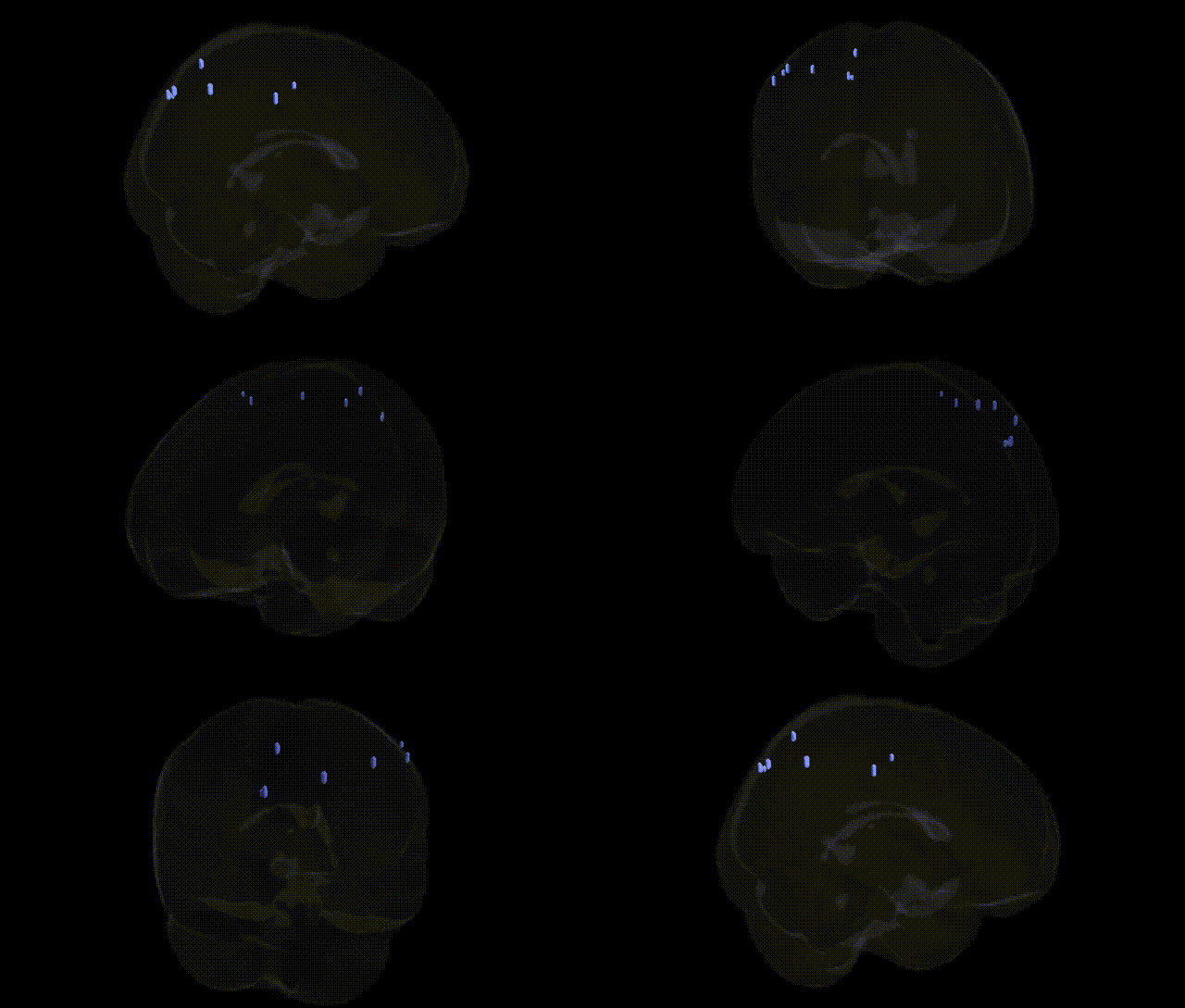
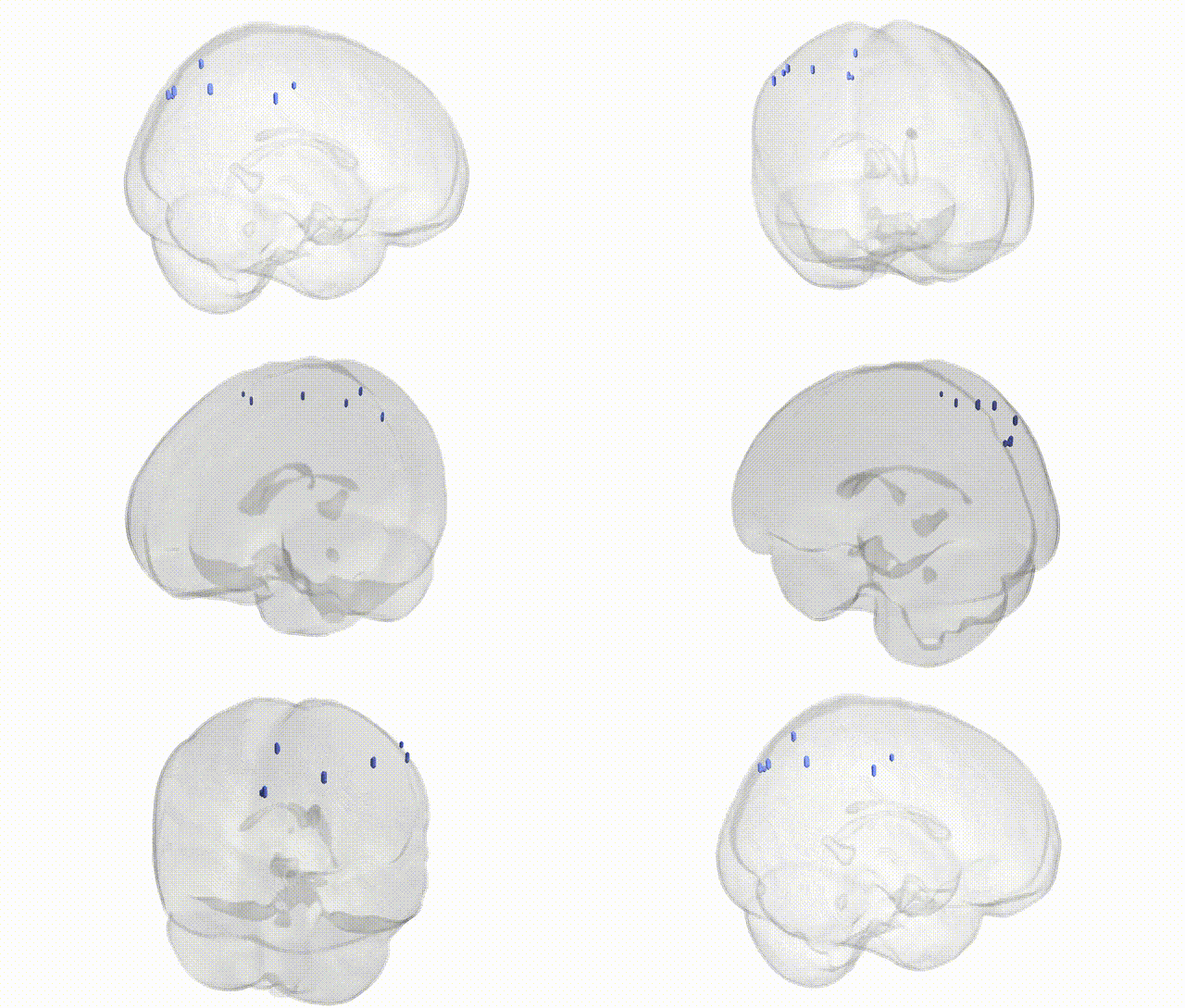
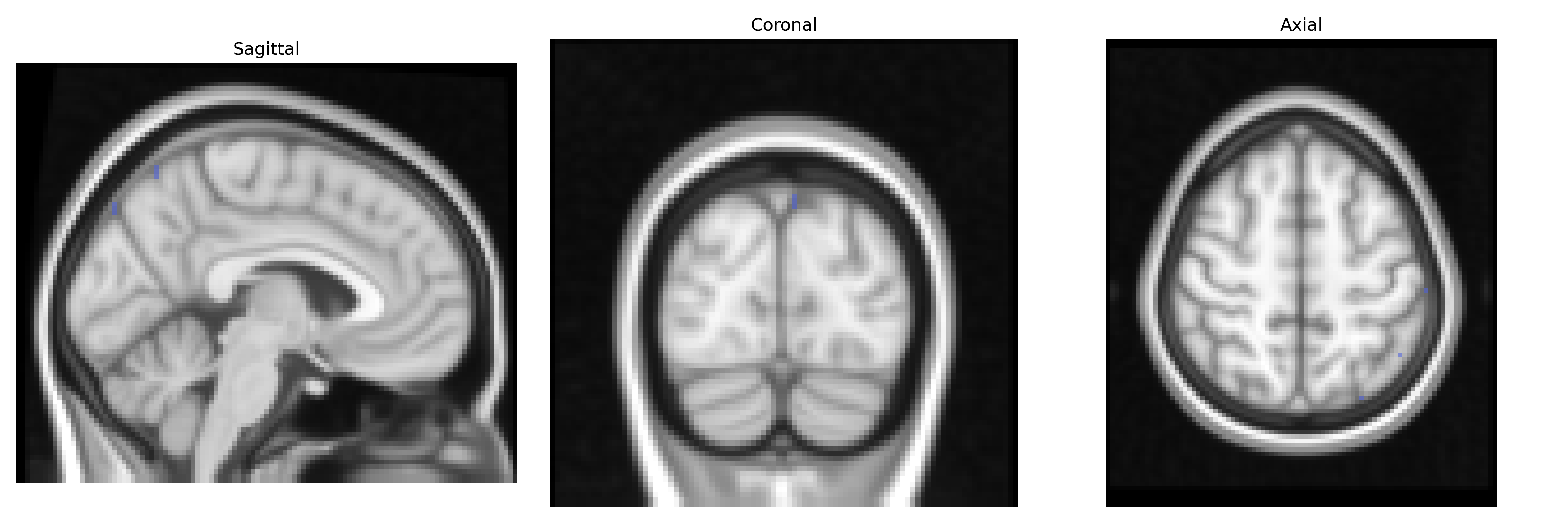
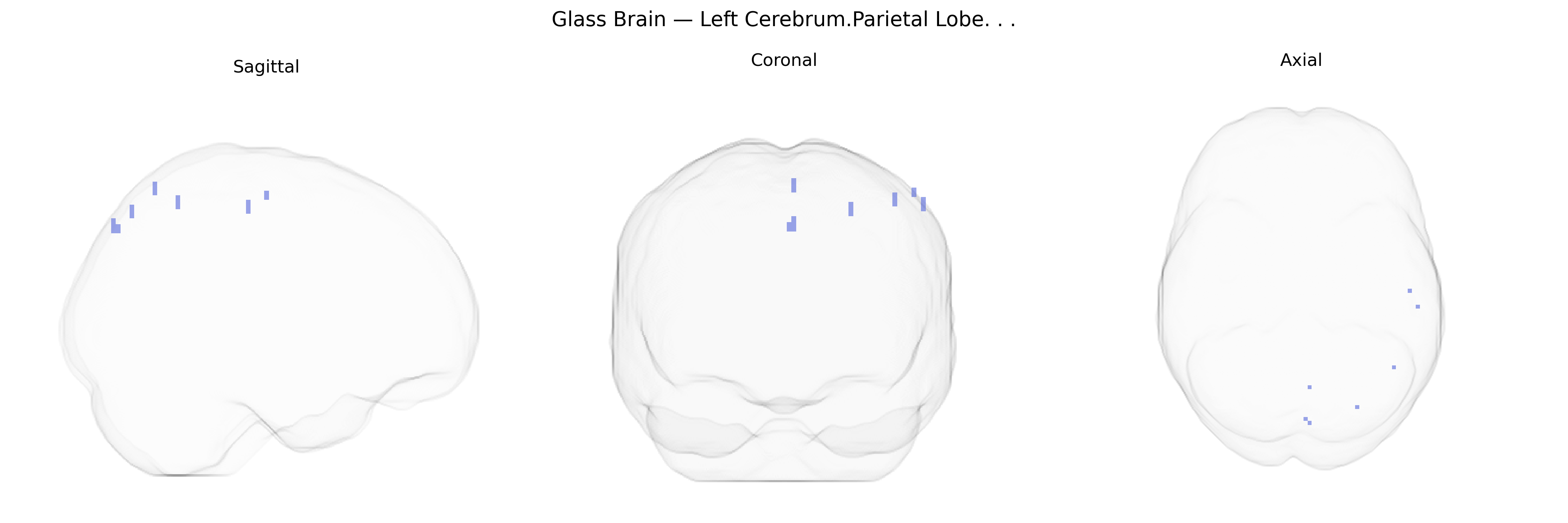
The bilateral Left Cerebrum.Parietal Lobe refers to the portions of the parietal cortex located in the left cerebral hemisphere, extending dorsally and posteriorly from the central sulcus toward the occipital lobe. This region encompasses structures such as the postcentral gyrus (primary somatosensory cortex), superior parietal lobule, and parts of the inferior parietal lobule, which together are critical for integrating somatosensory information, spatial perception, proprioception, and aspects of attention and symbolic processing (including elements of language-related functions in the dominant hemisphere). Neurons in the left parietal lobe participate in constructing internal representations of body position and extrapersonal space, support sensorimotor transformations required for skilled actions, and contribute to higher-order cognitive operations such as calculation and praxis.
The bilateral left cerebrum parietal lobe, as defined in the Talairach 2mm atlas, is a multimodal association region whose structure and function show strong heritability and have been repeatedly implicated in genetic studies of cognition, neurodevelopment, and neuropsychiatric disease. GWAS and imaging-genetics analyses using parietal cortical thickness, surface area, and gyrification as endophenotypes have identified robust associations with variants near genes involved in neurodevelopmental processes (e.g., microtubule and synaptic genes such as MAPT region loci, DLG2, and genes in Wnt and axon-guidance pathways), and several large consortia (ENIGMA, UK Biobank) report distinct genetic architectures for parietal versus other cortical regions. Parietal lobe measures have been linked to polygenic scores for general intelligence and educational attainment, highlighting genes tied to synaptic plasticity and neuronal differentiation, while task-based functional activation in parietal regions has been associated with allelic variation in dopaminergic and glutamatergic genes in studies of working memory and attention. Multiple disorders involving visuospatial processing, attention, and sensorimotor integration show parietal involvement in genetic studies: autism spectrum disorder, ADHD, schizophrenia, and specific learning disorders all exhibit parietal structural or functional differences that co-localize with risk loci enriched for synaptic, immune, and chromatin-remodeling genes. Neurodegenerative GWAS findings, particularly in Alzheimer’s disease, cerebral small vessel disease, and posterior cortical atrophy, also implicate bilateral parietal cortex, with risk alleles such as APOE ε4 and loci in CLU, PICALM, and BIN1 associated with parietal atrophy and hypometabolism patterns. Finally, parietal lobe connectivity and morphology show associations with genetic risk for handedness, spatial neglect vulnerability, and balance/coordination traits, suggesting that common variants exert regionally specific effects on parietal circuitry that mediate diverse cognitive and clinical phenotypes.
Overview generated by GPT-4o (2026).
Region ID: 799
Hemisphere: bilateral
Atlas: Talairach labels 2mm
Full Quality Version: Download MP4
Full Quality Version: Download MP4
Wali Sidiqyar*, Gaurav Rudravaram*, Elyssa M. McMaster, Trent M. Schwartz, Adam M. Saunders, Kurt G. Schilling, Bennett A. Landman "Introducing SPINS: A Shared Public Visualization Library of Neuroanatomical Structures." Medical Imaging with Deep Learning- short paper
This resource is licensed under CC0 1.0 Universal (Public Domain).