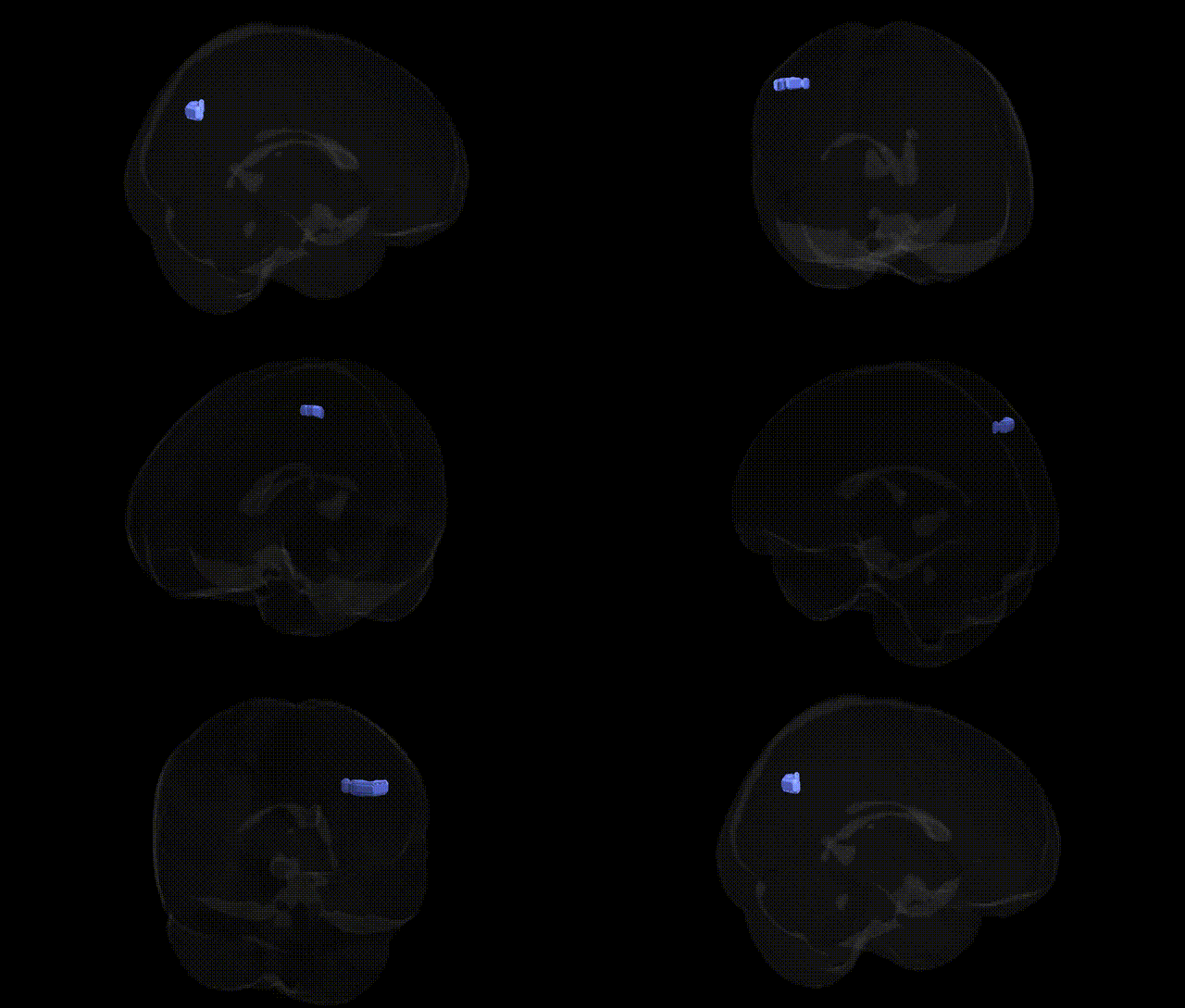
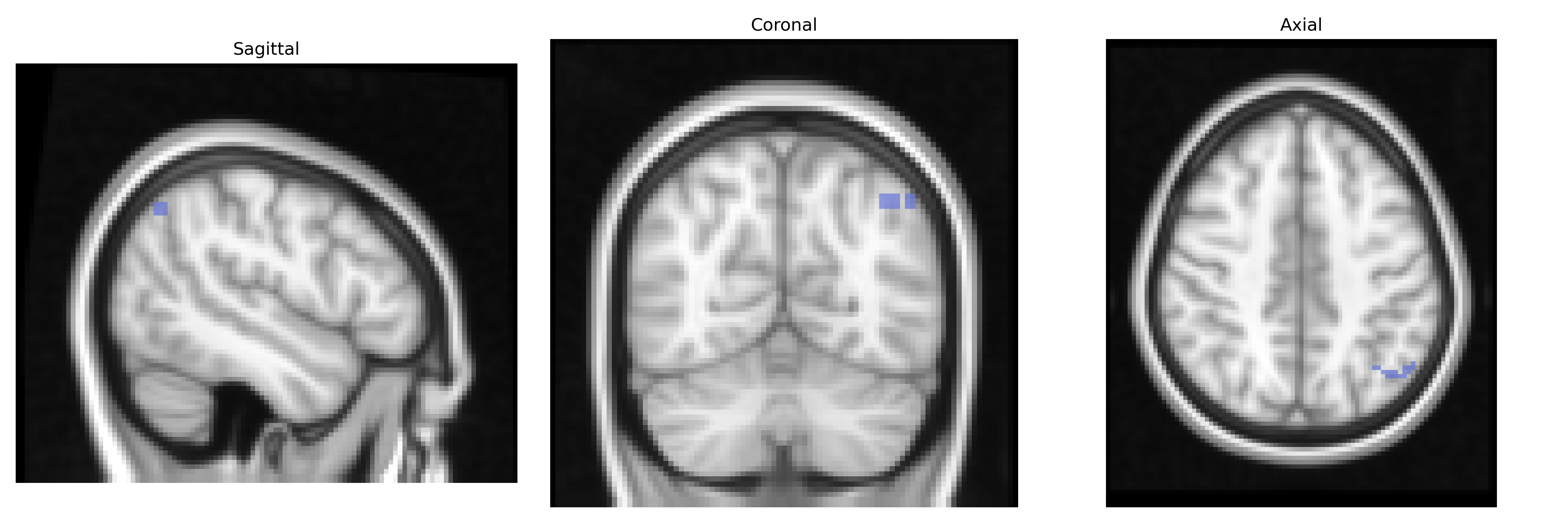
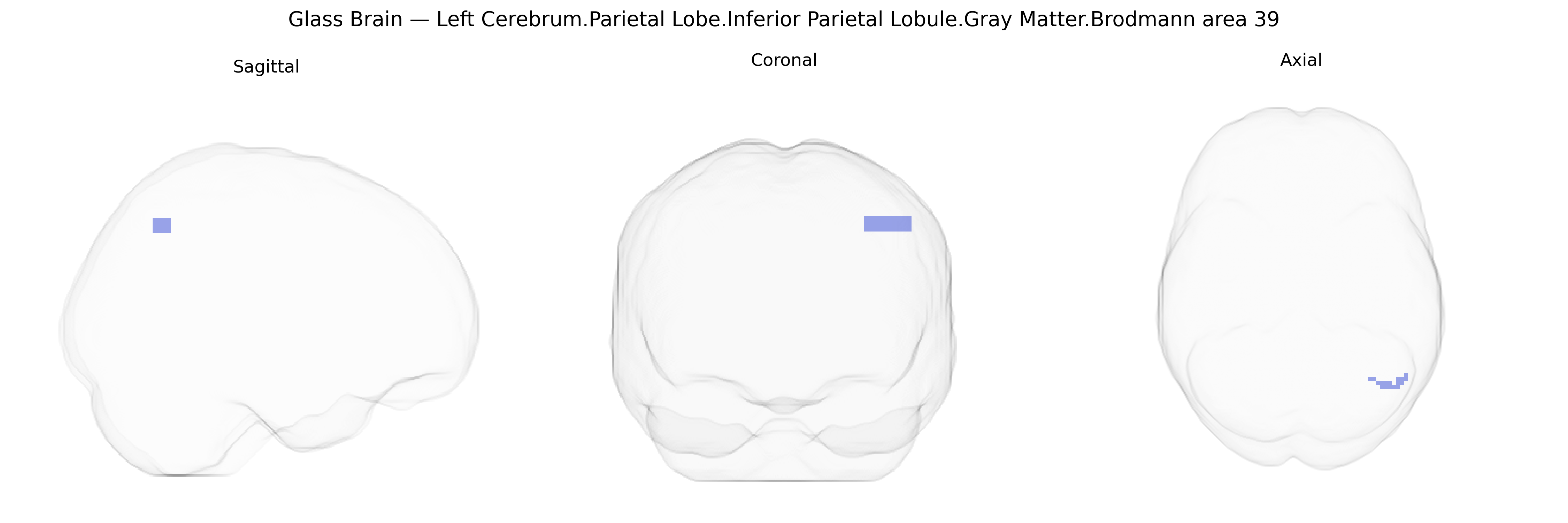
Bilateral Left Cerebrum.Parietal Lobe.Inferior Parietal Lobule.Gray Matter.Brodmann area 39 corresponds to the left angular gyrus, a heteromodal association cortex situated at the posterior end of the superior and middle temporal gyri and bordering the occipital lobe. This region integrates visual, auditory, and somatosensory information and plays a critical role in language-related functions (including reading, writing, and semantic processing), number processing, spatial cognition, and aspects of theory of mind. As part of the inferior parietal lobule, Brodmann area 39 contributes to the dorsal language network and is interconnected with temporal and frontal association areas, participating in higher-order conceptual integration and symbolic representation. A direct article exists at Angular gyrus.
The bilateral left inferior parietal lobule (Brodmann area 39) has emerged in genetic and neuroimaging studies as a key association cortex implicated in language, reading, numerical processing, and higher-order cognition, with GWAS and imaging-genetics work linking its gray matter structure and function to multiple traits and disorders. Variants in genes involved in synaptic plasticity, neuronal migration, and axonal guidance (including FOXP2, DCDC2, KIAA0319, CNTNAP2, and ROBO1) have been associated with developmental dyslexia, specific language impairment, and speech–language disorders, often showing structural or functional alterations in BA39 and adjacent inferior parietal regions. Large-scale GWAS of educational attainment, general cognitive ability, and reading-related skills have identified polygenic influences that correlate with cortical thickness, surface area, and volume in parietal association regions, including BA39, suggesting a distributed genetic architecture for scholastic and cognitive performance. Imaging-genetics studies have further tied common variants in genes such as COMT, BDNF, and APOE to variability in parietal lobe activation and connectivity during tasks involving working memory, semantic processing, and visuospatial integration. In neuropsychiatric and neurodevelopmental conditions, BA39 has been implicated via genetic and structural–functional findings in autism spectrum disorder, schizophrenia, and attention-deficit/hyperactivity disorder, where risk alleles in synaptic and neurodevelopmental genes (for example, DISC1, NRG1, and SHANK family genes) are associated with altered parietal network organization. Additionally, rare mutations and copy number variants affecting posterior cortical development (e.g., in TBR1, EOMES, and other corticogenesis-related genes) can produce language and visuospatial deficits with abnormalities in BA39, while Alzheimer’s disease GWAS loci (such as APOE, CLU, PICALM) are linked to atrophy and hypometabolism in parietal association cortex, reflecting the region’s vulnerability to genetically mediated neurodegeneration.
Overview generated by GPT-4o (2026).
Region ID: 1014
Hemisphere: bilateral
Atlas: Talairach labels 2mm
Full Quality Version: Download MP4
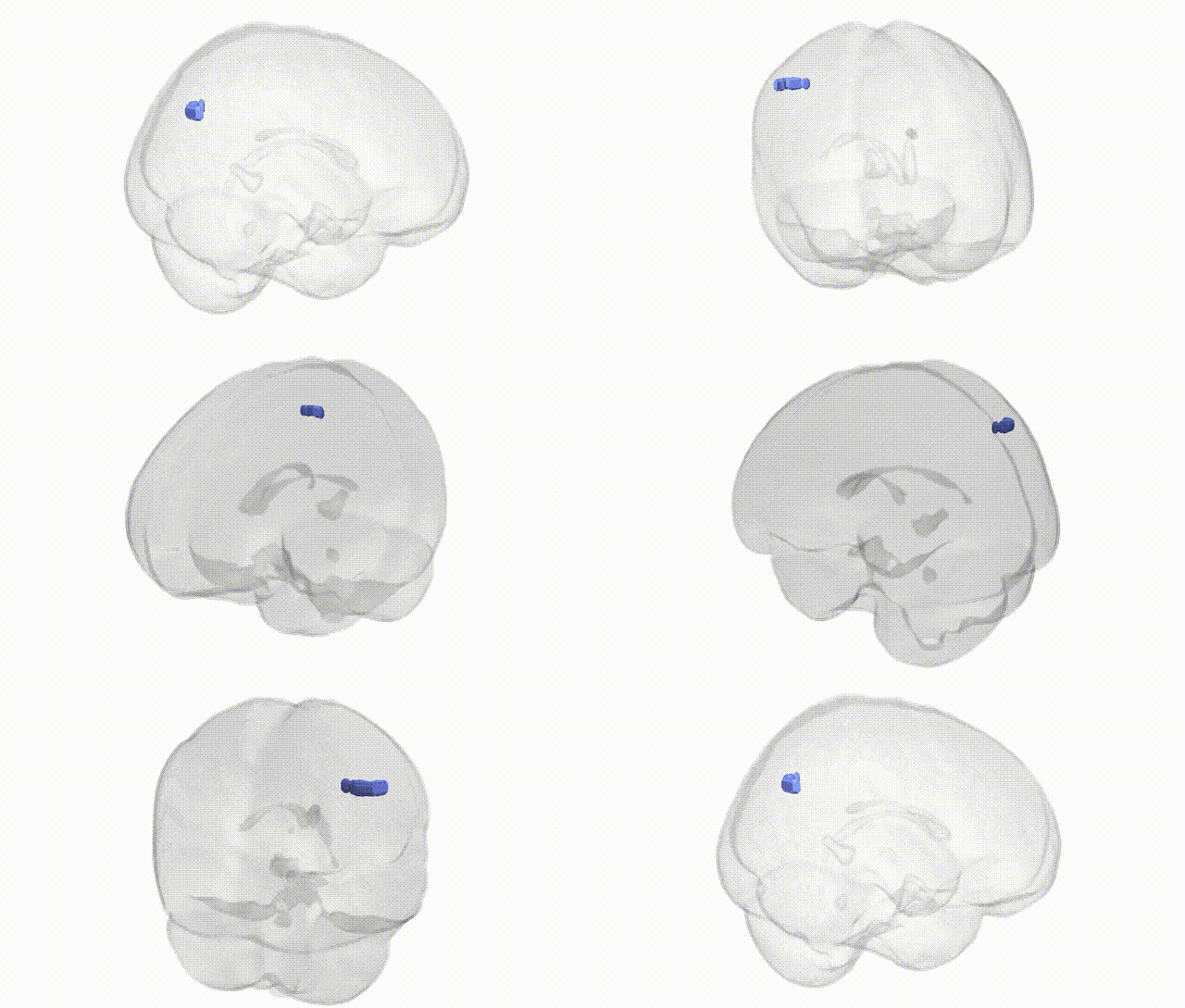
Full Quality Version: Download MP4
Wali Sidiqyar*, Gaurav Rudravaram*, Elyssa M. McMaster, Trent M. Schwartz, Adam M. Saunders, Kurt G. Schilling, Bennett A. Landman "Introducing SPINS: A Shared Public Visualization Library of Neuroanatomical Structures." Medical Imaging with Deep Learning- short paper
This resource is licensed under CC0 1.0 Universal (Public Domain).