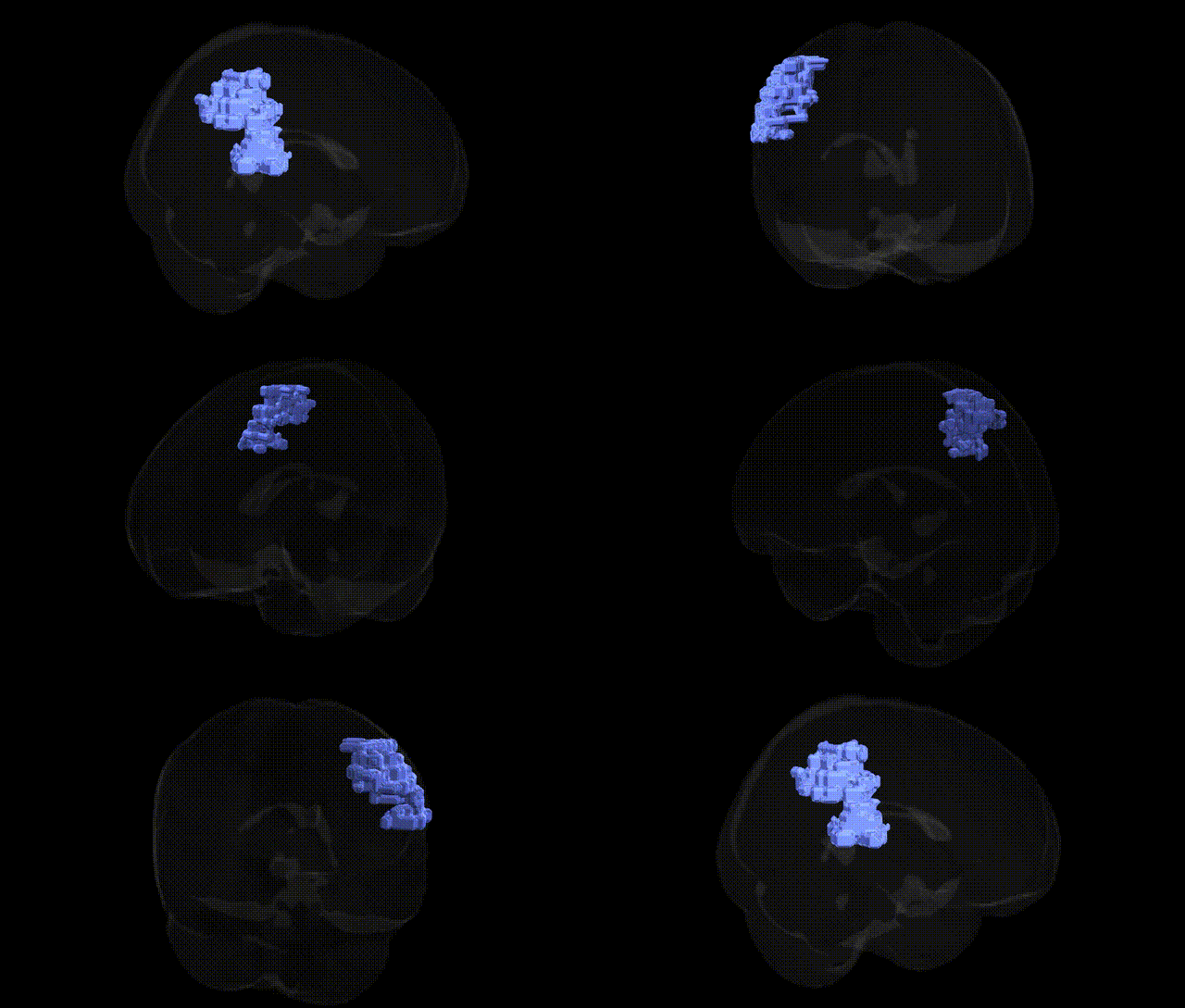
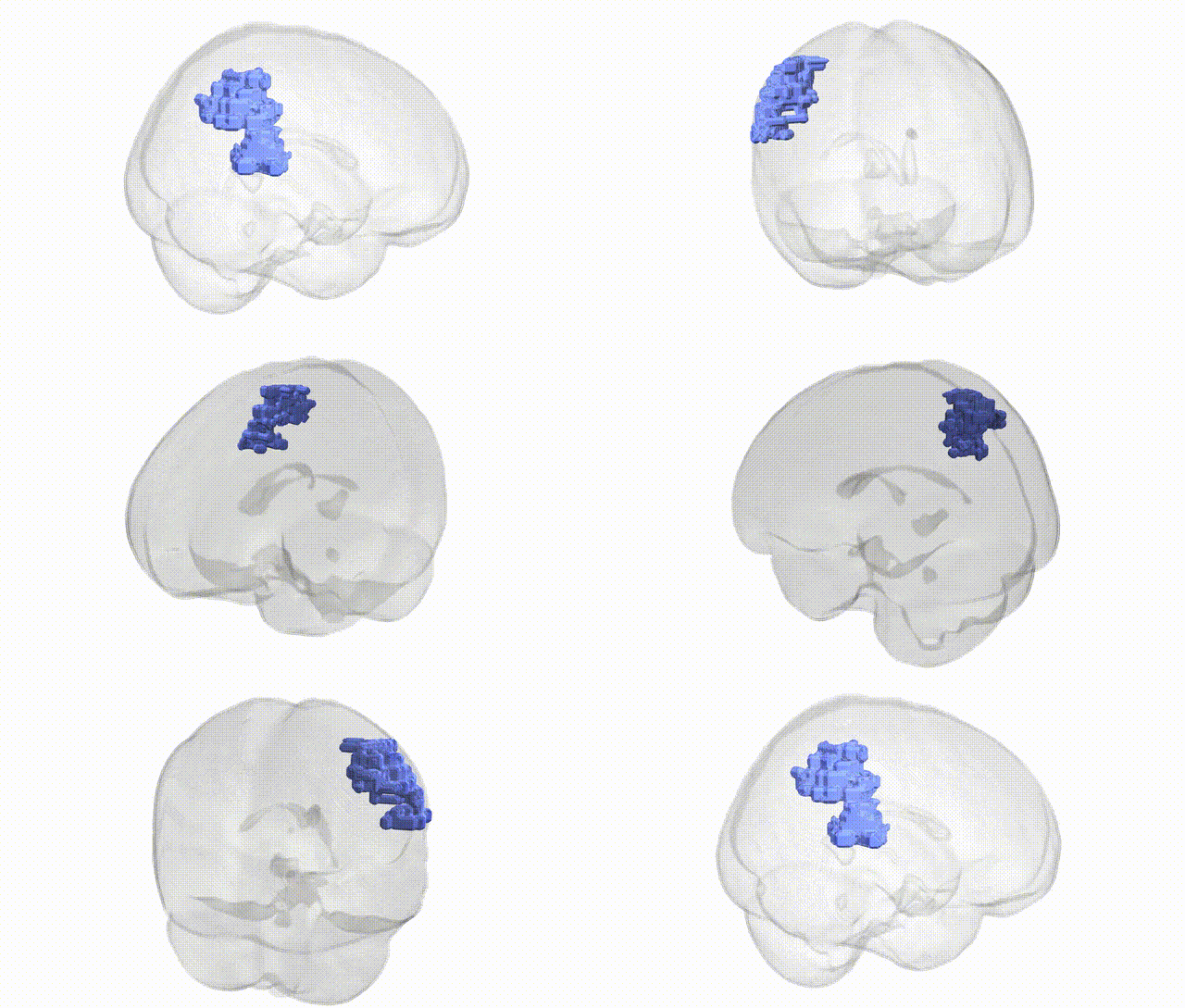
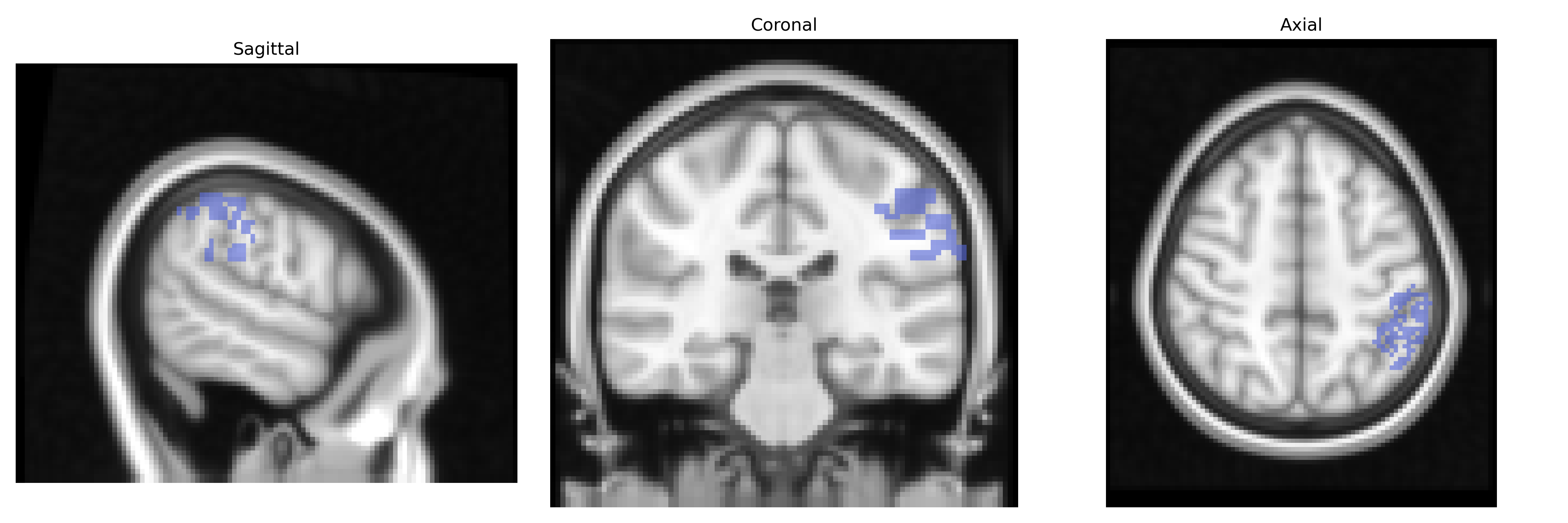
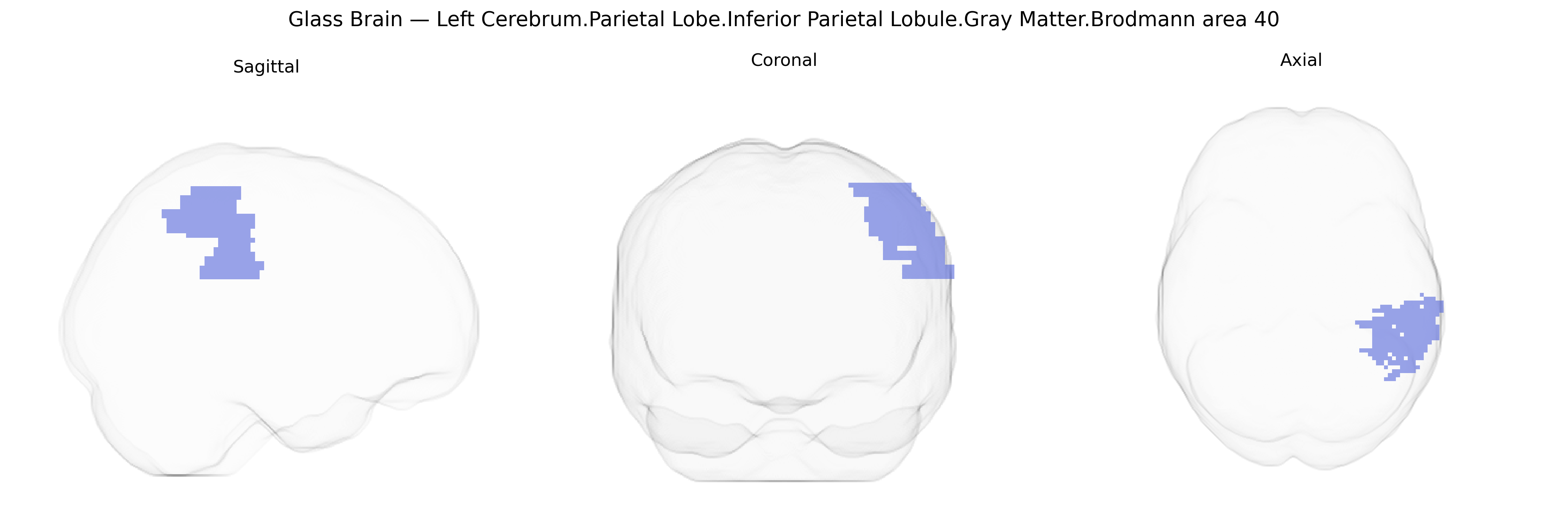
Bilateral Left Cerebrum Parietal Lobe Inferior Parietal Lobule Gray Matter Brodmann area 40 corresponds primarily to the supramarginal gyrus, a cortical region situated at the posterior end of the lateral sulcus within the inferior parietal lobule. Cytoarchitectonically defined as Brodmann area 40, this region integrates multimodal sensory inputs, including somatosensory, auditory, and visual information, and plays key roles in language processing (particularly phonological and articulatory aspects), spatial attention, praxis, and aspects of working memory. It is critically involved in mapping sounds to articulatory patterns, supporting reading and writing, and contributing to body schema and the recognition of object-related actions. Functionally, BA40 participates in left-dominant language networks and fronto-parietal circuits for cognitive control, with lesions often producing deficits such as conduction aphasia, apraxia, and disturbances in spatial perception. There is no direct Wikipedia article for “Brodmann area 40” in this exact Talairach label form; a closely related and encompassing structure is the supramarginal gyrus: Supramarginal gyrus.
The bilateral left inferior parietal lobule (IPL; Brodmann area 40) has been implicated in multiple genetic and GWAS-based associations primarily through imaging genetics studies that link common variants to regional gray matter volume, cortical thickness, and functional activation. Variants in genes related to synaptic plasticity and neurodevelopment—such as BDNF (e.g., Val66Met), COMT, and APOE—have been repeatedly associated with structural and functional variation in the IPL, often in the context of memory, attention, and language tasks. Large-scale GWAS of brain morphology (e.g., ENIGMA consortium studies) have identified numerous loci associated with parietal lobe and inferior parietal cortical measures, including variants near microtubule and axon guidance genes, although these loci are typically reported for broader parietal or whole-brain measures rather than Talairach-specific BA40. Genetically influenced alterations of IPL structure or connectivity have been reported in schizophrenia, major depressive disorder, bipolar disorder, ADHD, and autism spectrum disorder, with polygenic risk scores for these conditions correlating with parietal and IPL morphology or activation patterns. IPL BA40 also shows genetic associations with cognitive traits such as general intelligence, working memory, and reading/language skills, and has been linked via GWAS and imaging genetics to Alzheimer’s disease risk (where APOE and additional loci affect parietal atrophy and default mode network integrity), highlighting this region as a convergent hub for genetic influences on higher-order cognition and neuropsychiatric vulnerability.
Overview generated by GPT-4o (2026).
Region ID: 878
Hemisphere: bilateral
Atlas: Talairach labels 2mm
Full Quality Version: Download MP4
Full Quality Version: Download MP4
Wali Sidiqyar*, Gaurav Rudravaram*, Elyssa M. McMaster, Trent M. Schwartz, Adam M. Saunders, Kurt G. Schilling, Bennett A. Landman "Introducing SPINS: A Shared Public Visualization Library of Neuroanatomical Structures." Medical Imaging with Deep Learning- short paper
This resource is licensed under CC0 1.0 Universal (Public Domain).