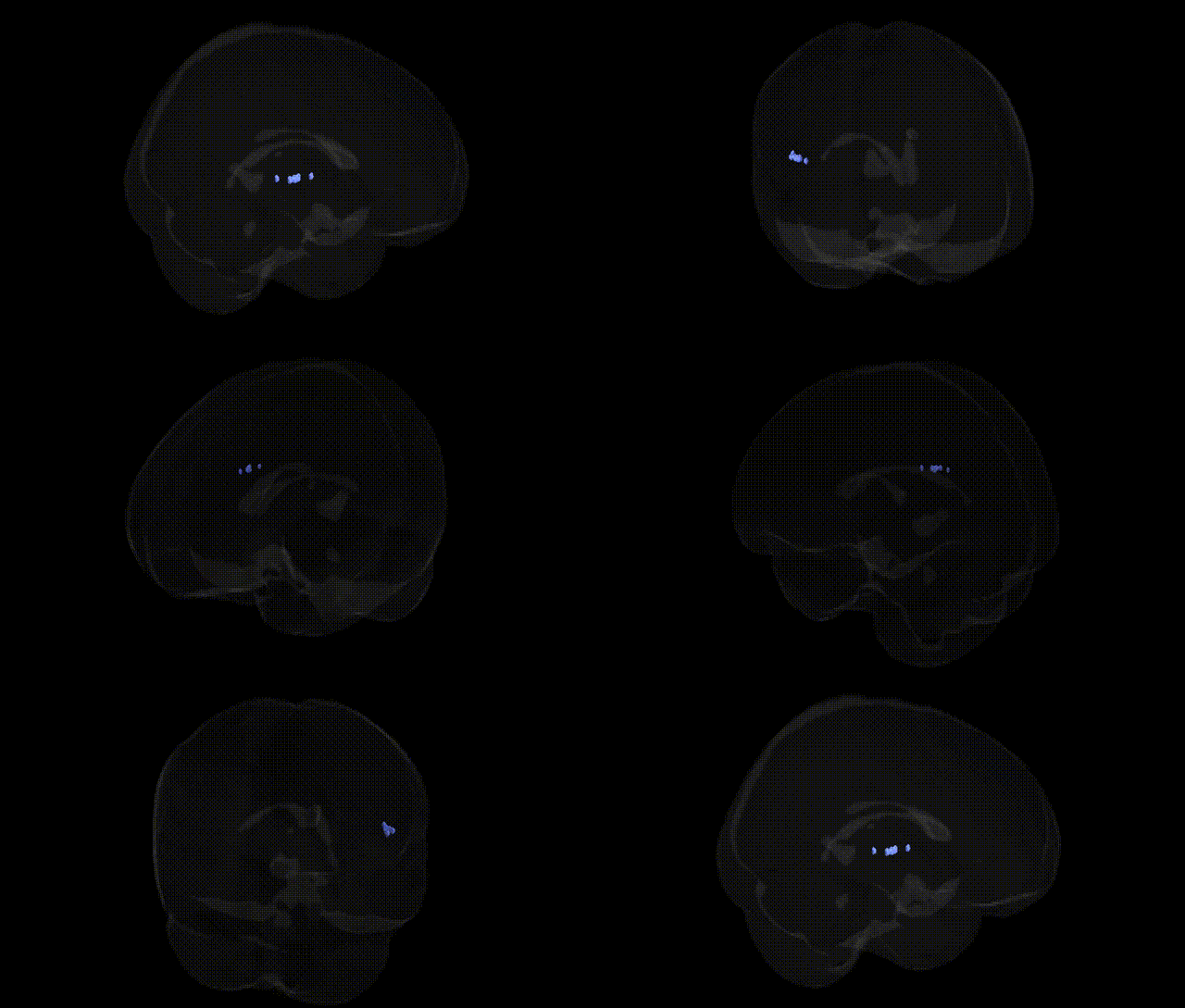
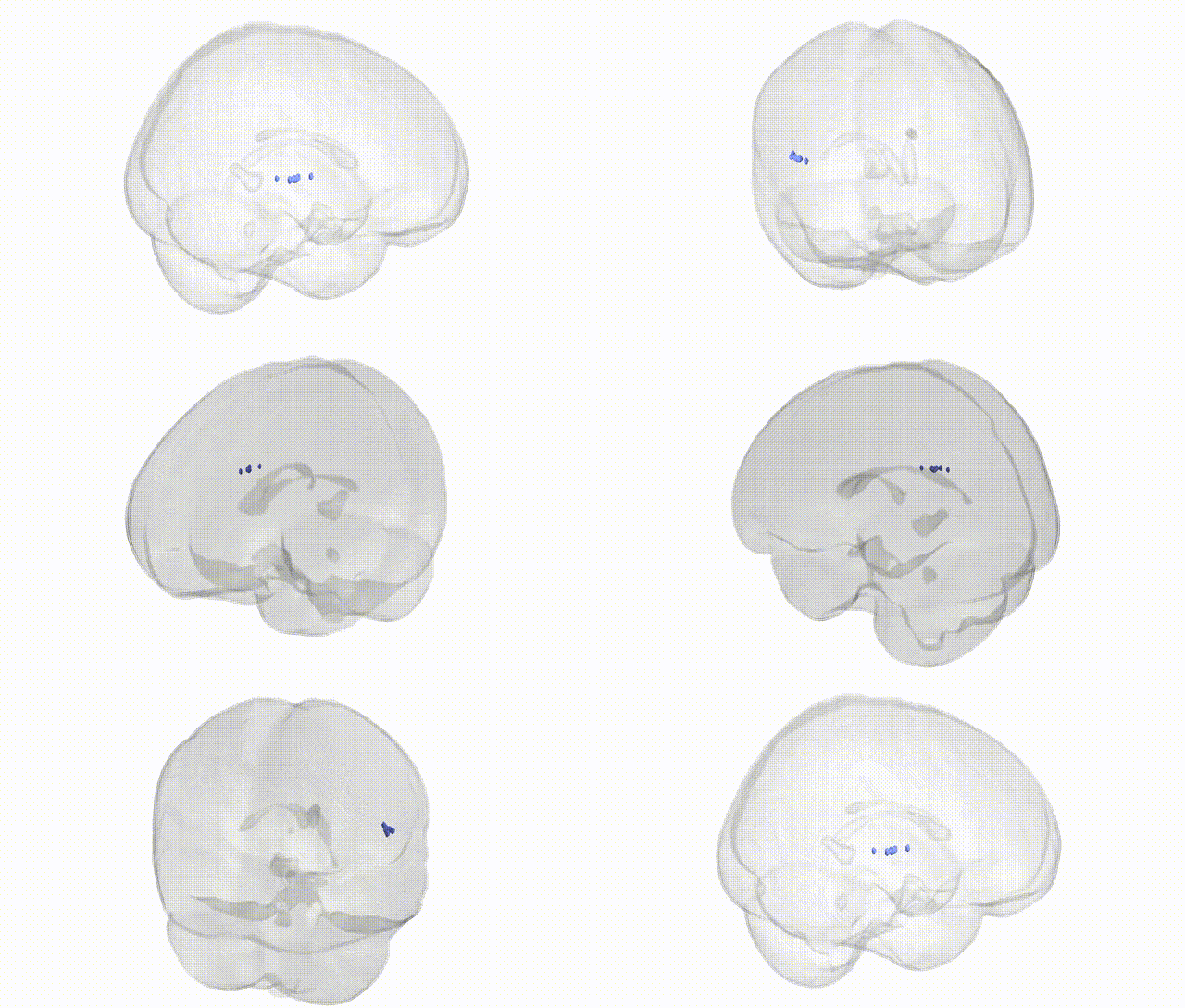
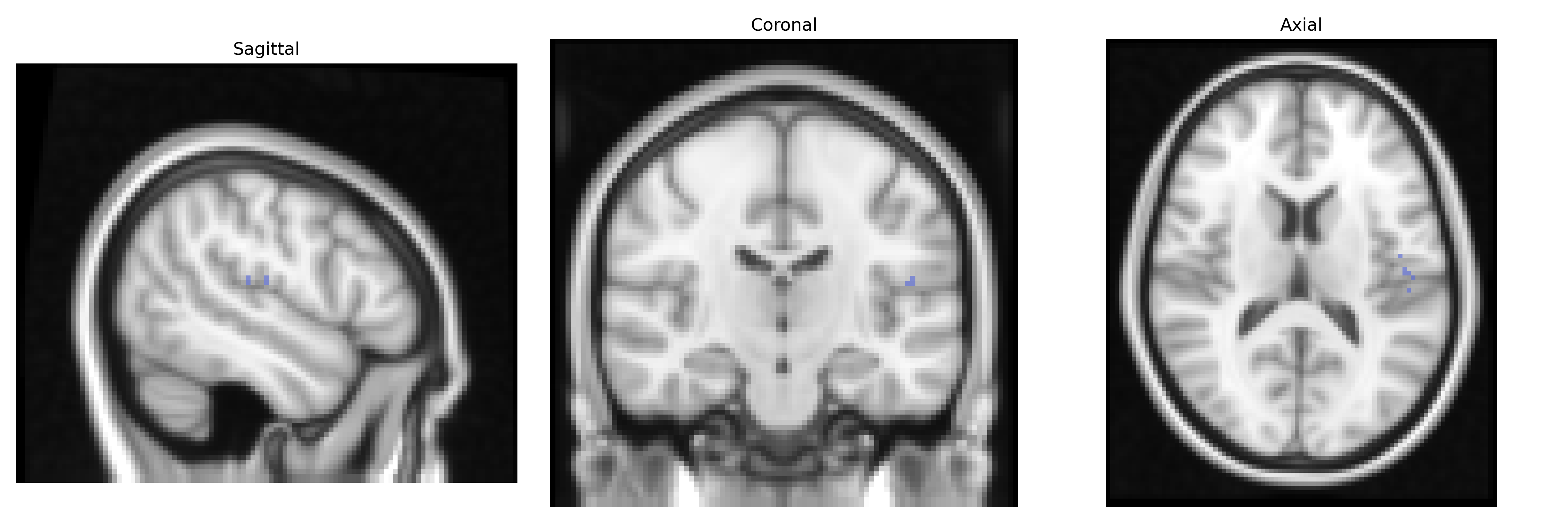
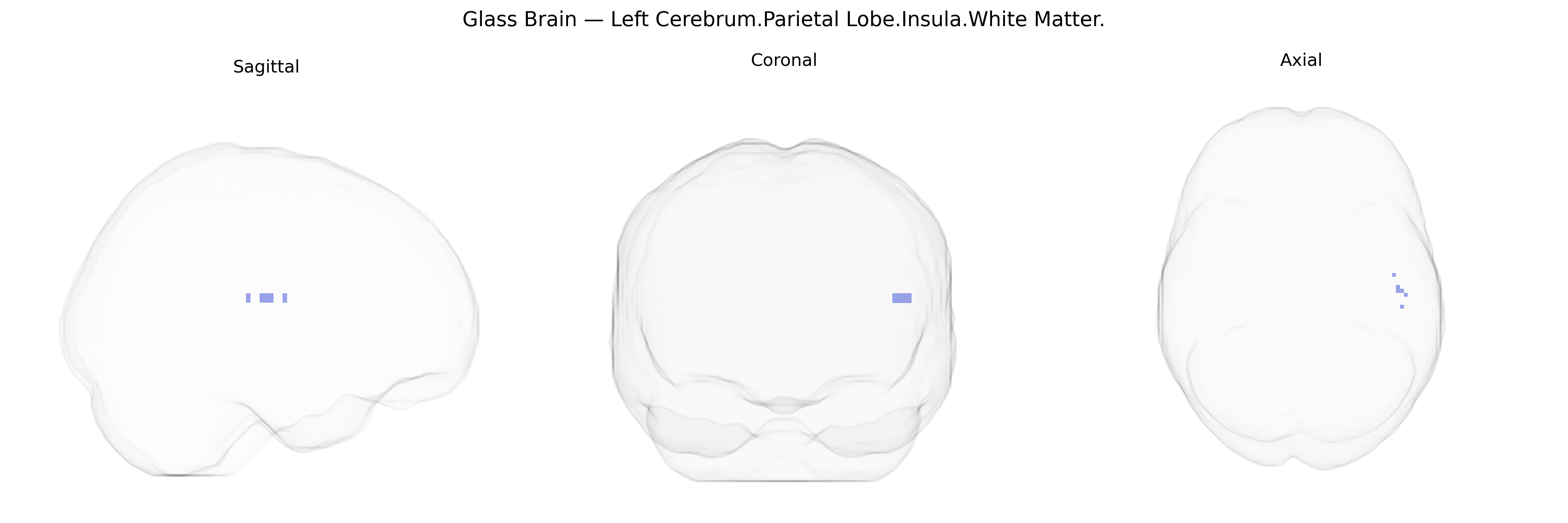
The bilateral Left Cerebrum.Parietal Lobe.Insula.White Matter corresponds to deep subcortical fiber pathways coursing beneath the insular cortex at the junction of the parietal lobe and the insula. This white matter region contains association and projection fibers that contribute to integration of somatosensory, visceral, and multimodal information, linking insular areas involved in interoception, pain processing, and salience detection with parietal regions mediating spatial attention and sensorimotor integration. It forms part of complex fiber systems, including components of the extreme and external capsules and nearby short association tracts, supporting communication between cortical and subcortical structures such as the thalamus and basal ganglia. There is no direct link for this specific white matter compartment; however, it is closely related to the Insular cortex.
Genetic associations specifically targeting the bilateral Left Cerebrum Parietal Lobe Insula white matter as defined in the Talairach 2 mm atlas are not well characterized, but convergent imaging–genetics and GWAS evidence implicates genes and variants influencing insular and parietal connectivity, microstructure, and related functions. Large brain-imaging GWAS (e.g., ENIGMA, UK Biobank) have identified common variants in genes involved in axonal guidance, myelination, and synaptic plasticity (such as CNTNAP2, NRG1, MAG, and oligodendrocyte-related loci) that modulate white-matter integrity and network properties in fronto‑parietal and insular pathways, often measured via fractional anisotropy and other diffusion MRI metrics. These regions’ white matter tracts contribute to salience, interoceptive, and sensorimotor integration networks; variants associated with psychiatric and neurological disorders—including schizophrenia (e.g., risk loci in CACNA1C, ZNF804A, and polygenic burden for synaptic genes), bipolar disorder, major depression, autism spectrum conditions, and attention-deficit/hyperactivity disorder—have repeatedly been linked to altered insular and parietal connectivity or white-matter microstructure. GWAS of traits such as pain sensitivity, risk-taking, neuroticism, and cognitive performance also show that polygenic profiles influencing cortical development and connectivity (e.g., genes in neurodevelopmental and calcium-signaling pathways) are associated with structural and functional variation in insular–parietal circuits, although these findings generally reflect broader network-level associations rather than Talairach-specific labels.
Overview generated by GPT-4o (2026).
Region ID: 775
Hemisphere: bilateral
Atlas: Talairach labels 2mm
Full Quality Version: Download MP4
Full Quality Version: Download MP4
Wali Sidiqyar*, Gaurav Rudravaram*, Elyssa M. McMaster, Trent M. Schwartz, Adam M. Saunders, Kurt G. Schilling, Bennett A. Landman "Introducing SPINS: A Shared Public Visualization Library of Neuroanatomical Structures." Medical Imaging with Deep Learning- short paper
This resource is licensed under CC0 1.0 Universal (Public Domain).