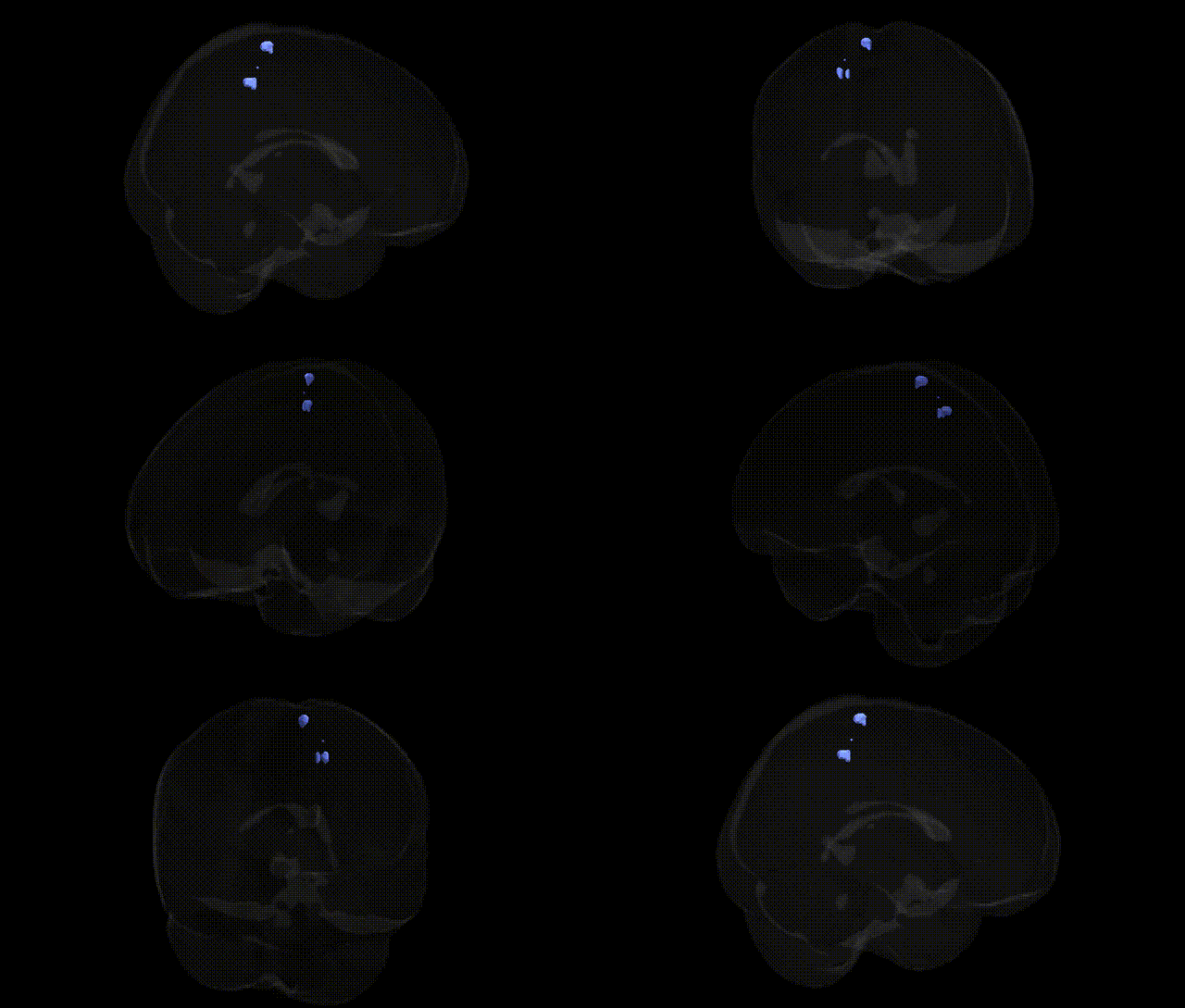
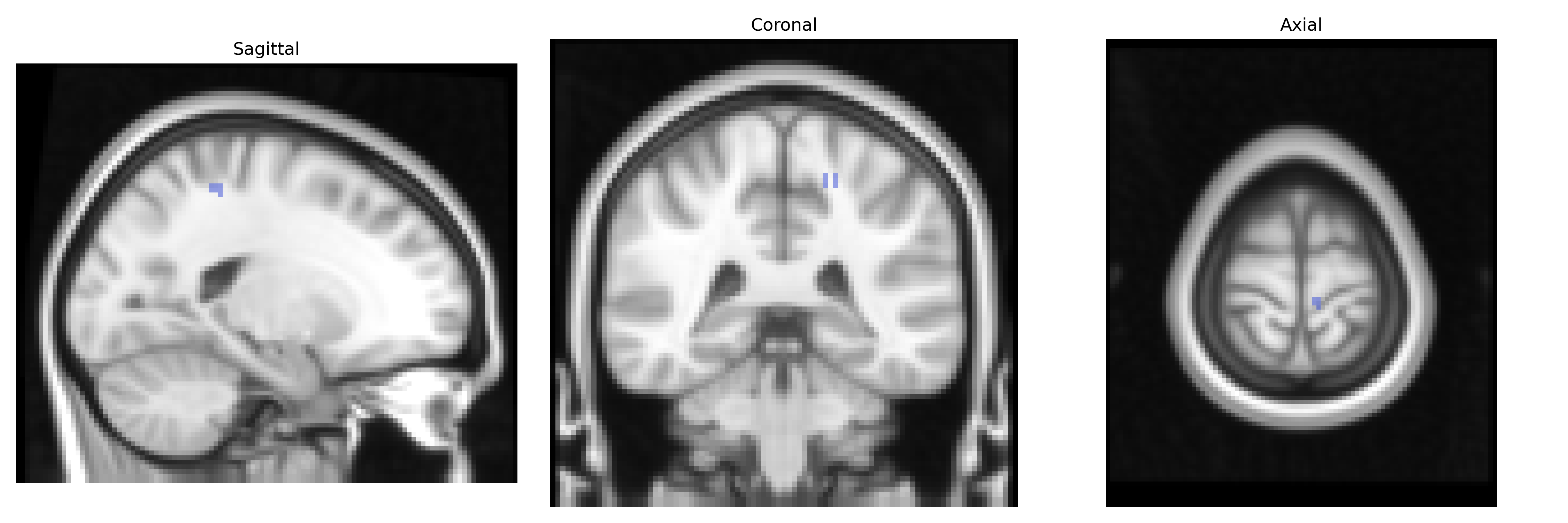
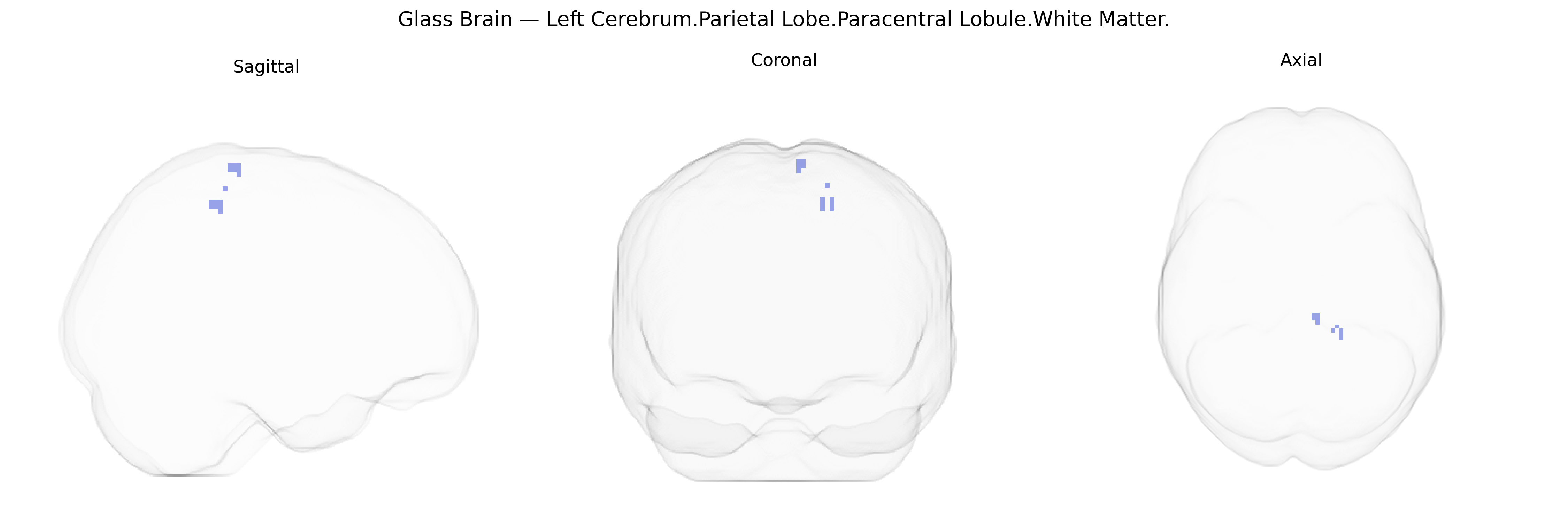
The bilateral Left Cerebrum.Parietal Lobe.Paracentral Lobule.White Matter corresponds to the deep myelinated fiber tracts underlying the paracentral lobule of the parietal lobe in the left hemisphere, extending around the medial surface near the central sulcus and supplementary motor regions. This white matter region carries cortico-cortical and cortico-subcortical projections related to sensorimotor integration, particularly for the lower limb and parts of the trunk, and participates in motor planning, execution, and somatosensory processing mediated by the adjacent cortical mantle. As a conduit for descending and ascending fibers, it links primary motor and somatosensory areas with premotor, supplementary motor, and thalamic structures, contributing to the coordination of voluntary movement and proprioceptive feedback. There is no direct Wikipedia article for this specific white matter subdivision; a closely related cortical structure is the Paracentral lobule.
The bilateral Left Cerebrum Parietal Lobe Paracentral Lobule white matter corresponds to corticospinal and sensorimotor projection fibers underlying the medial primary motor and somatosensory cortices for lower limbs, and genetic associations typically reflect broader motor, sensory, and white‑matter–integrity phenotypes rather than region‑specific loci. Large GWAS of brain MRI metrics (e.g., diffusion tensor imaging and regional white‑matter volume) have implicated polygenic influences on paracentral and adjacent sensorimotor white matter through variants in genes involved in axon guidance, myelination, and oligodendrocyte function (such as CNTN4, CNTN5, NRG1, MAG, and other neurodevelopmental loci), although these findings usually report tract‑level or global white‑matter measures rather than Talairach‑defined paracentral lobule regions. In neurodegenerative and motor disorders, ALS and hereditary spastic paraplegia show genetic variants affecting corticospinal tract microstructure that extend through paracentral white matter, while multiple sclerosis risk genes (e.g., HLA‑DRB1*15:01 and other immune‑related loci) are linked to lesion burden and microstructural changes in periventricular and deep parietal white matter, which may include paracentral segments. GWAS of gait, balance, and lower‑limb strength have also associated polygenic scores with integrity of sensorimotor white matter, indirectly implicating paracentral pathways, and some psychiatric and neurodevelopmental GWAS (schizophrenia, ADHD, autism) connect synaptic and neurodevelopmental risk genes to widespread white‑matter alterations that encompass parietal and paracentral regions. Overall, current genetic evidence supports a polygenic, systems‑level influence on paracentral lobule white matter properties and related motor/sensory functions rather than discrete, region‑specific genetic associations uniquely tied to this Talairach‑defined area.
Overview generated by GPT-4o (2026).
Region ID: 1063
Hemisphere: bilateral
Atlas: Talairach labels 2mm
Full Quality Version: Download MP4
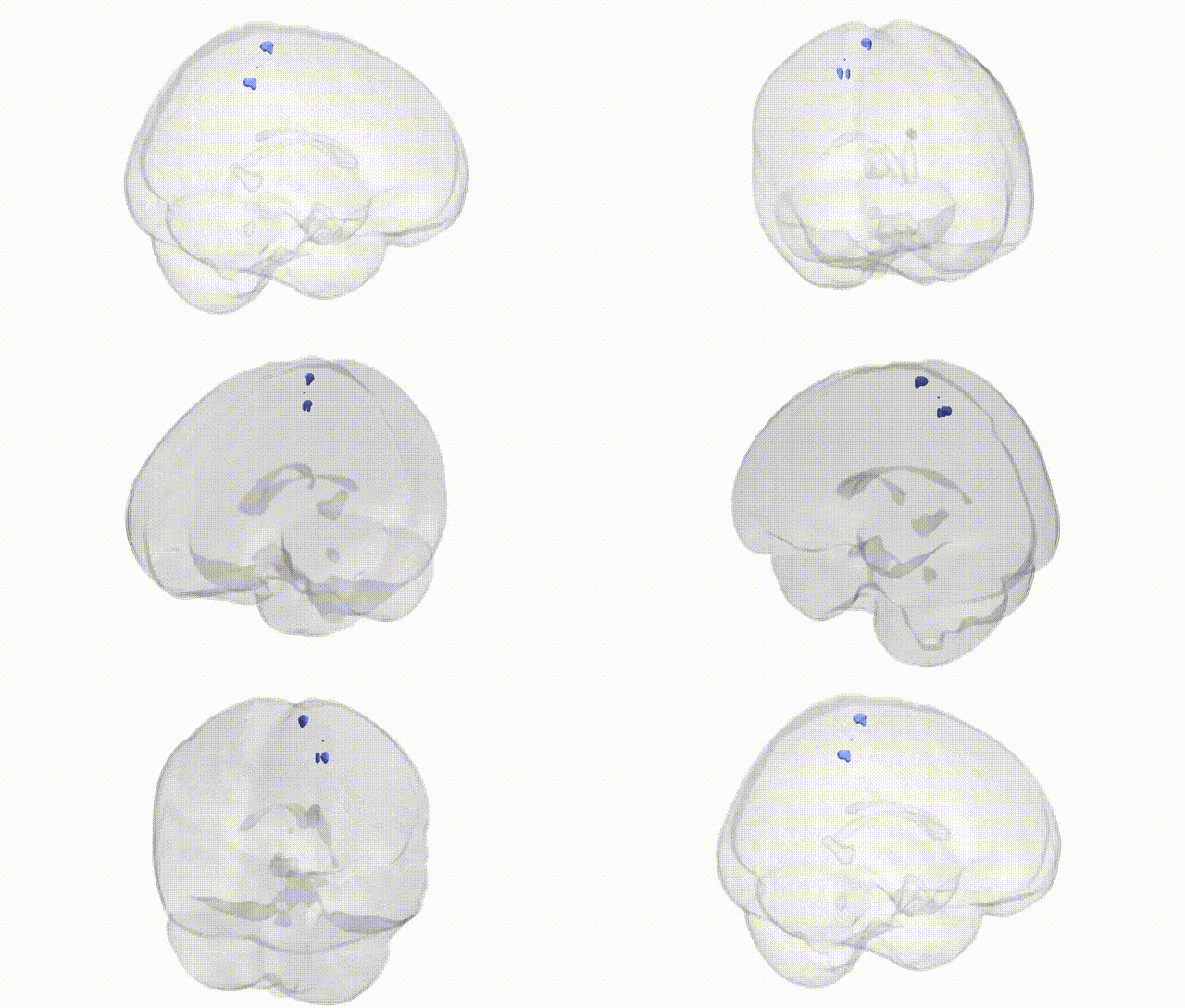
Full Quality Version: Download MP4
Wali Sidiqyar*, Gaurav Rudravaram*, Elyssa M. McMaster, Trent M. Schwartz, Adam M. Saunders, Kurt G. Schilling, Bennett A. Landman "Introducing SPINS: A Shared Public Visualization Library of Neuroanatomical Structures." Medical Imaging with Deep Learning- short paper
This resource is licensed under CC0 1.0 Universal (Public Domain).