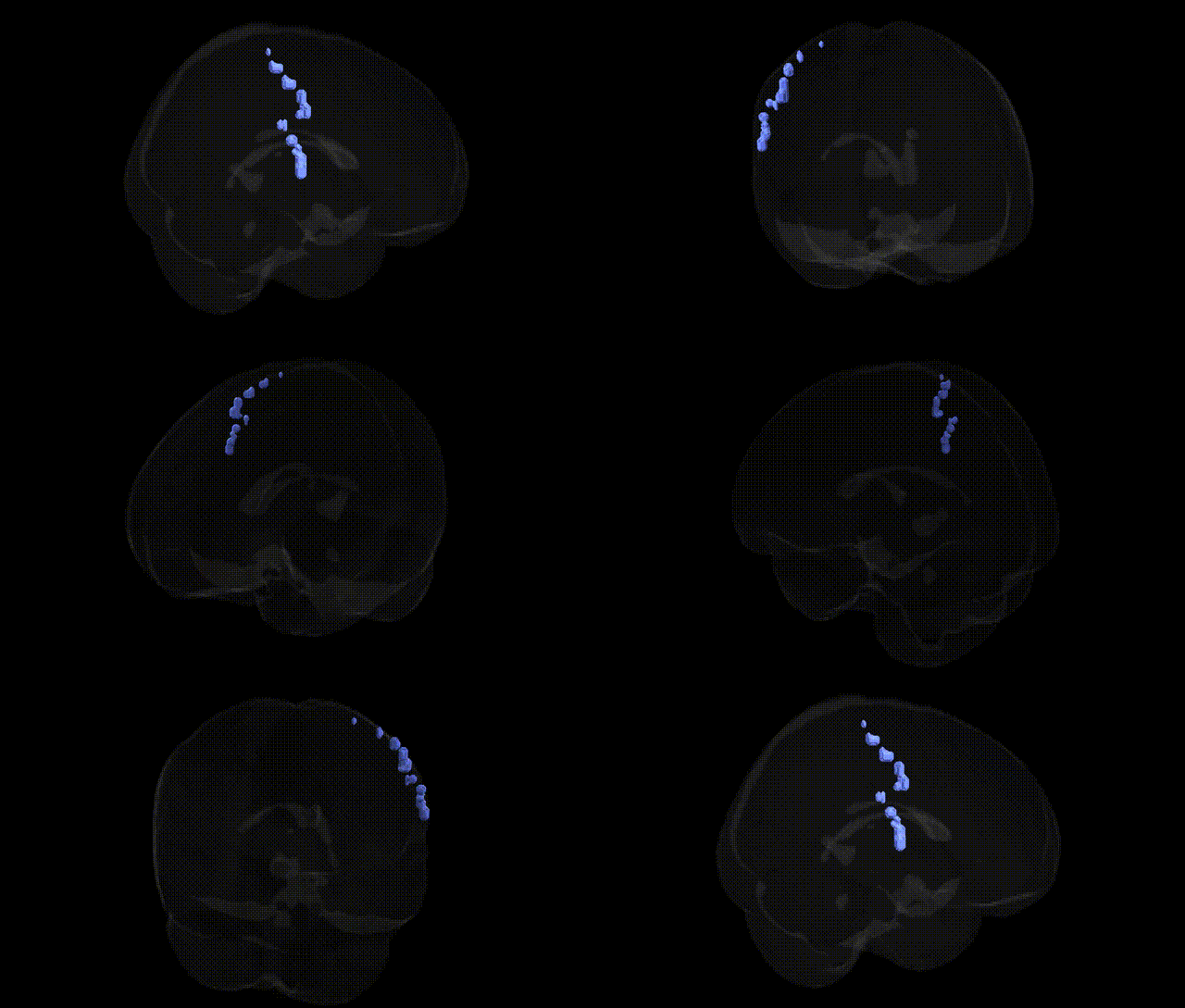
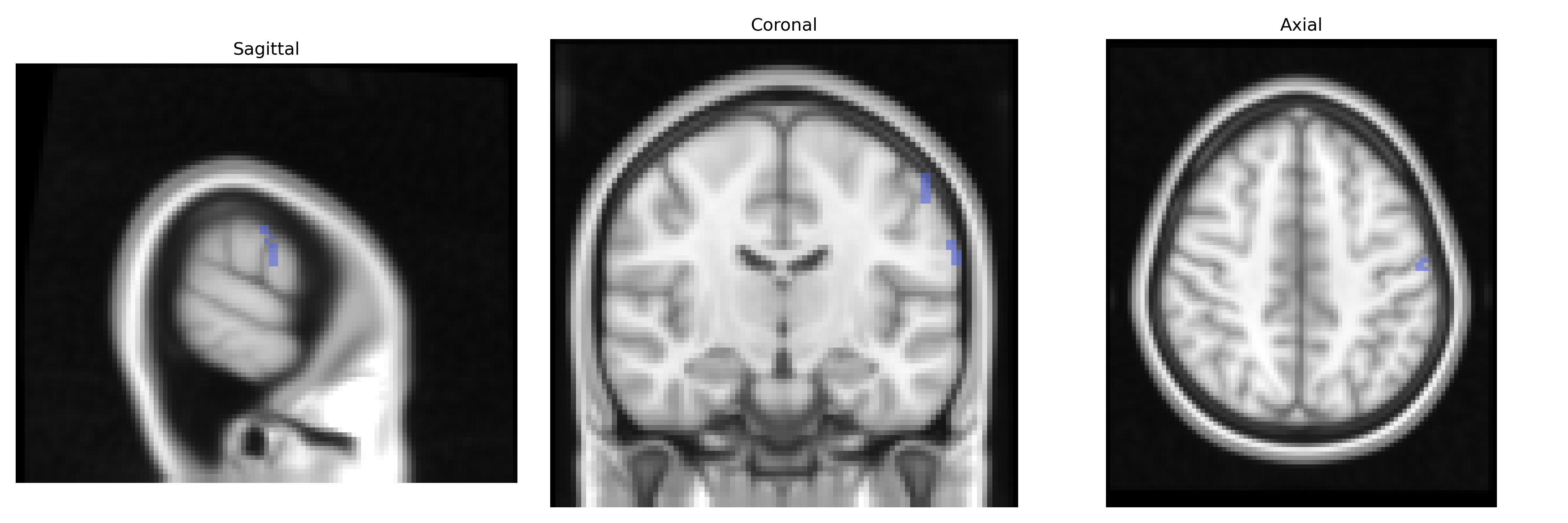
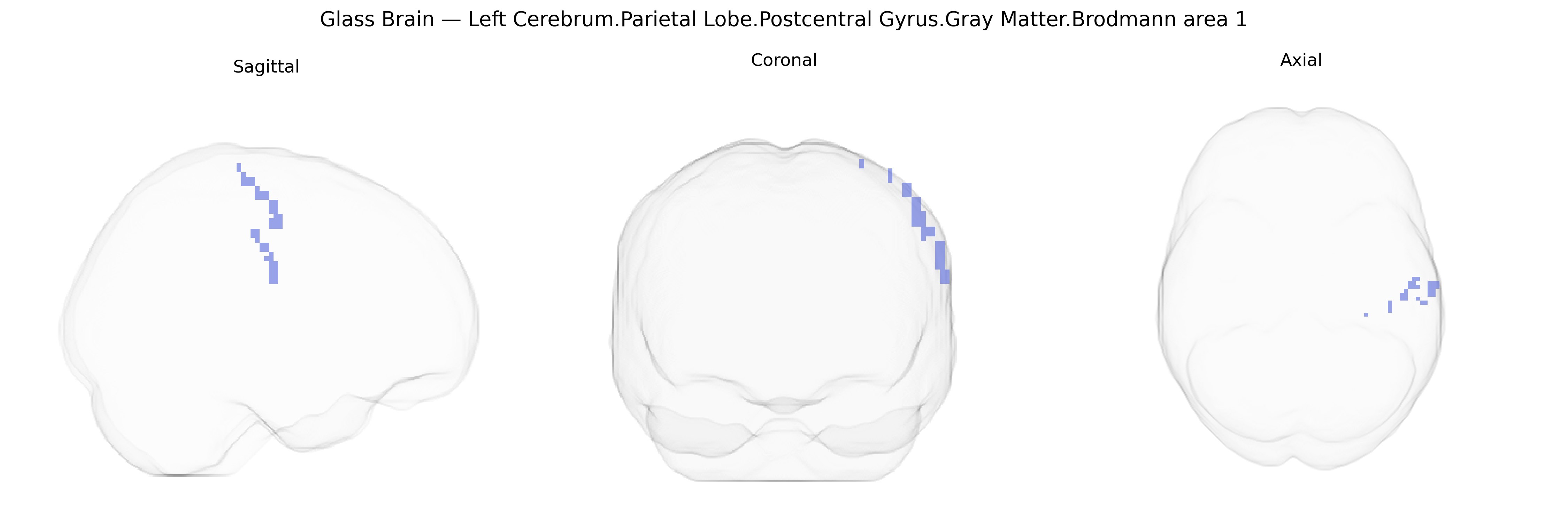
Bilateral Left Cerebrum.Parietal Lobe.Postcentral Gyrus.Gray Matter.Brodmann area 1 corresponds to a primary somatosensory cortical region located in the anterior parietal lobe, immediately posterior to the central sulcus within the postcentral gyrus. Brodmann area 1 forms part of the primary somatosensory cortex (SI), receiving and processing tactile input from the thalamus and integrating information about touch, texture, and aspects of proprioception from the contralateral side of the body. Together with Brodmann areas 3 and 2, it participates in fine-grained somatosensory discrimination and contributes to the perception of object features through active touch. There is no direct link for this precise Talairach-defined label; a closely related structure is the primary somatosensory cortex: Primary somatosensory cortex.
The bilateral left postcentral gyrus (parietal lobe, Brodmann area 1) is a primary somatosensory region whose gray matter structure and function show modest but reproducible genetic influences in neuroimaging and GWAS studies. Twin and family-based heritability analyses indicate substantial genetic contribution to cortical thickness and surface area in the postcentral gyrus, with heritability estimates often in the 40–70% range. Large-scale brain morphology GWAS (e.g., ENIGMA and UK Biobank) have identified multiple loci associated with somatosensory and parietal cortical measures, including variants near genes involved in neurodevelopment and synaptic signaling such as MIR588, CENPW, and others, although findings are usually reported at broader regional levels (parietal cortex or somatosensory cortex) rather than Brodmann area 1 specifically. Functionally, genetic studies of pain sensitivity, tactile perception, and sensorimotor integration implicate the postcentral gyrus as a key substrate, with variants in genes related to ion channels (e.g., SCN9A), neuroplasticity (e.g., BDNF), and inflammatory signaling influencing somatosensory responses and corresponding activation of this region. In clinical genetics, structural and functional abnormalities of the postcentral gyrus have been reported in disorders with known genetic risk such as autism spectrum disorder, schizophrenia, ADHD, and chronic pain conditions, where risk alleles in synaptic, neurodevelopmental, and immune-related genes (e.g., CNTNAP2, GRIN2A, complement pathway genes) are associated with altered somatosensory cortex morphology or connectivity. However, current evidence links these genetic variants to the region largely through imaging–genetics and symptom-based associations, and no single gene or variant has been uniquely or specifically tied to Brodmann area 1 gray matter in the Talairach atlas; instead, the postcentral gyrus emerges as part of broader somatosensory and parietal networks influenced by polygenic risk across many loci.
Overview generated by GPT-4o (2026).
Region ID: 893
Hemisphere: bilateral
Atlas: Talairach labels 2mm
Full Quality Version: Download MP4
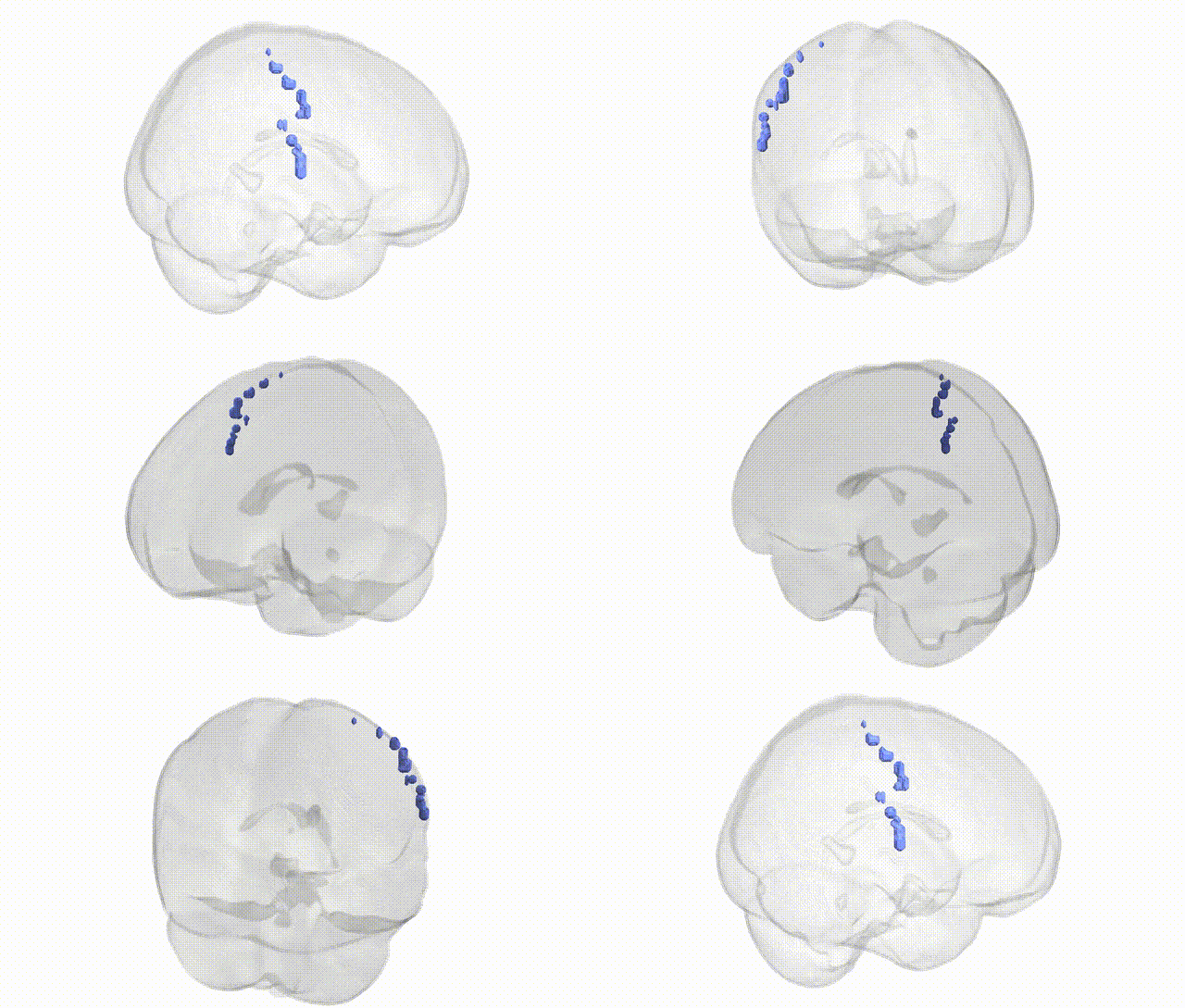
Full Quality Version: Download MP4
Wali Sidiqyar*, Gaurav Rudravaram*, Elyssa M. McMaster, Trent M. Schwartz, Adam M. Saunders, Kurt G. Schilling, Bennett A. Landman "Introducing SPINS: A Shared Public Visualization Library of Neuroanatomical Structures." Medical Imaging with Deep Learning- short paper
This resource is licensed under CC0 1.0 Universal (Public Domain).