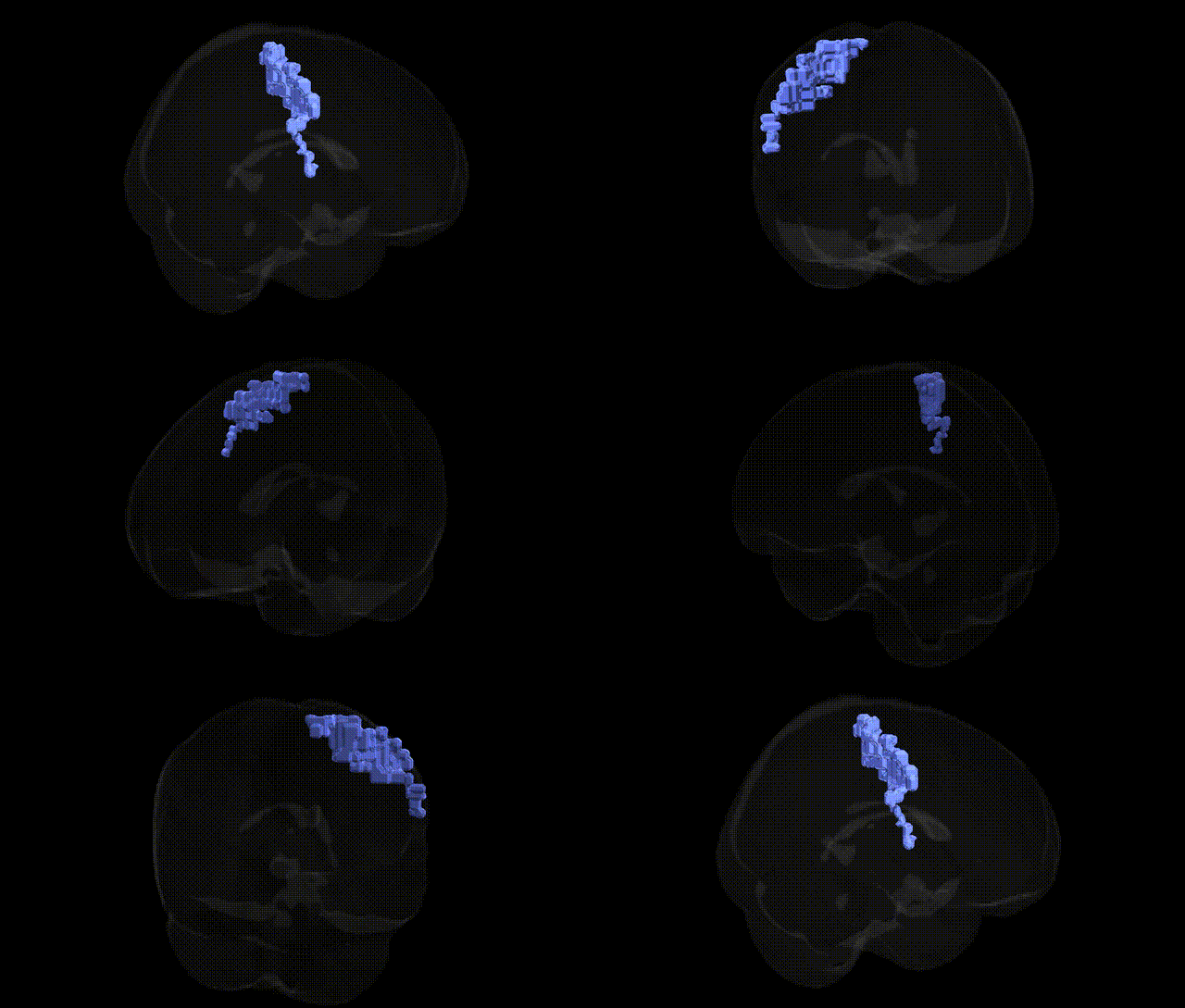
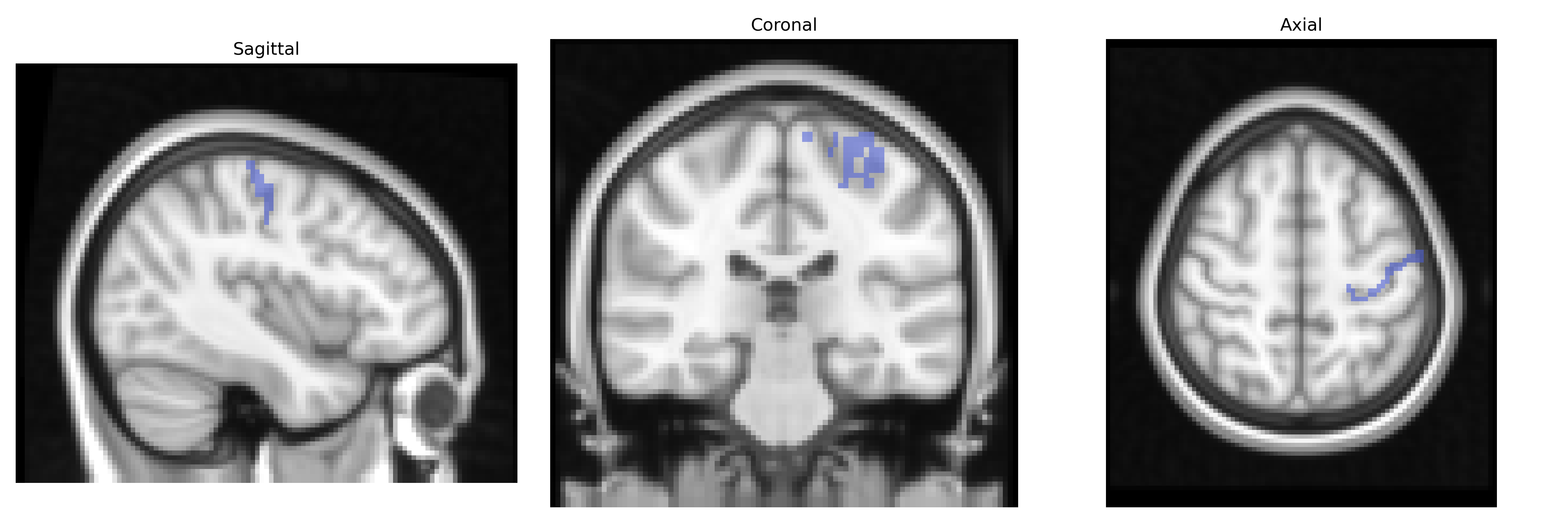
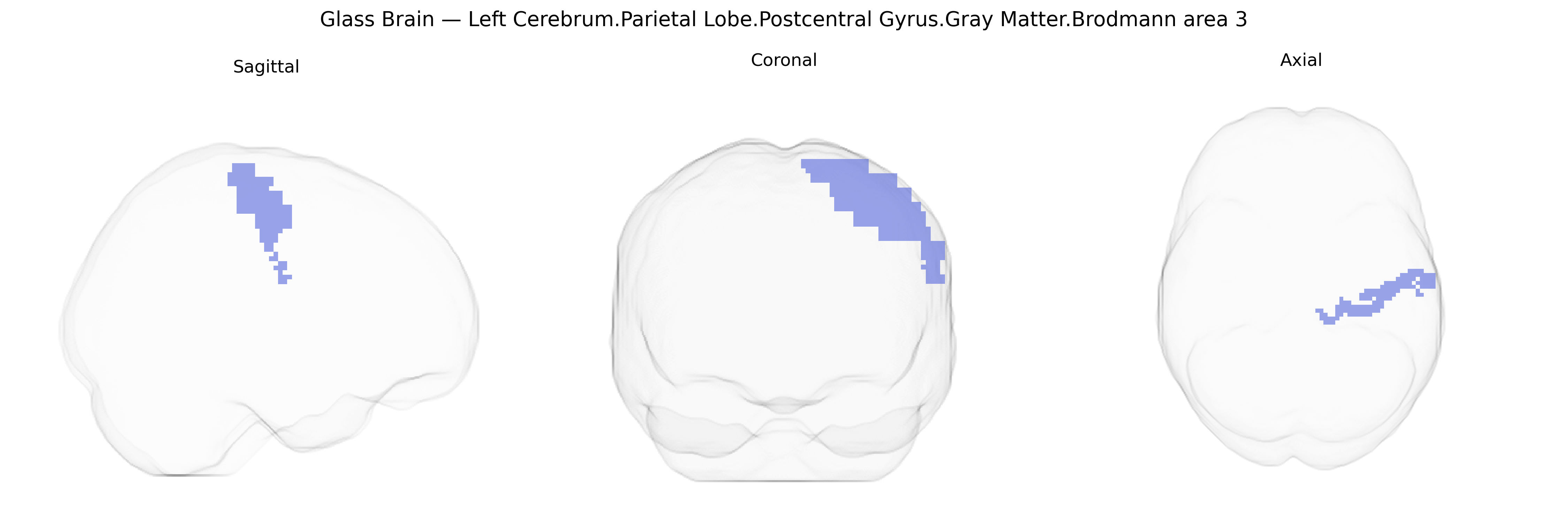
Bilateral Left Cerebrum.Parietal Lobe.Postcentral Gyrus.Gray Matter.Brodmann area 3 corresponds to the primary somatosensory cortex region specialized for processing tactile information, particularly cutaneous input from the body surface. Located in the anterior portion of the postcentral gyrus within the parietal lobe, Brodmann area 3 receives dense thalamocortical projections from the ventral posterior nucleus and is critical for fine touch, texture discrimination, and precise localization of somatic stimuli. Its neurons are somatotopically organized, forming part of the sensory homunculus and contributing to early-stage encoding of stimulus intensity and modality before information is relayed to adjacent somatosensory fields (areas 1 and 2) and higher-order parietal regions involved in multimodal integration and perception. Primary somatosensory cortex
The bilateral Left Cerebrum Parietal Lobe Postcentral Gyrus (Brodmann area 3), a primary somatosensory cortex region, has been implicated in multiple genetic and GWAS findings, mainly through imaging-genetics and neuropsychiatric studies rather than region-specific single-gene associations. Large-scale brain MRI GWAS (e.g., ENIGMA, UK Biobank) have identified common variants near genes involved in neurodevelopment, synaptic function, and cell adhesion (such as CDH13, DLG2, and genes in Wnt and axon guidance pathways) that influence cortical thickness, surface area, or gyrification in parietal somatosensory regions including BA3. Postcentral/parietal cortical metrics have been associated with polygenic risk scores for schizophrenia, bipolar disorder, major depression, and autism, suggesting that genetic liability to these disorders partly manifests through structural and functional variation in this somatosensory hub. Somatosensory cortex activation patterns in the postcentral gyrus also show heritability and genetic correlations with pain sensitivity and chronic pain conditions, consistent with GWAS implicating nociception-related genes (e.g., CACNA2D1, SCN9A and other ion channel genes) and immune/inflammatory pathways that indirectly affect BA3 function. Motor and sensory phenotypes—such as hand skill, tactile acuity, and sensorimotor integration—have been linked in twin and family studies to genetic factors that modulate postcentral gyrus structure and connectivity, and rare variants or copy-number changes in broad neurodevelopmental genes (e.g., NRXN1, CNTNAP2, and others) can alter somatosensory representation in BA3 as part of wider cortical disruption. Overall, genetic influences on this region appear highly polygenic, shared across brain-wide networks, and embedded in broader risk architecture for neurodevelopmental, psychotic, affective, and pain-related traits rather than in isolated, BA3-specific loci.
Overview generated by GPT-4o (2026).
Region ID: 895
Hemisphere: bilateral
Atlas: Talairach labels 2mm
Full Quality Version: Download MP4
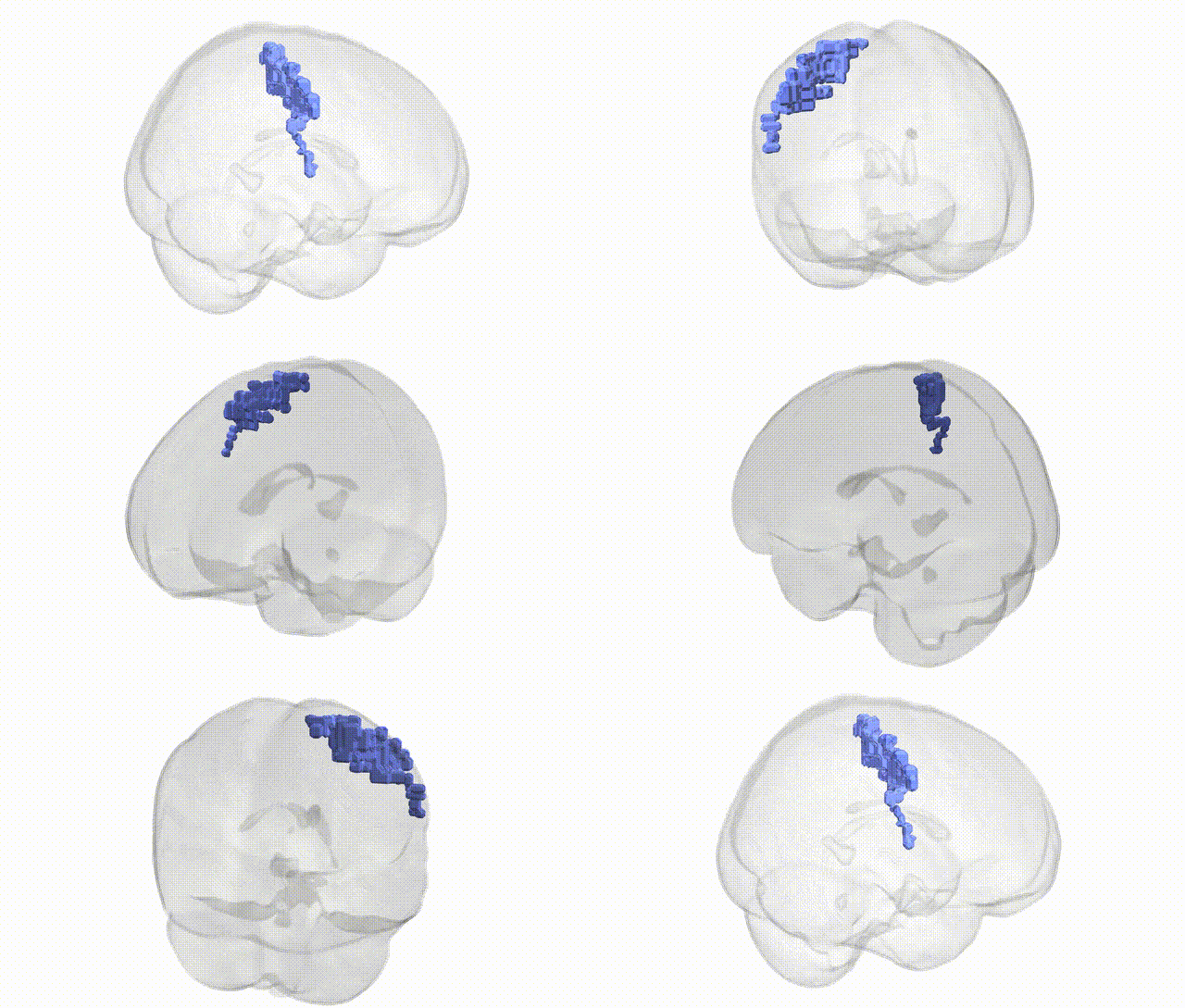
Full Quality Version: Download MP4
Wali Sidiqyar*, Gaurav Rudravaram*, Elyssa M. McMaster, Trent M. Schwartz, Adam M. Saunders, Kurt G. Schilling, Bennett A. Landman "Introducing SPINS: A Shared Public Visualization Library of Neuroanatomical Structures." Medical Imaging with Deep Learning- short paper
This resource is licensed under CC0 1.0 Universal (Public Domain).