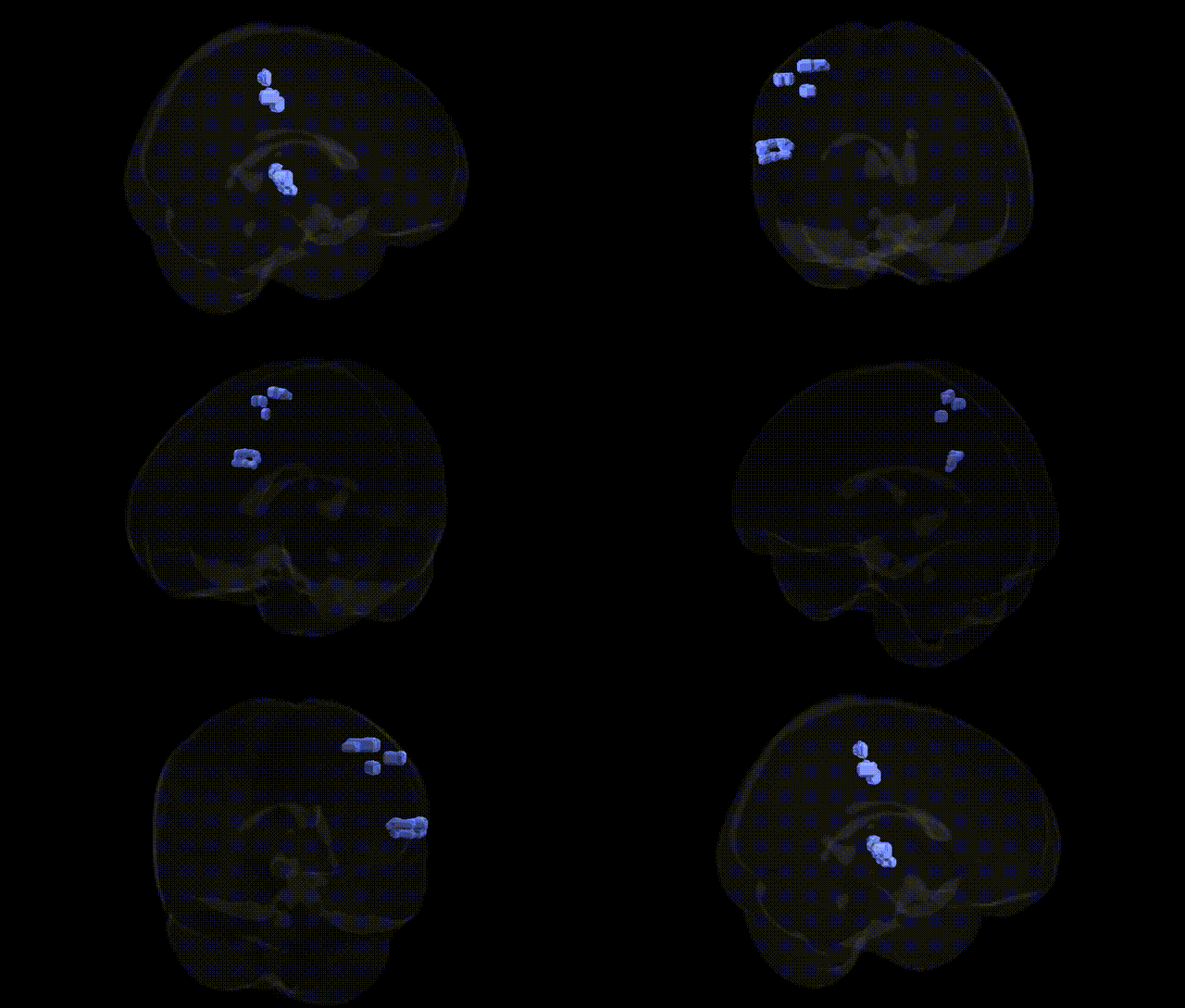
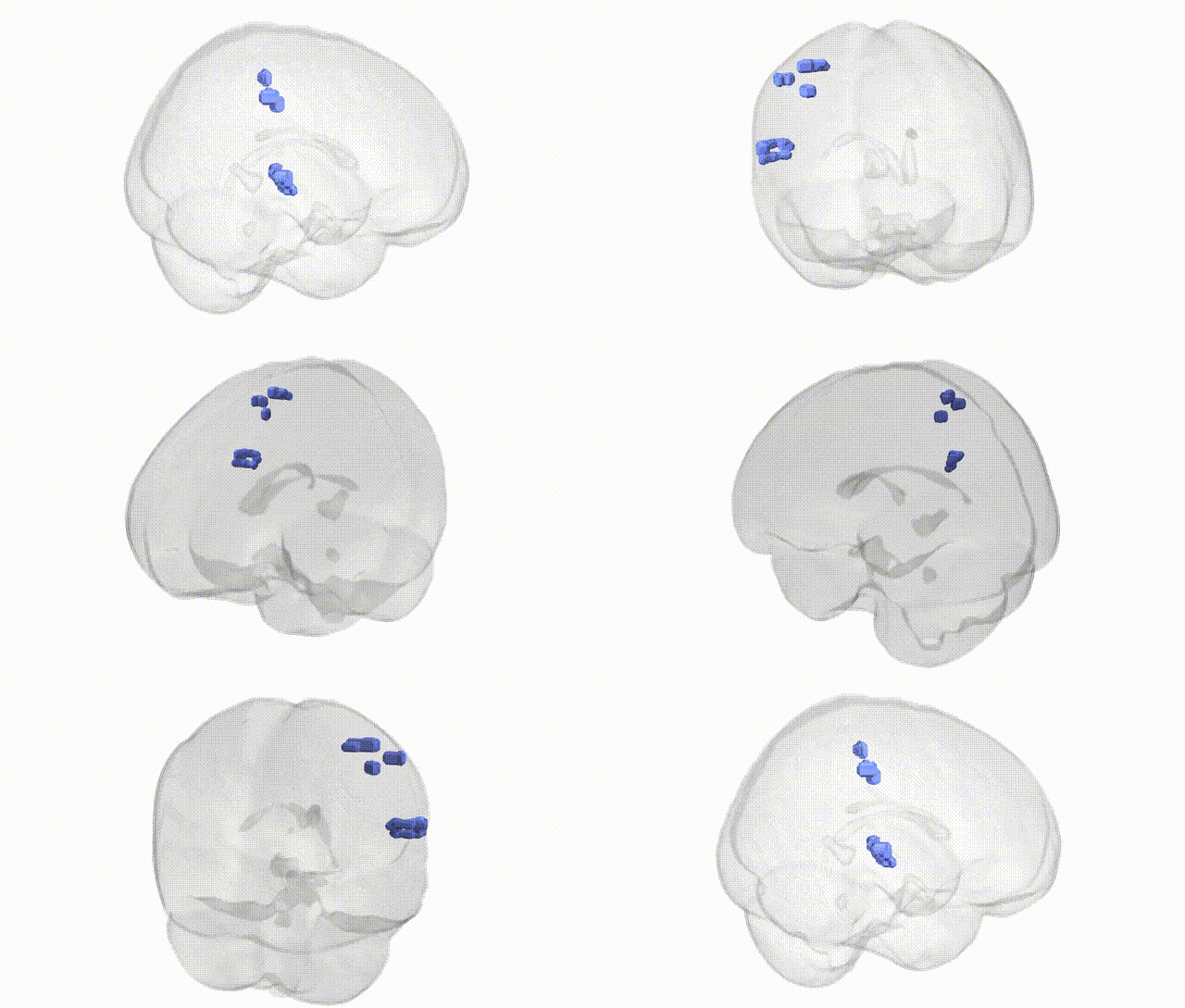
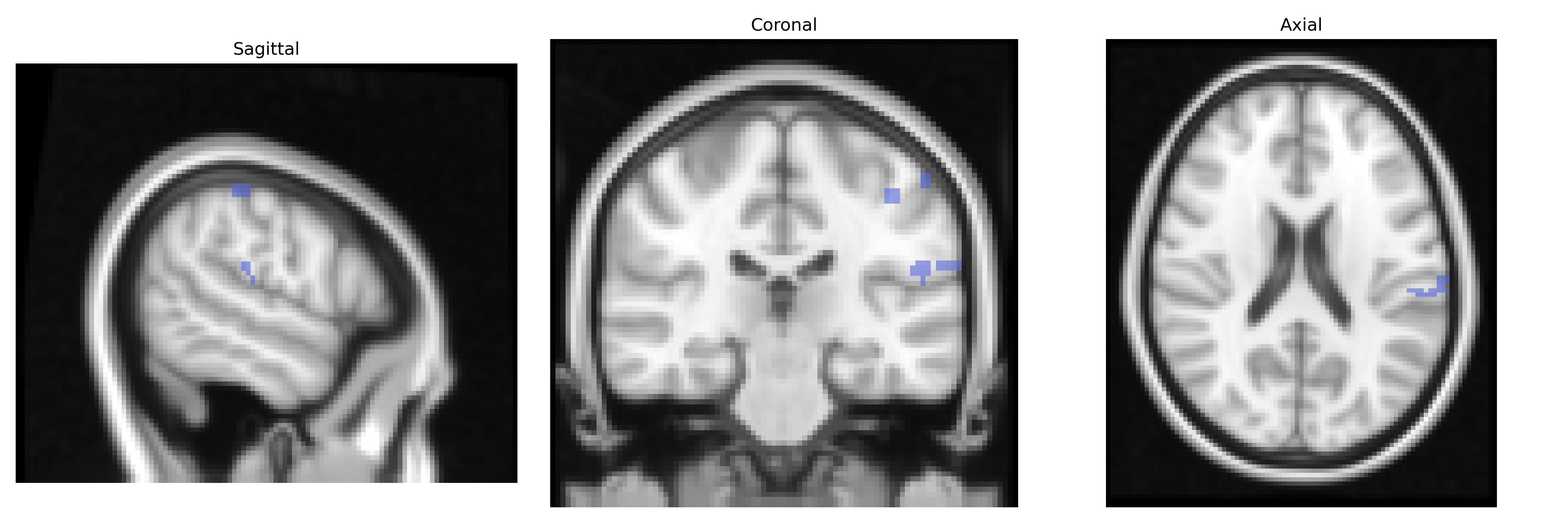
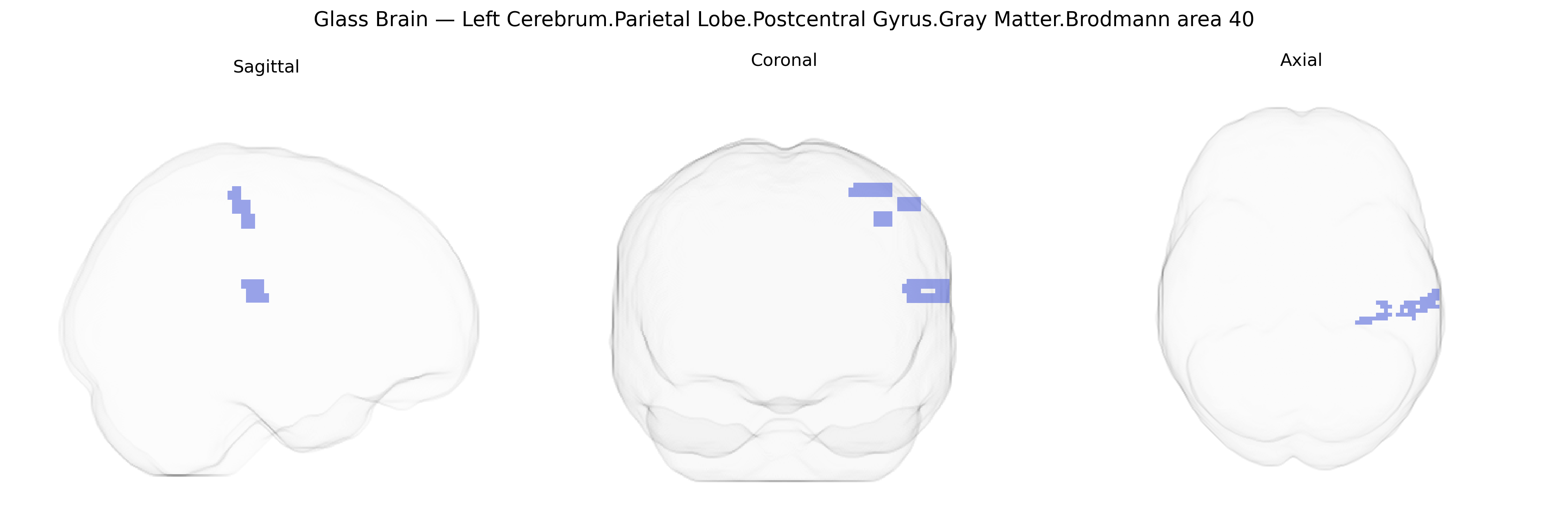
The bilateral Left Cerebrum.Parietal Lobe.Postcentral Gyrus.Gray Matter.Brodmann area 40 corresponds primarily to the supramarginal portion of the inferior parietal lobule, situated just posterior to the postcentral gyrus and adjacent to the lateral sulcus. This heteromodal association cortex integrates somatosensory, auditory, and visual information and plays key roles in language processing (particularly phonological and lexical-semantic aspects), verbal working memory, spatial attention, and aspects of praxis. BA40 is heavily interconnected with temporal and frontal language areas, including Wernicke’s and Broca’s regions, and contributes to higher-order cognitive functions such as reading, writing, and the interpretation of complex sensory stimuli. There is no direct link for “Brodmann area 40”; a closely related structure is the Supramarginal gyrus.
The bilateral left cerebrum parietal lobe postcentral gyrus (gray matter, Brodmann area 40) corresponds largely to inferior parietal cortex involved in multimodal sensory integration, language, attention, and working memory, and has been repeatedly implicated in imaging–genetics and GWAS-related studies. Large consortia (e.g., ENIGMA, UK Biobank) have identified heritable variation in cortical thickness and surface area in inferior parietal and postcentral regions associated with common variants in genes such as CENPW, HMGA2, IGF1, and LRP1B, among others, reflecting general neurodevelopmental and structural brain influences. Genetic studies of schizophrenia, major depressive disorder, bipolar disorder, and autism spectrum disorder have linked polygenic risk scores to altered gray-matter volume or cortical thickness in BA40 and adjacent inferior parietal areas, suggesting this region is sensitive to cumulative psychiatric genetic risk rather than single loci. GWAS of cognitive traits and educational attainment (e.g., variants near KIAA0319, FOXP2, CNTNAP2 implicated in language/reading) have shown associations with functional activation and structural measures in temporo-parietal language networks that include BA40, especially for phonological processing and verbal working memory. Additionally, imaging–genetics work on Alzheimer’s disease and other dementias has linked APOE ε4 and other AD-risk variants to accelerated cortical thinning and atrophy in parietal association cortices, including BA40, paralleling deficits in episodic memory and visuospatial functions. Overall, genetic associations involving this region tend to reflect broad neurodevelopmental, cognitive, and psychiatric risk architectures rather than highly specific single-gene effects restricted to BA40.
Overview generated by GPT-4o (2026).
Region ID: 774
Hemisphere: bilateral
Atlas: Talairach labels 2mm
Full Quality Version: Download MP4
Full Quality Version: Download MP4
Wali Sidiqyar*, Gaurav Rudravaram*, Elyssa M. McMaster, Trent M. Schwartz, Adam M. Saunders, Kurt G. Schilling, Bennett A. Landman "Introducing SPINS: A Shared Public Visualization Library of Neuroanatomical Structures." Medical Imaging with Deep Learning- short paper
This resource is licensed under CC0 1.0 Universal (Public Domain).