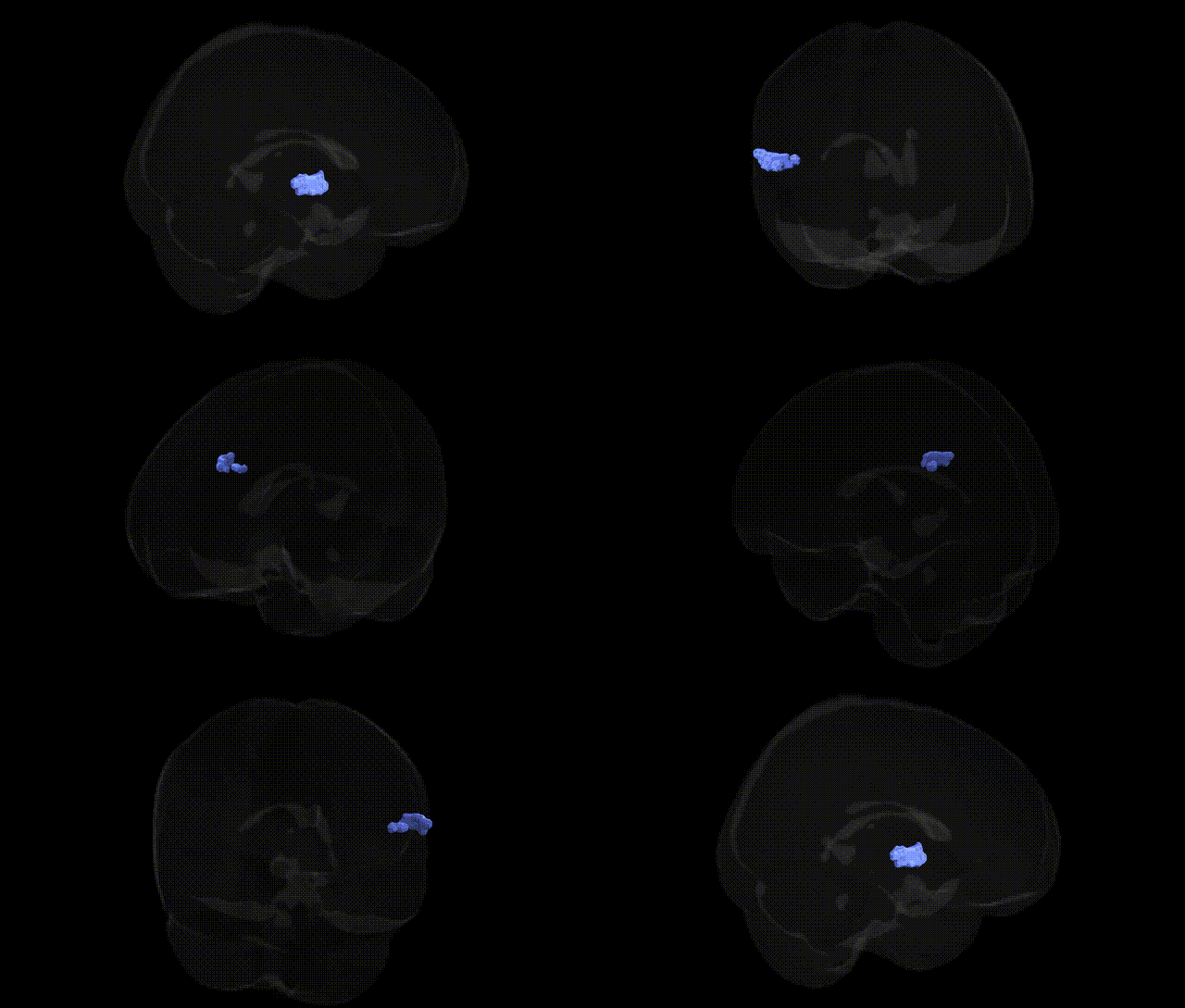
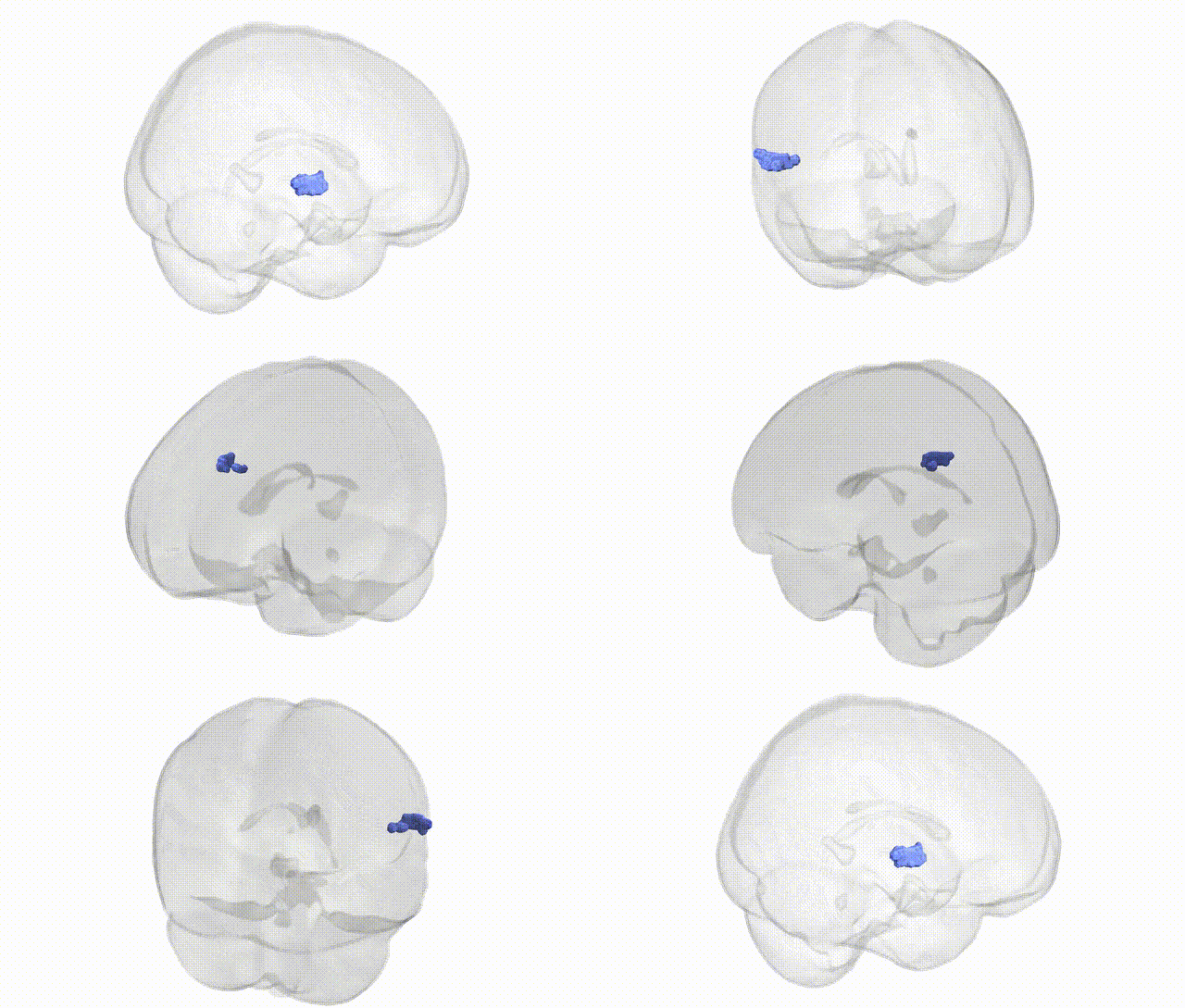
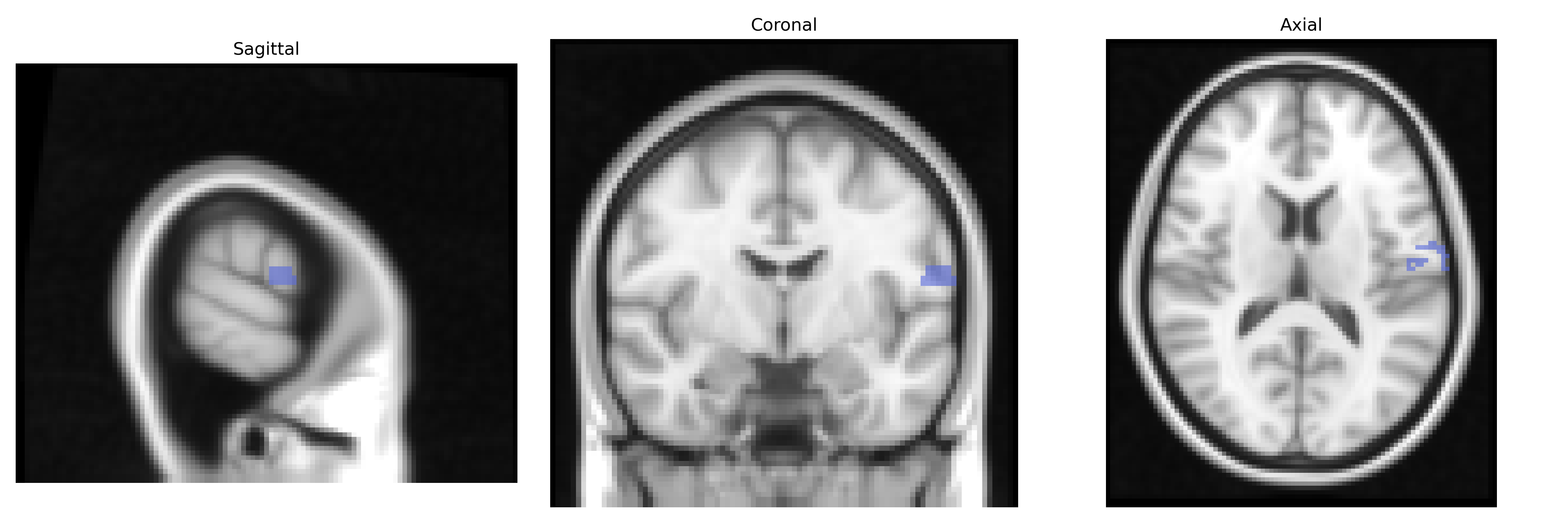
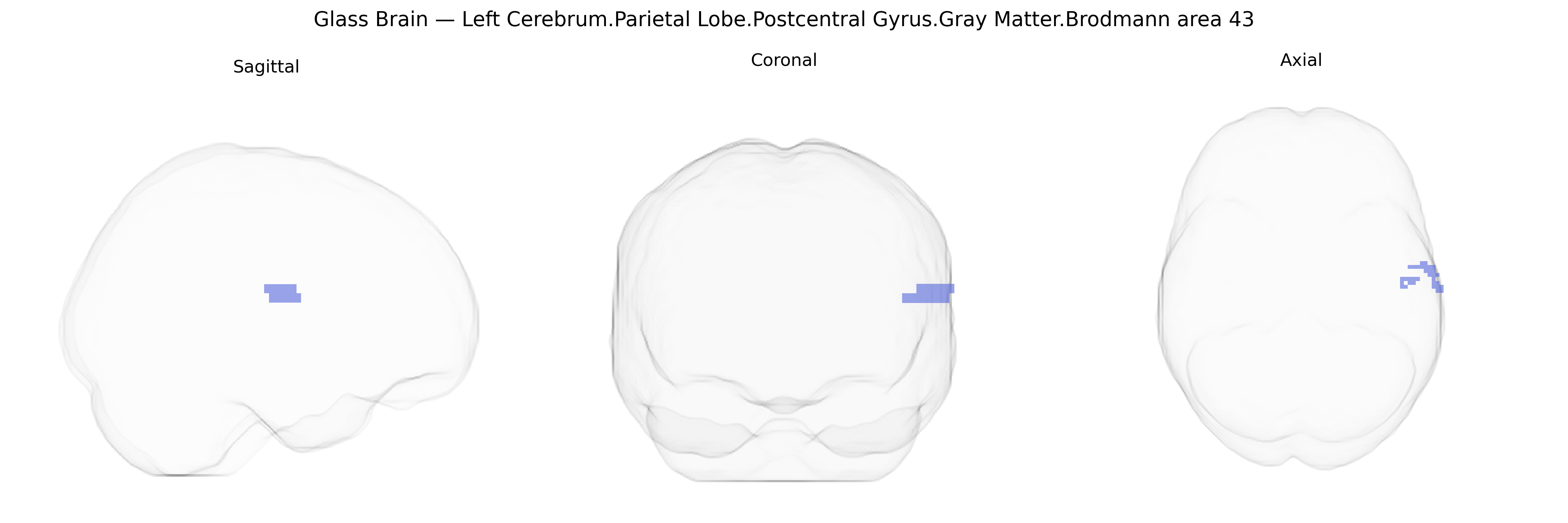
Bilateral Left Cerebrum.Parietal Lobe.Postcentral Gyrus.Gray Matter.Brodmann area 43 is a cortical region located in the parietal operculum along the ventral portion of the postcentral gyrus, adjacent to the lateral sulcus. Classified within the somatosensory association cortex, Brodmann area 43 is implicated in processing somatosensory input related to oral and perioral regions, including aspects of tactile and proprioceptive information that contribute to oral stereognosis and sensorimotor integration for feeding and speech. Cytoarchitectonically, it exhibits granular isocortex features characteristic of parietal sensory areas, with dense thalamocortical input from somatosensory relay nuclei. Functionally, this area participates in integration of somatosensory signals with orofacial motor functions and may interface with neighboring gustatory and primary somatosensory areas. There is no direct link for Brodmann area 43; a related structure is Postcentral gyrus.
The bilateral left cerebrum parietal lobe postcentral gyrus gray matter Brodmann area 43 (as defined in the Talairach 2 mm atlas) lies at the interface of primary somatosensory and gustatory processing, and genetic associations involving this region are typically inferred from imaging‑genetics, GWAS of cortical morphology, and functional studies rather than single “BA43‑specific” loci. Large neuroimaging GWAS (e.g., ENIGMA, UK Biobank) have shown that common variants near genes involved in neurodevelopment and synaptic function—such as HDAC9, DACT1, CENPW, KIAA0586, and others—are associated with regional parietal/postcentral cortical thickness and surface area, which encompass Brodmann areas 1–3 and may extend into BA43 depending on parcellation. Variants in genes related to taste perception (e.g., TAS2R family) and oral somatosensation have been linked to functional activation in neighboring insular–parietal gustatory regions, though spatial resolution often prevents precise attribution to BA43. GWAS of chronic pain, somatosensory disorders, and migraine (implicating loci near TRPM8, LRP1, PRDM16) have, through imaging follow‑up, associated risk alleles with altered structure or connectivity in postcentral/parietal somatosensory cortex, again including the vicinity of BA43. In neuropsychiatric genetics, polygenic risk for conditions such as schizophrenia, ADHD, and autism spectrum disorder has been correlated with morphometric and functional changes in parietal and somatosensory areas in imaging‑genetic studies, but these effects are diffuse and not specific to BA43. Overall, available genetic data point to polygenic influences on the development, structure, and function of parietal/postcentral regions containing BA43, with associations emerging primarily through broad cortical GWAS and imaging‑genetics rather than targeted studies of this exact Talairach-defined subregion.
Overview generated by GPT-4o (2026).
Region ID: 792
Hemisphere: bilateral
Atlas: Talairach labels 2mm
Full Quality Version: Download MP4
Full Quality Version: Download MP4
Wali Sidiqyar*, Gaurav Rudravaram*, Elyssa M. McMaster, Trent M. Schwartz, Adam M. Saunders, Kurt G. Schilling, Bennett A. Landman "Introducing SPINS: A Shared Public Visualization Library of Neuroanatomical Structures." Medical Imaging with Deep Learning- short paper
This resource is licensed under CC0 1.0 Universal (Public Domain).