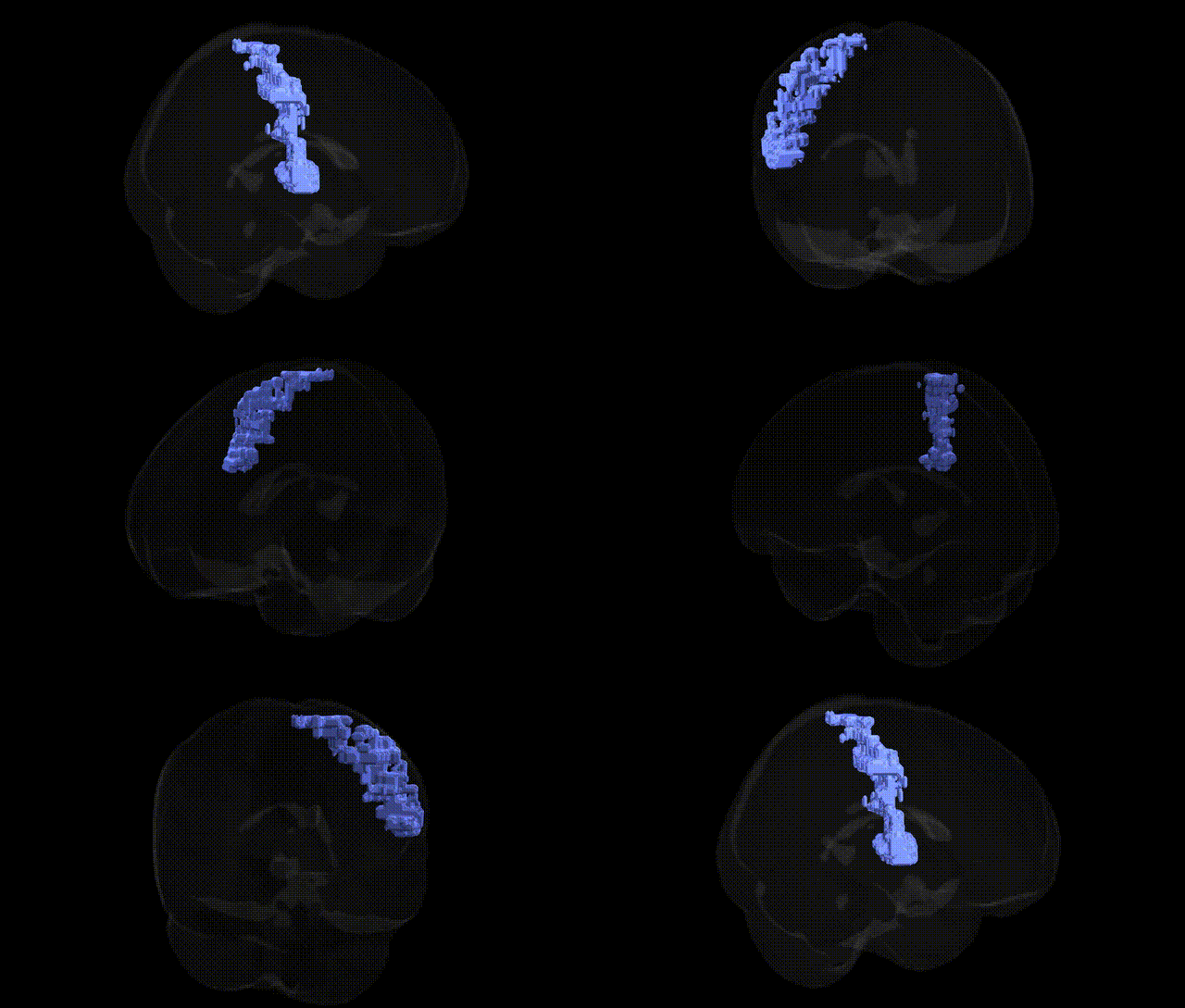
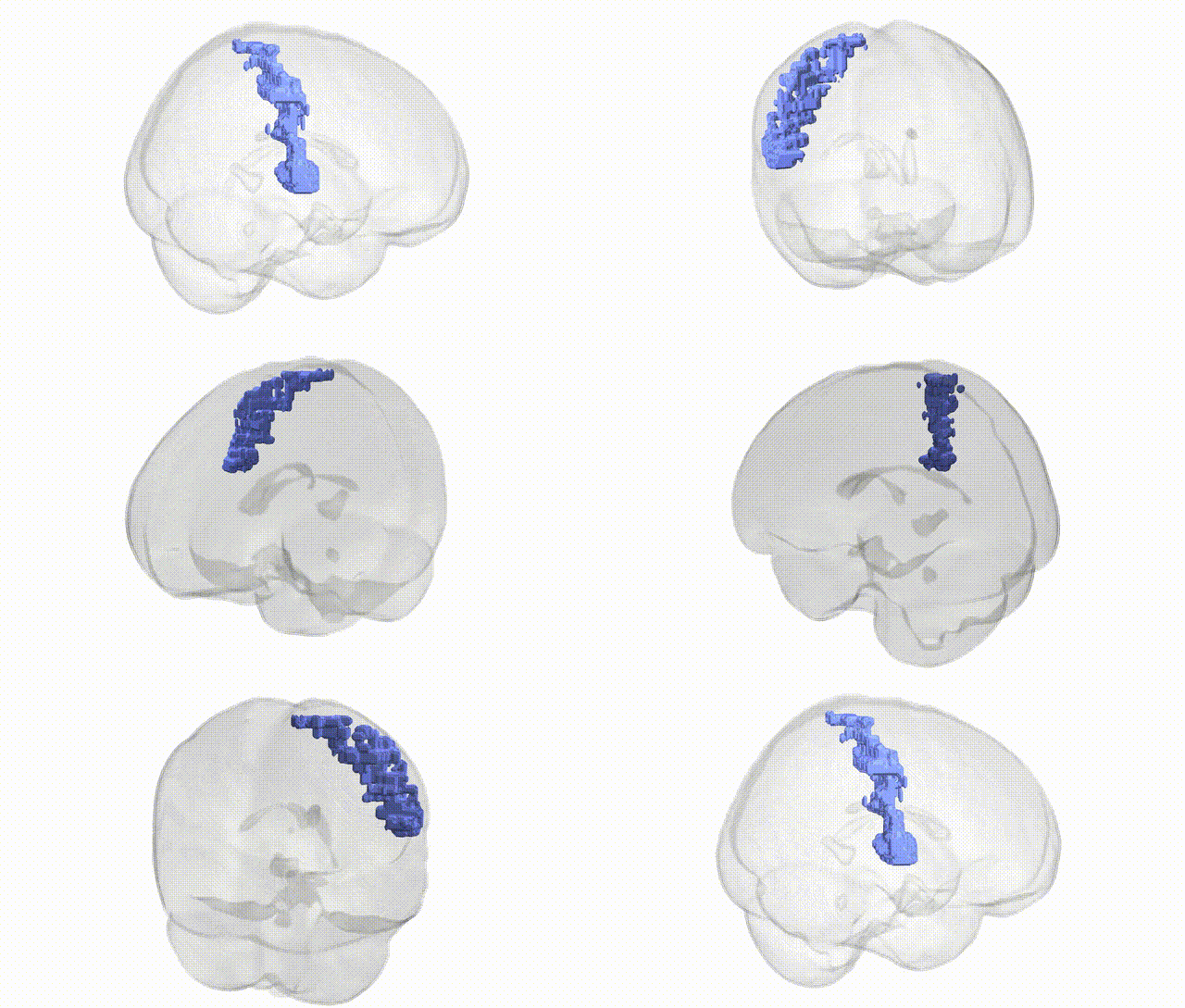
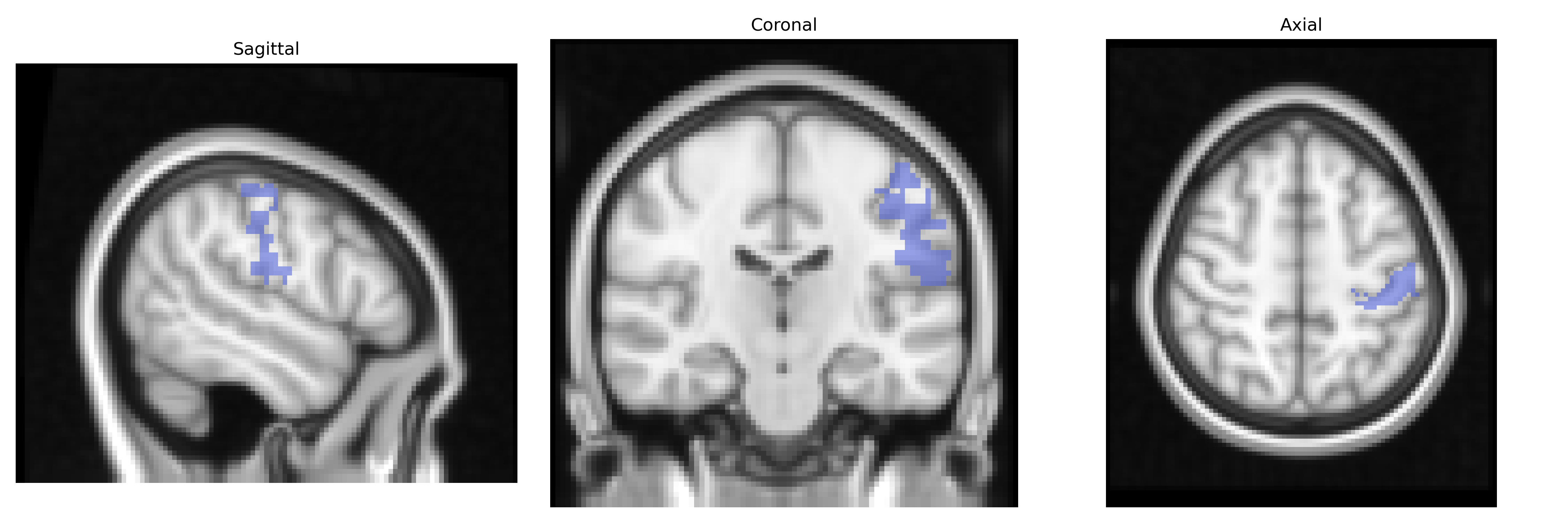
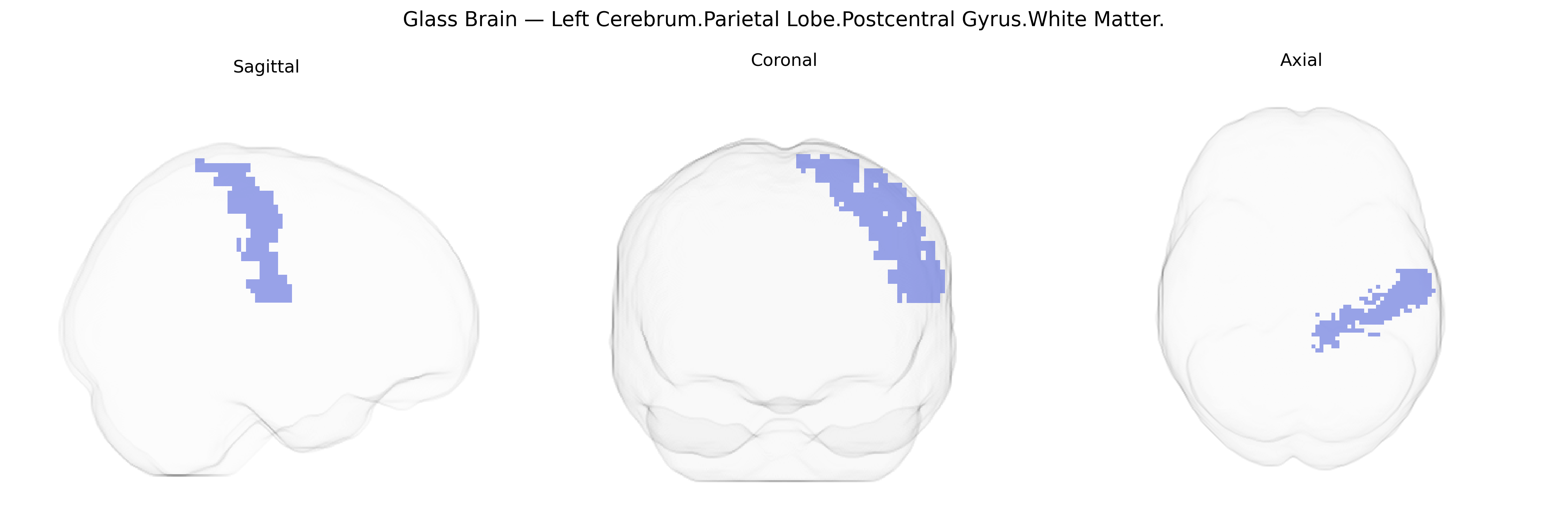
The bilateral Left Cerebrum.Parietal Lobe.Postcentral Gyrus.White Matter corresponds to subcortical myelinated fiber tracts underlying the primary somatosensory cortex in the postcentral gyrus of the parietal lobe. These white matter pathways include short association fibers connecting adjacent somatosensory cortical areas and longer projection fibers that relay tactile, proprioceptive, nociceptive, and temperature information between the cortex, thalamus, and other sensorimotor regions. Functionally, this region is critical for the rapid transmission and integration of sensory input from the contralateral body, supporting conscious perception of somatic stimuli, spatial discrimination, and coordination of sensorimotor processing. Although the Talairach label specifies white matter, it is closely related to the overlying Postcentral gyrus.
Genetic associations specific to the bilateral Left Cerebrum.Parietal Lobe.Postcentral Gyrus.White Matter (as defined in the Talairach 2 mm atlas) are rarely reported at that fine-grained level, but broader work on postcentral gyrus, parietal white matter, and somatosensory networks provides relevant context. GWAS and imaging‑genetics studies indicate that parietal and somatosensory cortical thickness and white‑matter microstructure (e.g., fractional anisotropy in adjacent tracts such as superior longitudinal fasciculus and thalamocortical projections) are heritable and influenced by numerous common variants with small effects, including loci near genes involved in axon guidance, myelination, and synaptic development (such as NRG1, CNTN4/5, and myelin‑related genes like MAG and MBP, though associations are generally region‑wide rather than postcentral‑specific). Variants affecting parietal and somatosensory white matter have been implicated in neurodevelopmental and neuropsychiatric disorders—most notably autism spectrum disorder, ADHD, and schizophrenia—through altered sensory integration and connectivity; for example, polygenic risk scores for these conditions often correlate with distributed cortical and white‑matter changes that include postcentral/parietal regions. GWAS of chronic pain, neuropathic pain, and pain sensitivity (involving genes related to nociception and neuroinflammation such as SCN9A and CACNA2D1) have been linked, via imaging‑genetics mediation analyses, to structural and functional alterations in the primary somatosensory cortex and its underlying white matter. In motor and coordination traits, polygenic influences on corticospinal and sensorimotor networks (including FOXP1/FOXP2‑related language‑sensorimotor circuitry and general neurodevelopmental genes like BDNF) have been tied to features that overlap postcentral white matter. Overall, evidence supports strong polygenic contributions to parietal/postcentral white‑matter structure and function, but current GWAS findings typically map to broader somatosensory and parietal networks rather than uniquely to the Talairach‑defined bilateral left postcentral gyrus white matter, and no single gene or locus has been robustly established as specifically defining this region.
Overview generated by GPT-4o (2026).
Region ID: 784
Hemisphere: bilateral
Atlas: Talairach labels 2mm
Full Quality Version: Download MP4
Full Quality Version: Download MP4
Wali Sidiqyar*, Gaurav Rudravaram*, Elyssa M. McMaster, Trent M. Schwartz, Adam M. Saunders, Kurt G. Schilling, Bennett A. Landman "Introducing SPINS: A Shared Public Visualization Library of Neuroanatomical Structures." Medical Imaging with Deep Learning- short paper
This resource is licensed under CC0 1.0 Universal (Public Domain).