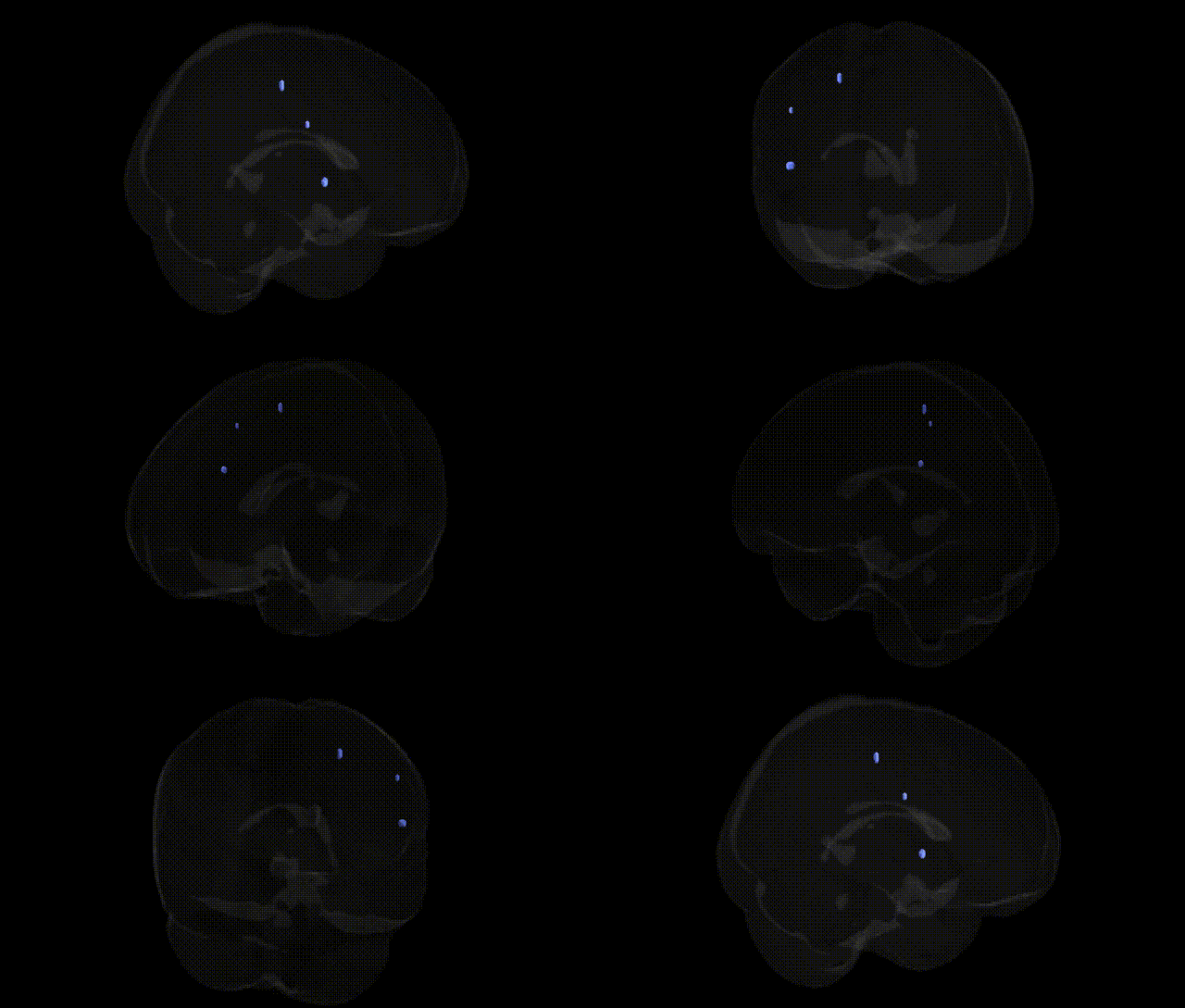
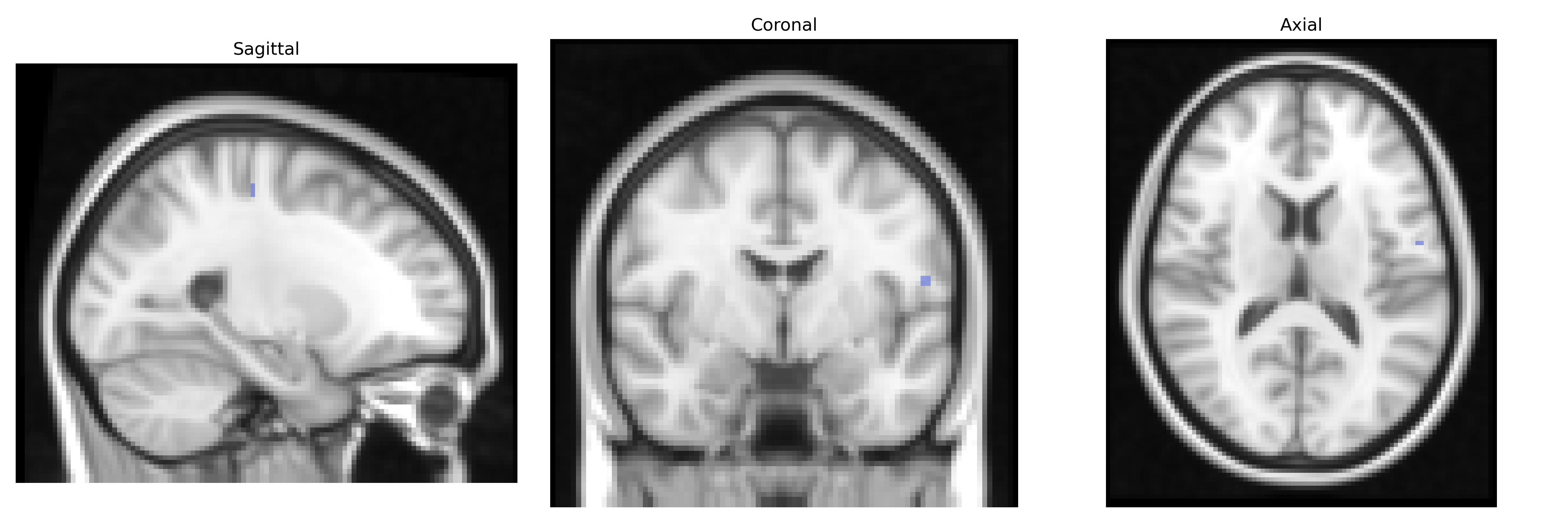
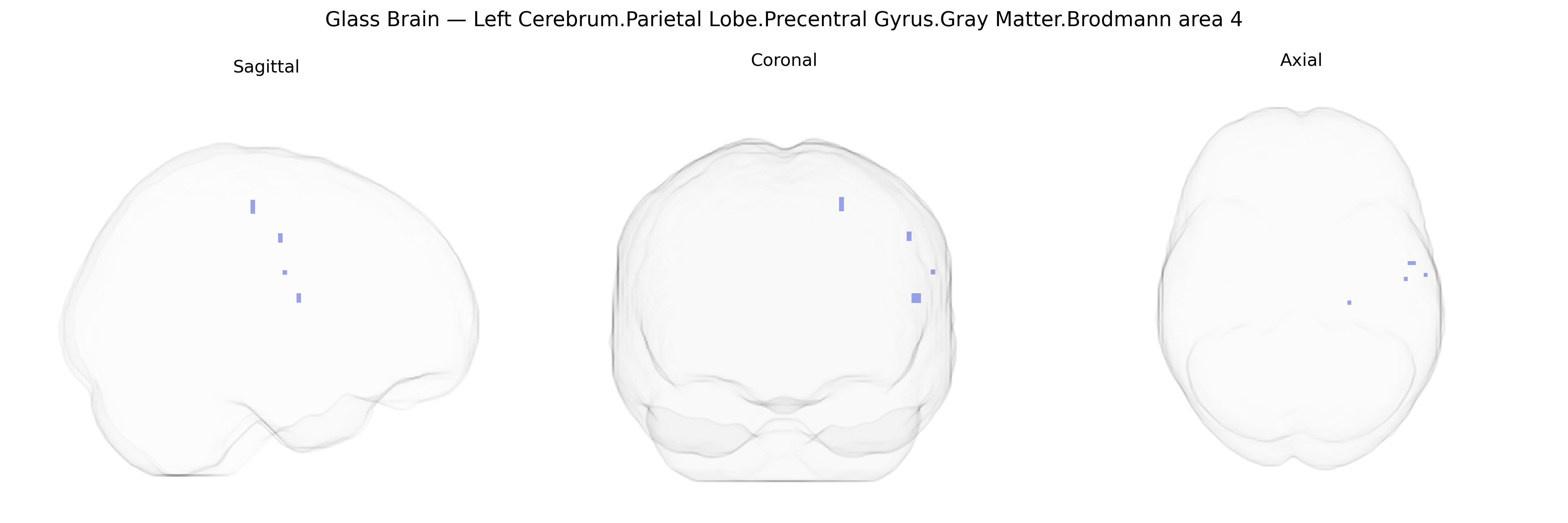
The bilateral Left Cerebrum.Parietal Lobe.Precentral Gyrus.Gray Matter.Brodmann area 4 corresponds to the primary motor cortex located in the precentral gyrus of the frontal lobe (though sometimes variably labeled in atlas systems). This cortical region contains large pyramidal neurons (Betz cells) that give rise to the corticospinal tract, forming a somatotopic representation of voluntary movements (the motor homunculus) for contralateral body musculature. Functionally, Brodmann area 4 is essential for initiating and executing fine, discrete, and skilled movements, integrating input from premotor and supplementary motor areas as well as somatosensory regions to modulate motor output. Lesions in this region typically result in contralateral motor deficits, including weakness or paralysis and impaired fine motor control. Primary motor cortex
The bilateral left precentral gyrus gray matter in Brodmann area 4 (primary motor cortex) has been implicated in multiple genetic and GWAS-based associations, largely via imaging genetics studies that link common variants to motor cortex structure and function. Large-scale brain MRI GWAS (e.g., ENIGMA, UK Biobank) have identified SNPs in genes involved in neurodevelopment, synaptic signaling, and axon guidance (such as variants near BDNF, MAPT, CNTNAP2, and cell-adhesion or cytoskeletal genes) that correlate with cortical thickness, surface area, and volumetric measures within precentral regions encompassing BA4. Motor cortex alterations tied to genetic risk have been reported in neurodegenerative and movement disorders, including ALS (with C9orf72, SOD1 and other loci showing structural and functional changes in BA4), Parkinson’s disease (risk variants near SNCA, LRRK2 associated with altered motor network activation), and hereditary spastic paraplegia and dystonia, where causal genes often influence corticospinal tract and motor cortex integrity. Neurodevelopmental disorders such as autism spectrum disorder and ADHD demonstrate motor cortex differences linked to polygenic risk scores and variants in genes related to cortical patterning, although associations are typically distributed across multiple regions rather than BA4-specific. GWAS of motor performance and traits such as hand grip strength, reaction time, and fine motor skill have also implicated loci that show downstream effects on motor cortex activation and connectivity, suggesting that genetic variation in neurodevelopmental and synaptic pathways contributes to inter-individual differences in BA4 structure and function.
Overview generated by GPT-4o (2026).
Region ID: 804
Hemisphere: bilateral
Atlas: Talairach labels 2mm
Full Quality Version: Download MP4
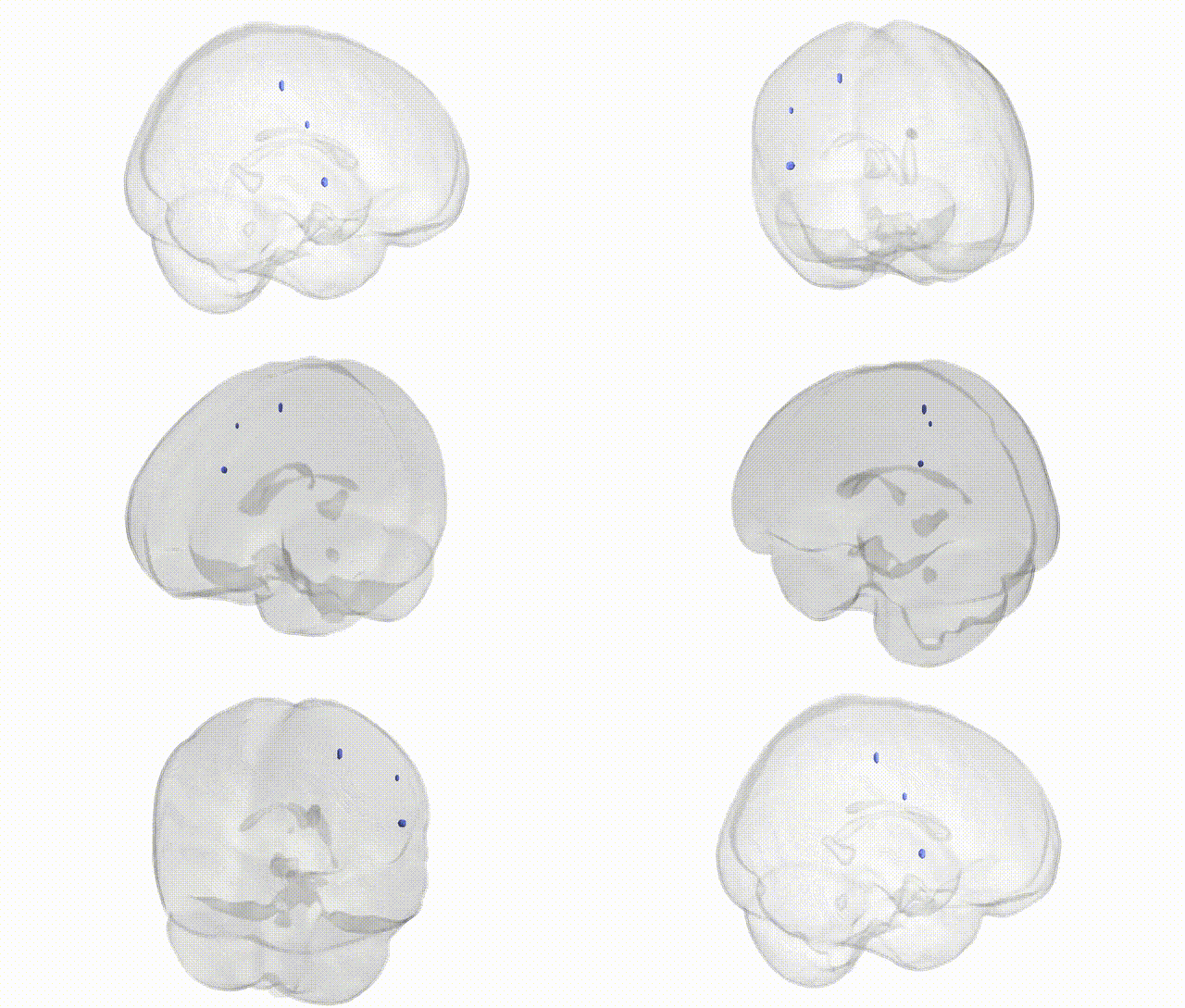
Full Quality Version: Download MP4
Wali Sidiqyar*, Gaurav Rudravaram*, Elyssa M. McMaster, Trent M. Schwartz, Adam M. Saunders, Kurt G. Schilling, Bennett A. Landman "Introducing SPINS: A Shared Public Visualization Library of Neuroanatomical Structures." Medical Imaging with Deep Learning- short paper
This resource is licensed under CC0 1.0 Universal (Public Domain).