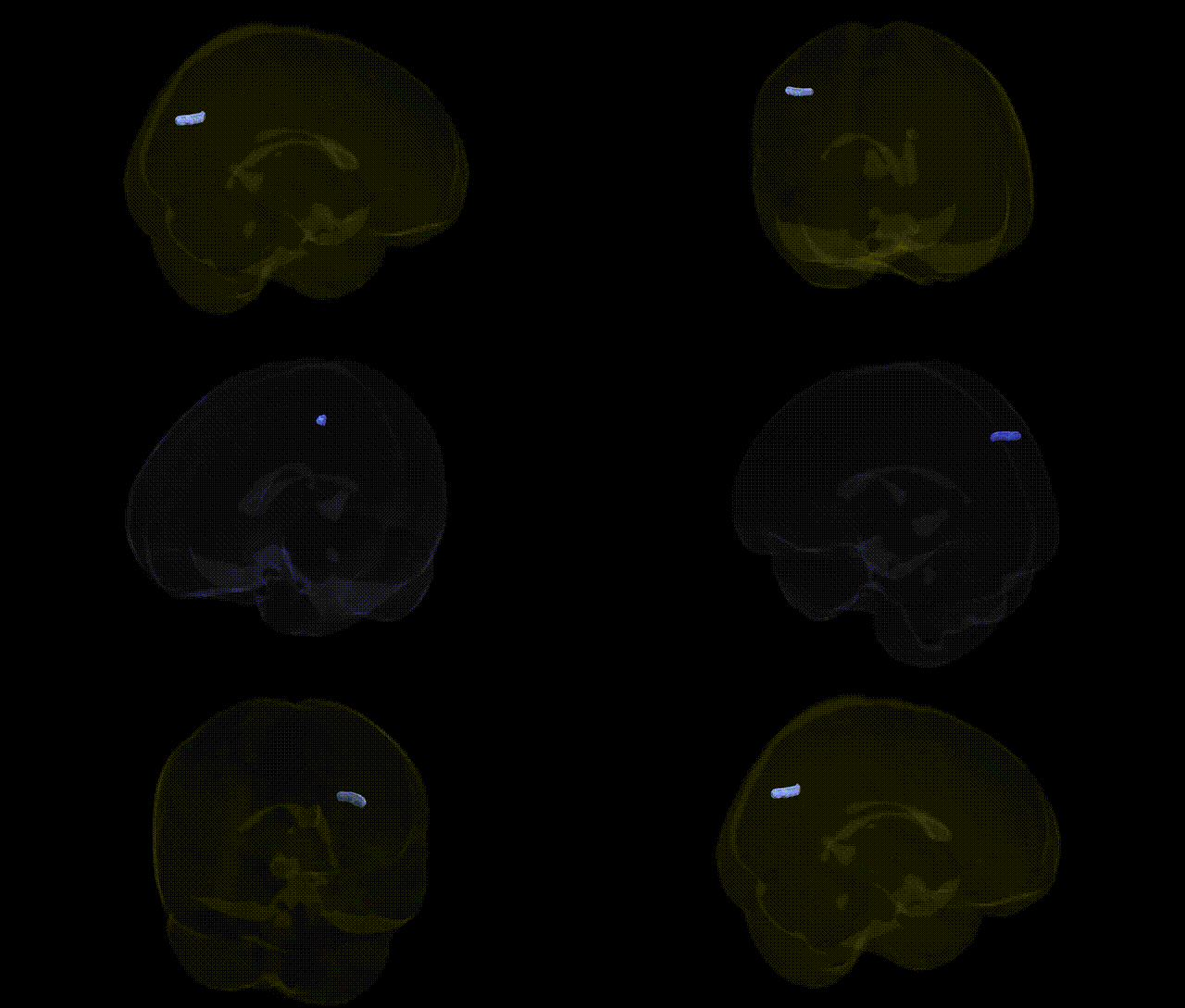
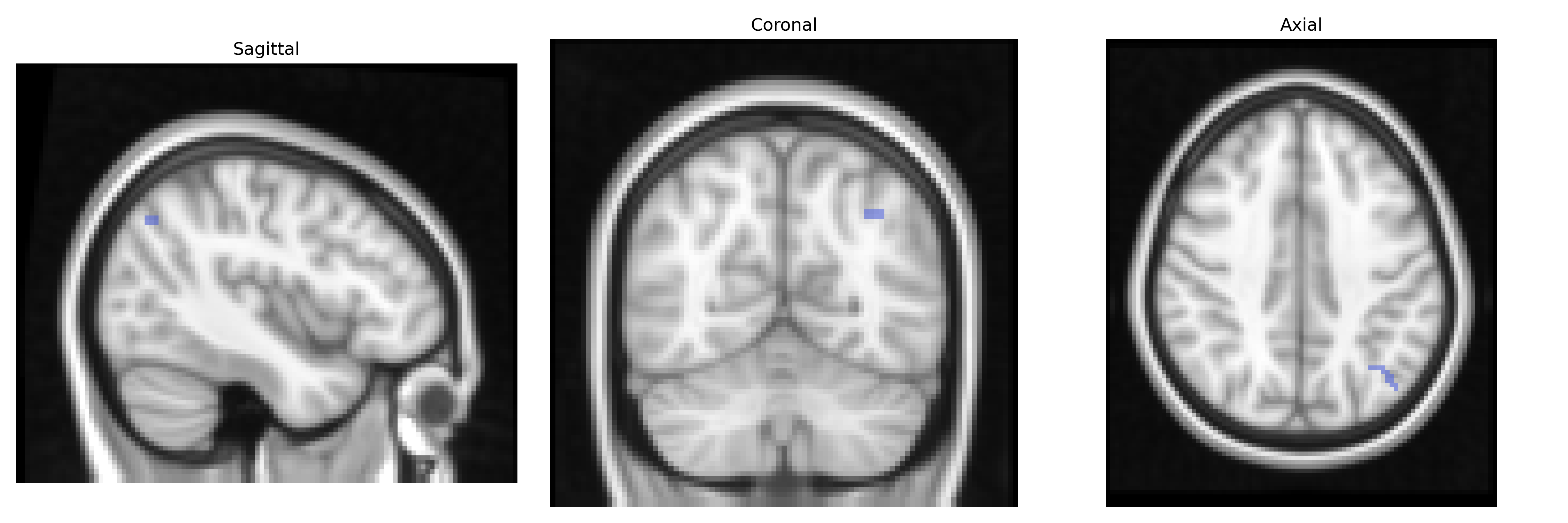
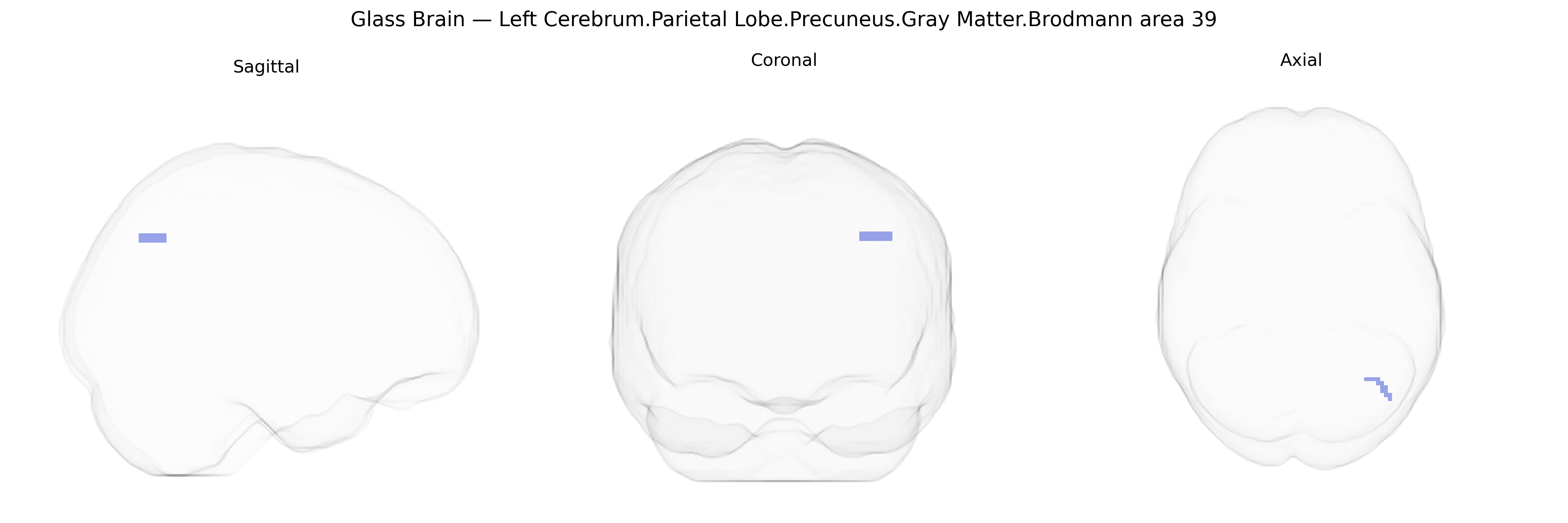
Bilateral Left Cerebrum.Parietal Lobe.Precuneus.Gray Matter.Brodmann area 39 corresponds to gray matter within the left posterior parietal cortex, centered in the angular gyrus region that functionally overlaps with BA39 and extends into the precuneus. This region is implicated in high-level multimodal association processes, including language-related semantic integration, reading and writing, visuospatial processing, and aspects of number cognition, as well as participation in the default mode network involved in episodic memory, self-referential thought, and mental imagery. Its cytoarchitecture reflects a heteromodal association cortex, receiving convergent inputs from visual, auditory, and somatosensory areas and projecting to frontal and temporal association regions, supporting complex cross-modal integration and higher-order cognition. There is no direct link for this exact Talairach-label combination; a closely related structure is Angular gyrus.
Genetic associations involving the bilateral Left Cerebrum.Parietal Lobe.Precuneus.Gray Matter.Brodmann area 39 (BA39) largely arise from imaging genetics and GWAS of cortical thickness, surface area, and functional connectivity rather than from studies targeting this specific Talairach-defined parcel. Variants in genes influencing synaptic plasticity, neurodevelopment, and myelination (e.g., BDNF, CNTNAP2, DISC1, and common polygenic risk loci for schizophrenia and major depressive disorder) have been associated with structural and functional alterations in the inferior parietal and precuneus regions overlapping BA39, often in the context of default mode network (DMN) abnormalities. Large-scale GWAS of regional cortical measures (such as ENIGMA and UK Biobank studies) have identified multiple loci (including variants near KIAA0586, TBR1, and other neurodevelopmental genes) associated with parietal and precuneus cortical thickness and surface area, which in turn correlate with cognitive traits like general intelligence, working memory, language-related processes, and educational attainment. BA39 and adjacent inferior parietal cortex show heritable variation in structure and connectivity that is enriched for polygenic risk scores for Alzheimer’s disease and other neurodegenerative disorders, consistent with reports linking APOE and other AD-related loci to gray matter changes and hypometabolism in parietal/precuneus DMN hubs. Additionally, imaging genetics studies in autism spectrum disorder, dyslexia, and developmental language disorders have related risk variants in genes such as FOXP2 and DCDC2 to altered activation or morphology in temporo-parietal regions that encompass BA39, though these associations are generally coarse and not specific to the 2 mm Talairach BA39 label. Overall, genetic influences on this region are best characterized at the level of parietal and DMN networks, with polygenic contributions to cognition, psychiatric risk, and neurodegeneration rather than single-gene, BA39-specific effects.
Overview generated by GPT-4o (2026).
Region ID: 990
Hemisphere: bilateral
Atlas: Talairach labels 2mm
Full Quality Version: Download MP4
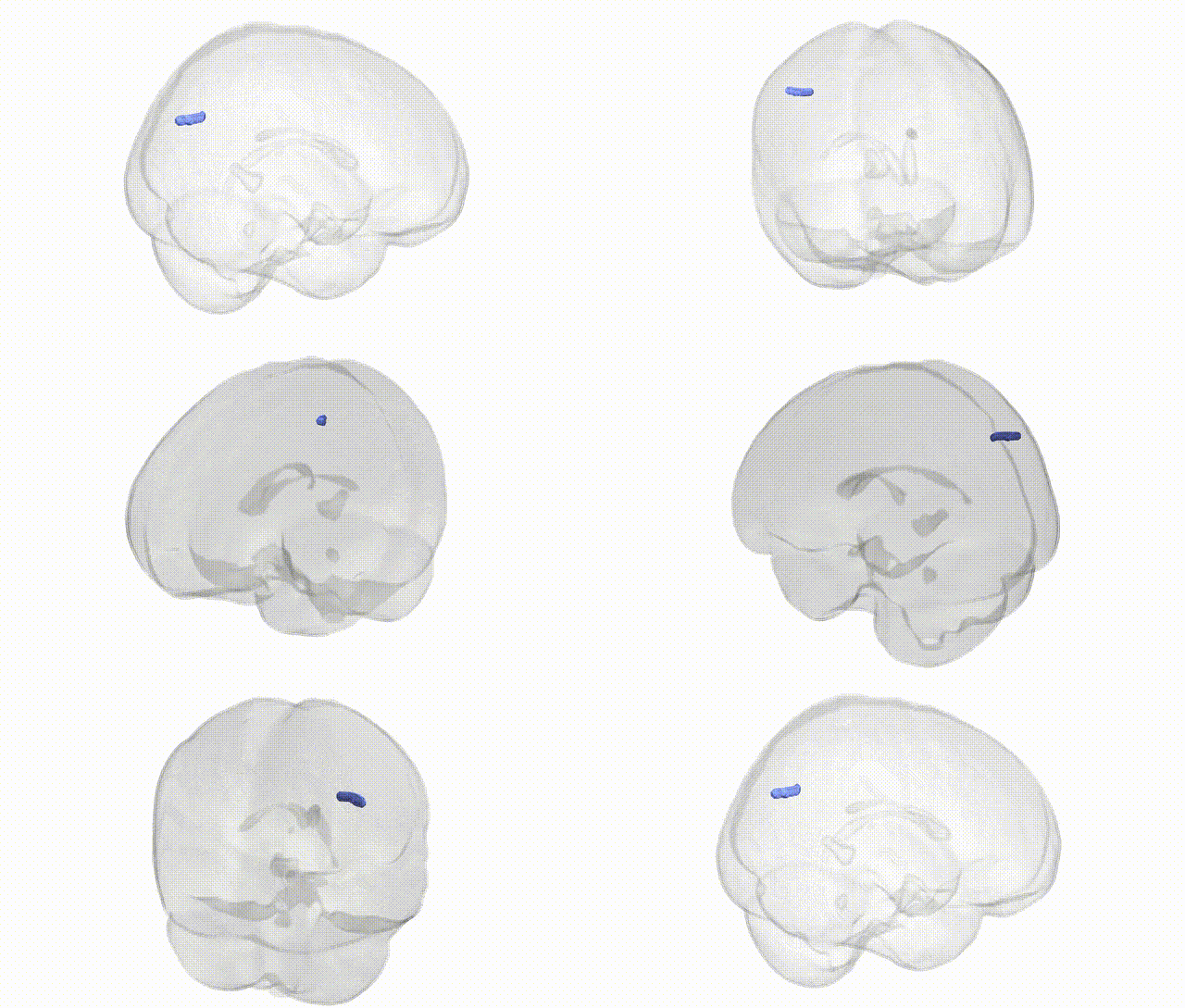
Full Quality Version: Download MP4
Wali Sidiqyar*, Gaurav Rudravaram*, Elyssa M. McMaster, Trent M. Schwartz, Adam M. Saunders, Kurt G. Schilling, Bennett A. Landman "Introducing SPINS: A Shared Public Visualization Library of Neuroanatomical Structures." Medical Imaging with Deep Learning- short paper
This resource is licensed under CC0 1.0 Universal (Public Domain).