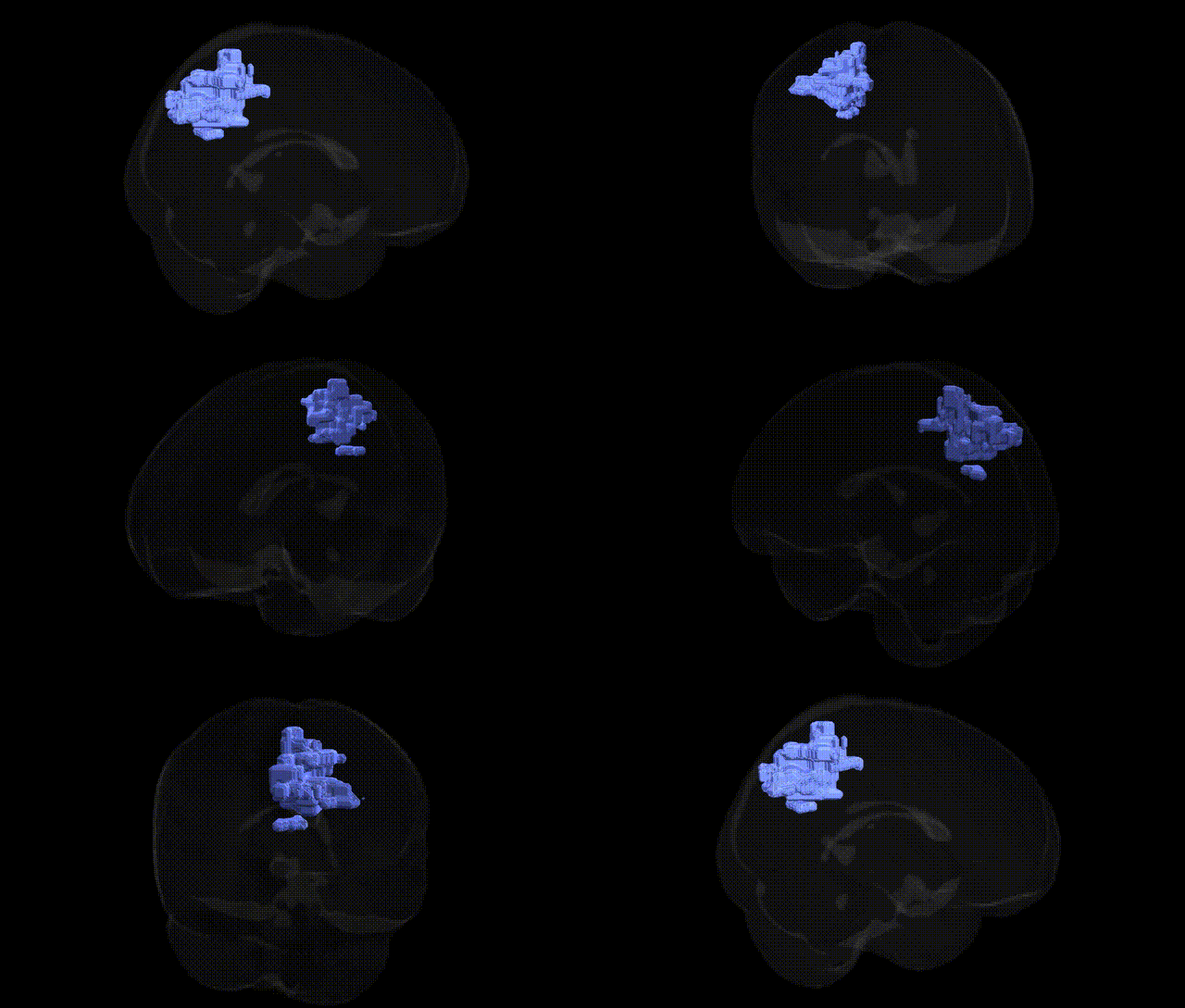
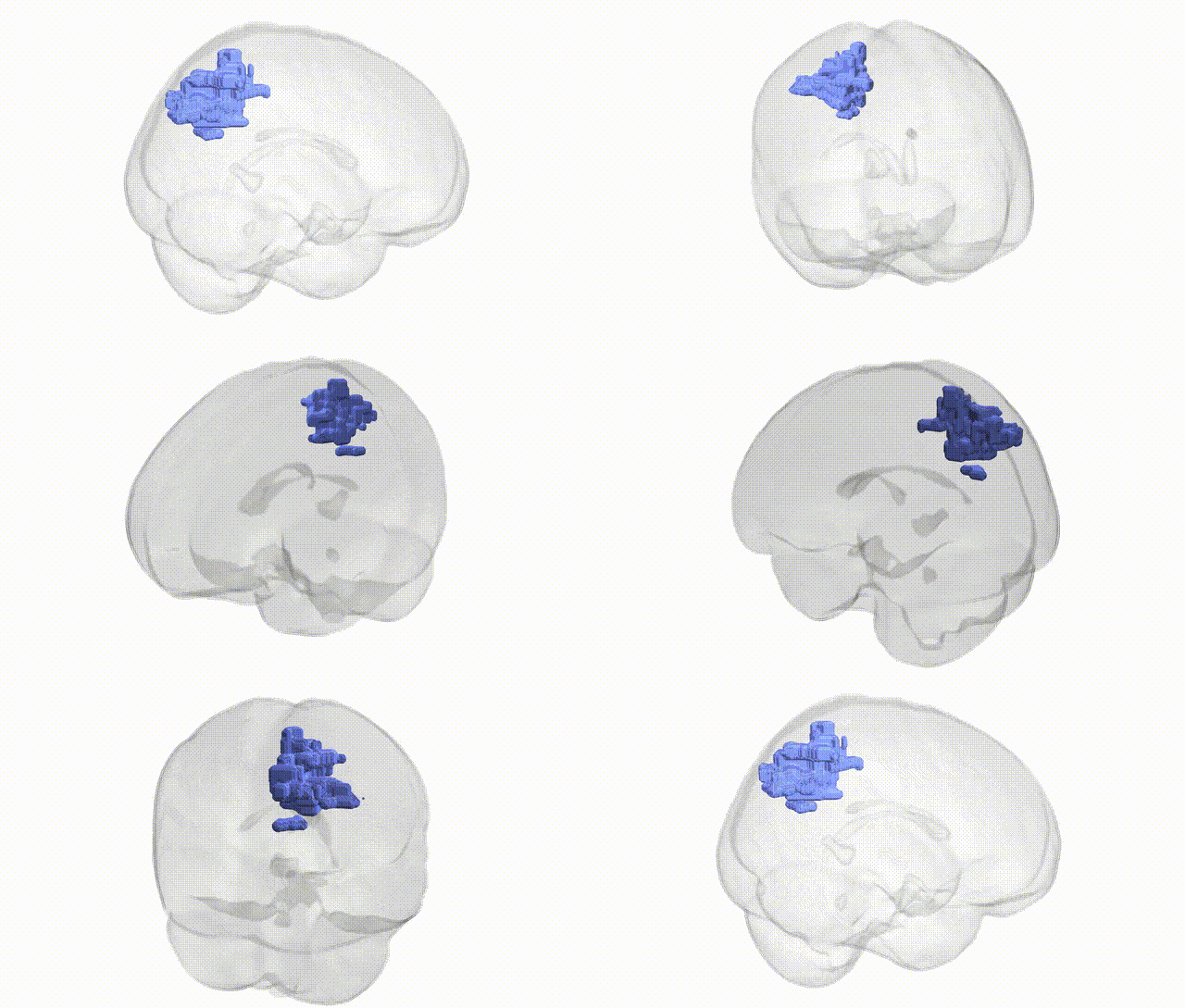
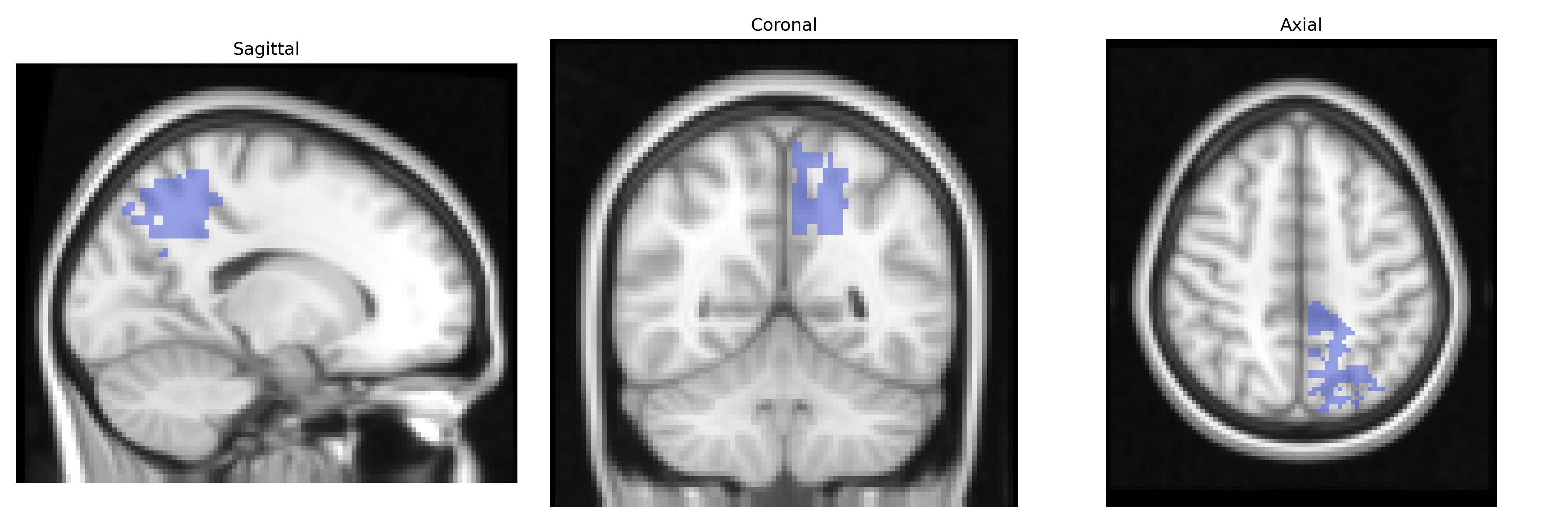
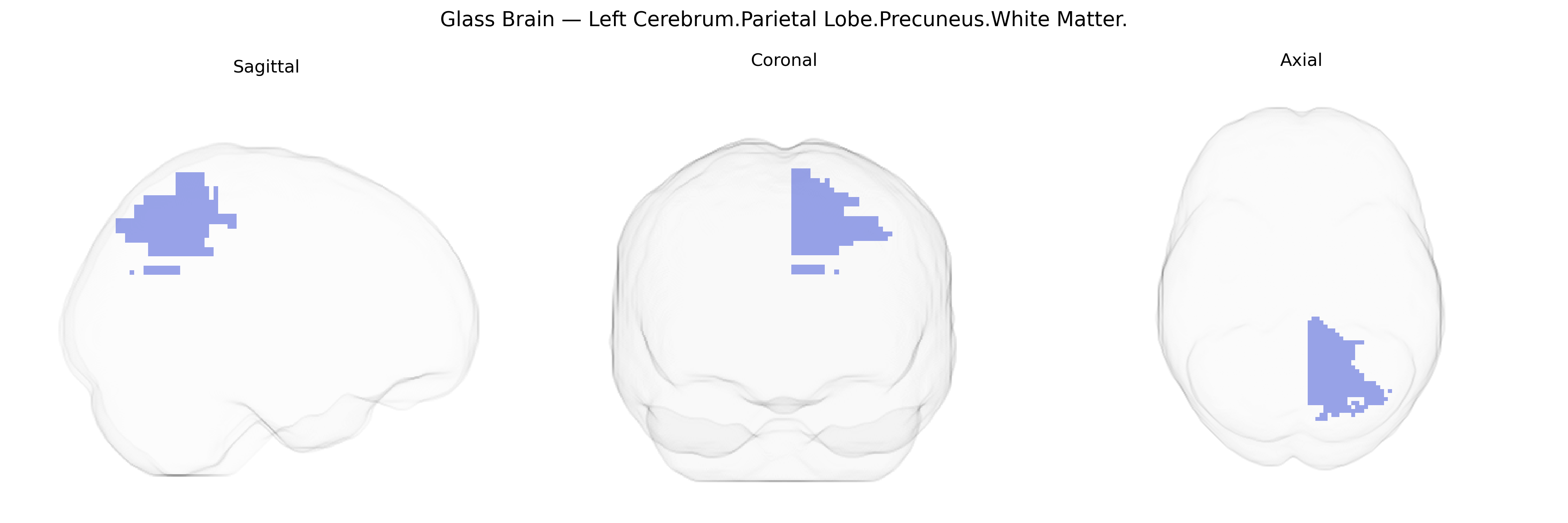
The bilateral Left Cerebrum.Parietal Lobe.Precuneus.White Matter refers to the subcortical myelinated fiber tracts underlying the precuneus region of the parietal lobe in the left cerebral hemisphere. The precuneus is located on the medial surface of the parietal lobe, bounded anteriorly by the marginal branch of the cingulate sulcus and posteriorly by the parieto-occipital sulcus, and its white matter contains association fibers that connect the precuneus cortex with other parietal, frontal, and occipital areas, as well as interhemispheric commissural fibers traveling through the corpus callosum. Functionally, the overlying precuneus gray matter is implicated in visuospatial imagery, self-related processing, episodic memory, and default mode network activity, and the integrity of its white matter tracts is critical for efficient integration of these higher-order cognitive functions across distributed cortical networks. There is no direct Wikipedia article for this specific white matter subdivision; a related entry describing the overlying cortical region is available at Precuneus.
Genetic associations with the bilateral Left Cerebrum Parietal Lobe Precuneus white matter (as defined in the Talairach 2 mm atlas) arise mostly from imaging‑genetics and GWAS studies that use voxel‑ or region‑based measures of precuneus volume, cortical thickness, surface area, functional connectivity, or white‑matter microstructure (e.g., diffusion metrics). Variants in genes related to synaptic plasticity, neurodevelopment, and myelination—including APOE (especially ε4), CLU, PICALM, BIN1, and CR1 from Alzheimer’s disease GWAS—have repeatedly been implicated in structural and functional alterations of the precuneus and its surrounding white matter, consistent with this region’s role in early Alzheimer’s pathology and default‑mode network disruption. GWAS of brain morphology (e.g., ENIGMA, UK Biobank) have identified multiple loci associated with parietal and precuneus measures, including SNPs near genes such as HMGA2 and variants in pathways involving neuronal differentiation and axonal guidance, though these findings are often reported at the level of broader parietal or default‑mode network regions rather than the specific Talairach label. The precuneus region’s white matter has also been implicated in genetic studies of schizophrenia, major depressive disorder, autism spectrum disorder, and attention‑deficit/hyperactivity disorder, where risk alleles in genes affecting glutamatergic signaling, calcium channel function, and white‑matter integrity (e.g., CACNA1C, GRIN2A/2B, and oligodendrocyte‑related genes) show associations with altered connectivity or microstructure in medial parietal territories that encompass the precuneus. Additionally, polygenic scores for cognitive ability and educational attainment correlate with structural and functional features of the precuneus and adjacent parietal white matter, supporting a genetically influenced role of this region in higher‑order cognition, self‑referential processing, and default‑mode network functioning, even though precise SNP‑level maps for the bilateral “Left Cerebrum.Parietal Lobe.Precuneus.White Matter” Talairach label remain limited and typically inferred from broader parcellations.
Overview generated by GPT-4o (2026).
Region ID: 860
Hemisphere: bilateral
Atlas: Talairach labels 2mm
Full Quality Version: Download MP4
Full Quality Version: Download MP4
Wali Sidiqyar*, Gaurav Rudravaram*, Elyssa M. McMaster, Trent M. Schwartz, Adam M. Saunders, Kurt G. Schilling, Bennett A. Landman "Introducing SPINS: A Shared Public Visualization Library of Neuroanatomical Structures." Medical Imaging with Deep Learning- short paper
This resource is licensed under CC0 1.0 Universal (Public Domain).