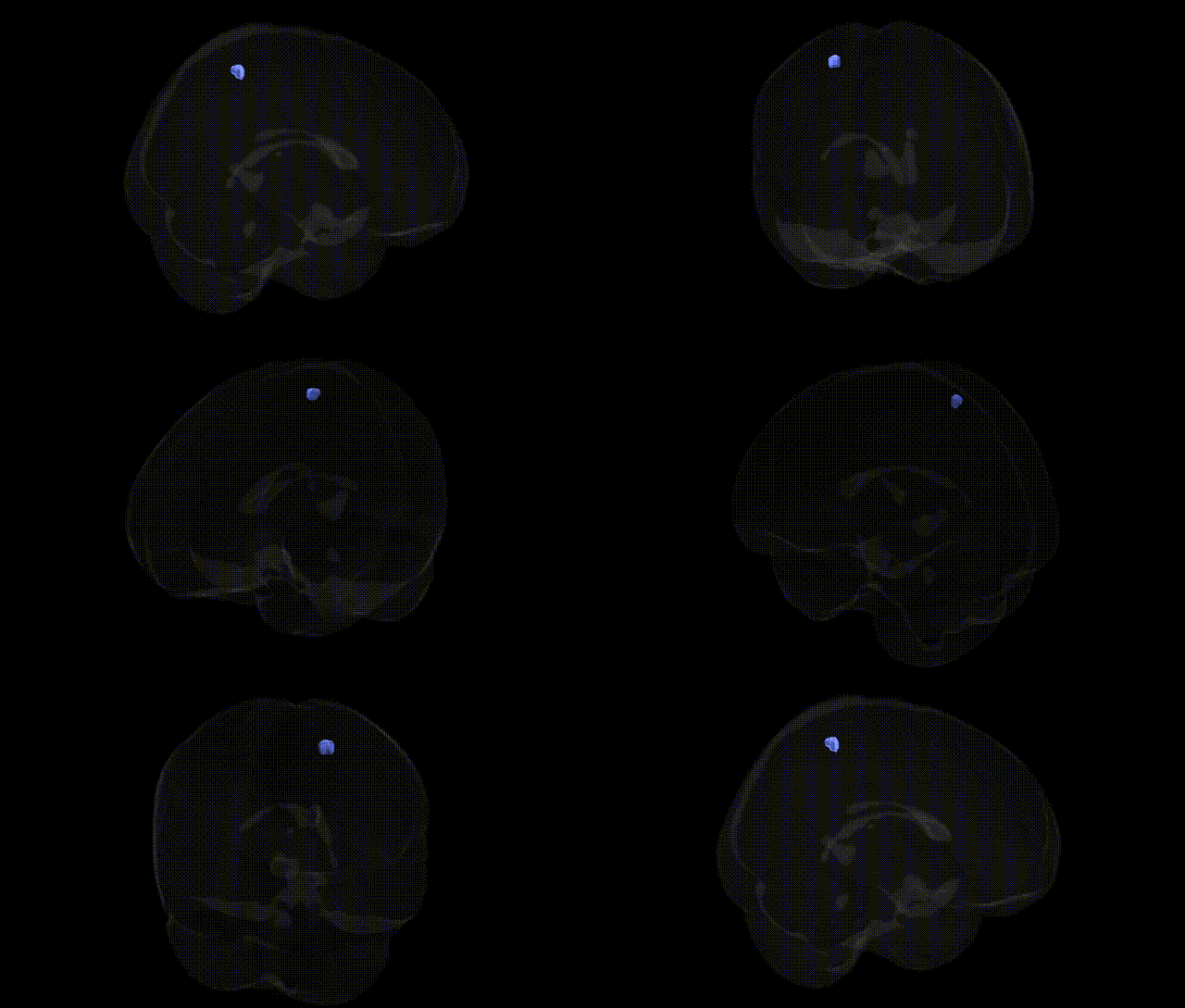
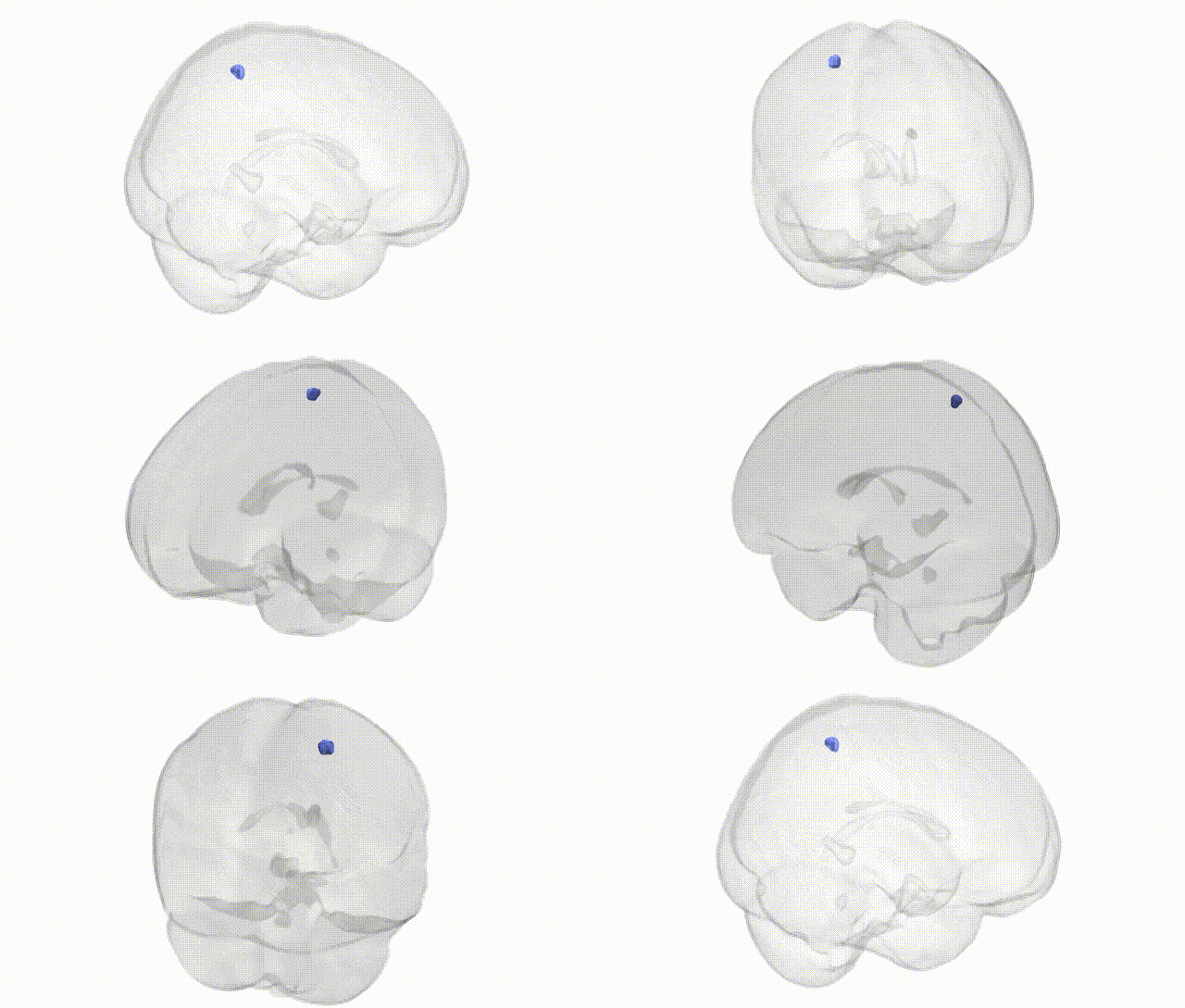
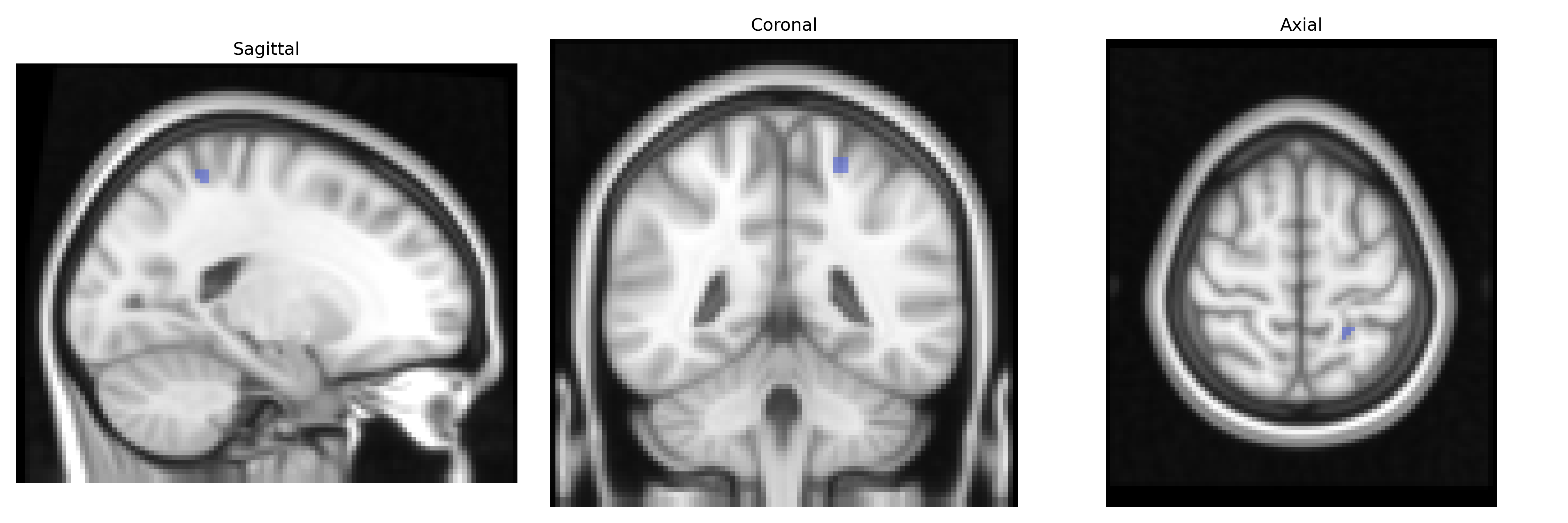
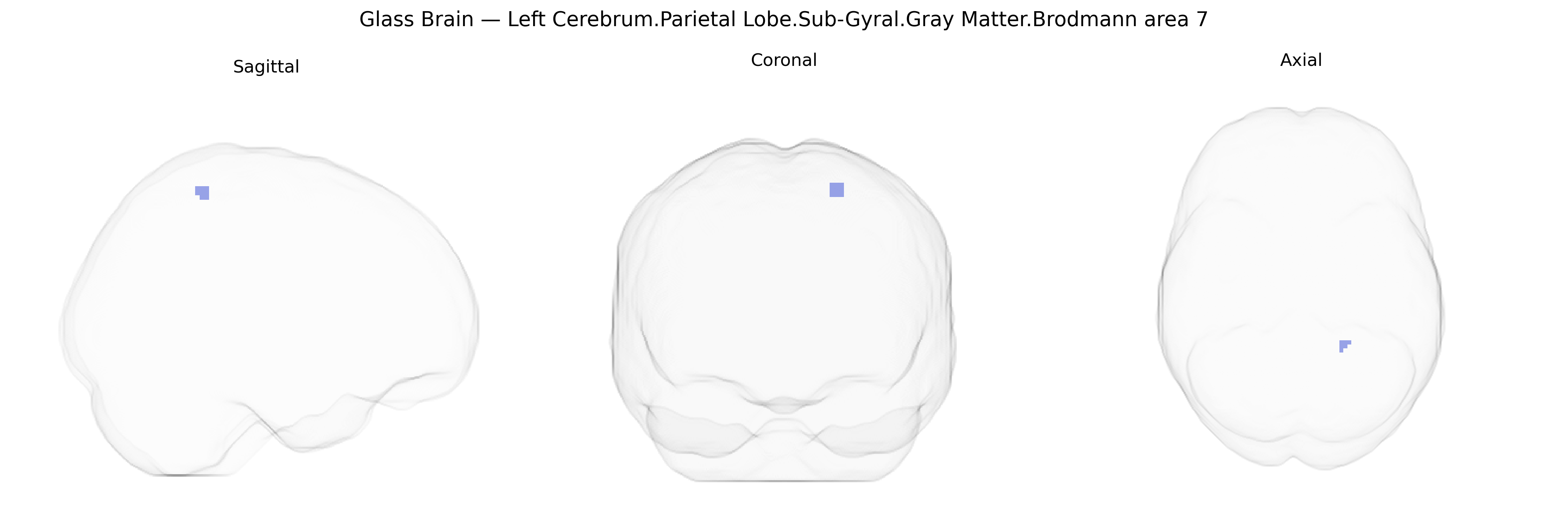
The bilateral Left Cerebrum.Parietal Lobe.Sub-Gyral.Gray Matter.Brodmann area 7 corresponds to association cortex located in the superior parietal lobule, positioned posterior to the primary somatosensory cortex (Brodmann areas 3, 1, and 2) and anterior to the visual association areas of the occipital lobe. This heteromodal region integrates visual, somatosensory, and proprioceptive inputs, supporting visuospatial processing, body-image representation, and the coordination of eye–hand movements. It plays a critical role in spatial attention, mental rotation, and sensorimotor transformations necessary for reaching and grasping, and contributes to higher-order aspects of perception such as spatial orientation and navigation. Lesions in this area can lead to disturbances in visuospatial integration and apraxia-related deficits. There is no direct link for the full Talairach label; a related structure is Brodmann area 7.
The bilateral Left Cerebrum Parietal Lobe Sub-Gyral Gray Matter Brodmann area 7, a key component of the superior parietal lobule involved in visuospatial processing, attention, and sensorimotor integration, has been implicated in multiple genetic and GWAS findings through imaging-genetics and disorder-trait studies. Variants in genes related to synaptic function, neurodevelopment, and myelination (such as BDNF, CNTNAP2, and neurodevelopmental loci identified in large ENIGMA and UK Biobank imaging GWAS) have been associated with cortical thickness and surface area in parietal regions overlapping BA7, reflecting heritable influences on its structural and functional organization. BA7 and adjacent superior parietal cortex show genetically influenced alterations in schizophrenia, autism spectrum disorder, and ADHD, where common risk alleles and polygenic risk scores correlate with parietal morphology and connectivity, and also in Alzheimer’s disease and related dementias where GWAS risk loci (for example in APOE and other neuroinflammation and lipid-metabolism genes) are linked to parietal atrophy and hypometabolism. Traits such as general cognitive ability, working memory, mathematical skills, and educational attainment demonstrate genetic correlations with superior parietal/BA7 structure and activity, indicating that polygenic architectures influencing cognition and attention partially act through this region. Additionally, parietal areas encompassing BA7 show genetic associations with chronic pain, somatosensory integration, and body representation, and have been implicated in large-scale GWAS of resting-state networks and task-based activation, where common variants modulate activity within dorsal attention and frontoparietal control networks that prominently involve BA7.
Overview generated by GPT-4o (2026).
Region ID: 1080
Hemisphere: bilateral
Atlas: Talairach labels 2mm
Full Quality Version: Download MP4
Full Quality Version: Download MP4
Wali Sidiqyar*, Gaurav Rudravaram*, Elyssa M. McMaster, Trent M. Schwartz, Adam M. Saunders, Kurt G. Schilling, Bennett A. Landman "Introducing SPINS: A Shared Public Visualization Library of Neuroanatomical Structures." Medical Imaging with Deep Learning- short paper
This resource is licensed under CC0 1.0 Universal (Public Domain).