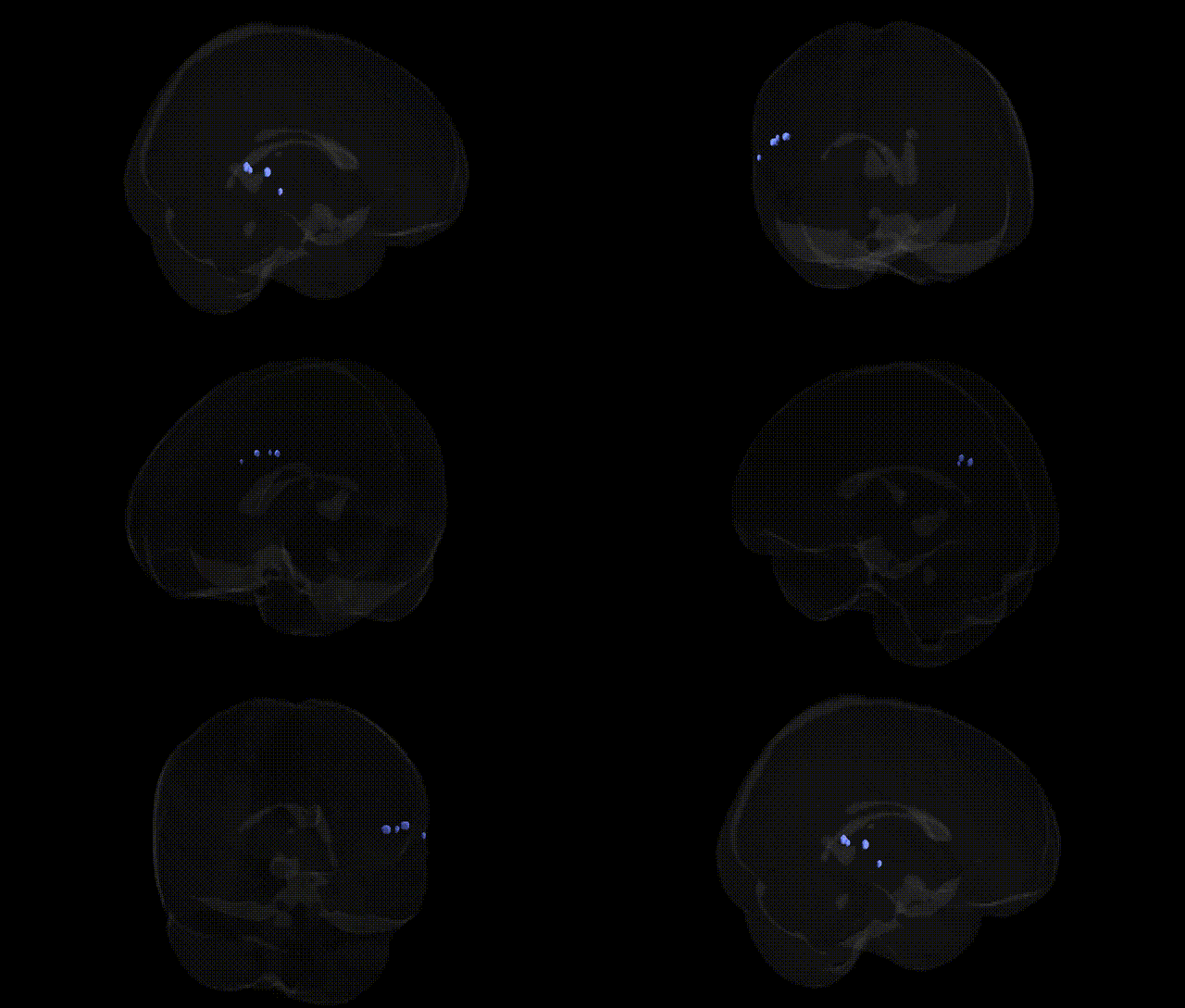
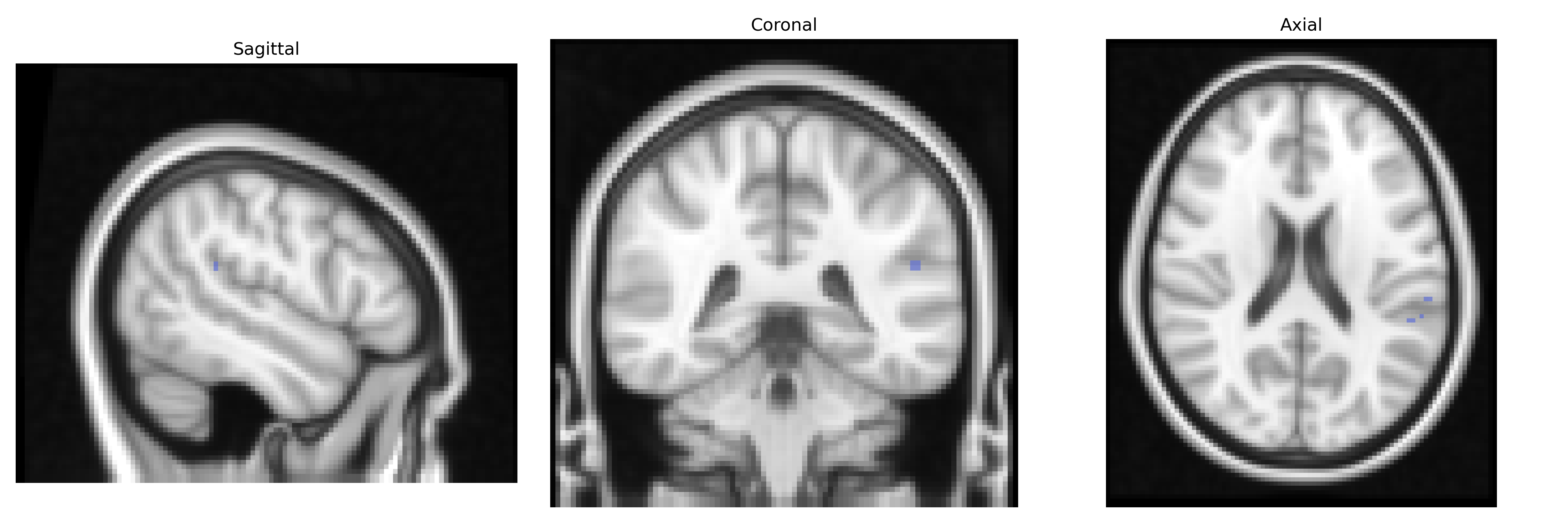
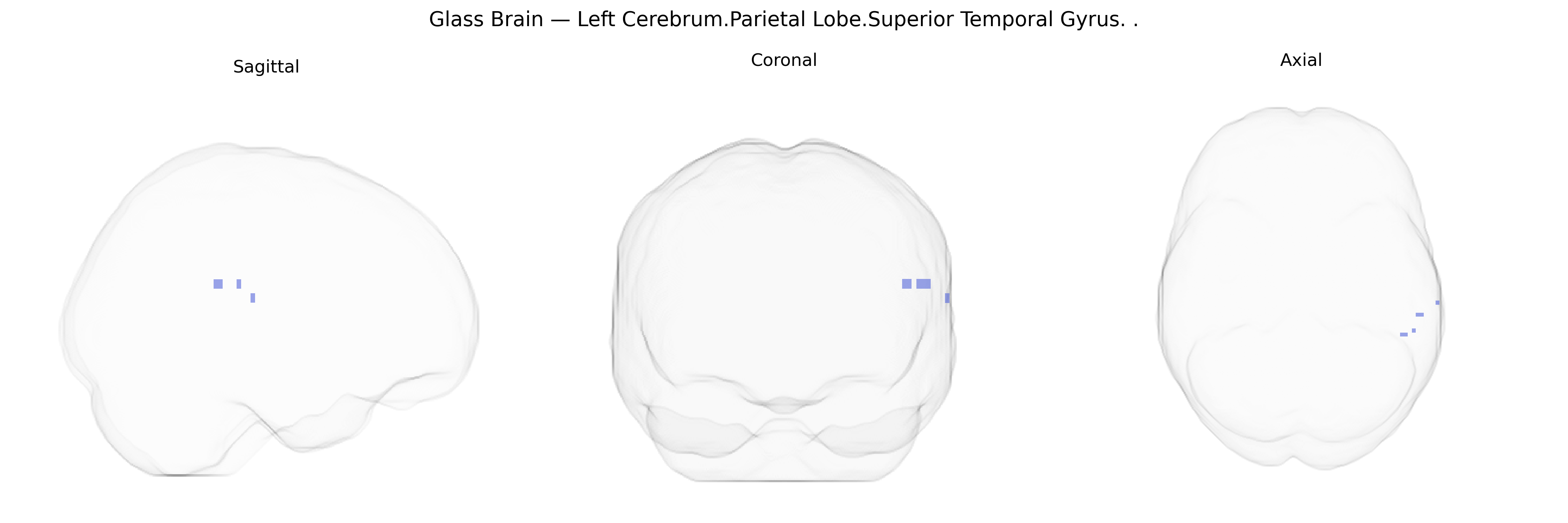
The bilateral Left Cerebrum.Parietal Lobe.Superior Temporal Gyrus corresponds to cortical tissue at the parietal–temporal interface, encompassing the upper portion of the temporal lobe near the inferior parietal lobule. Functionally, this region participates in multimodal sensory integration, language processing (particularly phonological and lexical aspects on the left), auditory association, and aspects of social cognition, including interpretation of biologically relevant sounds and speech. It also contributes to the integration of auditory information with visual and somatosensory input, supporting higher-order perceptual functions and certain components of spatial and attentional processing. There is no direct link for this exact Talairach label; a closely related structure is the Superior temporal gyrus.
Genetic associations involving the bilateral Left Cerebrum Parietal Lobe Superior Temporal Gyrus (as defined in the Talairach 2 mm atlas, though neuroanatomically overlapping with classically “superior temporal” and parietotemporal regions) largely emerge from imaging‑genetics and GWAS of brain structure, language, and psychiatric traits. Heritability studies and large cohorts such as ENIGMA and UK Biobank have identified common variants in genes involved in neurodevelopment, synaptic function, and axon guidance (e.g., CNTNAP2, FOXP2 pathway genes, DCDC2, KIAA0319, and other loci near neuronal adhesion and glutamatergic signaling genes) that modulate cortical thickness, surface area, or gyrification in parietotemporal and superior temporal regions, with downstream effects on speech, phonological processing, and auditory language networks. GWAS of schizophrenia, bipolar disorder, and major depression have shown that polygenic risk scores for these disorders correlate with structural and functional alterations in bilateral superior temporal and adjacent parietal cortices, implicating synaptic and calcium-channel genes (such as CACNA1C and GRIN2A) in volume reductions and connectivity changes in these regions. Autism spectrum disorder genetics highlight variants in synaptic and chromatin‑remodeling genes (e.g., SHANK3, NRXN1, CHD8) that are associated with atypical development of temporal and parietal association cortex, including superior temporal regions central to social communication and language perception. GWAS of cognitive traits (general intelligence, reading ability, educational attainment) link polygenic influences on cortical morphology and functional activation of parietotemporal and superior temporal areas to genes involved in neuronal proliferation and myelination, while risk variants for neurodegenerative disease (e.g., APOE in Alzheimer’s disease) are associated with atrophy patterns extending into temporoparietal regions that encompass the atlas-defined superior temporal gyrus. Collectively, these studies indicate that a distributed set of neurodevelopmental, synaptic, and plasticity-related genes shape structure and function in this bilateral parietotemporal/superior temporal region, with consequences for language, auditory processing, social cognition, and vulnerability to psychiatric and neurodevelopmental disorders.
Overview generated by GPT-4o (2026).
Region ID: 783
Hemisphere: bilateral
Atlas: Talairach labels 2mm
Full Quality Version: Download MP4
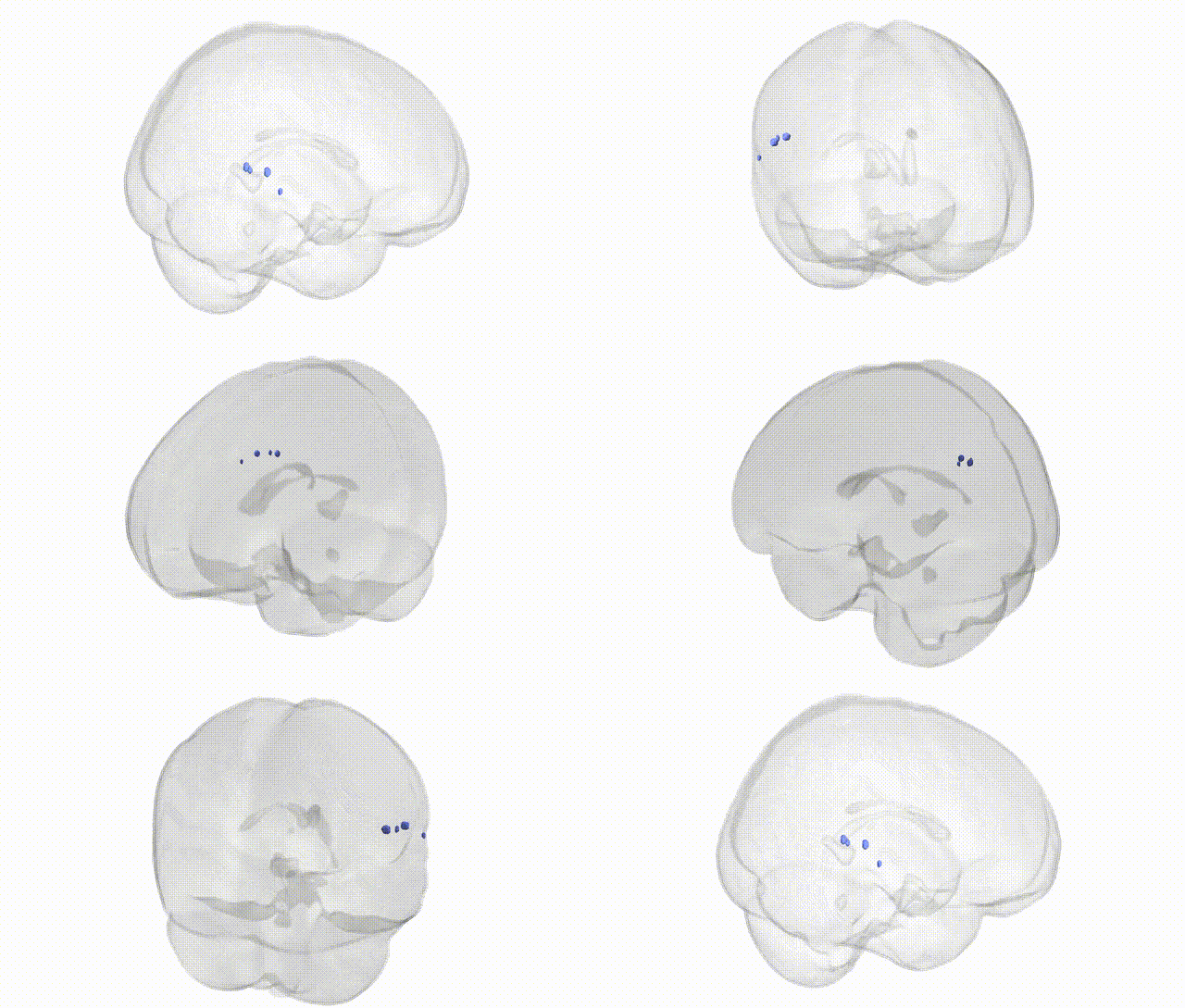
Full Quality Version: Download MP4
Wali Sidiqyar*, Gaurav Rudravaram*, Elyssa M. McMaster, Trent M. Schwartz, Adam M. Saunders, Kurt G. Schilling, Bennett A. Landman "Introducing SPINS: A Shared Public Visualization Library of Neuroanatomical Structures." Medical Imaging with Deep Learning- short paper
This resource is licensed under CC0 1.0 Universal (Public Domain).