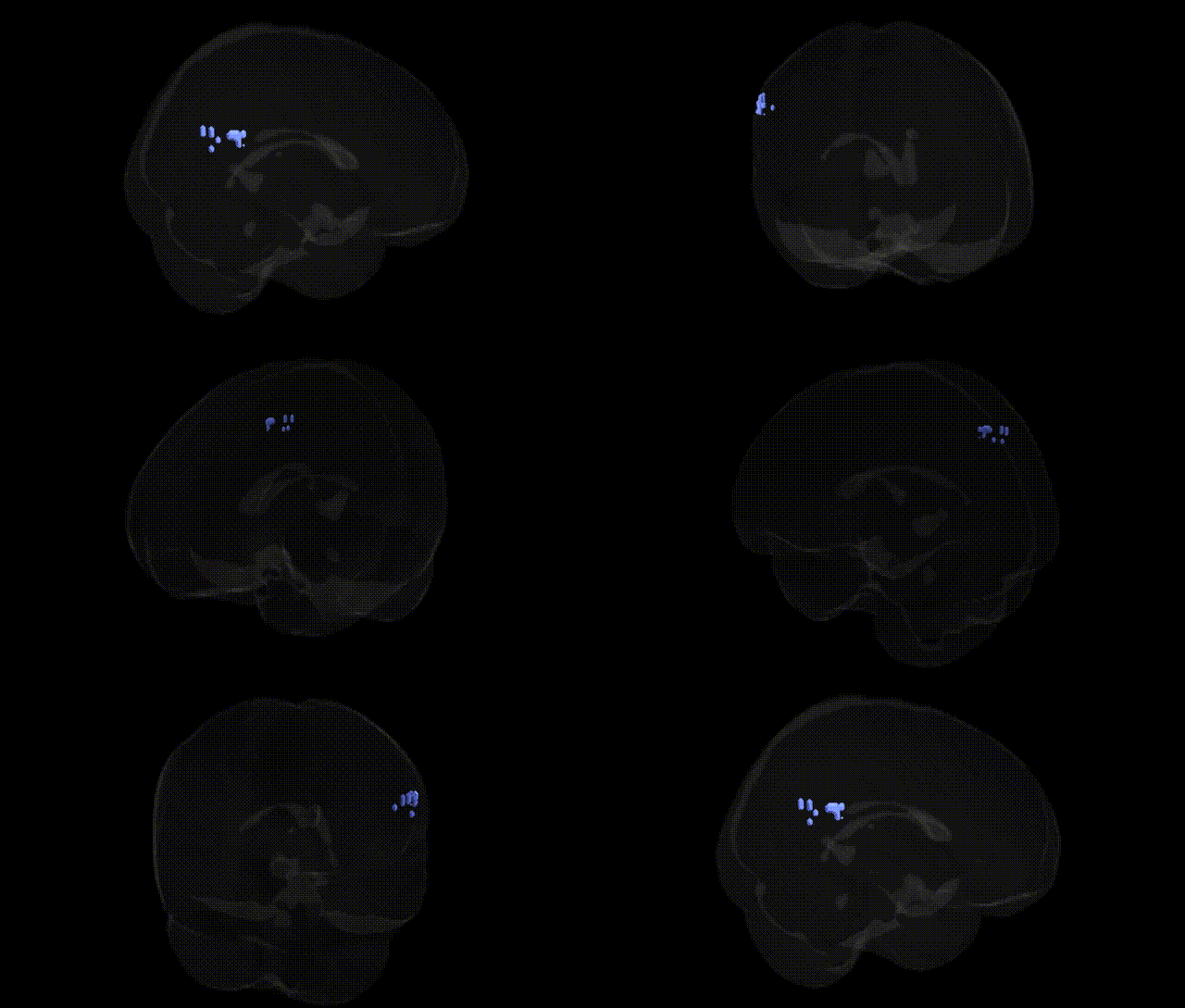
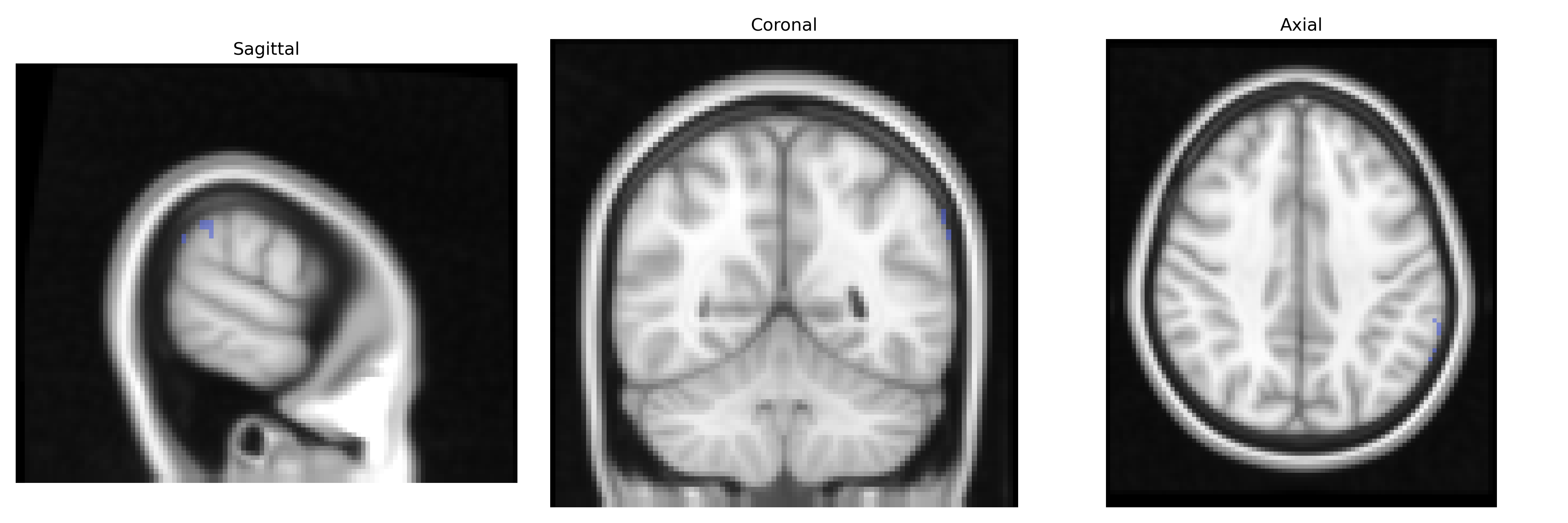
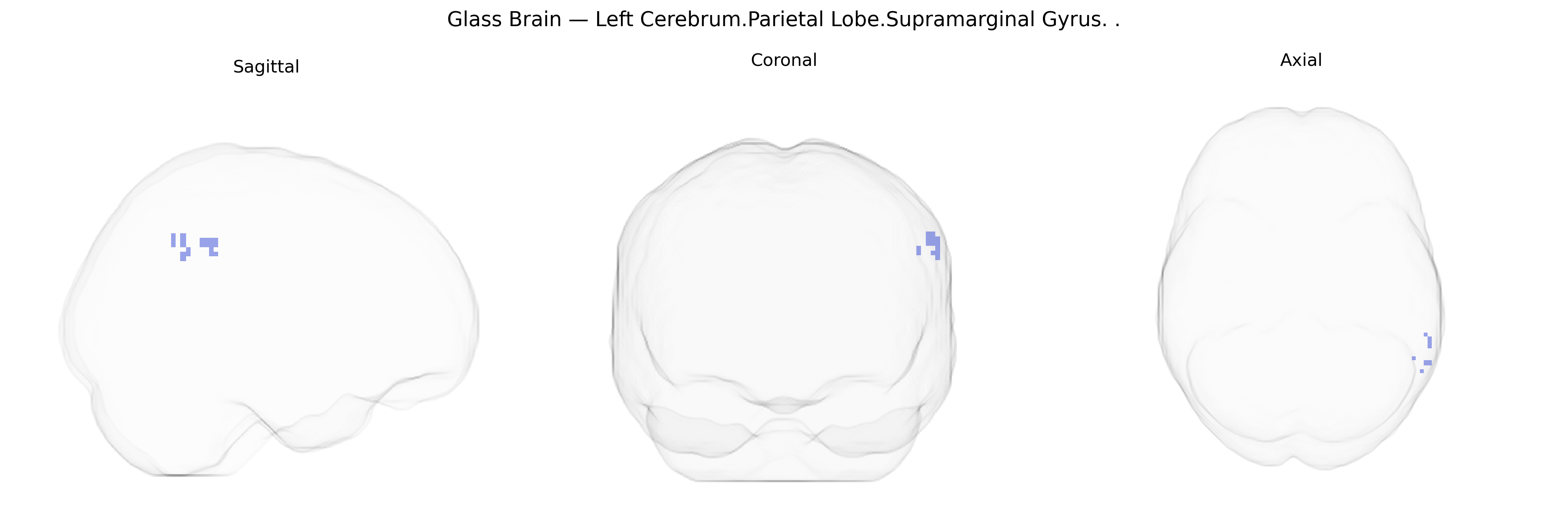
The bilateral Left Cerebrum.Parietal Lobe.Supramarginal Gyrus corresponds to the supramarginal gyrus of the inferior parietal lobule, a curved cortical structure arching over the posterior end of the lateral (Sylvian) fissure. It is cytoarchitectonically associated with parts of Brodmann areas 40 and adjacent parietal regions, and participates in multimodal integration of auditory, visual, and somatosensory information. Functionally, it is implicated in phonological processing, language comprehension, reading and writing, as well as aspects of spatial attention, body representation, and tool use. The supramarginal gyrus also contributes to social cognition and empathy-related processes by supporting perspective-taking and interpretation of others’ actions.
The supramarginal gyrus, a key parietal lobe structure involved in language, phonological processing, social cognition, and sensorimotor integration, shows converging genetic associations from neuroimaging GWAS and disorder-focused studies, although findings are typically reported at regional rather than Talairach-2mm-label resolution. Large ENIGMA and UK Biobank imaging genetics analyses have identified common variants in genes related to neurodevelopment and synaptic function (including loci near genes such as FOXP2, DCDC2, KIAA0319, and other neuronal growth and migration genes) associated with cortical thickness and surface area in inferior parietal regions encompassing the supramarginal gyrus. GWAS of reading ability and dyslexia, language-related endophenotypes, and phonological working memory have reported SNPs and polygenic scores that predict structural variation and activation in supramarginal and adjacent temporo‑parietal cortex, consistent with its role in grapheme‑phoneme integration. Psychiatric GWAS, particularly for schizophrenia, bipolar disorder, major depression, ADHD, and autism spectrum disorder, implicate risk genes (e.g., CACNA1C, CNTNAP2, NRXN1, and others) that are associated with altered supramarginal gyrus structure or functional connectivity in case–control imaging genetics, linking parietal language and social-cognitive circuitry to polygenic liability. Additionally, GWAS of cognitive traits such as general intelligence, educational attainment, and working memory have shown that higher polygenic scores correlate with morphological features and task-related activation in inferior parietal lobule regions including the supramarginal gyrus, suggesting that common genetic variation influencing cognition partially acts through this bilateral parietal hub.
Overview generated by GPT-4o (2026).
Region ID: 882
Hemisphere: bilateral
Atlas: Talairach labels 2mm
Full Quality Version: Download MP4
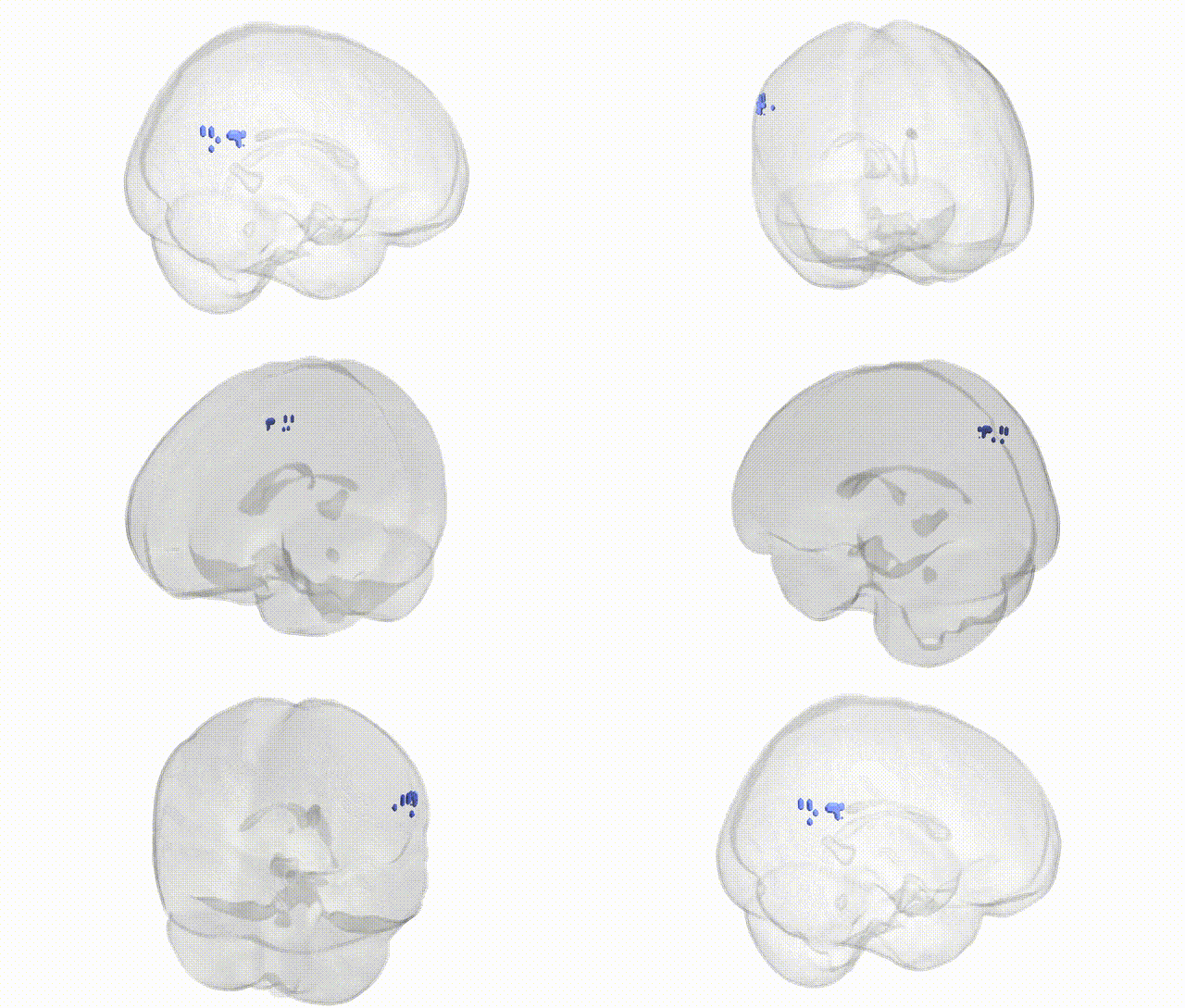
Full Quality Version: Download MP4
Wali Sidiqyar*, Gaurav Rudravaram*, Elyssa M. McMaster, Trent M. Schwartz, Adam M. Saunders, Kurt G. Schilling, Bennett A. Landman "Introducing SPINS: A Shared Public Visualization Library of Neuroanatomical Structures." Medical Imaging with Deep Learning- short paper
This resource is licensed under CC0 1.0 Universal (Public Domain).