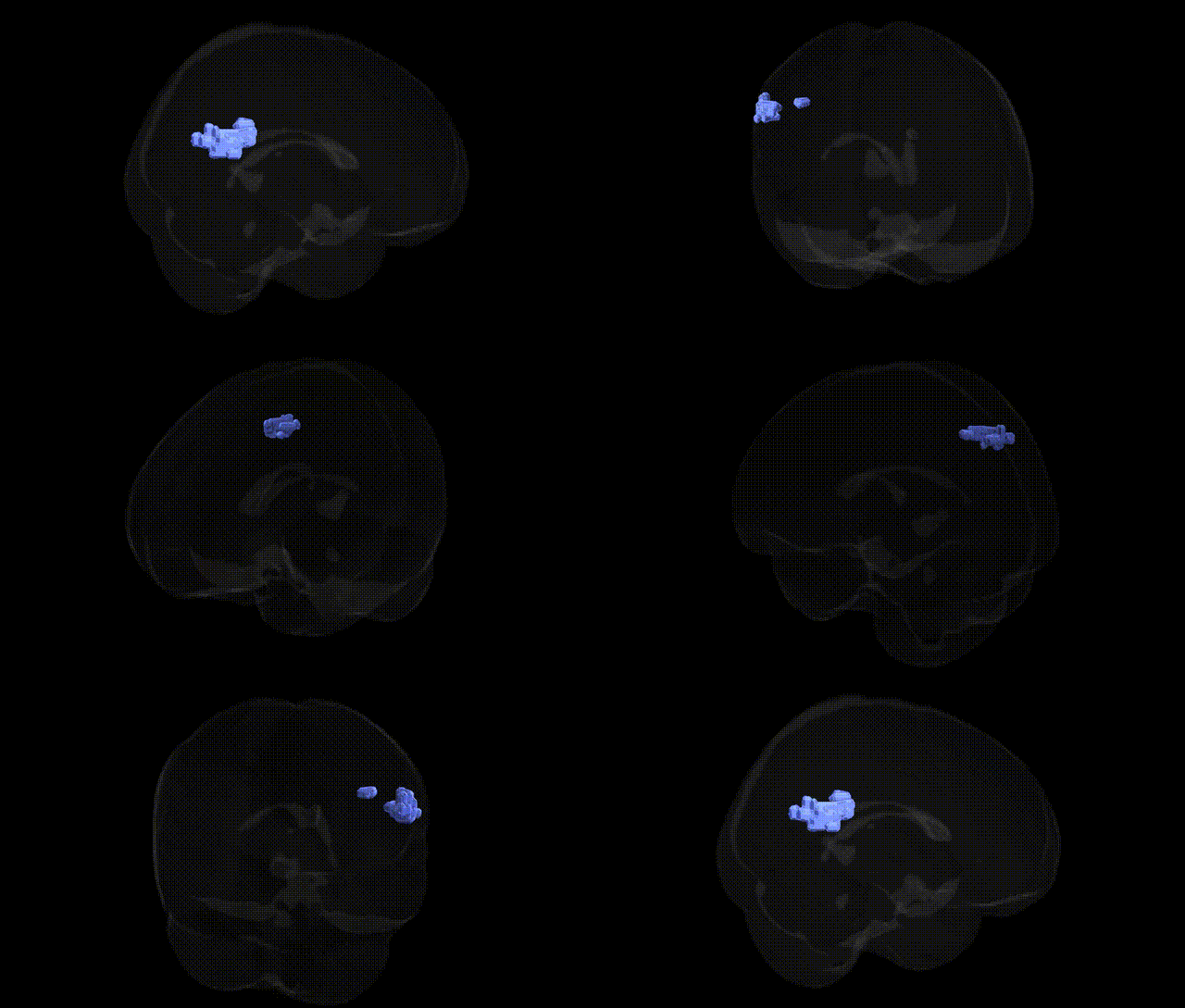
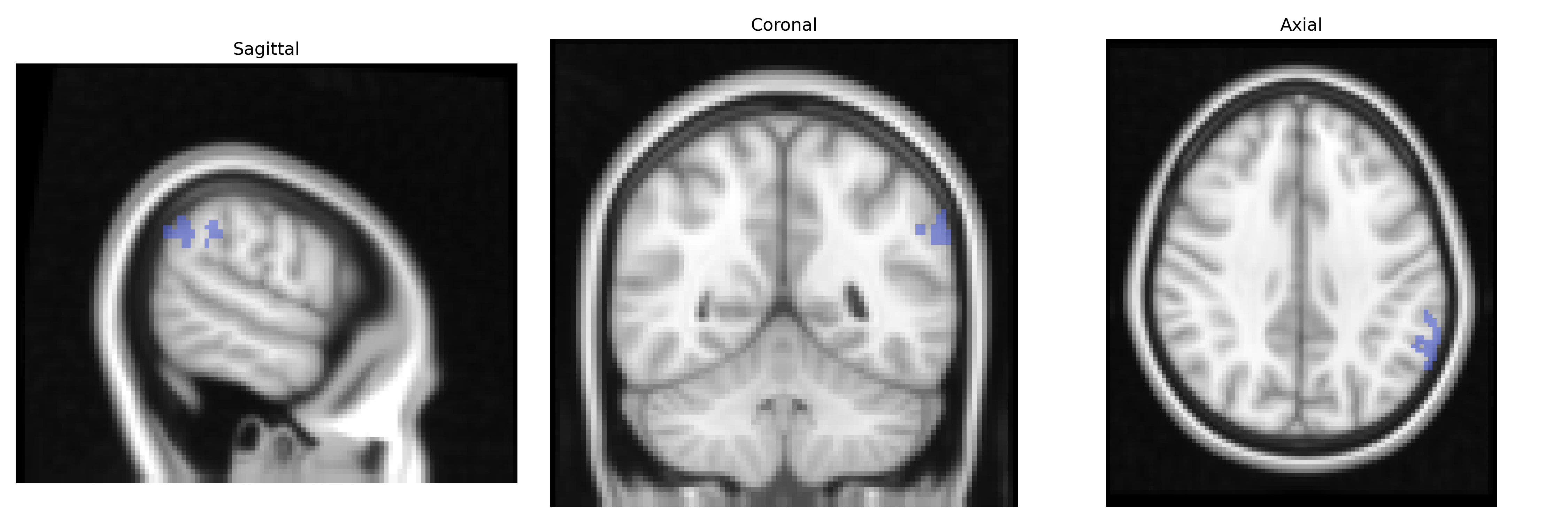
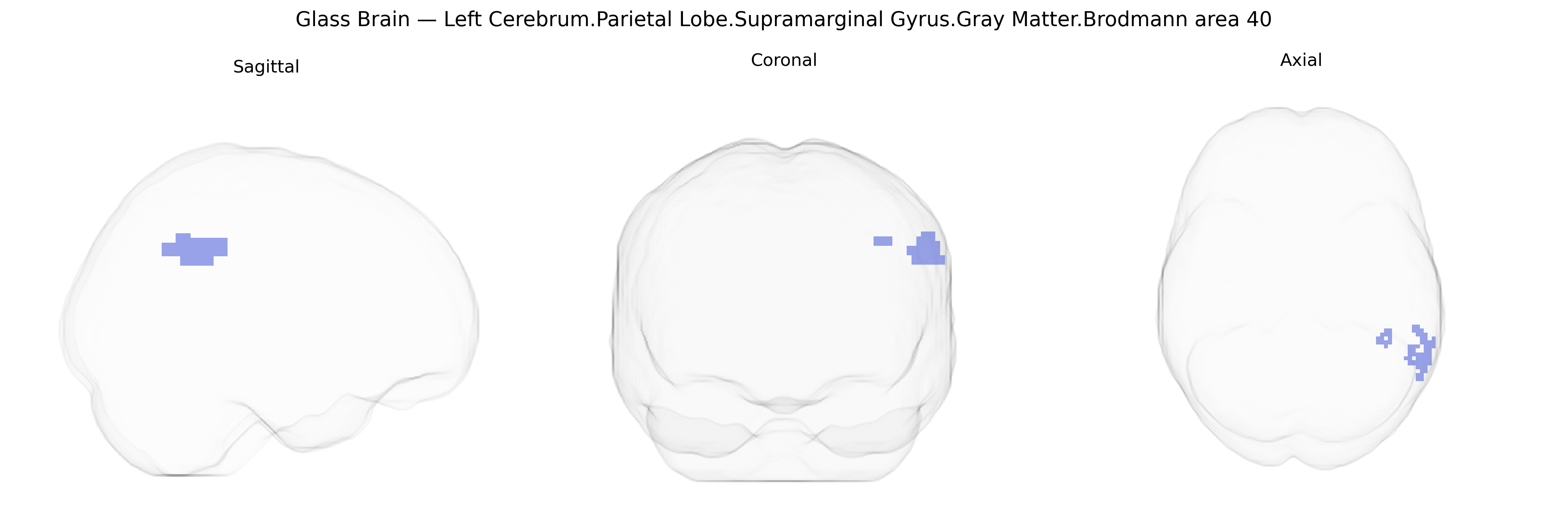
The bilateral Left Cerebrum.Parietal Lobe.Supramarginal Gyrus.Gray Matter.Brodmann area 40 corresponds to a higher-order association region in the inferior parietal lobule, wrapping around the posterior end of the lateral (Sylvian) fissure. Brodmann area 40 in the supramarginal gyrus is involved in multimodal integration of auditory, somatosensory, and visual information and plays key roles in language processing (particularly phonological and articulatory aspects), spatial attention, praxis, and aspects of working memory and social cognition. It receives input from temporal and frontal language areas and contributes to mapping sounds to articulatory patterns and to the integration of sensory cues necessary for skilled manual and oral actions. There is no direct link for “Brodmann area 40” as a stand-alone article; a closely related and encompassing structure is the Supramarginal gyrus.
The supramarginal gyrus (SMG; Brodmann area 40) has been implicated in multiple genetically influenced traits, particularly language, reading, and social cognition, though most genetic associations involve network-level or cortical measures rather than this single ROI from the Talairach 2 mm atlas. GWAS of cortical structure (e.g., ENIGMA and UK Biobank studies) have identified loci near genes such as HMGA2, KIAA0586, and microtubule- or synapse-related genes that influence parietal cortical thickness and surface area, with some clusters overlapping the inferior parietal lobule that includes the SMG, and these structural measures are moderately heritable. In neurodevelopmental disorders, imaging–genetics work in dyslexia and specific language impairment has linked variants in genes like DCDC2, KIAA0319, and CNTNAP2 to altered activation and structure in left temporo‑parietal language areas encompassing BA40. Autism spectrum disorder and schizophrenia polygenic risk scores have been associated with differences in parietal association cortex connectivity, including the SMG, which participates in social cognition, theory of mind, and attention networks. GWAS of handedness and language lateralization also report genetic effects on left-lateralized temporo‑parietal circuitry; variants near PCSK6 and LRRTM1 have been connected to asymmetries overlapping the supramarginal region. Additionally, genome-wide studies of chronic pain, depression, and general cognitive ability show associations with altered structure or activation of the inferior parietal lobule and SMG, mediated by polygenic influences on synaptic plasticity, neurodevelopmental pathways, and neuronal migration, although specific single-gene effects on bilateral BA40 gray matter remain incompletely resolved and are typically part of broader polygenic architectures affecting distributed cortical networks.
Overview generated by GPT-4o (2026).
Region ID: 927
Hemisphere: bilateral
Atlas: Talairach labels 2mm
Full Quality Version: Download MP4
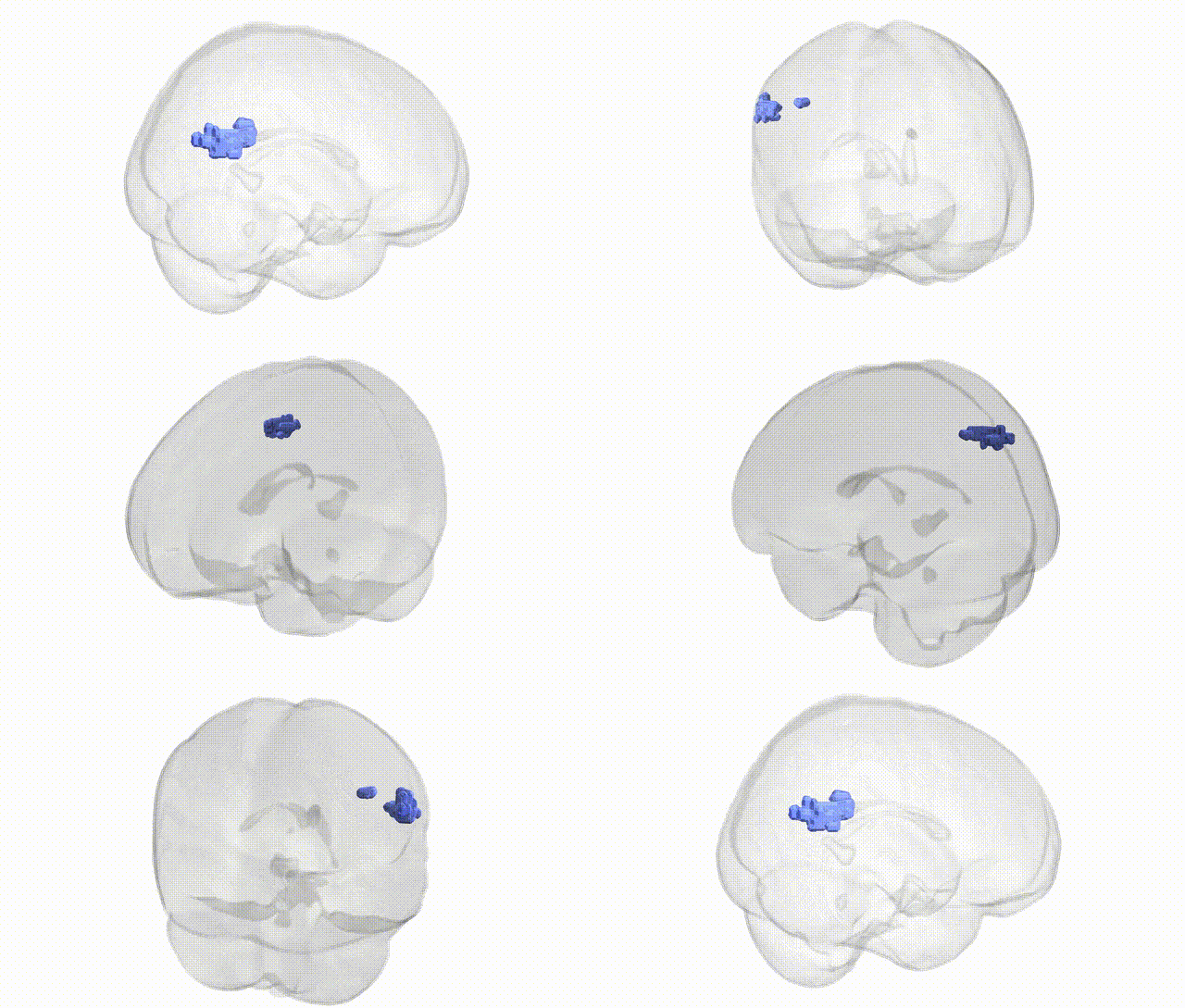
Full Quality Version: Download MP4
Wali Sidiqyar*, Gaurav Rudravaram*, Elyssa M. McMaster, Trent M. Schwartz, Adam M. Saunders, Kurt G. Schilling, Bennett A. Landman "Introducing SPINS: A Shared Public Visualization Library of Neuroanatomical Structures." Medical Imaging with Deep Learning- short paper
This resource is licensed under CC0 1.0 Universal (Public Domain).