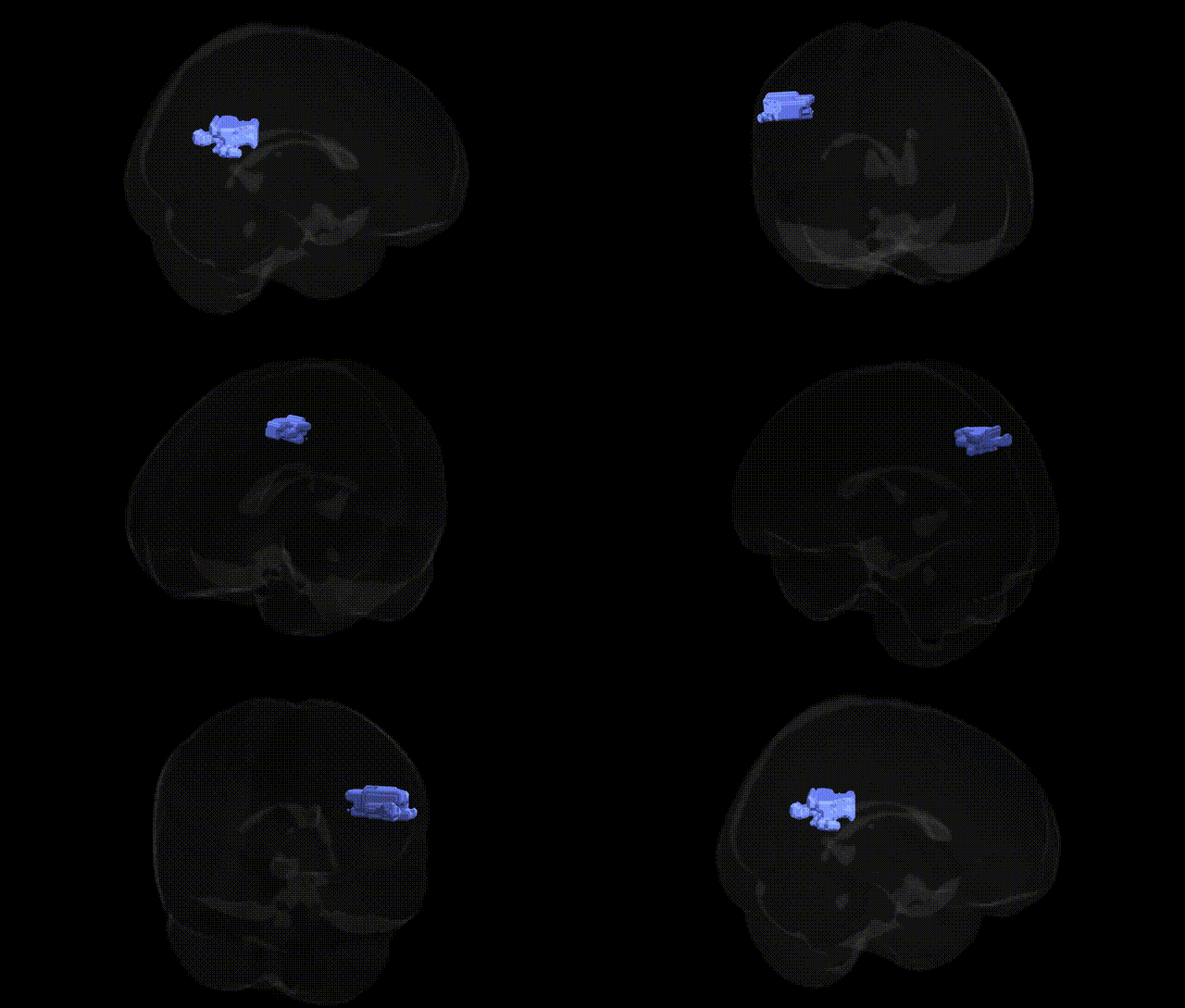
The bilateral left cerebrum parietal lobe supramarginal gyrus white matter comprises the subcortical fiber tracts underlying the supramarginal gyrus, a portion of the inferior parietal lobule that forms part of the perisylvian language and multisensory integration network. These white matter pathways interconnect supramarginal cortex with adjacent parietal, temporal, and frontal regions, contributing to phonological processing, sensorimotor integration for speech, spatial attention, and aspects of social cognition. They include segments of association fibers such as components of the superior longitudinal fasciculus/arcuate system, which are critical for coupling auditory-verbal representations with articulatory and motor planning systems and for integrating somatosensory and visual inputs during complex perceptual and linguistic tasks. Supramarginal gyrus
The bilateral left supramarginal gyrus white matter (Talairach 2 mm: Left Cerebrum.Parietal Lobe.Supramarginal Gyrus.White Matter) participates in fronto-parietal and temporo-parietal networks that have been repeatedly implicated in imaging genetics and GWAS of cognition and neuropsychiatric risk, although most findings target cortical thickness, surface area, or diffusion metrics rather than this label specifically. Large-scale MRI–GWAS studies from consortia such as ENIGMA and UK Biobank show that diffusion properties and structural measures in parietal association white matter are heritable and influenced by numerous loci spanning neurodevelopmental and axon guidance pathways (e.g., genes involved in myelination, synaptic development, and cytoskeletal organization), with polygenic architectures rather than single strong-effect variants. Variants in genes including CNTNAP2, ROBO1/2, NRG1, and others have been linked to white matter organization in parietal and temporo-parietal tracts that traverse the supramarginal region, in turn associated with language, reading, and higher-order cognitive performance. GWAS of intelligence, educational attainment, and working memory frequently show downstream associations with supramarginal/temporoparietal network structure, while neuropsychiatric GWAS (schizophrenia, ADHD, autism spectrum disorder, dyslexia) highlight polygenic risk that correlates with altered parietal white matter connectivity involving the supramarginal gyrus. Nonetheless, current evidence is largely indirect and regionally coarse; no single gene has a uniquely established, specific association with the Talairach-defined supramarginal gyrus white matter, and observed links reflect broad polygenic influences on large-scale association networks rather than a discrete, genetically isolated tract.
Overview generated by GPT-4o (2026).
Region ID: 929
Hemisphere: bilateral
Atlas: Talairach labels 2mm
Full Quality Version: Download MP4
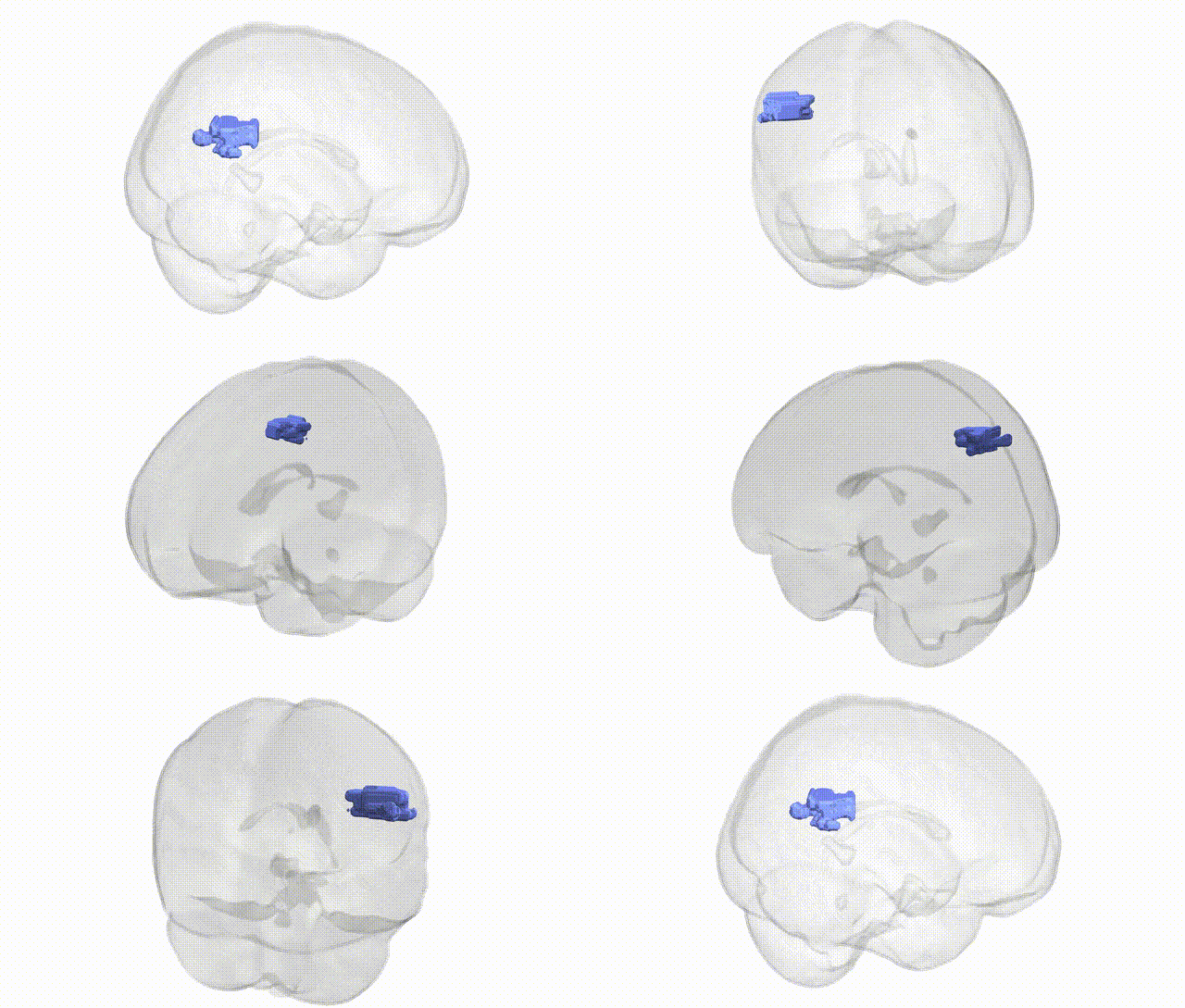
Full Quality Version: Download MP4
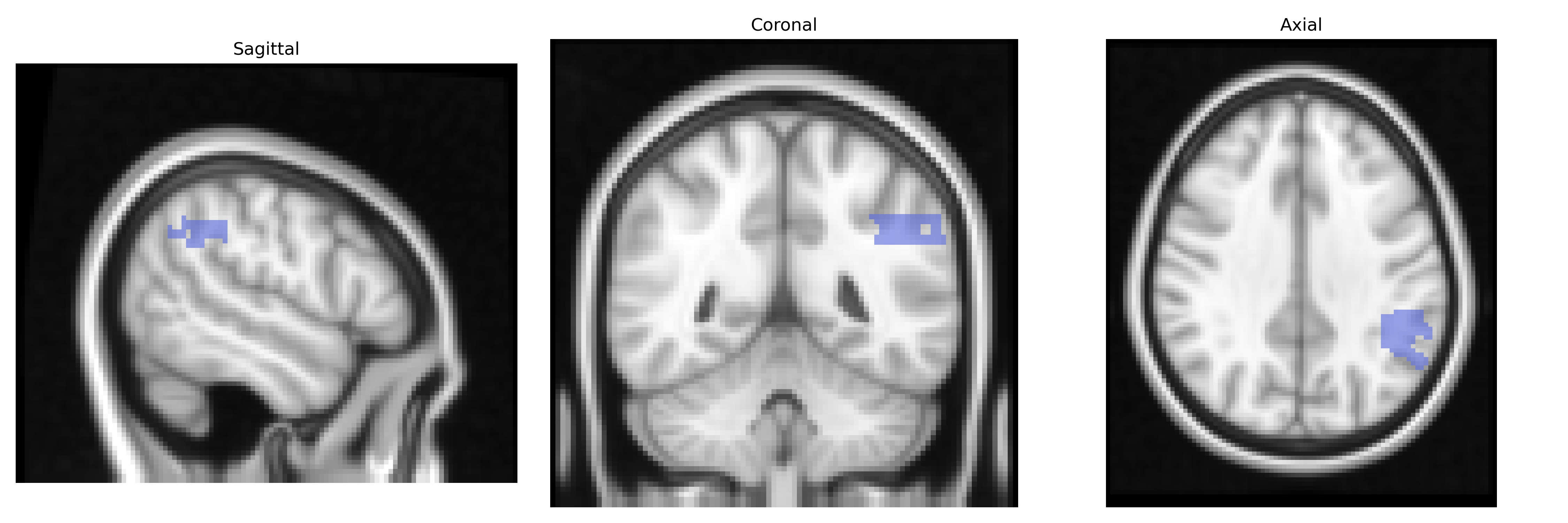
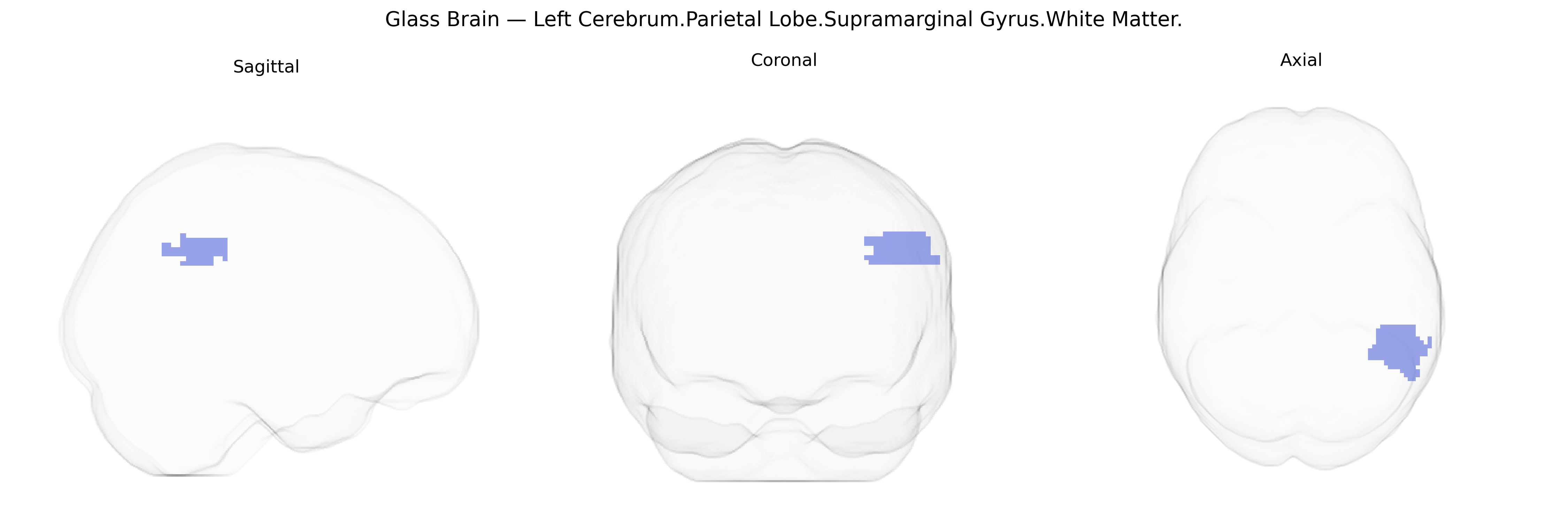
Wali Sidiqyar*, Gaurav Rudravaram*, Elyssa M. McMaster, Trent M. Schwartz, Adam M. Saunders, Kurt G. Schilling, Bennett A. Landman "Introducing SPINS: A Shared Public Visualization Library of Neuroanatomical Structures." Medical Imaging with Deep Learning- short paper
This resource is licensed under CC0 1.0 Universal (Public Domain).